To organize a shared sibling closet, assign dedicated sections for each child’s clothes using adjustable shelves, drawers, and hanging rods at accessible heights. Limit clothing quantities, rotate seasonal items, and store outgrown or off-season wear separately. Use labeled bins, hooks, and small dividers to keep shoes, accessories, and personal items tidy. Sorting laundry by child and encouraging responsibility helps maintain order. Keep often-used items within easy reach. If you want smart solutions, you’ll find helpful tips coming up.
Key Takeaways
- Designate dedicated zones for each child’s clothing with labeled bins, shelves, or drawers to maintain organization.
- Use adjustable shelving and clear labels to easily rotate and access seasonal or outgrown clothes.
- Assign specific laundry areas for each child to streamline sorting and foster responsibility.
- Install child-friendly hanging bars and accessible storage to promote independence in managing their clothing.
- Create personal spaces or bins for each child’s belongings, including keepsakes and hand-me-downs, to reduce clutter.

AWTATOS Closet Organizers and Storage, 6 Cube Storage Organizer, White
- Large Storage Capacity: Six 11.8×11.8×11.8 inch cubes
- Sturdy and Stable: Made with durable panels and metal frame
- Customizable Layout: DIY stacking and configuration options
As an affiliate, we earn on qualifying purchases.
As an affiliate, we earn on qualifying purchases.
Designing a Functional Closet Layout for Siblings
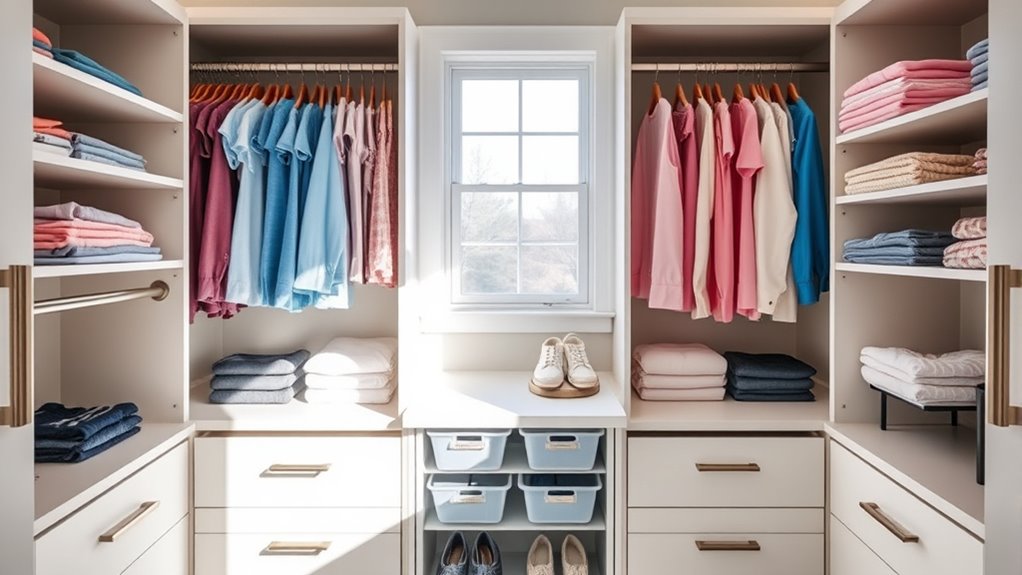
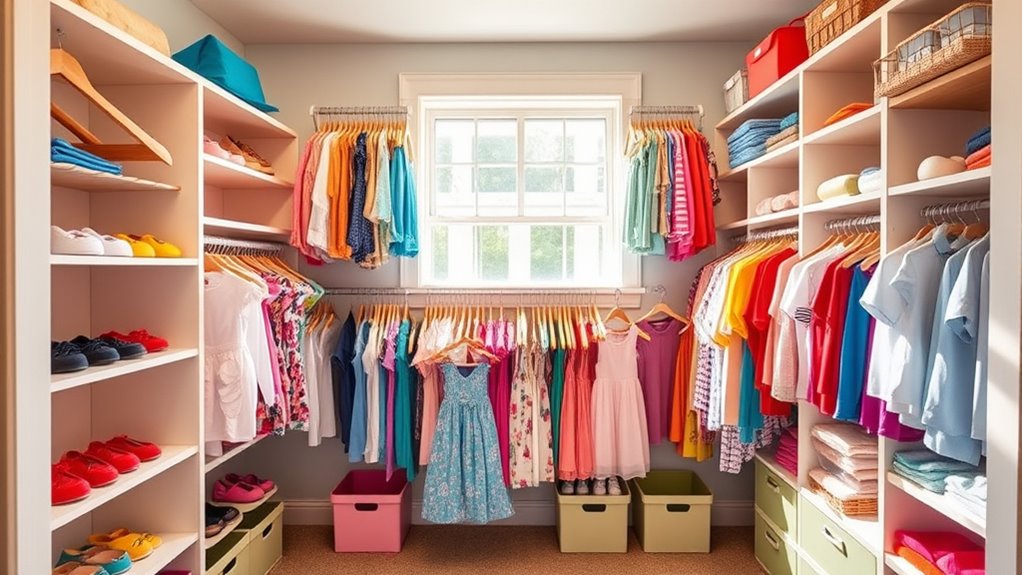
Creating a functional closet layout for siblings begins with clear space division to prevent confusion and clutter. Start by assigning dedicated sections for each child, using shelves, drawers, or hanging rods to keep their belongings separate. Use adjustable shelving and small bins to create multiple storage zones, ensuring each child has their own space for shoes, accessories, and clothing. Install hanging bars at accessible heights, so children can independently handle their clothes. Top shelves can store seasonal items or keepsakes for each kid, organized and labeled for quick retrieval. Maximize vertical space with tall bookcases or wall hooks for hanging items. This layout promotes organization, reduces mix-ups, and encourages children to take responsibility for their belongings, making shared closet management smoother. Incorporating energy-efficient storage solutions can also help reduce the environmental impact of keeping their clothes organized.
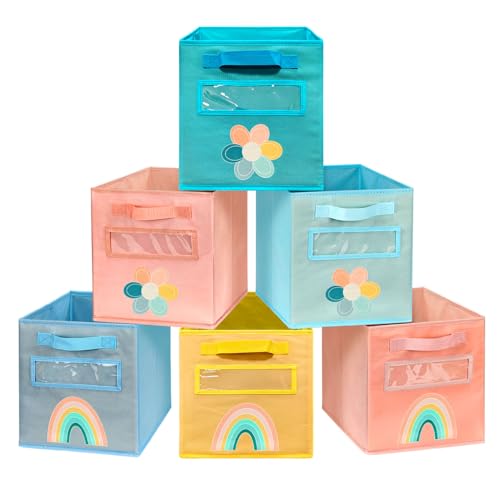
Cube Storage Bins, 6 Pack 11 Inch Fabric Storage Bins with Handle and Label Window, Foldable Storage Cubes, Colorful Fabric Bins for Kids Room, Classroom Organization and Storage, Clothes, Toys
- Perfect for Cube Cabinets: Fits 10.6 x 10.6 x 11.2 inch spaces
- Vibrant Color Options: Multiple colors to match home or office decor
- High-Quality Materials: Made of durable non-woven fabric and sturdy cardboard
As an affiliate, we earn on qualifying purchases.
As an affiliate, we earn on qualifying purchases.
Managing Clothing Quantities and Seasonal Rotation

To keep your shared sibling closet organized and manageable, limiting clothing quantities is essential. By doing so, you prevent clutter and make seasonal rotation easier. Start by keeping only seasonally appropriate clothes for each child in the closet. Store outgrown or off-season items elsewhere, such as in labeled bins. Regularly assess clothing needs to avoid overstocking. Establish clear limits, like a maximum of ten pajamas per child, to prevent excess. When seasons change, rotate clothes by swapping out current items and storing off-season pieces separately. This keeps the closet current and frees up space. Additionally, maintain a simple inventory system to track what belongs to each child, easing future swaps and minimizing clutter. Incorporating a clothing organization system can further streamline this process and enhance overall tidiness.

Simple Houseware Adjustable Closet Hanging Rod, White
- Maximize Closet Space: Double your storage capacity
- Adjustable Length: Expand from 18'' to 30''
- Customizable Height: Adjust vertically in 1-inch steps
As an affiliate, we earn on qualifying purchases.
As an affiliate, we earn on qualifying purchases.
Implementing Laundry Sorting and Responsibility Systems
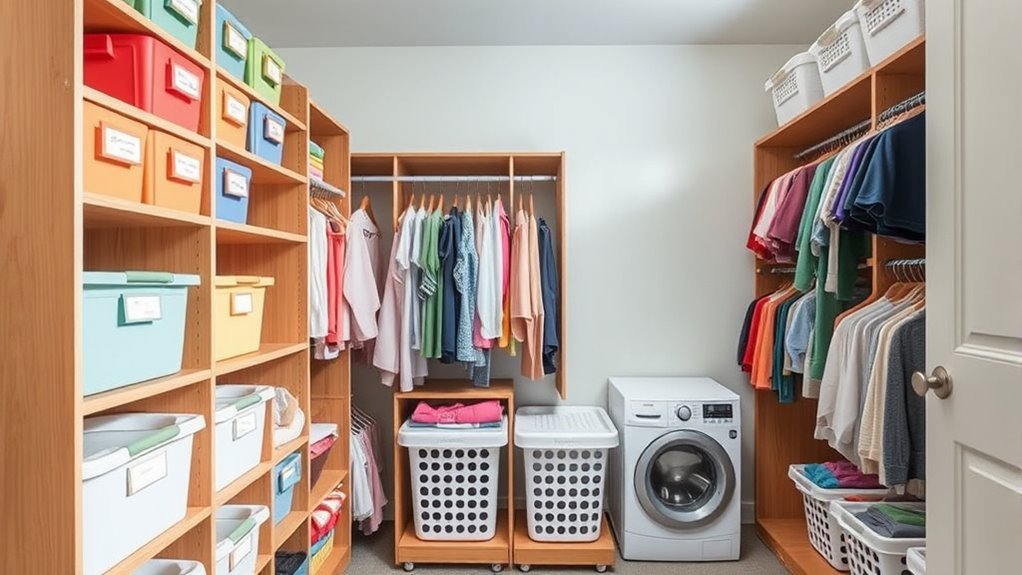
Organizing laundry routines helps keep shared sibling closets tidy and reduces mishaps. Begin by designating specific areas or sides of the closet for each child’s clothes. Use identical hangers and labeled bins to keep things clear. When laundry is done, wash clothes together but sort immediately after drying, involving your kids to foster responsibility. Encourage them to put away their own clothes to build independence and reduce mix-ups. Use baskets or bins for small items like socks and underwear, making retrieval easy. Implement a system where children sort laundry piles independently, ensuring they’re accountable for their items. Regularly review and adjust routines to maintain clarity. Additionally, understanding the importance of color accuracy in projectors can help you select the right equipment for clear and vibrant visuals, which can be analogous to choosing the right organizational tools for your closet. This organized approach minimizes confusion, promotes responsibility, and keeps shared closets neat and functional.

Criusia Drawer Organizer Clothes, 10 Pack Dresser Organizer for Baby Clothes, Underwear, Sock- Foldable Closet Organization and Storage Dividers Bins for Nursery, Bedroom (Beige)
- Variety of Sizes: Includes large, medium, and small bins
- Sturdy Non-Woven Fabric: Made from durable, odorless material
- Reinforced Construction: Heavy plastic sides and bottom for shape retention
As an affiliate, we earn on qualifying purchases.
As an affiliate, we earn on qualifying purchases.
Creating Child-Friendly and Accessible Storage Zones
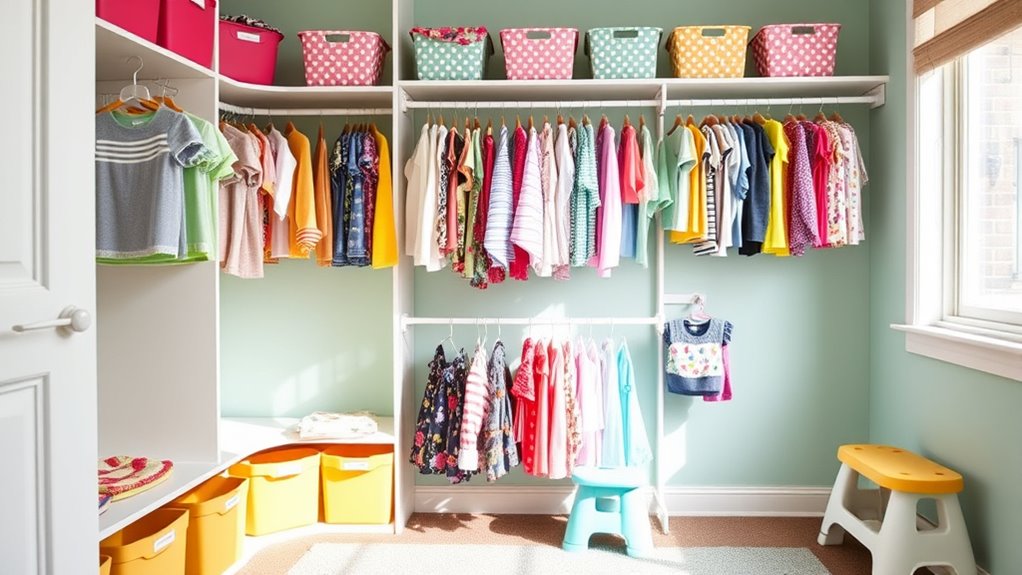
A well-designed, child-friendly storage zone makes it easier for kids to access their clothing and belongings independently. You can achieve this by creating designated areas that suit their size and abilities.
- Place hanging bars at lower heights so children can hang and select their clothes easily
- Use baskets or bins on the floor for shoes and socks, making tidying simple
- Incorporate hooks at child height for backpacks, robes, or towels to keep clutter off the floor
- Organize drawers with small dividers for underwear and accessories, encouraging independent retrieval
- Keep frequently used items within reach, like T-shirts and pajamas, to promote autonomy
- Integrating sound healing science concepts, such as calming tones in the environment, can also create a more soothing and organized space for children.
Organizing Hand-Me-Downs and Personalizing Shared Spaces
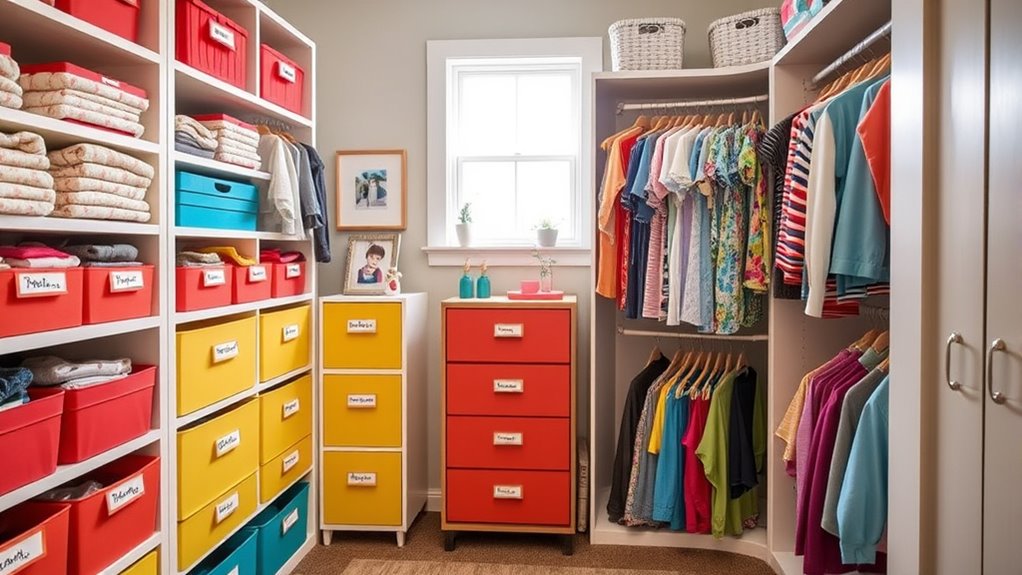
Creating designated spaces for hand-me-downs and personal items helps keep shared closets tidy and respectful of each child’s belongings. Use labeled bins or shelves to separate outgrown clothes, seasonal items, and keepsakes, making swapping and storage easy. Assign each child a specific zone or drawer for their personal items, encouraging independence and ownership. To visualize, consider this setup:
| Hand-Me-Down Storage | Personal Spaces |
|---|---|
| Labeled bins for sizes | Individual drawers for clothes |
| Seasonal clothing bins | Decorated sections for favorite items |
| Keepsake boxes | Personal baskets for toys |
| Overflow storage areas | Customizable spaces for hobbies |
| Clear labels for easy access | Hooks for backpacks and accessories |
This system streamlines organization, promotes respect for shared spaces, and helps kids feel responsible for their belongings. Incorporating natural materials in storage solutions can also make the space more inviting and eco-friendly.
Frequently Asked Questions
How Can I Prevent My Children’s Clothes From Mixing up in a Shared Closet?
To prevent your children’s clothes from mixing up, assign each kid a specific section or drawer in the closet. Use labeled bins or baskets for smaller items like socks and underwear. Keep their clothes on separate hangers or shelves, and involve your kids in sorting laundry immediately after drying. Encourage them to put away their clothes in their designated areas, fostering independence and keeping everything clearly organized.
What’s the Best Way to Store Outgrown Clothing Efficiently?
You should store outgrown clothing in labeled bins or dedicated closet sections organized by size and season. Regularly sort through clothes to separate items no longer needed, then pack them away neatly to keep your space uncluttered. Keep these bins in a separate area or on high shelves for easy access when swapping clothes between siblings or passing down. This method helps you stay organized and makes future clothing shift smoother.
How Often Should I Rotate and Declutter My Kids’ Wardrobe?
You should rotate and declutter your kids’ wardrobe every three to six months, aligning with seasonal changes. Regularly assess what fits and what’s outgrown, removing unused or outgrown clothing promptly. Involve your children to teach responsibility and keep the wardrobe manageable. This routine helps prevent clutter buildup, makes it easier to find clothes, and keeps their wardrobe organized and ready for the upcoming season.
How Can I Encourage My Children to Take Responsibility for Their Laundry?
You can encourage your children to take responsibility for their laundry by involving them in sorting and washing routines. Teach them to sort their clothes immediately after drying, using labeled baskets or bins. Make it fun and part of their daily chores, and praise their efforts to foster independence. Provide accessible storage for clean clothes and create clear expectations about putting away their laundry, so they develop good habits naturally.
What Are Simple Ways to Personalize a Shared Closet Space for Each Child?
You can personalize your shared closet by assigning each child a specific section or drawer, clearly labeled with their name or favorite colors. Encourage them to decorate their space with small touches like photos, stickers, or magnets. Use different baskets or bins for each child’s accessories to keep things organized. Letting them choose how to arrange their area fosters ownership, responsibility, and respect for shared space.
Conclusion
By implementing these tips, you’re crafting a closet that’s as harmonious as a well-conducted symphony, where each sibling’s belongings find their rightful place. Think of it as tuning an orchestra—small adjustments lead to a seamless flow. With organized zones and thoughtful systems, you’ll turn the shared closet into a space where chaos transforms into calm, making daily routines smoother and more enjoyable for everyone. Your efforts will create a balanced, functional haven—like a perfectly played melody.