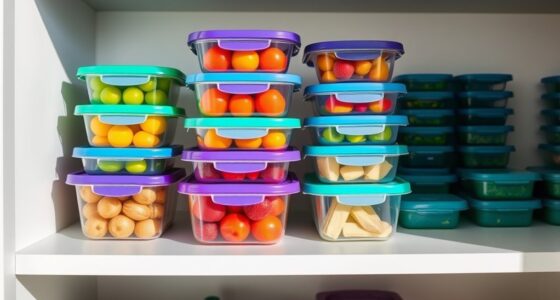
To keep your pantry pest-free, regularly inspect your food for holes, webbing, and small insects. Store items in airtight, transparent containers and freeze foods like grains and spices to kill eggs. Clean shelves thoroughly with soap or vinegar, vacuum cracks, and wipe surfaces often. Control moisture and eliminate clutter to make your space less inviting for pests. For more effective tips and strategies, continue discovering ways to protect and organize your pantry.
Key Takeaways
- Store all food in airtight, transparent containers to prevent pest entry and enable easy monitoring.
- Regularly inspect pantry items for holes, webbing, and signs of insects, discarding contaminated packages immediately.
- Maintain cleanliness by vacuuming, wiping shelves with vinegar or soapy water, and removing clutter to eliminate hiding spots.
- Use pheromone or sticky traps to detect and monitor pest activity early, enabling quick response.
- Control moisture by fixing leaks and keeping humidity below 50% to create an environment unfavorable for pests.
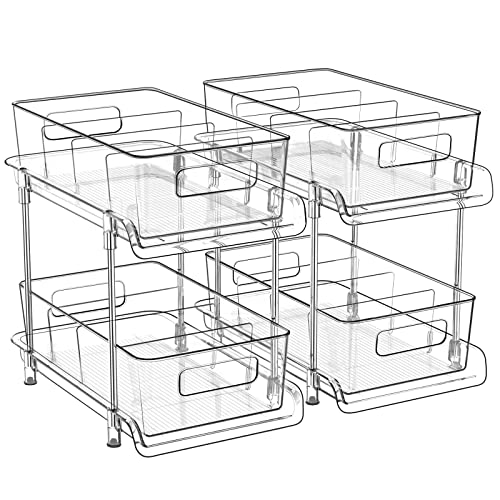
HIHEGD 2-Tier Bathroom Organizer with Dividers, Clear Under Sink and Pull-Out Cabinet Organizer for Kitchen and Pantry Storage
[Upgraded Version]: The pull out cabinet organizer is made of sturdy high-hardness abs plastic and securely linked by...
As an affiliate, we earn on qualifying purchases.
Recognizing Signs of Infestation and Detection Techniques
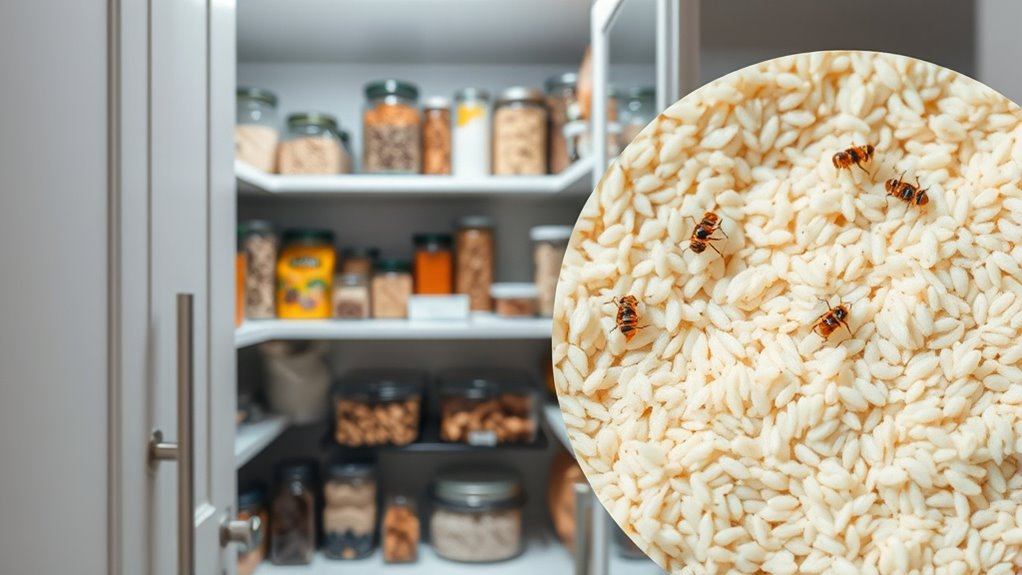
Recognizing the signs of a pantry infestation is essential for early intervention. You should regularly inspect all food packages, especially opened ones, for tiny holes, tears, or webbing. Look for silken threads or webbing in tight corners or inside packages—these are common signs of moth activity. Check the bottoms of containers for frass, which varies in appearance depending on the pest. Keep an eye out for small insects flying around or crawling on food surfaces; adult pests are easier to spot than larvae. Pheromone traps are useful tools for monitoring pest presence and infestation levels. By routinely examining your pantry and its contents, you can catch an infestation early, preventing widespread damage and making pest control more manageable.

Vtopmart 10 PCS Flour and Sugar Storage Container, Large Airtight Food Canisters with Lids for Kitchen, Pantry Organization, BPA Free, Black
【BPA Free】- Vtopmart flour container sets are made of BPA free and durable plastic, which have a longer...
As an affiliate, we earn on qualifying purchases.
Best Practices for Food Storage to Prevent Pests
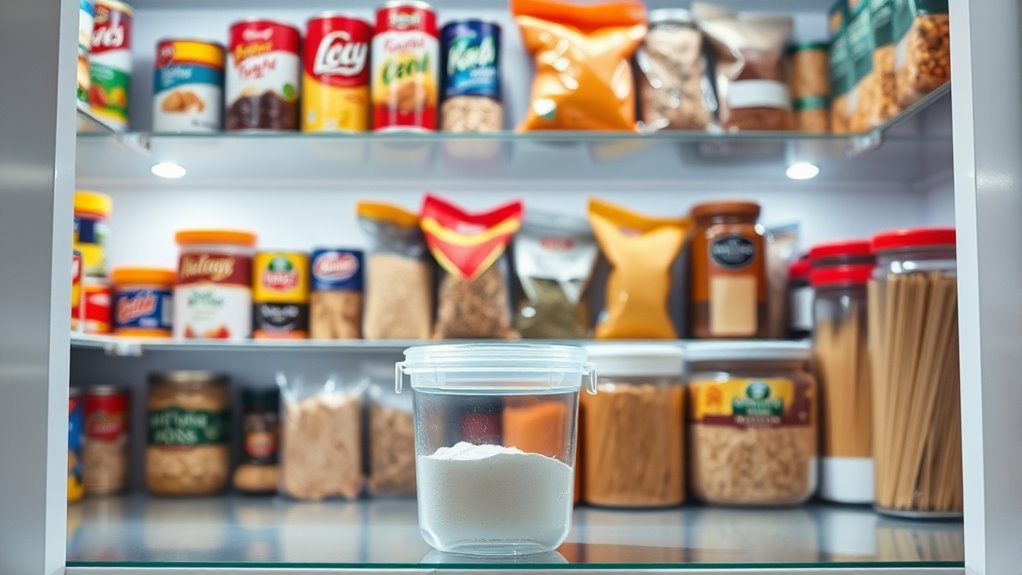
Are you storing your pantry foods in a way that keeps pests out? Proper storage is key to preventing infestations. Use airtight containers with tight-fitting lids to block pests from accessing your food. Guarantee containers are transparent so you can easily monitor for signs of pests. Freeze items like flour, spices, or grains if you don’t plan to use them soon; this kills eggs and larvae. Store bulk goods and pet foods in sealed, pest-proof containers to eliminate entry points. Keep damaged or torn packages away from your pantry, as they’re prime entry points. Regularly check stored items for signs of pest activity. Proper storage not only protects your food but also simplifies pest detection and control efforts. Understanding pest vulnerabilities can help you identify weak spots in your storage practices.

Shazo 2 PC (11L | 372 oz) Flour Sugar Storage Containers with Easy Carry Handle - Plastic Extra Large Food Storage Containers with Lids for Rice Cereal, BPA Free & Airtight Kitchen Pantry Organization
𝐄𝐱𝐭𝐫𝐚 𝐋𝐚𝐫𝐠𝐞 𝐂𝐚𝐩𝐚𝐜𝐢𝐭𝐲 𝐟𝐨𝐫 𝐁𝐮𝐥𝐤 𝐒𝐭𝐨𝐫𝐚𝐠𝐞: Shazo 2-piece set (11L | 372 fl oz each, 11.2"L x 5.2"W...
As an affiliate, we earn on qualifying purchases.
Effective Methods for Pantry Cleaning and Maintenance
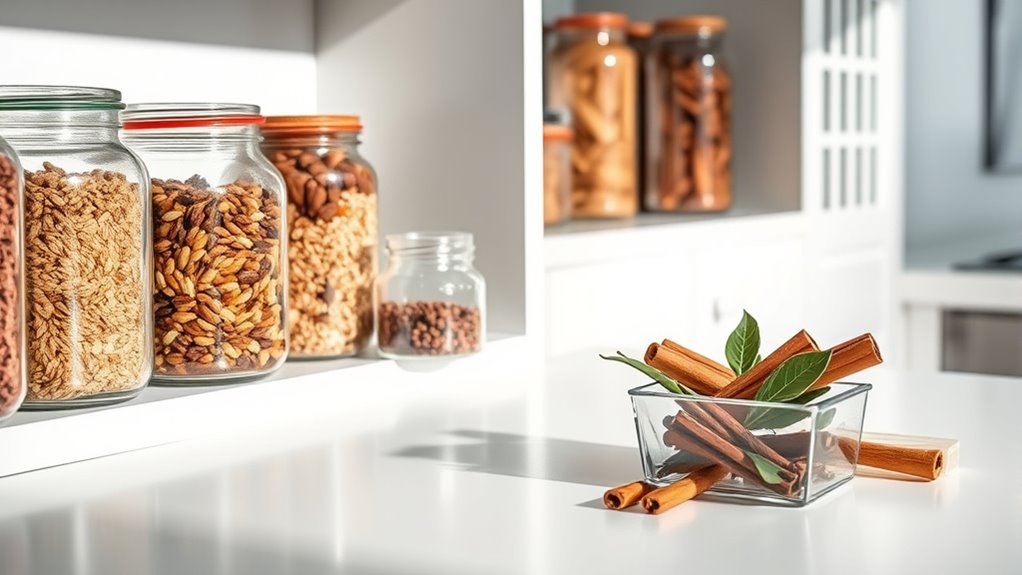
Regularly cleaning your pantry is essential to prevent pest infestations and maintain food safety. Start by emptying all shelves and removing every item, inspecting packages for signs of pests. Vacuum thoroughly, paying close attention to corners, cracks, and crevices where crumbs and debris can hide. Wash all surfaces with soapy water or vinegar-based solutions to eliminate residues that attract pests. Clean storage containers thoroughly before refilling, ensuring they’re dry and free of old food remnants. Regularly wipe down shelves and bins to prevent buildup. Maintain a cleaning schedule, ideally once a month, to catch early signs of pests. Keep the area dry and well-ventilated, as moisture encourages pest activity. Using energy-efficient cleaning tools can make regular maintenance easier and more sustainable. Consistent maintenance creates an inhospitable environment for pantry pests.
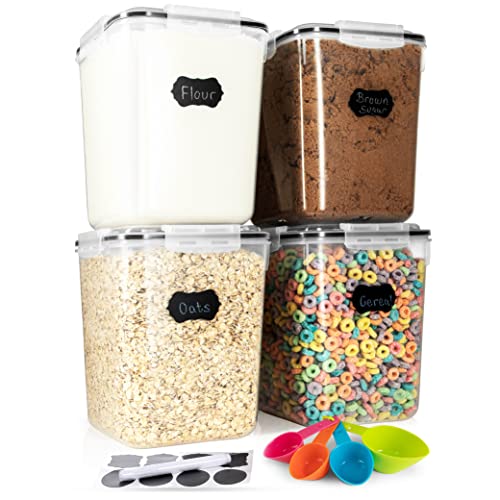
Storeganize Flour Sugar Storage Containers (5.3L/4pk) Great Rice Canisters Sets For The Kitchen pantry, Large Food Storage Containers With Lids Airtight
COMPLETE CONTAINER SET: This set comes with 4 premium large rice airtight containers (5.3L/179oz), a 4pc measuring scoop...
As an affiliate, we earn on qualifying purchases.
Creating an Environment Unfavorable for Pests
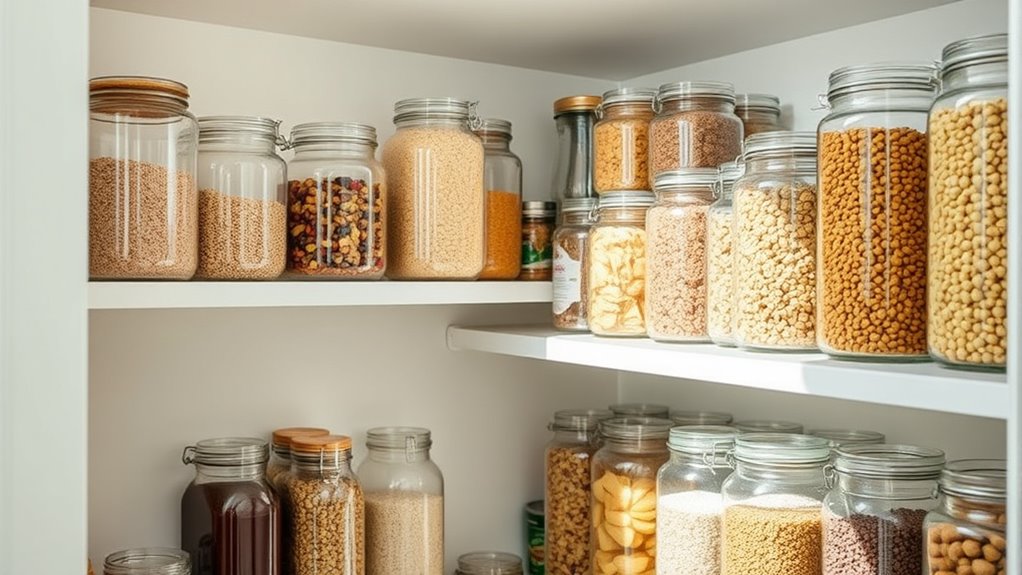
Creating an environment unfavorable for pests starts with controlling moisture and maintaining cleanliness, as pests thrive in damp, cluttered spaces. Keep your pantry dry by fixing leaks, using dehumidifiers, and ensuring proper ventilation. Regularly wipe shelves with vinegar or soapy water to remove crumbs and spills that attract pests. Store food in airtight, transparent containers to prevent infestations and allow easy monitoring. Eliminate clutter that provides hiding spots and breeding grounds. Check for and repair cracks or gaps in walls, floors, and shelves. Reduce moisture levels by keeping humidity below 50%. Keep pet food sealed and away from pantry items. Proper food storage practices and consistent maintenance and vigilance create an inhospitable environment, discouraging pests from settling in and reproducing.
Responding Quickly to Active Pantry Pest Problems

When you notice signs of an active pantry pest infestation, swift action is necessary to prevent the problem from worsening. Immediately discard all contaminated food in sealed plastic bags and take it outside to prevent spreading. If you suspect hidden eggs or larvae in unopened packages, freeze those items for 48 hours to kill any pests. Set up pheromone or sticky traps to monitor adult insects and assess infestation levels. Seal any cracks, gaps, or unsealed doors and windows with caulk or weatherstripping to block pest entry points. Thoroughly clean all shelves, cabinets, and storage areas with soapy water or vinegar solutions, paying special attention to corners and crevices. Acting quickly helps contain the infestation and reduces the risk of future problems. Incorporating regular preventive measures can further protect your pantry from recurring pest issues.
Frequently Asked Questions
How Can I Identify the Specific Type of Pantry Pest Infestation?
To identify a specific pantry pest infestation, start by examining your food packages for tiny holes, tears, or webbing. Look for frass or droppings, and check for adult insects—moths with reddish-brown wings or beetles like flour beetles and rice weevils. Using pheromone traps helps monitor the pests. Carefully inspect your pantry, focusing on cracks, corners, and sealed containers to determine the pest type accurately.
Are There Natural Remedies to Repel Pantry Pests Effectively?
Yes, you can use natural remedies to repel pantry pests effectively. Place small sachets of bay leaves, lavender, or thyme in your pantry; these aromas deter insects without chemicals. Keep your storage areas dry and clean, as moisture encourages pests. Regularly inspect and discard infested items, and freeze vulnerable foods like grains and spices for 48 hours to kill eggs and larvae. These natural strategies help keep pests at bay.
How Long Should I Freeze Food to Eliminate Eggs and Larvae?
You should freeze food for at least 48 hours to eliminate eggs and larvae effectively. This duration guarantees that any pests, eggs, or larvae inside the food are killed, preventing infestation when you store it again. Make sure items are in airtight containers or sealed plastic bags before freezing. After freezing, you can safely thaw and use your food, knowing it’s pest-free.
What Are the Best Materials for Airtight Pantry Storage Containers?
You should choose transparent, airtight containers made of glass, metal, or BPA-free plastic. These materials keep pests out, allow you to monitor food easily, and resist odors and stains. Opt for containers with tight-fitting lids to guarantee a secure seal. By selecting durable, easy-to-clean, and pest-proof containers, you create a reliable barrier against pantry pests, keep your food fresh, and maintain an organized, pest-free pantry environment.
How Often Should I Inspect and Clean My Pantry to Prevent Pests?
You should inspect and clean your pantry at least once a month to prevent pests effectively. Regularly check for signs like holes, webbing, or droppings, and immediately clean shelves, cracks, and corners. Keep food in airtight containers, and dispose of any damaged or expired items. Consistent maintenance helps catch infestations early and keeps your pantry pest-free, ensuring your food stays safe and organized.
Conclusion
Keeping your pantry pest-free is essential for safe, healthy food storage. Regular inspections and proper cleaning can reduce infestations markedly—studies show that proactive measures cut pest problems by over 60%. By recognizing signs early and maintaining an organized, clean environment, you prevent pests from taking hold. Remember, quick action is key to avoiding larger issues. Stay vigilant and keep your pantry a pest-free zone for peace of mind and better food quality.