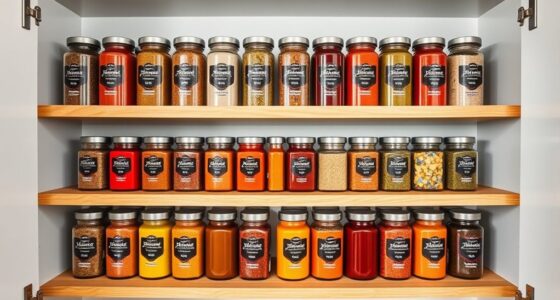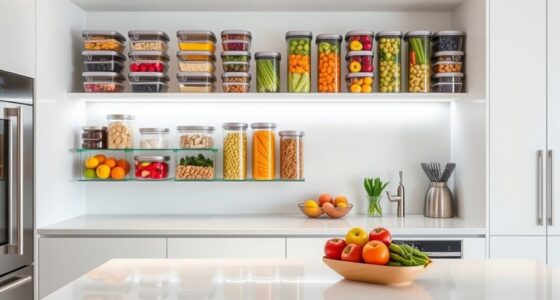
To keep your kitchen organized, regularly declutter surfaces and use clear containers for easy visibility. Maximize vertical space with shelves, designate zones for tasks, and utilize drawer organizers for efficiency. Keep frequently used items within reach and implement a system for incoming and outgoing things. Maintain a cleaning routine to preserve order, and personalize your space with decor and labels. Stick with these tips to transform your kitchen — and there’s more to discover if you continue exploring.
Key Takeaways
- Regularly declutter and discard unused or expired items to maintain a tidy, functional space.
- Use transparent, labeled containers to enhance visibility and reduce food waste.
- Create designated task zones for prep, cleaning, and storage to improve workflow.
- Maximize vertical space with wall-mounted shelves and hanging storage solutions.
- Incorporate routine checks and seasonal reorganizations to keep your kitchen organized and efficient.
Declutter Regularly to Keep Surfaces Clear
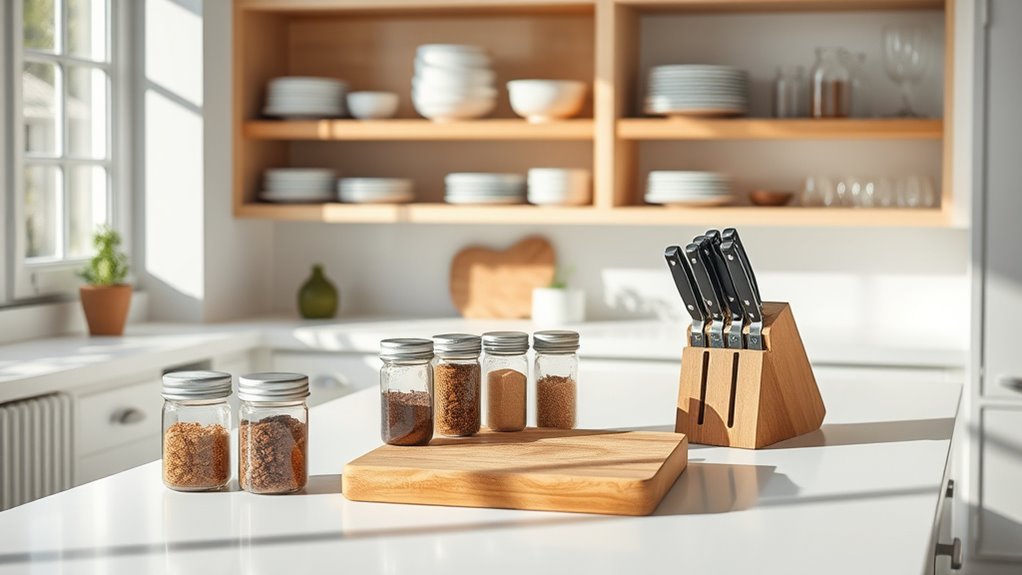
To maintain a tidy kitchen, you need to declutter regularly, ensuring surfaces stay clear and functional. Consistently clearing off counters helps create space for meal prep and prevents clutter from piling up. When you organize your appliances, think about proper placement—store rarely used gadgets away and keep daily essentials within easy reach. This routine reduces visual chaos and makes cooking more efficient. As you declutter, examine each item’s purpose; if you haven’t used something in months, it’s time to let it go. Keep countertops free of unnecessary items, focusing only on what you need for daily tasks. Incorporating smart appliances can further streamline your kitchen tasks by automating routine functions. Regular decluttering not only keeps your surfaces clear but also helps you maintain a well-organized kitchen environment, making cooking and cleaning more enjoyable. Additionally, implementing storage solutions designed for small spaces can maximize your organization and keep clutter at bay, especially when combined with an understanding of space optimization. Incorporating clear storage containers can also help you quickly identify items and reduce visual clutter.
Use Clear Containers for Easy Visibility
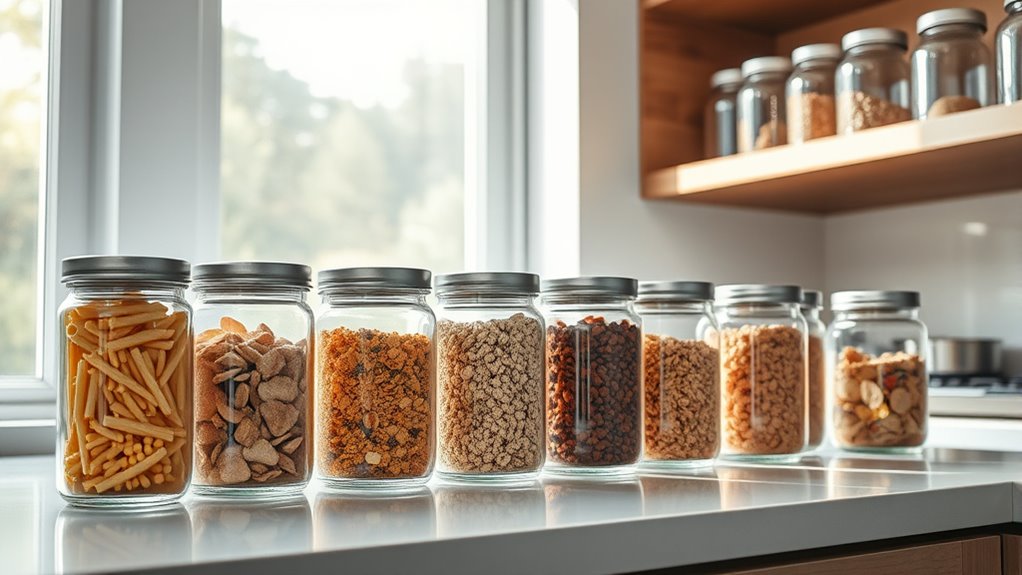
Using clear containers in your kitchen makes it easy to see what’s inside at a glance, saving you time and effort when cooking or grabbing ingredients. They improve food storage by keeping items organized and visible. Choose container materials like glass or BPA-free plastic for durability and safety. Clear containers help prevent food waste by reminding you of expiration dates and contents. Labeling containers adds extra clarity, making your space even more efficient. Here’s a quick overview:
| Container Material | Benefits |
|---|---|
| Glass | Durable, eco-friendly |
| Plastic | Lightweight, versatile |
| Silicone | Flexible, heat-resistant |
| Metal | Long-lasting, stylish |
Opt for clear containers to streamline your kitchen and easily identify ingredients without opening each one. Proper calibration of your containers can further enhance their effectiveness in maintaining food freshness.]
Maximize Vertical Space With Shelving
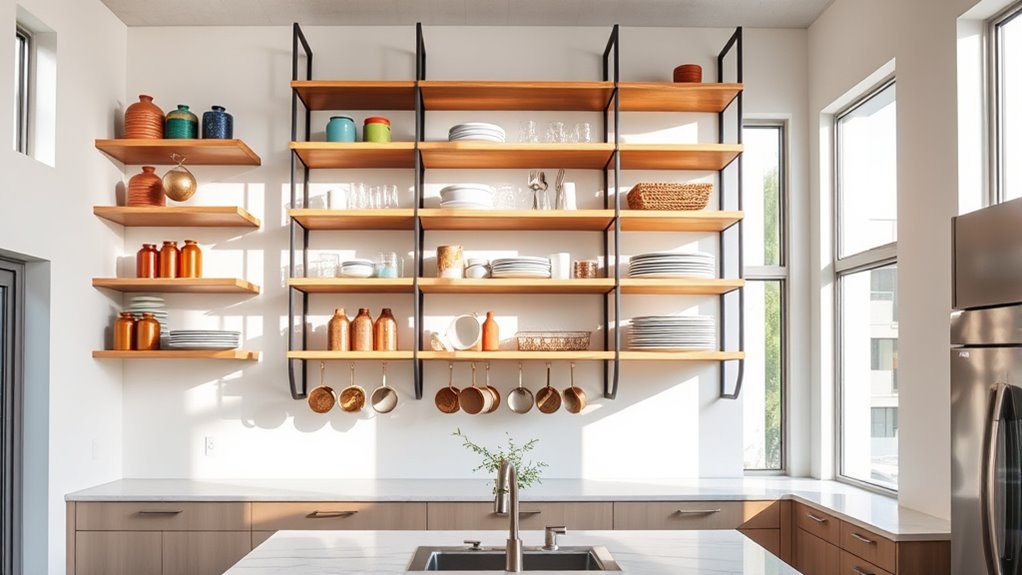
Maximizing vertical space with shelving transforms your kitchen into a more organized and efficient area. Wall-mounted shelves are perfect for freeing up counter space and keeping essentials within easy reach. Install them above counters, appliances, or even under cabinets to create extra storage without clutter. Hanging storage options, like hooks or racks, are also excellent for utensils, pots, and pans. These solutions make use of otherwise wasted wall space, allowing you to store items vertically and keep your countertops clear. Incorporating smart storage solutions into your kitchen not only improves organization but also enhances the overall functionality of your space. Developing organizational habits through consistent use of visual and auditory cues can help you develop better organization habits, making your cooking environment more enjoyable and less chaotic. Using storage accessories such as baskets and bins can further optimize your vertical storage and keep smaller items neatly contained. Additionally, selecting durable materials for your shelving ensures long-term stability and safety.
Designate Zones for Different Tasks

Creating designated zones for different tasks in your kitchen helps streamline your workflow and reduces clutter. By establishing specific areas, you can quickly find what you need and keep things organized. For example, set up a pantry zoning area for snacks, canned goods, and dry ingredients. Create utensil stations near your prep and cooking zones for easy access. Use a table like this to visualize your zones:
| Zone | Items Included | Location |
|---|---|---|
| Pantry Zoning | Canned goods, snacks, dry ingredients | Kitchen pantry |
| Utensil Stations | Cooking utensils, cutlery | Near stove or prep area |
| Prep Area | Cutting boards, knives | Countertop |
| Cleaning Zone | Sponges, dish soap, towels | Sink area |
| Storage & Waste | Trash, recycling, storage bins | Under sink or corner |
Adding a designated storage and waste zone will help keep your kitchen tidy and ensure that waste disposal is convenient and efficient. Additionally, incorporating organization principles can further optimize your kitchen layout and maintain order over time. Furthermore, utilizing storage solutions such as baskets or drawer dividers can make it easier to keep your zones neat and accessible.
Utilize Drawer Inserts and Organizers
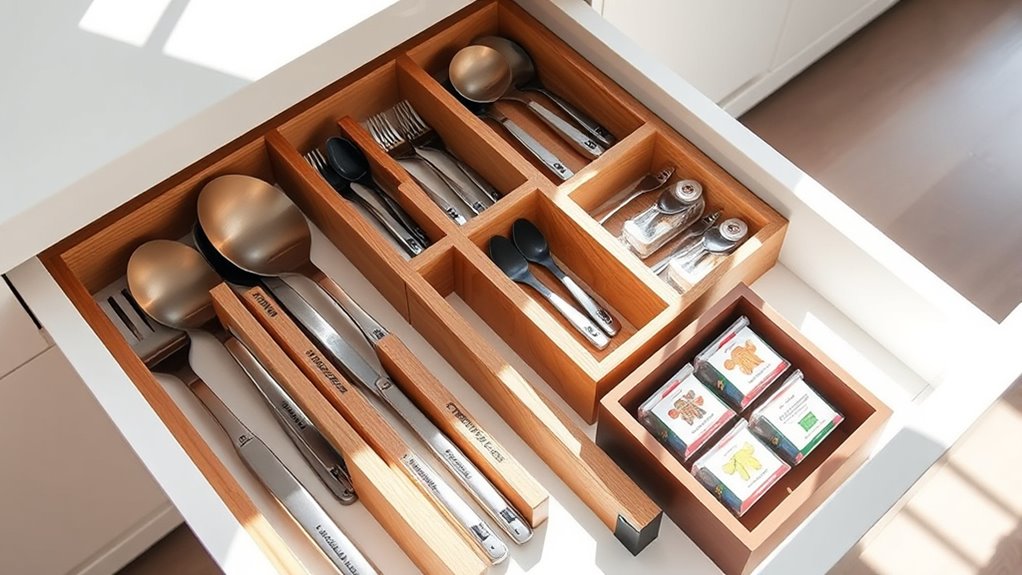
Drawer inserts and organizers are essential tools for keeping your kitchen drawers tidy and functional. They help you maximize space and find what you need quickly. Consider these options:
- Use drawer dividers to separate utensils, ensuring nothing gets jumbled together.
- Invest in utensil trays to keep spatulas, spoons, and forks neatly organized.
- Choose adjustable organizers for customizing compartments to fit different items.
- Implement stackable trays to utilize vertical space for smaller tools or gadgets.
- Incorporate storage solutions that can adapt to various kitchen items, making your space even more efficient. Understanding heat distribution can also help you select the right storage methods for your cookware, preventing warping or damage. Additionally, selecting water-resistant organizers can protect your utensils and tools from moisture and spills. Proper material selection for your organizers can also enhance their durability and suitability for your specific needs. Incorporating ergonomic designs can make retrieving and replacing items more comfortable and accessible.
Label Everything for Quick Access
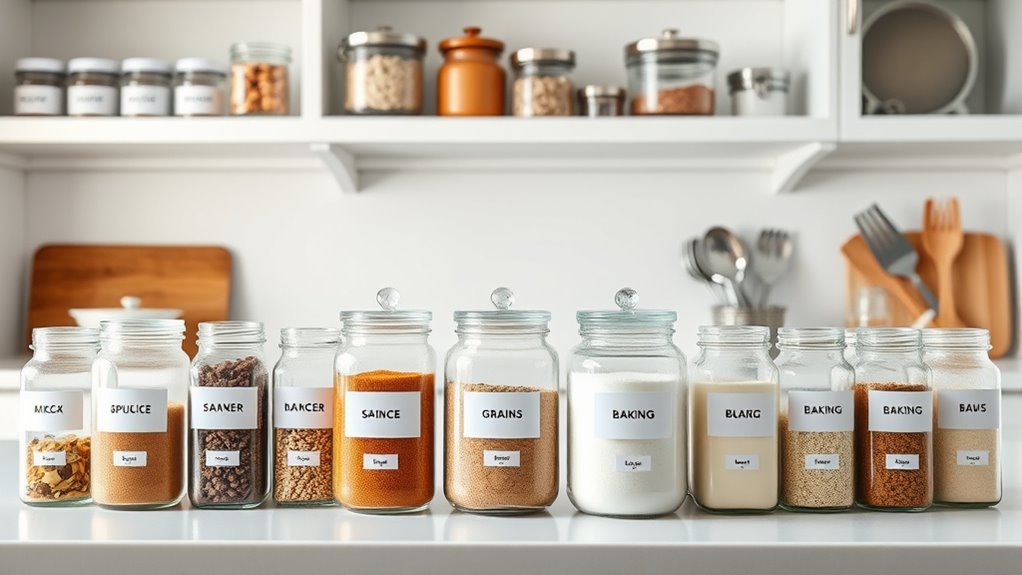
Labeling everything in your kitchen makes it easy to find what you need quickly and keeps your space organized. Proper food storage starts with clear labels so you know exactly what’s inside containers, bags, or jars. Use simple labeling techniques like masking tape and a marker or invest in a label maker for a cleaner look. Label shelves, drawers, and storage bins to create a visual system that guides you to ingredients effortlessly. This reduces clutter and prevents expired food from hiding in the back. Consistent labeling helps everyone in your household know where items belong, saving time during meal prep. Regularly checking piercing care and hygiene can help maintain a hygienic environment and prevent contamination. Incorporating storage solutions that are tailored to your space can further enhance organization. Additionally, understanding credit card terms can help you manage your household budget more effectively, ensuring you don’t overspend on kitchen upgrades or supplies. Staying informed about food expiration dates can also help you discard items before they spoil, reducing waste. Keep labels legible and updated as you replenish or reorganize your food storage to maintain an efficient, clutter-free kitchen.
Keep Frequently Used Items Within Reach
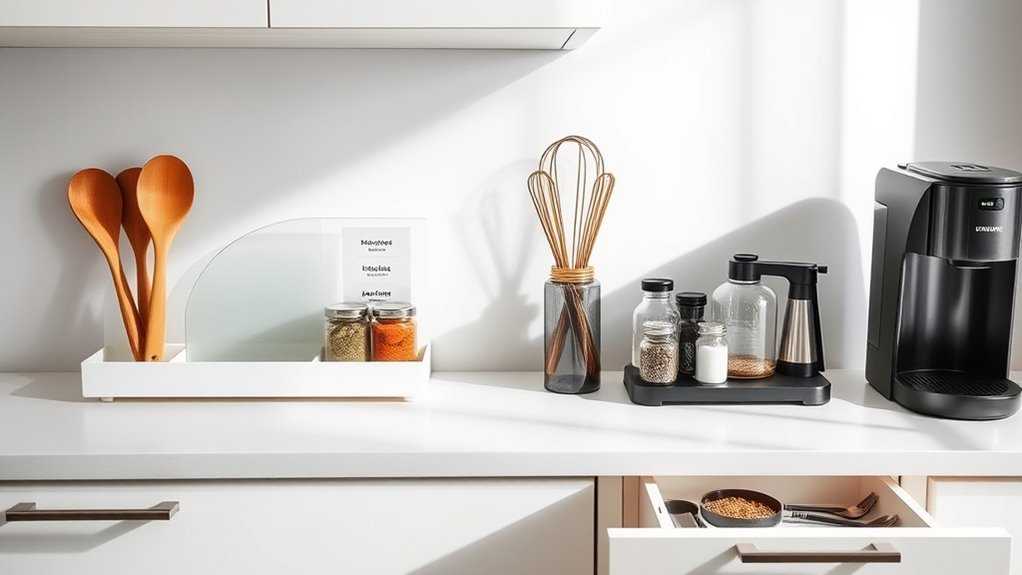
To make your kitchen more efficient, keep your most-used items in easy access zones where you can grab them quickly. Use clear visibility spots so you can see everything at a glance, preventing unnecessary searches. This simple setup saves time and keeps your space organized. Additionally, incorporating electric bikes for errands can reduce clutter and promote eco-friendly living. Understanding kitchen organization principles can further help you optimize your storage space and streamline your daily routines.
Easy Access Zones
Creating easy access zones in your kitchen means placing frequently used items where you can grab them quickly without hunting. This saves time and keeps your space efficient. Focus on organizing your pantry so your go-to ingredients are at eye level, making meal prep smoother. Keep everyday appliances, like your toaster or coffee maker, in dedicated spots for quick access, avoiding clutter. Consider these items:
- Daily cooking essentials (spoons, spatulas)
- Common pantry staples (oil, salt, spices)
- Frequently used small appliances (blender, toaster)
- Reusable shopping bags or containers
Clear Visibility Spots
Keeping frequently used items within view is key to maintaining an efficient kitchen. Clear visibility spots help you quickly find what you need without unnecessary searching. Use visual cues like open shelving or transparent containers to make items easily identifiable. Proper lighting enhancements, such as under-cabinet lights, illuminate your workspace and highlight these accessible spots. Arrange everyday essentials at eye level or in designated zones so they stand out. This reduces clutter and streamlines your workflow. When you can see your tools and ingredients at a glance, you save time and stay organized. Consistently maintaining these visibility spots ensures your kitchen remains functional and inviting, making cooking and cleanup more enjoyable. Organizing your space with intentional placement can further enhance efficiency and reduce stress during meal prep. Additionally, incorporating storage solutions tailored to your needs can improve overall accessibility and keep your counters clear.
Implement a System for Incoming and Outgoing Items

Creating a system for incoming and outgoing items keeps your kitchen organized and efficient. You should set up drop zones for daily essentials, label storage areas clearly, and schedule regular checks to guarantee everything in order. These steps help prevent clutter and ensure your kitchen runs smoothly.
Design Drop Zones
Implementing a well-organized drop zone in your kitchen helps streamline daily routines and reduces clutter. To create an effective system, consider these key elements:
- Designate a specific spot for incoming items like mail, keys, and bags to keep them off counters.
- Use a tray or basket for outgoing items, such as laundry or trash bags.
- Incorporate a nearby spot for pantry planning supplies to quickly access ingredients and meal prep tools.
- Position frequently used appliances nearby for easy access without cluttering the main prep area.
Label Storage Areas
Have you ever wondered how to guarantee your kitchen stays organized amid daily chaos? The key is implementing effective labeling techniques for your storage areas. Start by labeling shelves, drawers, and containers clearly, so you know exactly where everything belongs. Use different storage container types, like clear bins, jars, and baskets, to categorize items and make them easy to identify. Consistent labels help streamline incoming and outgoing items, reducing clutter and preventing misplacement. When you assign specific labels, it becomes simple to put items back in their designated spots after use. This organized approach saves time and effort, making your kitchen more functional. Proper labeling not only maintains order but also encourages everyone in your household to follow the system effortlessly.
Schedule Regular Checks
Scheduling regular checks keeps your kitchen organized by ensuring that incoming and outgoing items are managed efficiently. This helps maintain an accurate pantry inventory and prevents clutter. To stay on top of things, consider these steps:
- Review your pantry inventory weekly to identify expired or unused items, reducing waste.
- Check appliances for maintenance needs, ensuring they function properly and avoid breakdowns.
- Track incoming deliveries to update your storage system promptly.
- Remove outdated ingredients and reorganize shelves for easy access.
Maintain a Cleaning Routine to Preserve Organization
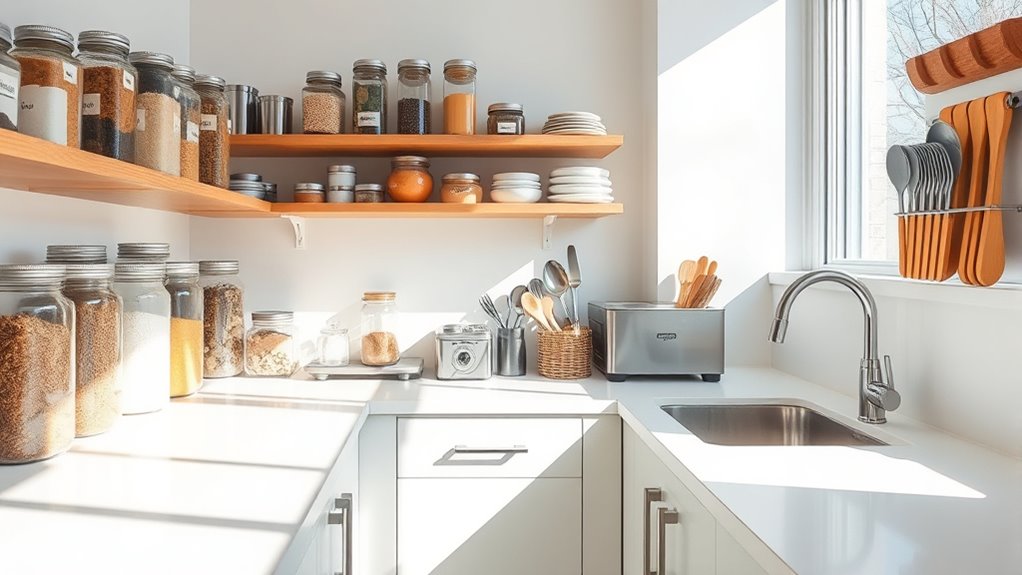
Maintaining a regular cleaning routine is essential to keep your kitchen organized and clutter-free. Consistently wiping down surfaces, cleaning out expired food, and tidying up daily prevents messes from piling up. Incorporate deep cleaning sessions monthly to thoroughly scrub appliances, cabinets, and hidden corners. This helps eliminate grime and keeps everything in top shape. Additionally, seasonal organizing allows you to reassess your storage, donate unused items, and adjust your setup for better efficiency. Setting a schedule for these tasks ensures your kitchen remains functional and inviting. By establishing these routines, you reduce clutter, avoid surprises, and maintain a space that’s both practical and enjoyable to cook in. Regular upkeep is the key to long-lasting organization.
Personalize Your Space to Make It Enjoyable
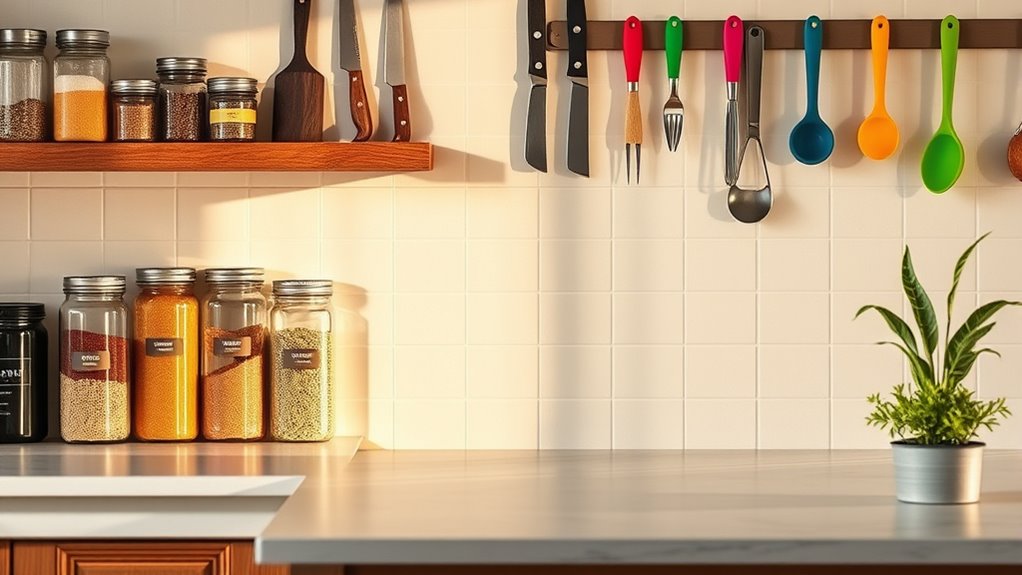
Personalizing your kitchen transforms it from a mere workspace into a welcoming, functional environment you enjoy spending time in. To make it truly yours, incorporate personalized decor that reflects your style and personality. Display your favorite kitchen tools prominently, so they’re easily accessible and add visual interest. Consider adding memorable photos or artwork that inspire you every day. Keep essentials within reach by customizing storage solutions to fit your needs. Use colorful containers or labels to make organization fun and personalized. These small touches create a space that feels uniquely yours, making cooking and cleaning more enjoyable. When your kitchen reflects your personality, it becomes a place you love to spend time in, boosting both your mood and efficiency.
Frequently Asked Questions
How Often Should I Reorganize My Kitchen for Optimal Efficiency?
You should reorganize your kitchen every 3 to 6 months for maximum efficiency. Incorporate seasonal cleaning to declutter and perform a pantry audit, checking for expired items and adjusting your storage. Regular reorganizing helps you identify what’s working and what’s not, making your kitchen more functional. Staying consistent with these routines ensures your space remains tidy, accessible, and enjoyable to use, saving you time and stress.
What Are the Best Materials for Durable Kitchen Storage Containers?
You should choose durable kitchen storage containers made from BPA-free plastics or glass storage options. BPA-free plastics are lightweight, shatter-resistant, and safe for food storage. Glass storage, on the other hand, is highly durable, doesn’t stain or retain odors, and is microwave-safe. Both materials guarantee your food stays fresh, and they’re easy to clean. Select containers that are airtight and stackable for maximum organization and longevity.
How Can I Prevent Clutter From Accumulating Over Time?
To prevent clutter from piling up, stay consistent with your pantry organization and utensil storage. Regularly declutter by removing expired items and unused utensils, and put things back in their designated spots. Use clear containers and labels to keep everything visible and easy to access. Set a weekly reminder to tidy up, ensuring your kitchen stays neat and functional, so clutter doesn’t have a chance to build up over time.
What Are Some Space-Saving Tips for Small Kitchens?
To save space in your small kitchen, utilize vertical storage by installing shelves or hanging racks to keep essentials accessible without clutter. Opt for multifunctional furniture like fold-out tables or ottomans with hidden compartments to maximize usability. Keep countertops clear by stowing items vertically and choosing compact appliances. Regularly declutter, and use organizers to guarantee every inch is functional, making your small kitchen feel more spacious and efficient.
How Do I Choose the Right Labeling System for My Needs?
Like a master librarian, you should choose labeling methods that suit your organizational categories. Consider clear, easy-to-read labels for frequently used items, and color-coded labels for different categories. Think about your needs—do you prefer handwritten labels or printed ones? Match your labels to your storage style, ensuring they’re durable and accessible. This way, you create an intuitive system that makes finding what you need effortless, saving you time and frustration.
Conclusion
By following these tips, your kitchen will be as organized as a well-oiled machine. Keep clutter at bay, use smart storage solutions, and maintain a routine, so everything flows smoothly—like a gentle stream. When your space works for you, cooking becomes more enjoyable and less stressful. Remember, an organized kitchen isn’t just a dream; it’s a habit you can create, turning chaos into calm and making your culinary space a true sanctuary.