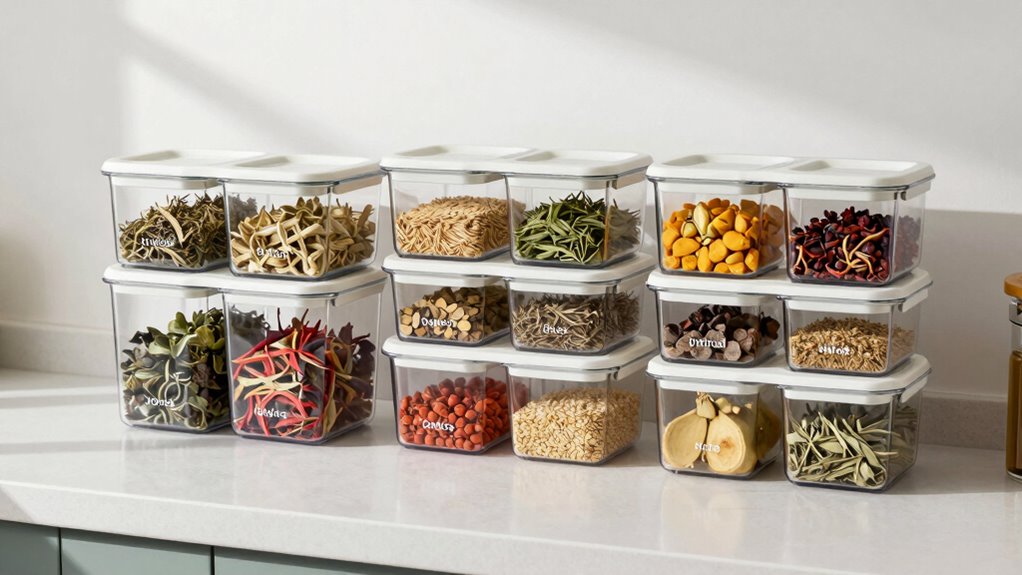

To control clutter naturally with container limits, assign specific containers for different items and stick to their capacity. Regularly assess what’s inside, removing duplicates or things you no longer need. Use clear labels and color coding for quick identification, and stack items efficiently by size and usage. Keep safety in mind by avoiding overstuffing, and review your system regularly to stay organized. If you keep these tips in mind, you’ll discover simple ways to maintain a tidy space effortlessly.
Key Takeaways
- Assign specific containers for different items and set capacity limits based on space and importance.
- Regularly assess and declutter containers when they reach capacity to prevent overstuffing.
- Use labels and color-coding to reinforce designated storage and prevent unnecessary accumulation.
- Maximize vertical space and stack items efficiently to utilize space without overfilling containers.
- Schedule periodic reviews to adjust container limits and maintain an organized, clutter-free environment.
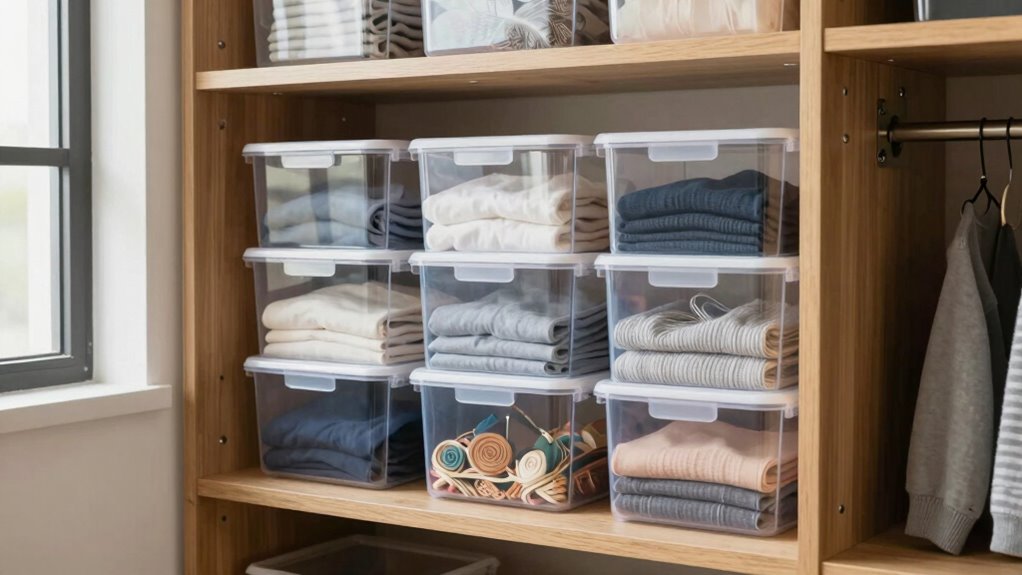
If clutter tends to take over your space, setting container limits can be an effective way to keep things organized naturally. When you assign specific containers for different items, you create a clear boundary that prevents accumulation beyond what’s manageable. This strategy encourages you to regularly assess what’s inside each container, making it easier to decide what to keep, donate, or discard. One key to success is implementing smart stacking strategies. Instead of randomly piling items, you organize by size, frequency of use, or type. For example, larger, less-used items can go at the bottom of a stack, while everyday essentials stay on top for quick access. Using stacking strategies ensures that your containers maximize vertical space, reducing clutter on surfaces and countertops. It also helps you see at a glance what’s stored inside without rummaging through multiple boxes. Incorporating safety tips ensures that your organization methods remain secure and minimize hazards. Proper container management also supports maintaining limits and prevents overstuffing, which can lead to safety issues or damage. Additionally, understanding space optimization principles can help you make the most of your available area and avoid overfilling containers. Incorporating space-saving techniques can further enhance your ability to utilize every inch efficiently. Regularly reviewing your container organization system allows you to identify areas for improvement and adapt your methods as needed, ensuring long-term effectiveness. Label management is another essential element in maintaining these limits. When containers are clearly labeled, you streamline your organization process and reduce the chances of overfilling or misplacing items. Labels serve as visual cues, guiding you to put things back in their designated spots and making it easier to identify contents without opening every container. You can use simple labels, or get creative with color coding, which adds an extra layer of clarity. Proper label management also helps you periodically review what’s inside each container, ensuring you’re not holding onto things that no longer serve a purpose. When combined with stacking strategies, labels make it easy to reorganize or add new items without disrupting your system. To keep everything functioning smoothly, set container limits based on the space available and the importance of the contents. For example, if you have a small closet, designate just a few containers for seasonal clothing, and stick to that limit. When a container reaches its capacity, it’s a cue to reassess what’s inside. If you find yourself constantly overflowing, it’s a sign to declutter or get rid of duplicates. These limits prevent clutter from creeping back in and help you maintain a tidy, manageable space. Regularly reviewing and adjusting your stacking strategies and labels ensures your organization system stays effective. Over time, this approach becomes second nature, making clutter less of a constant concern and helping you enjoy a cleaner, more functional space naturally.
clear plastic storage containers with labels
As an affiliate, we earn on qualifying purchases.
As an affiliate, we earn on qualifying purchases.
Frequently Asked Questions
Can Container Limits Work for Shared Household Spaces?
Yes, container limits work well for shared household spaces. They help with shared space organization and household clutter management by setting clear boundaries for everyone’s belongings. When each person has a designated container limit, it encourages responsibility and prevents clutter from spreading. You can easily maintain a tidy environment by regularly checking and adjusting these limits, making shared spaces more functional and less chaotic for everyone involved.
How Often Should I Reassess My Container Limits?
You should reassess your container limits every few months to guarantee effective storage optimization. Regularly reviewing your decluttering strategies helps you identify items that no longer fit or are unnecessary, making room for essentials. As your needs change, adjusting container limits keeps clutter under control and maintains an organized space. Make it a habit to evaluate your limits periodically, so your storage solutions stay practical and clutter-free over time.
What Types of Containers Are Best for Different Items?
Think of your storage as a treasure chest—use sturdy plastic bins for toys, which are easy to clean, and elegant baskets for textiles to add style. Clear containers serve as visual guides, boosting organization tips. Small jars work well for tiny items like beads, while labeled boxes keep seasonal decorations tidy. Choosing the right containers helps you keep clutter at bay and makes your space more functional and inviting.
How Do I Handle Sentimental Items Within Container Limits?
To handle sentimental items within container limits, prioritize sentimental storage by choosing meaningful containers that reflect the item’s value. You’ll want to assess your emotional attachment, keeping only items that truly matter. Be selective, and set clear boundaries for what fits comfortably within your container limits. If you run out of space, consider digitizing photos or creating a memory book, allowing you to preserve your emotional attachments without cluttering your space.
Are There Eco-Friendly Container Options for Clutter Control?
Yes, you can choose eco-friendly container options for clutter control. Biodegradable containers break down naturally, reducing environmental impact, while recycled storage options give new life to materials, supporting sustainability. Think of these containers as gifts to the planet—light on waste, heavy on purpose. By opting for biodegradable and recycled options, you create a greener space that’s organized and eco-conscious, making clutter control both effective and environmentally friendly.

caktraie 5 Pack Stackable Closet Storage Basket – Stackable Storage Bins
- Multi-Functional Storage: Stores shoes, clothes, toys, and more
- Slide Rail Design: Easily access items at the back
- Easy Assembly & Stackable: Simple to assemble and fold for storage
As an affiliate, we earn on qualifying purchases.
As an affiliate, we earn on qualifying purchases.
Conclusion
By setting container limits, you keep clutter in check without much fuss, making your space feel more organized and inviting. Think of it as putting a leash on chaos before it runs wild—you stay in control and prevent messes from spiraling out of hand. With a little planning, your space remains a haven of calm, proving that sometimes, a simple boundary is all it takes to keep things neat and tidy.
color-coded storage boxes for kitchen
As an affiliate, we earn on qualifying purchases.
As an affiliate, we earn on qualifying purchases.

SUPVAN E11 Keyboard & Bluetooth Label Maker Machine with 4 Tapes, Black
- Quick Printing via Keyboard or App: Supports fast printing with keyboard or app
- Rechargeable & Portable: 1200mAh battery, lightweight, compact design
- Efficient Minimal Margin Printing: Prints with only 0.2-inch margins
As an affiliate, we earn on qualifying purchases.
As an affiliate, we earn on qualifying purchases.