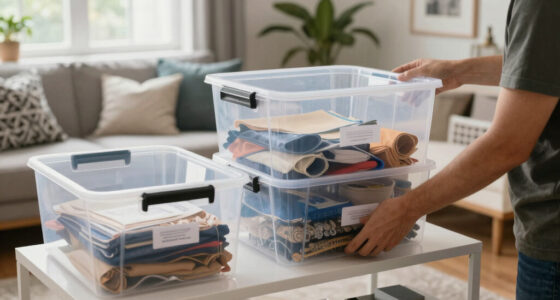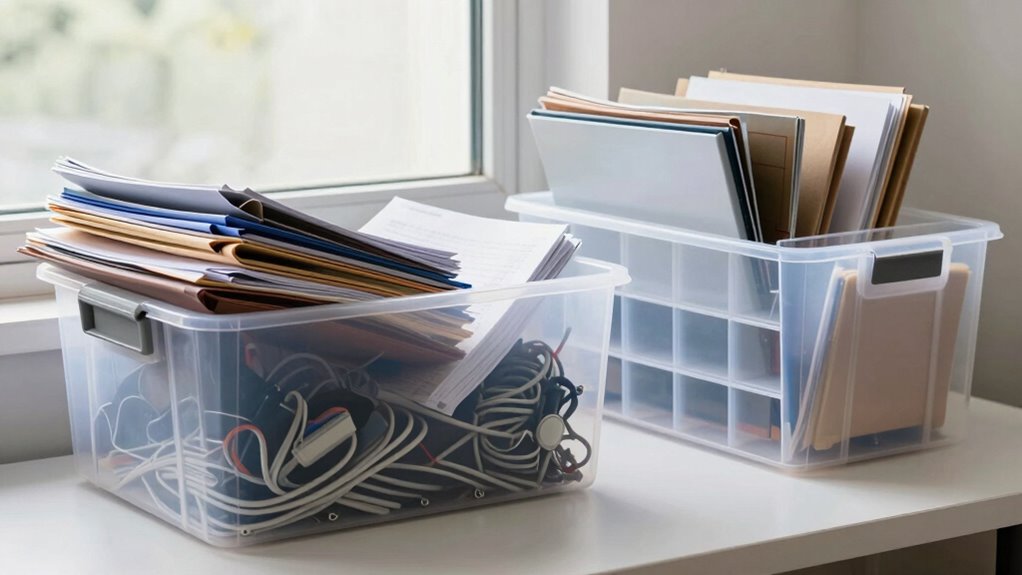

Bigger organizers might seem like the best choice, but they don’t always lead to better organization. Larger units can encourage clutter, making it harder to find items and maintain a tidy space. They can also overwhelm your decor and make your space feel cramped. Instead, choosing smaller, well-suited organizers helps optimize your space and keeps things accessible. To discover why smart sizing outweighs size alone, keep exploring these helping tips.
Key Takeaways
- Larger organizers can encourage hoarding and clutter, reducing overall organization instead of improving it.
- Oversized containers often dominate visual space, disrupting room harmony and aesthetic appeal.
- Bigger units require more effort to clean and access, making maintenance more challenging.
- Smaller, well-chosen organizers promote better categorization, visibility, and long-term organization.
- Properly sized storage solutions fit specific needs, enhancing both functionality and the room’s visual balance.
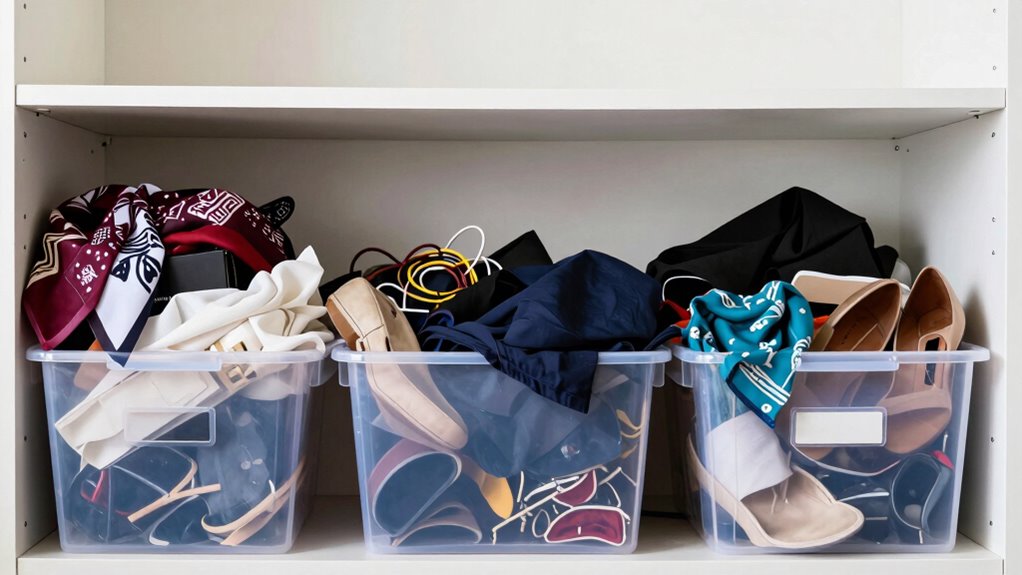
Have you ever assumed that a larger organizer automatically leads to better organization? It’s a common thought—more space should mean more room for everything, right? But that’s not always the case. In fact, bigger isn’t necessarily better when it comes to organization. When you opt for a large organizer, you might think it’ll simplify things, but often it can do the opposite. Instead of streamlining your space, it can clutter it up, making it harder to find what you need quickly. Space optimization becomes a challenge because large organizers tend to encourage hoarding or storing unnecessary items that don’t serve a purpose. Over time, what was meant to help you is now contributing to chaos.
Choosing the right size organizer is key—bigger isn’t always better for a tidy, functional space.
Beyond clutter, bigger organizers can also impact the aesthetic appeal of your space. They tend to dominate the room visually, drawing attention away from the overall design. Instead of blending seamlessly into your decor, they can make a space feel more cramped or cluttered. You might find yourself overwhelmed by the sheer size of the unit, which can detract from the room’s harmony. The goal should be to create a balanced, inviting environment—not to fill every inch with oversized containers. When your organizer is too large, it can overshadow other design elements and diminish the room’s aesthetic appeal, making it look disorganized even if all items are neatly stored inside. Recognizing the importance of space utilization can help you make smarter choices in storage solutions.
Additionally, larger organizers often require more effort to maintain, including cleaning and upkeep, which can become a burdensome chore over time. Cleaning around and inside a big unit takes longer, and finding specific items becomes more cumbersome. You might end up with items lost at the bottom or in the back, defeating the purpose of organization altogether. Smaller, well-chosen organizers allow you to categorize and access your belongings more efficiently, keeping everything visible and within reach. They encourage better space utilization because you’re less likely to fill them with unnecessary items, making your storage solutions more effective in the long run.
In the end, the key isn’t size—it’s smart planning. You want organizers that fit your space and your needs, not just the largest option available. By focusing on space optimization and maintaining an aesthetic appeal, you can create a well-organized environment that feels functional and visually appealing. Sometimes, less truly is more. Choosing appropriately sized organizers helps you stay organized without sacrificing style, making your space both practical and pleasant to be in.
As an affiliate, we earn on qualifying purchases.
Frequently Asked Questions
How Do I Choose the Right Organizer Size for My Needs?
To choose the right organizer size, consider your space and how you’ll use it. Think about space optimization—smaller organizers work well for cluttered drawers, while larger ones suit bigger items or collections. Also, factor in color coordination with your decor to keep things visually appealing. Measure your area carefully to make certain the organizer fits comfortably without overcrowding. Picking the right size helps keep your belongings organized and your space functional.
Are Smaller Organizers More Affordable Than Larger Ones?
Smaller organizers are generally more affordable than larger ones, making them a cost-effective storage solution for small spaces or specific items. The cost comparison shows that compact options usually have a lower price point due to less material and simpler designs. If you’re on a budget, prioritizing smaller organizers can help you stay organized without overspending, but remember to choose a size that fits your storage needs efficiently.
Can Multiple Small Organizers Be More Effective Than One Large One?
Multiple small organizers can be more effective than one large one because they allow for better space optimization and targeted storage solutions. Think of it like fitting pieces of a puzzle—you gain flexibility and easier access. With smaller organizers, you can customize storage for different items, making it easier to keep everything tidy and organized. This approach often results in a more efficient use of space than relying on a single, bulky organizer.
What Materials Are Best for Durable Organizers?
For durable organizers, choose materials with high material durability, like sturdy plastic, metal, or reinforced fabric. These materials withstand daily wear and tear, guaranteeing longevity. Opt for versatile organizers made from these durable materials, as they adapt to various storage needs and environments. By selecting tough, versatile materials, you ensure your organizer remains functional and reliable over time, making your organization efforts more effective and lasting.
How Do I Maintain Organization Over Time With Different Sizes?
To maintain organization over time with different sizes, you should implement space-saving strategies like stacking smaller containers inside larger ones and utilizing vertical space. Regularly reassess your setup to guarantee it still fits your needs, and keep aesthetics in mind by choosing organizers that complement your space. Labeling items and periodically decluttering also help sustain an organized environment, regardless of the sizes of your organizers.
modular drawer organizers for kitchen
As an affiliate, we earn on qualifying purchases.
As an affiliate, we earn on qualifying purchases.
Conclusion
Remember, bigger organizers are like oversized backpacks—they can carry more, but often become cumbersome and overwhelming. Sometimes, a smaller, well-placed container can keep your essentials more accessible and your space more manageable. Don’t let size fool you into thinking more is always better. Instead, aim for the right fit, like a tailor-made suit that fits perfectly. When you choose quality over quantity, your organization becomes a streamlined wardrobe, not a cluttered closet.
compact storage containers for office
As an affiliate, we earn on qualifying purchases.
As an affiliate, we earn on qualifying purchases.
multi-purpose small storage baskets
As an affiliate, we earn on qualifying purchases.
As an affiliate, we earn on qualifying purchases.