To organize your medicines and first aid supplies without guessing, designate a specific spot for everything and use clear, labeled containers or drawers. Sort items by category, such as bandages or medications, and keep frequently used items at the front. Maintain a master inventory list and regularly check for expired items. Adding quick-reference guides can also help everyone find what they need fast. Keep exploring for more tips to stay fully prepared.
Get ready for Prime Big Deal Days — try Prime free
Exclusive member deals on October 6–7, plus fast free delivery. Cancel anytime.
As an affiliate, we earn on qualifying purchases.
Key Takeaways
- Designate a dedicated, labeled storage space with categories for quick identification.
- Use clear, waterproof labels on containers and organize items by category and frequency of use.
- Maintain an updated inventory list to track supplies and expiration dates.
- Include quick-reference guides and instructions for easy access during emergencies.
- Regularly review and reorganize supplies to ensure safety, completeness, and current readiness.
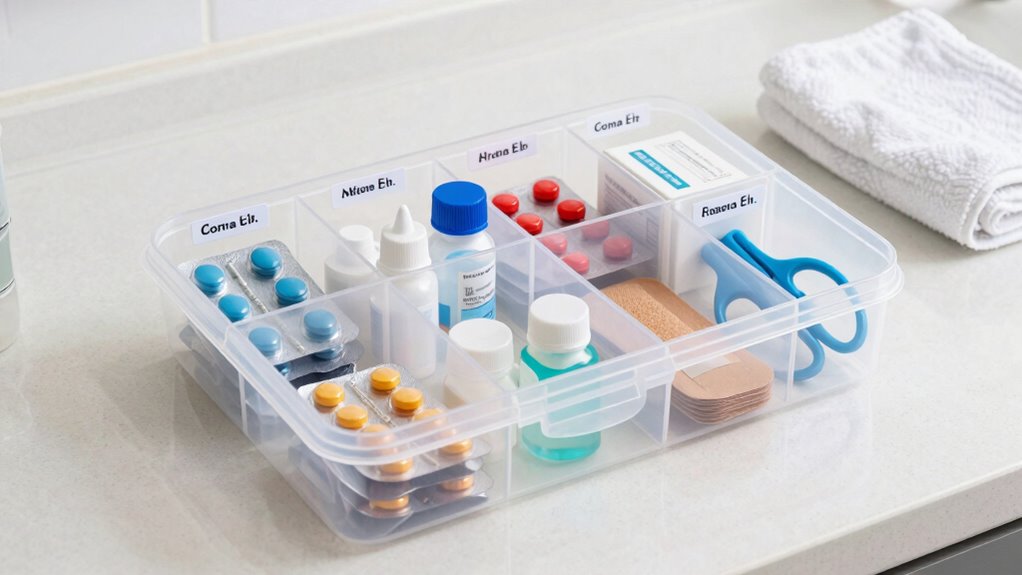
Have you ever struggled to find the right bandage or medication in an emergency? If so, you’re not alone. When urgency strikes, every second counts, and disorganized supplies can make a stressful situation worse. To improve your emergency preparedness, organizing your medicines and first aid supplies isn’t just about convenience — it’s about safety. Proper organization guarantees that you can quickly access what you need, minimizing confusion and preventing mistakes that could compromise medication safety.
Disorganized first aid supplies can worsen emergencies; proper organization ensures quick, safe access when every second counts.
Start by designating a specific, easily accessible spot for all your first aid and medical supplies. Use a sturdy, clearly labeled container or a dedicated drawer so you always know where to look. Inside, sort items by category — bandages, antiseptics, medications, gloves, etc. This structure saves you from rummaging through clutter and helps you locate items swiftly. Keep frequently used medications and supplies at the front or top for rapid access, especially in emergencies, so you’re not wasting precious time.
Implementing a clear labeling system is essential. Use waterproof labels or permanent markers to mark each container or section with its contents. For example, label one bin “Pain Relievers” and another “Antiseptics.” This way, you avoid second-guessing what’s inside and reduce the risk of grabbing the wrong item, which can be critical when seconds matter. Additionally, organize medications by expiration date, discarding expired items regularly. This practice not only maintains medication safety but also guarantees that you’re always prepared with effective supplies. Regularly reviewing your supplies helps you stay aware of medication safety and prevents potential issues caused by expired or unsafe items. Incorporating a systematic inventory check can help catch discrepancies early and ensure your supplies are always in order.
Creating a master list of all your supplies can be a game-changer. Keep this list updated and stored nearby, either digitally or on paper, so you know exactly what’s available and what needs restocking. When you’re familiar with your inventory, you can act quickly during emergencies, avoiding unnecessary delays or confusion. Recognizing the importance of organization in first aid kits can significantly improve response times and reduce stress during critical moments. Consider also including instructions or quick-reference guides for general first aid procedures, so anyone helping can act confidently.
Finally, review and reorganize your setup periodically. Emergency preparedness is an ongoing process. As supplies change or new needs arise, keeping everything current prevents gaps in your readiness. Regular checks guarantee medication safety and streamline your response in urgent situations. When you invest time in organizing your first aid kit and medicines, you’re empowering yourself to act swiftly and correctly, reducing stress and increasing safety for everyone involved.
Remember that understanding medical supplies and their proper management is crucial, especially when seconds count.
waterproof first aid kit organizer
As an affiliate, we earn on qualifying purchases.
As an affiliate, we earn on qualifying purchases.
Frequently Asked Questions
How Often Should I Review and Update My First Aid Kit?
You should review and update your first aid kit at least every six months to guarantee medication safety and that supplies are current. Regular checks help you spot expired medications or missing items. Use storage tips like keeping medicines in a cool, dry place and organizing supplies so you can quickly find what you need. Staying proactive keeps your kit ready for any emergency and ensures safety for everyone.
What’s the Best Way to Label Medicine Containers?
You should use clear, legible medication labels on all your storage containers. Write the name of the medication, dosage instructions, and expiration date directly on each container or use pre-made labels. Stick the labels on the front of the storage containers and make sure they’re waterproof if needed. This way, you easily identify medications, avoid mix-ups, and keep your first aid supplies organized and safe.
How Can I Prevent Medicines From Expiring Unnoticed?
To prevent medicines from expiring unnoticed, you should implement a consistent medication storage system with clear expiration tracking. Regularly check your medicine containers for expiration dates and remove expired items promptly. Use labels or a spreadsheet to track expiration dates, and set reminders to review your supplies monthly. This proactive approach guarantees you’re always aware of your medicines’ freshness, reducing waste and keeping your first aid kit safe and effective.
Should I Keep Medicines in the Original Packaging?
Think of your medicines as treasured books; keeping them in their original packaging is like preserving their first edition. It helps with medication storage, maintains packaging preservation, and keeps labels clear for easy identification. Additionally, original packaging often includes important expiry info and dosage instructions. So, always store medicines in their original containers to guarantee safety, efficacy, and quick access when needed, much like a well-organized library.
How Do I Organize Medicines for Different Family Members?
You should organize medicines by creating designated storage areas for each family member’s needs, making it easy to access their specific medication. Use clearly labeled bins or containers to separate prescriptions and over-the-counter drugs. Keep medications in a cool, dry place, and guarantee each person’s supplies are up-to-date. Regularly review and rotate medications to maintain safety, helping everyone find what they need quickly without confusion or delay.
labeled medicine storage containers
As an affiliate, we earn on qualifying purchases.
As an affiliate, we earn on qualifying purchases.
Conclusion
Now that you’ve organized your medicines and first aid supplies, you’ll find it’s easier to access essentials quickly, reducing stress and saving seconds in emergencies. By creating clear categories, consistent containers, and a simple system, you’ll foster a fuss-free, functional first aid area. Remember, a well-ordered station saves time, tranquilizes tension, and transforms chaos into clarity. Stay structured, stay safe, and keep your kit’s calm, clean, and current.
first aid supplies inventory list
As an affiliate, we earn on qualifying purchases.
As an affiliate, we earn on qualifying purchases.
As an affiliate, we earn on qualifying purchases.
NFL season / tailgating Picks
team gear
As an affiliate, we earn on qualifying purchases.

![[Latest] Global Stem Cell Culture Media Market Size/Share Worth USD 2714 Million by 2035 at a 13.5% CAGR: Healthcare Foresights (Analysis, Outlook, Leaders, Report, Trends, Forecast, Segmentation, Growth Rate, Value, SWOT Analysis)](https://simplifykit.com/wp-content/uploads/2026/06/latest-global-stem-cell-culture-media-market-size-share-worth-usd-2714-million-b-featured-560x300.jpg)