
TL;DR
Ideal Home contributor Grace H has shared practical storage ideas for making a cluttered upstairs look tidier, including fitted wardrobes, closed bedside tables, an ottoman bed and a vintage cabinet for office supplies. The advice comes from her own home and is not a report of a new product launch or independently tested storage system.
Ideal Home contributor Grace H has shared room-by-room ideas for hiding everyday clutter upstairs, from fitted bedroom wardrobes to an ottoman bed and a vintage office cabinet. The article draws on her own home and offers practical decorating advice for readers looking to make small or busy rooms look tidier without leaving storage boxes on display.

Get the little things that make your day delivered free with Prime
- Fast, free delivery on millions of items
- Prime Video, Amazon Music and more included
- Member-only deals all year
H’s suggestions cover the landing, main bedroom, spare room and home office. On the landing, she recommends making use of otherwise overlooked space for a laundry cupboard, small unit for linens and towels, or a place to store a vacuum cleaner. These are presented as options where the layout allows, rather than solutions for every home.
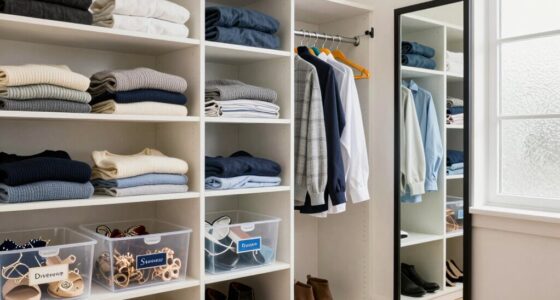
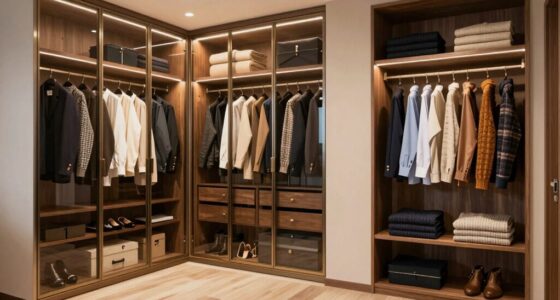
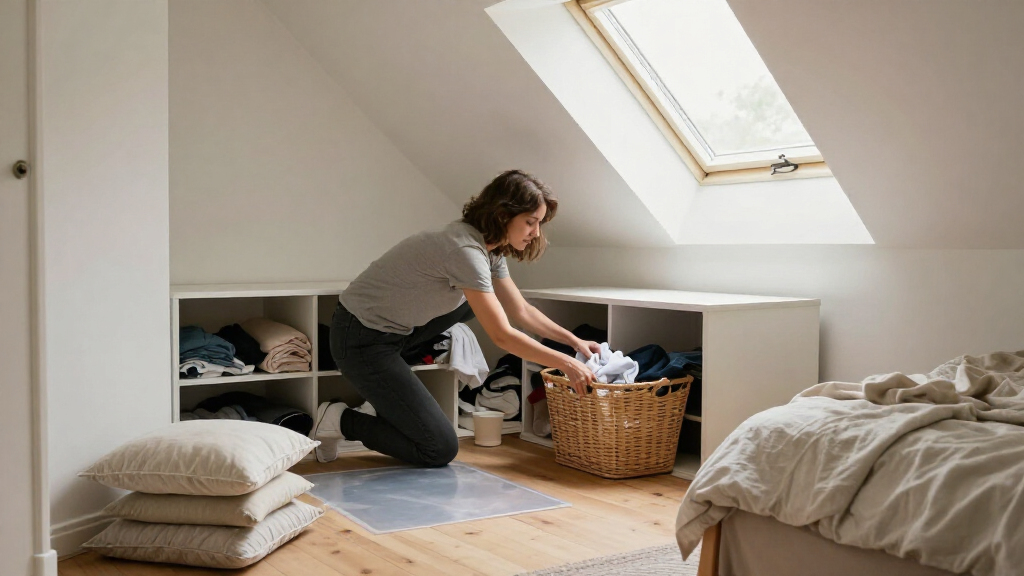
In the main bedroom, H favors tall fitted wardrobes to use more of the available wall height. She says she and her household replaced two lightweight clothes rails with fitted wardrobes, which they painted themselves to reduce the cost. She also suggests leaving space for baskets at the bottom, using bedside tables with closed drawers or cupboards, and adding a basket or dish to collect small personal items.
For a spare room, H describes using wardrobes for coats, formal clothes and laundry equipment, alongside bedding. She says an ottoman bed provides concealed space for spare duvets and other belongings. In her home office, a second-hand vintage cabinet painted pink stores cables and boxes; fabric-covered magazine or box files can conceal paperwork. These are personal examples, and the article does not report measured results or independent comparisons.
A tidier upstairs starts with what you can put away
Ideal Home contributor Grace H shares personal storage ideas for making busy upstairs rooms look calmer. The advice is about hiding everyday belongings, not reducing how many you own.
Make storage fit the room
Her suggestions span the landing, bedrooms and home office.
Use wall height
Tall fitted wardrobes add concealed space; closed bedside drawers or cupboards keep small items out of sight.
Hide bedding
An ottoman bed can hold spare duvets and other belongings, while wardrobes store clothes and laundry equipment.
Contain paperwork
A vintage cabinet stores cables and boxes; covered files can conceal paperwork.
Look for overlooked space
On the landing, use available room for storage that suits your layout.
Consider a laundry cupboard, a small unit for linens and towels, or a place for the vacuum.
Match the storage to your space and the items you need to keep accessible.
What the advice can tell you
Grace H describes examples from her own home, including wardrobes her household painted themselves to reduce cost.
- Practical ideas for concealing everyday belongings.
- Options ranging from fitted wardrobes to baskets and a second-hand cabinet.
- Measured results or independent comparisons.
- That hidden storage reduces the total amount of clutter.
Storage That Fits Smaller Upstairs Rooms
The article addresses a familiar household problem: bedrooms and spare rooms often have to accommodate clothes, laundry, paperwork and personal items as well as serve their intended purpose. Closed and concealed storage can reduce visible clutter, while furniture chosen to suit the room may help people use space that would otherwise go unused.
H’s account also makes clear that the advice is about appearance and organization, not getting rid of belongings. Baskets, drawers and hidden compartments can make a room look calmer, but they do not by themselves reduce the amount of stuff in a home. Readers deciding what to buy will still need to consider available floor and wall space, access, budget and whether the storage suits their needs.
Products Worth Considering

Ring Alarm 5-Piece Home Security Kit

Levoit Core 400S-P Smart Air Purifier for Large Rooms

Philips Hue Bridge Pro Starter Kit with 4 A19 E26 Color Smart Bulbs
As an affiliate, we earn on qualifying purchases.
A Follow-Up to Downstairs Storage
The article is part of H’s contributions to Ideal Home’s Open House series, in which she writes about colorful interiors, combining vintage and newer pieces, and making homes feel personal. The source describes this upstairs installment as a continuation of an earlier post about storage downstairs.
Rather than offering a single makeover or announcing a new product, H shares examples from her own home. Her recommendations include both built-in options, such as fitted wardrobes, and adaptable choices, such as baskets, bedside furniture and a repurposed cabinet. She notes that her household painted the wardrobes themselves to save money and found its office cabinet on eBay.
What the Advice Does Not Establish
The source does not give a publication date, measurements of the rooms, costs for the storage changes or details of the products beyond the types of furniture described. It also does not provide independent testing or evidence that these arrangements work for every household. H’s claims about the effect on a room’s appearance are personal observations, not quantified results.
It is also unclear how much of the household’s clutter is actively sorted, donated or discarded. The article focuses on putting possessions out of view, and H jokes about items kept for later sale. That distinction matters: concealed storage may make surfaces and floors look clearer, but the source does not claim that it reduces the total number of belongings.
More Room-by-Room Home Advice
The source points readers to H’s earlier article on downstairs storage and to her other Ideal Home contributions. It does not announce a follow-up date, a product launch or a planned renovation. Readers can apply the ideas selectively, starting with the room where visible clutter is most disruptive and checking that any proposed storage fits the space and budget.
For people considering larger changes, such as fitted wardrobes or a built-in window seat, the article leaves practical next steps to the reader: measure the room, compare costs and decide which items need accessible storage. H’s examples provide inspiration, but no further development or independently verified outcome is reported.
Key Questions
What is the main development in the article?
Grace H has shared upstairs storage ideas in an Ideal Home Open House contribution. The article is a personal advice piece, not an announcement of a new product or a reported home-design study.
What does H recommend for a bedroom?
She favors tall fitted wardrobes, bedside tables with closed storage and baskets for smaller items. She also describes using a chest of drawers with a mirror instead of a dressing table to keep products and belongings contained.
How does she use the spare room?
H says wardrobes in her spare room store coats, occasion wear and laundry equipment, while an ottoman bed holds spare bedding and other items out of sight.
Does the article show that hidden storage reduces clutter?
No measured results are provided. H’s examples explain how storage can hide visible belongings, but the article does not establish that concealed storage reduces the total amount of clutter.
Source: idealhome.co.uk