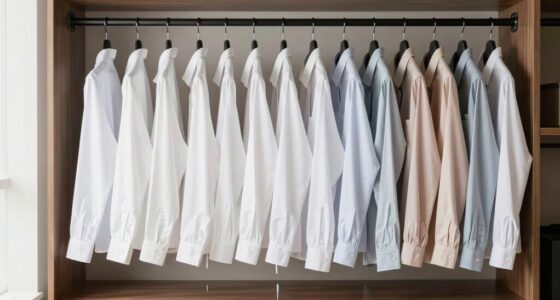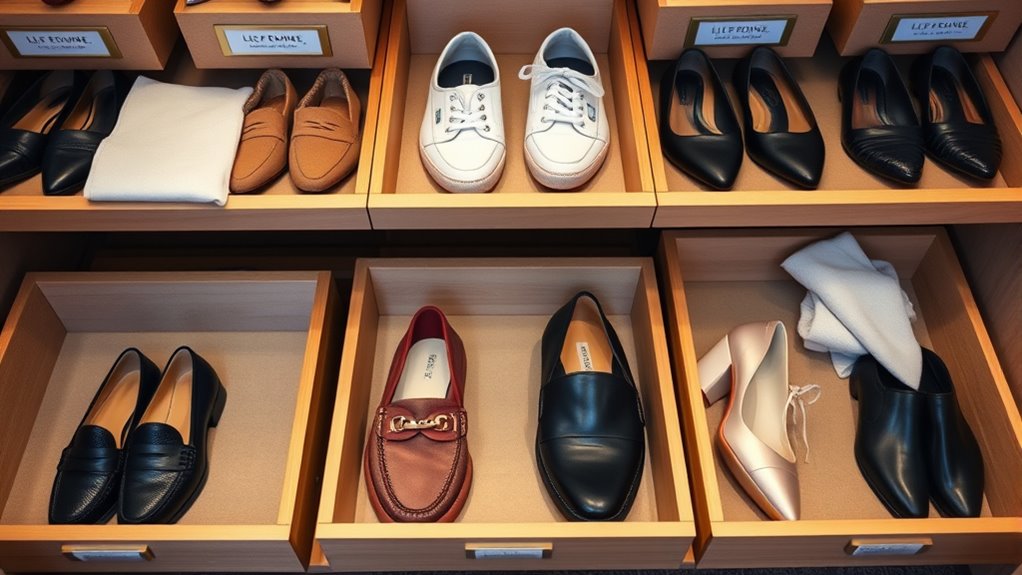

To extend your footwear’s life, choose storage solutions tailored to each shoe type—use shoe trees for leather shoes, tall racks for boots, and ventilated boxes for athletic shoes. Clean and maintain shoes regularly, using appropriate products for materials like suede or leather. Keep shoes organized with labels and dedicated spaces to prevent clutter and damage. Incorporate eco-friendly storage options and smart features to maximize space. Learn more about preserving and organizing shoes effectively.

Get the little things that make your day delivered free — and shop member deals
- Fast, free delivery on millions of items
- Access to Prime Big Deal Days deals on October 6–7
- Prime Video, Amazon Music and more included
Key Takeaways
- Use appropriate storage solutions like shoe trees, ventilated bins, or tall cabinets to maintain shape and prevent deformation.
- Clean shoes regularly with suitable methods for each material to prevent dirt buildup and material deterioration.
- Store shoes in a cool, dry, and dust-proof environment away from direct sunlight and moisture to prolong lifespan.
- Rotate footwear frequently and purge unused shoes to reduce wear and keep your collection organized.
- Incorporate eco-friendly storage options such as recycled plastic or bamboo to support sustainability and material preservation.
As an affiliate, we earn on qualifying purchases.
Selecting the Right Storage Solutions for Different Shoe Types

Choosing the right storage solution depends on the type of shoes you own. For delicate or high-end shoes like leather dress shoes and heels, use individual shoe trees or padded boxes to maintain shape and prevent damage. Sneakers and casual footwear benefit from stackable racks or cubbies that keep them organized and accessible. Boots require taller storage options, such as boot racks or tall cabinets with dedicated compartments, to avoid crushing or deforming their structure. Athletic shoes and sandals can be stored in ventilated bins or clear containers for easy identification and airflow. For seasonal or rarely worn shoes, under-bed storage bins or hanging organizers save space and keep them dust-free. Proper shoe organization plays a crucial role in prolonging their lifespan and keeping your space tidy.
As an affiliate, we earn on qualifying purchases.
Proper Cleaning and Maintenance Practices to Preserve Shoes

To keep your shoes looking their best, start by removing dirt regularly to prevent buildup and damage. Use the appropriate cleaning techniques for each material, such as gentle brushes for suede or damp cloths for leather. Proper cleaning and maintenance will extend your shoes’ lifespan and keep them looking fresh.
Regular Dirt Removal
Regular dirt removal is essential for maintaining your shoes’ appearance and extending their lifespan. Dirt and debris can cause material deterioration, stain surfaces, and weaken fabrics or leather. To keep your shoes in top shape, brush off loose dirt after each wear with a soft-bristled brush or cloth. For stubborn grime, wipe with a damp cloth or use a gentle cleaning solution suited to the material—leather, fabric, or synthetic. Avoid letting dirt sit, as it can seep into seams and degrade materials over time. Regular dirt removal prevents buildup and keeps your shoes looking fresh. Make it a routine after wearing, especially if you’ve been outdoors or in dusty environments. Proper maintenance now saves you time and money by reducing the need for deep cleaning or repairs later. Additionally, understanding color accuracy can help you better assess the true appearance of your shoes during cleaning, ensuring they look their best.
Correct Cleaning Techniques
Proper cleaning techniques are essential for maintaining your shoes’ appearance and prolonging their lifespan. Start by removing loose dirt with a soft brush or damp cloth. For leather shoes, use a gentle leather cleaner or a mixture of mild soap and water, then wipe clean and dry thoroughly. Suede and fabric shoes require specific brushes to lift dirt without damaging the material—avoid water to prevent stains. For sneakers and rubber footwear, use a soft brush and soapy water, then rinse and air dry. Always let shoes dry completely before storing to prevent mold and odor. Applying conditioners or protectants suitable for the material can also help preserve the look and durability of your footwear. Regular cleaning keeps shoes fresh and prevents material breakdown over time. Proper maintenance practices are vital for extending the life of your footwear and ensuring they remain in good condition over the years.
As an affiliate, we earn on qualifying purchases.
Effective Organization Techniques for Easy Access and Visibility
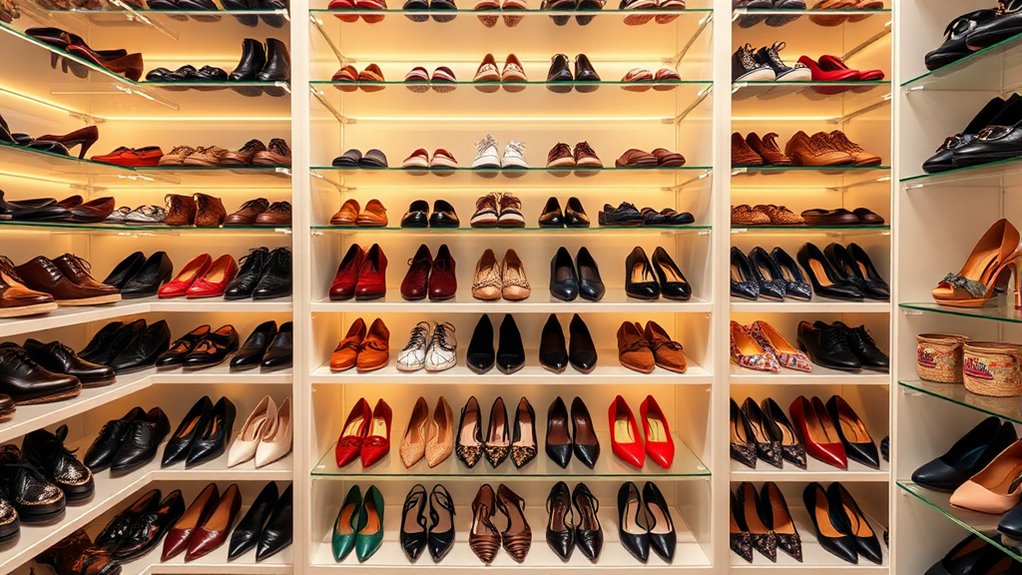
Organizing shoes for quick access and clear visibility starts with strategic placement and thoughtful grouping. First, categorize your footwear by use—work, casual, sports, or special occasions—and assign designated areas for each. Use clear storage bins or open shelving with labels to easily identify shoes at a glance. Arranging shoes facing forward enhances visibility, making it effortless to select the pair you want. Stackable racks or modular units maximize vertical space and keep shoes organized without clutter. Consider using adjustable shelves for flexibility as your collection grows. For frequently worn shoes, place them at eye level or in easily accessible spots. Regularly rotate and purge unused pairs to maintain a tidy, functional system that simplifies your mornings and preserves your footwear. Additionally, understanding electric bike speed capabilities can inspire innovative storage solutions for bulky gear or accessories.
As an affiliate, we earn on qualifying purchases.
Space-Saving Ideas for Small Living Areas
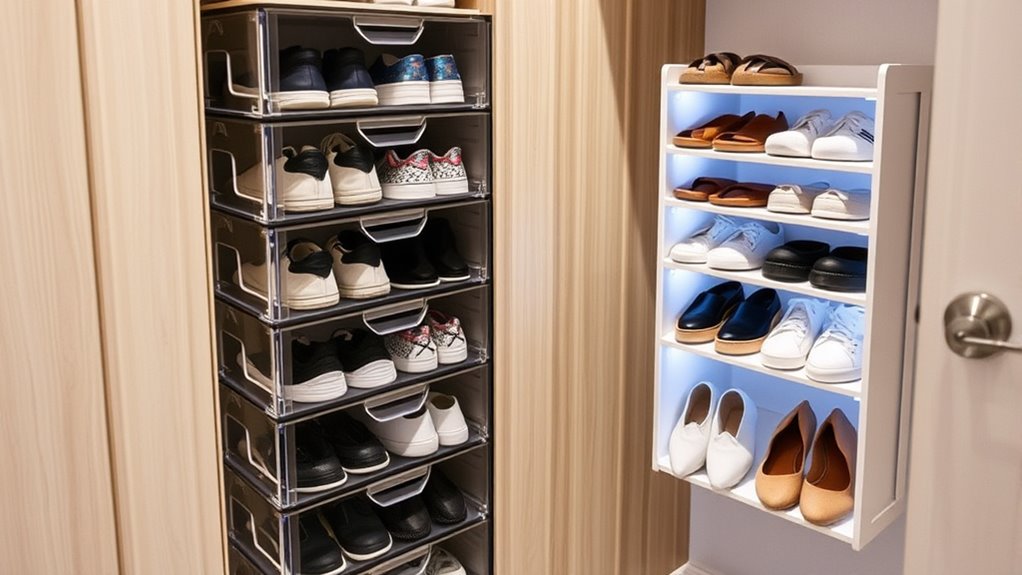
Maximizing limited space in small living areas requires creative, space-efficient shoe storage solutions that blend seamlessly with your home’s design. You can make the most of every inch with smart ideas like:
- Using under-bed storage bins with lids keeps shoes dust-free and accessible, perfect for seasonal footwear.
- Installing wall-mounted racks or hooks inside closets or near entryways saves space and keeps shoes organized.
- Employing vertical stackable shoe racks doubles capacity without cluttering the floor, ideal for tight spaces.
- Implementing clutter-free storage strategies helps maintain a tidy environment while preserving style.
Choose sleek, multifunctional pieces that complement your decor, making shoe storage unobtrusive yet effective. With these ideas, small spaces won’t compromise your footwear organization.
Eco-Friendly Materials and Sustainable Storage Options

As more people prioritize sustainability in their homes, the demand for eco-friendly shoe storage options continues to rise. You can choose storage solutions made from recycled plastics, bamboo, or reclaimed wood to reduce environmental impact. Bamboo is durable, lightweight, and grows quickly, making it an excellent renewable resource. Recycled plastics help divert waste from landfills and offer sturdy, affordable options for shoe organizers. Additionally, look for products made with non-toxic, biodegradable finishes to guarantee safety and sustainability. These materials not only support eco-conscious living but also add a natural, aesthetic touch to your space. Incorporating Free Floating design principles into your storage solutions can further enhance flexibility and visual appeal. By selecting sustainable storage options, you contribute to environmental preservation while keeping your footwear organized and protected.
Incorporating Smart Features for Modern Shoe Organization
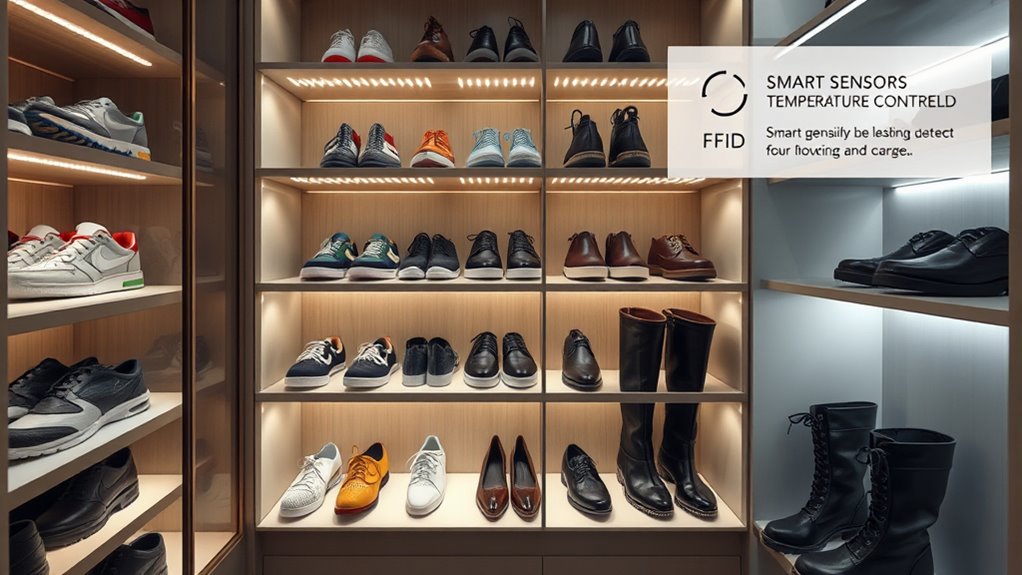
Incorporating smart features into shoe organizers transforms everyday storage into a high-tech, convenient experience. Imagine controlling your shoe collection with a smartphone app or having sensors that detect which shoes are in the organizer. Here are some ways smart tech enhances your storage:
- Sensor Lighting: Automatically lights up when you open the organizer, making it easy to find shoes in low light.
- App Control: Allows you to track, organize, and even reorder shoes digitally, reducing clutter and misplacement.
- Inventory Management: Keeps a digital record of your shoes, helping you decide what to wear or donate and preventing overstocking.
- Enhanced Accessibility: Integrating ergonomic design principles into smart shoe storage can improve comfort and reduce strain when retrieving footwear.
Smart features streamline organization, save time, and keep your footwear collection accessible and well-maintained.
Tips to Extend the Lifespan of Your Footwear Through Storage
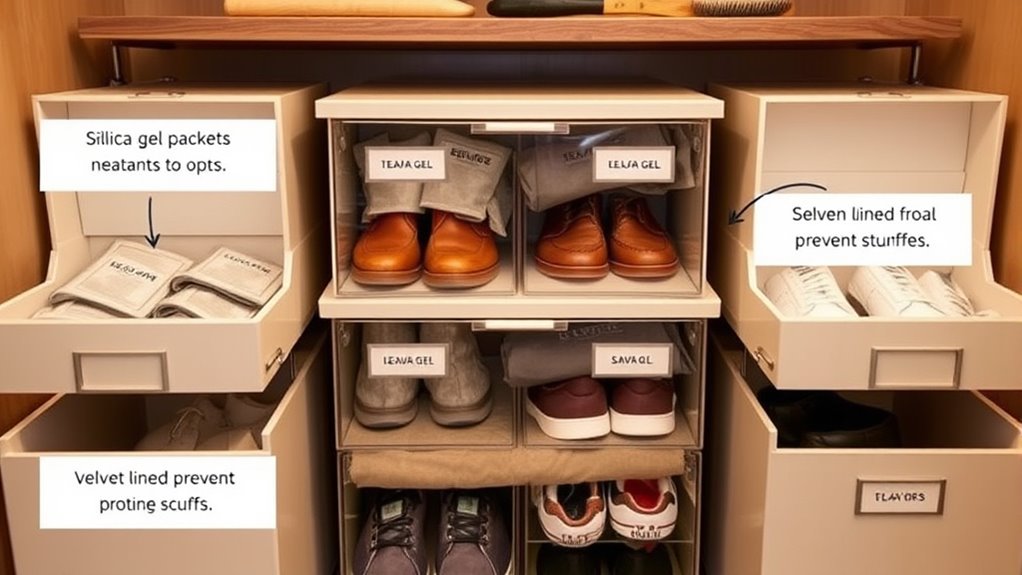
Proper storage is essential for extending the lifespan of your footwear. To prevent damage, clean your shoes before storing them to remove dirt and moisture. Use shoe inserts or forms to help maintain their shape, especially for boots and dress shoes. Store seasonal footwear separately and rotate them to reduce wear. Enclose shoes in labeled, dust-proof containers to protect against pests and environmental damage. Avoid overcrowding by regularly purging unused shoes, keeping only what you wear. Utilize space-efficient options like stackable racks or under-bed storage to prevent crushing or deformation. Keep shoes in a cool, dry place away from direct sunlight, which can cause fading and material deterioration. Proper storage not only preserves your shoes but also keeps your space organized and clutter-free. Additionally, choosing sustainable storage solutions can help minimize environmental impact and promote eco-friendly practices.
Frequently Asked Questions
How Often Should I Replace or Upgrade My Shoe Storage Solutions?
You should replace or upgrade your shoe storage solutions every 3 to 5 years or when they show signs of wear, damage, or don’t fit your collection anymore. If your current organizers become unstable, difficult to access, or no longer suit your space, it’s time for an upgrade. Regularly assess your storage to guarantee it keeps shoes organized, protected, and easy to use, adapting as your needs evolve.
What Are the Best Practices for Storing Delicate or Specialty Shoes?
Ever wonder if your delicate shoes are truly protected? To keep them in perfect shape, store them in dust-free, breathable containers like fabric or acid-free boxes. Use shoe trees or inserts to maintain their form, and keep them in a cool, dry place away from direct sunlight. Rotate and inspect regularly to catch issues early. These practices guarantee your specialty shoes stay pristine and ready for any occasion.
How Do I Prevent Pests and Mold in Shoe Storage Areas?
To prevent pests and mold in your shoe storage, keep shoes clean and dry before storing. Use airtight containers or sealed bins to block pests and moisture. Place silica gel packets or desiccants inside to absorb excess humidity. verify proper ventilation in storage areas and regularly inspect shoes for signs of mold or pests. Rotate stored footwear periodically to check for issues, and clean the storage space to maintain a pest-free environment.
Can DIY Storage Solutions Effectively Protect Shoes Long-Term?
Yes, DIY storage solutions can protect shoes long-term if you use the right materials and techniques. You should create well-ventilated, dust-proof containers or shelves, and incorporate moisture absorbers like silica gel or charcoal. Regularly clean and inspect your shoes, rotate seasonal footwear, and keep storage areas organized. Label containers for easy access, and avoid overcrowding, so shoes stay dry and in good condition over time.
What Factors Influence the Durability of Eco-Friendly Shoe Storage Materials?
You should consider factors like material quality, exposure to sunlight, moisture, and temperature fluctuations, as these affect durability. Eco-friendly materials like bamboo and recycled plastics can be strong if properly treated, but they may degrade faster if exposed to humidity or direct sunlight. Regular cleaning, avoiding harsh chemicals, and keeping storage in a stable environment can help prolong their lifespan, ensuring your eco-friendly shoe storage remains functional and attractive over time.
Conclusion
Did you know that properly storing shoes can extend their lifespan by up to 50%? By choosing the right storage solutions, keeping your footwear clean, and organizing efficiently, you not only save space but also protect your investment. Implement eco-friendly options and modern features to make shoe care easier. Taking these simple steps guarantees your shoes stay in great condition longer, saving you money and reducing waste in the long run.
NFL season / tailgating Picks
team gear
As an affiliate, we earn on qualifying purchases.