Living with less helps you enjoy a clearer mind, sharper focus, and less stress by reducing clutter and distractions. It creates more space for movement, making your home safer and easier to maintain. With less stuff, you’ll save money, boost your creativity, and feel more in control of your environment. Plus, it supports personal growth and environmental awareness. Discover how embracing minimalism can transform your life and bring lasting benefits.
Key Takeaways
- Decluttering enhances mental clarity, focus, and emotional well-being by reducing distractions and promoting present-moment awareness.
- A tidy home lowers stress levels, improves sleep quality, and creates a calming environment conducive to relaxation.
- Living with less increases available space, simplifies cleaning, and reduces maintenance efforts.
- Minimalism supports eco-friendly habits and helps cut unnecessary expenses through mindful purchasing.
- An organized home fosters creativity, productivity, and personal growth by minimizing mental and visual noise.
Enhanced Mental Clarity and Focus
Living with less can considerably sharpen your mental clarity and focus. When clutter diminishes, your mind isn’t overwhelmed by distractions, making it easier to concentrate on what truly matters. Incorporate mindfulness practices into your daily routine to stay present and reduce mental noise. These practices help you become more aware of your thoughts and feelings, strengthening your mental resilience. As your environment clears, your ability to prioritize and make decisions improves, boosting productivity and mental agility. A clutter-free space fosters a sense of calm, allowing your mind to relax and refocus more easily. Over time, this simplifies your mental landscape, helping you stay centered and attentive throughout your day. Creating simple organizational systems can further support this mental clarity by making your environment easier to maintain. Additionally, reducing visual and mental clutter can improve cognitive function, enhancing your overall mental performance. Recognizing the importance of mental clarity can motivate you to adopt these habits, leading to a more focused and peaceful mind. Developing routines that minimize visual clutter can also help sustain this clarity over the long term. Living with less truly enhances your capacity for clarity and sustained focus.
Reduced Stress and Anxiety Levels
Living with less creates a visual calmness that soothes your mind and reduces stress. As clutter fades, your mental clarity improves, making it easier to focus and feel centered. This simplicity helps you feel less overwhelmed, bringing a sense of peace to your daily life. Additionally, embracing minimalist principles can enhance your overall well-being by fostering a more intentional and mindful lifestyle. Practicing decluttering regularly can further reinforce these positive effects on your mental health, and cultivating curiosity about how minimalism impacts well-being can motivate continued progress. Exploring at-home beauty tech devices can also contribute to a simplified beauty routine, reducing excess and promoting a more streamlined, mindful approach to self-care. Understanding the psychology of clutter can deepen your appreciation for how minimalism improves mental health and emotional resilience.
Visual Calmness Promoted
When your environment is simple and uncluttered, it naturally fosters a sense of calm. With fewer decorative accents, your space feels more organized and intentional, reducing visual chaos. Carefully choosing items that complement each other through color coordination creates harmony and balance, which soothes your mind. A clutter-free room with thoughtfully selected decor minimizes distractions, making it easier to relax and focus. The clean, cohesive look promotes a sense of order that calms your nerves and lowers stress levels. By limiting visual clutter, you allow your eyes to rest on a few meaningful pieces rather than overwhelming your senses. This simplicity helps you feel more centered and at peace whenever you enter your space, enhancing overall tranquility. Smart Design principles support creating environments that promote well-being and comfort, including visual harmony that reinforces the peaceful atmosphere. Incorporating minimalist principles further enhances the calming effect by emphasizing quality over quantity, which aligns with clutter reduction strategies that improve mental clarity.
Mental Clarity Improved
Reducing clutter in your environment can substantially boost your mental clarity by lowering stress and anxiety levels. When your space is tidy, it’s easier to focus and think clearly. Incorporating mindful meditation into your daily routine can deepen this clarity, helping you stay present and calmer throughout your day. Less clutter means fewer distractions, allowing your mind to relax and process information more effectively. Additionally, practicing Free Floating relaxation techniques can enhance your overall sense of calm and mental focus. Engaging in regular seasonal maintenance can also prevent the buildup of clutter caused by neglected repairs or outdated items, further supporting a peaceful environment. Maintaining an organized space can also improve your oral health, as a tidy environment reduces the risk of accumulating bacteria and debris that can cause oral issues. Incorporating outdoor mindfulness practices can help reinforce this sense of calm and foster a stronger connection with your surroundings. Developing a consistent routine for home organization can further help maintain a clutter-free environment and sustain mental clarity. Over time, this process strengthens your mental resilience, making it easier to handle daily challenges without feeling overwhelmed. A clutter-free home creates a peaceful atmosphere, promoting mental well-being and reducing feelings of chaos. As your environment supports mindfulness, you’ll notice improved clarity and a greater sense of control over your thoughts and emotions.
Overwhelm Reduced Significantly
As you simplify your surroundings, you’ll notice a significant drop in stress and anxiety levels. Minimalist decor creates calm by reducing visual chaos, making your space feel more peaceful. Clutter management is key—when you keep surfaces clear and belongings organized, your mind follows suit. Here are three ways this helps:
- You experience fewer distractions, allowing you to focus better.
- The space feels more open, easing feelings of being overwhelmed.
- Less clutter means less mental energy spent on maintenance and worry. Incorporating clutter management strategies can further enhance your mental clarity and reduce feelings of overwhelm. When you adopt effective organization techniques, you create a space that promotes relaxation and mental well-being. With less clutter, you’re less likely to feel overwhelmed by messes or possessions. This mental clarity improves your mood and helps you stay centered, making everyday life feel more manageable and serene. Additionally, adopting a minimalist approach can help you better recognize what truly matters, fostering a sense of purpose and contentment in your daily life.
Increased Physical Space and Mobility
Living with less often means you gain more physical space and freedom of movement. When you declutter, you create room to breathe and move comfortably through your home. Effective storage solutions help keep belongings organized, preventing clutter from piling up again. By rearranging furniture, you can open up pathways and make rooms feel larger. Less furniture and fewer items mean you can navigate your space easily, reducing the risk of accidents or feeling cramped. With more open space, you’ll find it easier to perform daily activities and enjoy your environment. This increased mobility not only makes your home more functional but also promotes a sense of calm and relaxation. Embracing minimalism allows you to maximize your space, making your home feel more spacious and inviting. Additionally, maintaining a clutter-free environment can improve indoor air quality by reducing dust and allergens that often accumulate in clutter. Incorporating proper electrical safety measures ensures that your efforts to declutter and organize are complemented by a safe environment. Regularly cleaning and organizing can also enhance home safety by identifying potential hazards early and keeping your space secure. Using smart storage solutions can further optimize your space and maintain a clutter-free environment over time. Implementing ergonomic organization techniques can also improve overall comfort and efficiency in your daily routines.
Easier Maintenance and Less Cleaning
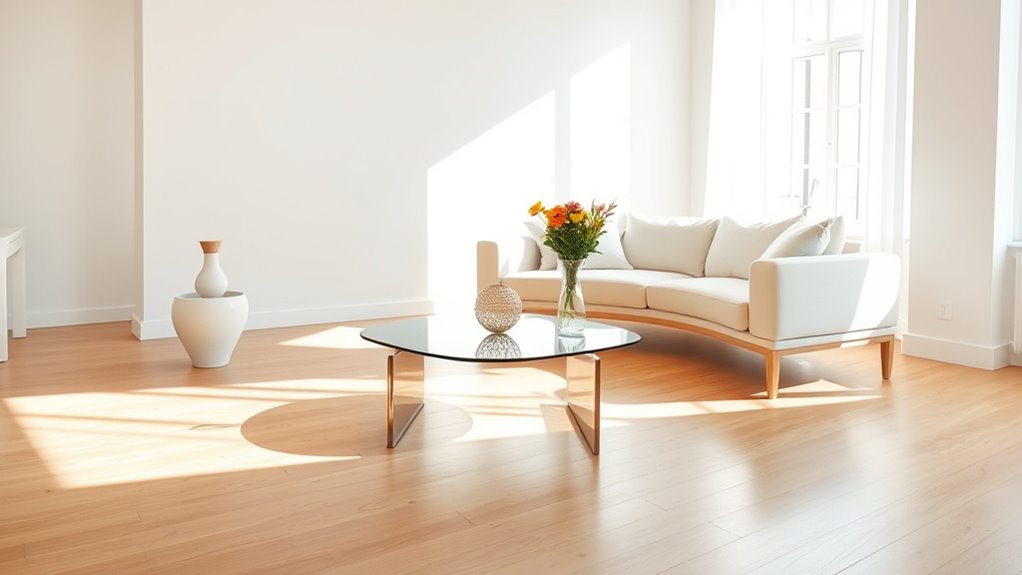
When you minimize your belongings, maintaining your home becomes much simpler. Less clutter means fewer surfaces to dust and less space to vacuum. Good storage solutions help keep everything organized, so you spend less time searching or rearranging. With a clutter-free environment, your cleaning routines become quicker and more effective.
Here’s how it works:
- Fewer items mean less dust and dirt accumulation.
- Streamlined storage keeps everything in its place, reducing clutter.
- Simplified cleaning routines save time and energy.
Greater Sense of Control and Organization

When you simplify your space, your daily routines become more streamlined and predictable. This reduces decision fatigue, so you can focus on what truly matters. As a result, you’ll experience clearer thinking and a stronger sense of control over your environment.
Streamlined Daily Routines
By establishing streamlined daily routines, you gain a greater sense of control and organization in your life. Simplifying your schedule helps reduce stress and frees up mental space. To make this happen:
- Choose a minimalist wardrobe that’s versatile and easy to mix and match, cutting down on decision time each morning.
- Practice simplified meal prep by planning and preparing meals ahead, saving time and avoiding last-minute choices.
- Set specific routines for morning and evening, like quick tidying or prioritizing tasks, so your day starts and ends with clarity.
These habits create a rhythm that keeps you focused and in control. With less clutter and chaos, your daily routines become smoother, giving you more confidence to handle whatever comes your way.
Reduced Decision Fatigue
Reduced decision fatigue happens when you simplify choices throughout your day, allowing you to conserve mental energy for more important tasks. When your home is organized and clutter is controlled, you don’t waste time searching for essentials or deciding what to wear. Clear surfaces and designated spaces make daily decisions easier, reducing stress and mental clutter. With less clutter, your mind feels more in control, and you can focus on priorities rather than being overwhelmed by disorder. Effective home organization streamlines routines and minimizes distractions, helping you make quicker, more confident choices. As a result, decision fatigue lessens, and you gain a greater sense of control over your environment, boosting your overall well-being and productivity.
Enhanced Mental Clarity
Achieving greater mental clarity often stems from establishing a well-organized environment, which helps you feel more in control of your surroundings. When your space is clutter-free, you can:
- Practice mindfulness practices more easily, allowing you to stay present and focused.
- Engage in cognitive restructuring, challenging negative thoughts and fostering a positive mindset.
- Reduce mental distractions, enabling clearer thinking and decision-making.
A tidy space encourages you to develop routines that reinforce organization and calmness. As you declutter, you create mental space for reflection and prioritization. This sense of control over your environment naturally promotes mental clarity, helping you feel more centered and less overwhelmed. Ultimately, a clutter-free home becomes a foundation for a sharper, more focused mind.
Improved Sleep Quality
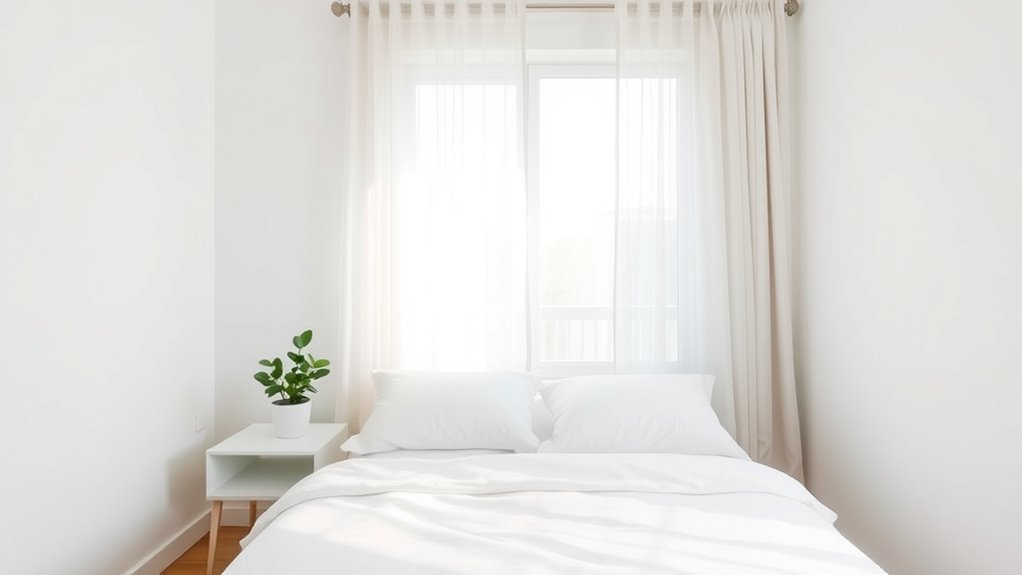
Living with less can markedly boost your sleep quality because decluttering your environment creates a calmer, more relaxing space. A tidy bedroom supports better sleep hygiene by reducing distractions and stressors that interfere with rest. When your bedroom environment is free of clutter, you’ll find it easier to unwind and signal to your body that it’s time to sleep. A clutter-free space minimizes visual noise, helping you relax more quickly and fall asleep faster. Additionally, a clean, organized room promotes a sense of calm, reducing anxiety that might keep you awake. Prioritizing simplicity in your sleeping area makes it easier to establish consistent bedtime routines, ultimately leading to more restful, rejuvenating sleep.
More Time for Personal Interests and Hobbies
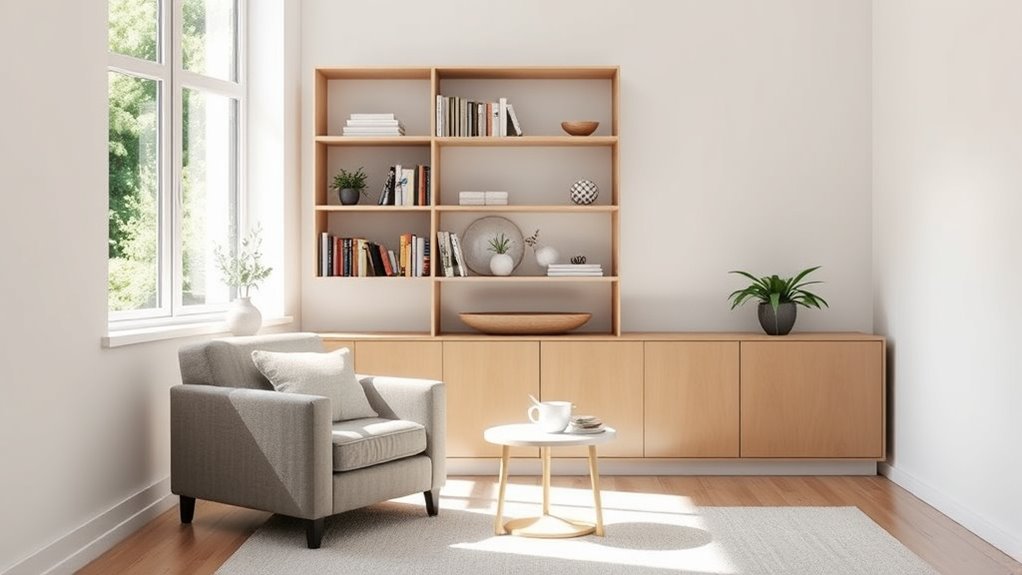
When you simplify your daily routines, you free up time to explore your personal interests and hobbies. This newfound flexibility encourages you to try creative pursuits you might have overlooked. As a result, living with less can lead to a more fulfilling and inspired daily life.
Simplifies Daily Routines
By simplifying your daily routines, you can free up valuable time that’s often spent on unnecessary tasks or clutter. Using effective organizing techniques and embracing minimalist design helps streamline your day.
- Declutter regularly to reduce decision fatigue, making it easier to find what you need quickly.
- Create designated spaces for essentials, so everything has a home, and cleanup takes less time.
- Limit choices by simplifying your wardrobe and daily gear, reducing the mental load.
These small adjustments lead to smoother mornings and less stress, giving you more room to enjoy personal interests and hobbies. When your environment is clear and organized, your routines become more efficient, making space for what truly matters.
Fosters Creative Pursuits
As you simplify your environment and routines, you create more space for creative pursuits and personal interests. With less clutter, you find it easier to immerse yourself in artistic exploration without distractions. Your mind becomes clearer, fostering innovative thinking as you experiment with new ideas or crafts. A clutter-free space encourages spontaneous inspiration, allowing you to focus on hobbies like painting, writing, or playing music. You gain the freedom to explore your passions more deeply, since you’re not bogged down by chaos or unnecessary possessions. This mental clarity and physical openness boost your ability to think outside the box and develop unique projects. Ultimately, living with less provides the time and mental space needed for genuine creative growth and personal fulfillment.
Financial Savings From Less Impulse Buying

Reducing impulse purchases can lead to significant savings over time. When you resist the urge to buy on impulse, you can focus on smarter shopping strategies. For example:
Cutting impulse buys boosts savings and encourages smarter shopping habits.
- Use bulk shopping to buy essentials in larger quantities, saving you money in the long run.
- Take advantage of online deals to compare prices and find discounts before making a purchase.
- Create a shopping list and stick to it, avoiding unnecessary items that tempt you in the moment.
Boosted Creativity and Inspiration
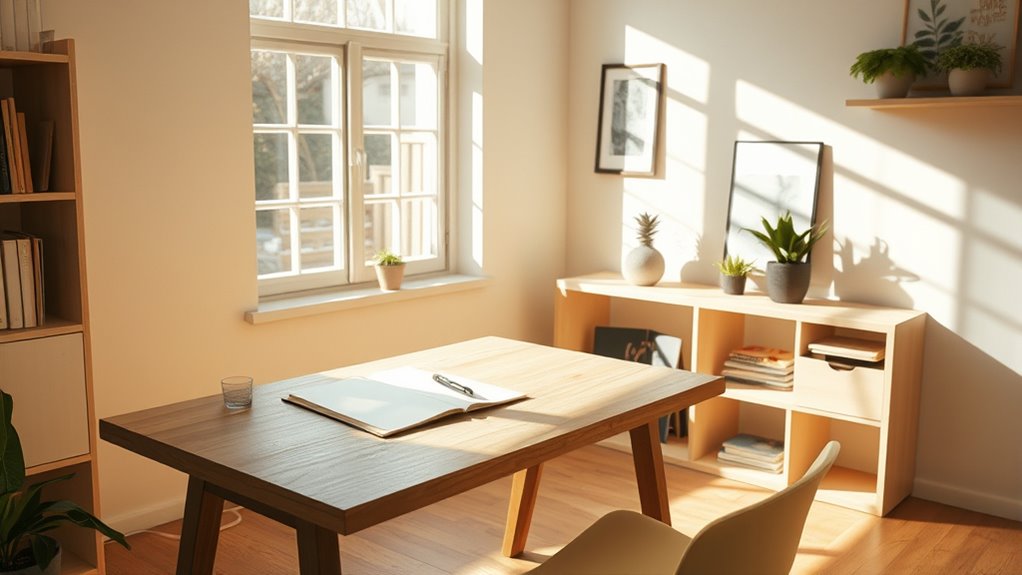
Have you noticed how living with less can spark your imagination? When clutter is minimized, your mind isn’t overwhelmed by distractions, allowing creative sparks to ignite more easily. A tidy space creates room for your ideas to flow freely, making it easier to brainstorm and develop innovative concepts. Without excess belongings vying for your attention, you can focus on what truly inspires you, whether it’s a new project or a fresh perspective. This clarity encourages experimentation and risk-taking, fueling your creativity. By simplifying your environment, you cultivate a mental space that supports inventive thinking. Ultimately, a clutter-free home not only clears physical space but also opens the door to endless possibilities, inspiring you to explore new creative horizons.
Strengthened Environmental Awareness

Living with less sharpens your awareness of how your choices impact the environment. You become more conscious of your recycling habits and seek eco-friendly practices. This heightened awareness encourages you to:
- Reduce waste by buying only what you need and choosing quality over quantity.
- Recycle diligently, ensuring materials are properly sorted and reused.
- Embrace eco-friendly practices like using reusable bags, bottles, and containers.
As a result, you start making mindful decisions that lessen your ecological footprint. You recognize the significance of small actions and their cumulative effect on the planet. Living clutter-free not only benefits your home but also cultivates a deeper understanding of environmental responsibility, inspiring you to adopt sustainable habits daily.
Frequently Asked Questions
How Does Decluttering Affect Long-Term Mental Health?
Decluttering substantially boosts your long-term mental health by enhancing mental clarity and reducing stress. When your space is organized, you feel more in control, which helps calm your mind. Over time, this decreased stress improves your overall well-being, making it easier to focus and handle daily challenges. Consistently maintaining a clutter-free environment fosters a sense of peace, positively impacting your mental health for years to come.
What Are the Best Methods to Start Decluttering?
You should start decluttering by using effective organizing techniques like sorting items into categories and setting clear goals. Gather helpful decluttering tools such as boxes, bins, or labels to streamline the process. Begin with small areas to build momentum, then gradually tackle larger spaces. Consistency is key, so dedicate a little time each day. This approach makes decluttering manageable and helps you maintain a clutter-free home long-term.
Can Living Minimally Improve Relationships With Family and Friends?
Living minimally can definitely improve your relationships with family and friends. Studies show that clutter can cause stress, making minimal communication and shared activities more challenging. When you declutter, you create a calmer environment that encourages meaningful interactions. With less chaos, you’re more likely to connect deeply, enjoy shared activities, and have open conversations, strengthening bonds and fostering a more supportive, loving atmosphere for everyone involved.
How Does a Clutter-Free Home Impact Children’s Development?
A clutter-free home positively impacts your children’s development by fostering emotional security and supporting playful learning. When you keep their environment organized, they feel safer and more focused, encouraging creativity and independence. A tidy space reduces stress and distractions, allowing your kids to engage fully in play and learning activities. This stability helps build confidence and emotional resilience, nurturing their overall growth and making your home a nurturing space for development.
What Are Eco-Friendly Ways to Dispose of Unwanted Items?
Think of your unwanted items as seeds for change. You can eco-friendly dispose of them by exploring recycling options for metals, plastics, and electronics, ensuring they’re reborn instead of wasted. Donating to centers gives your belongings a second life and supports those in need. By choosing these options, you nurture the planet and your community, turning clutter into kindness and sustainability.
Conclusion
Living with less isn’t just about tidiness—it’s about transforming your life. Studies show that decluttering can reduce stress levels by up to 40%, helping you feel calmer and more in control. When you embrace a clutter-free home, you create space for what truly matters—your mental well-being, creativity, and personal growth. Start small today; the benefits will quickly add up, making your life more peaceful, productive, and fulfilling.