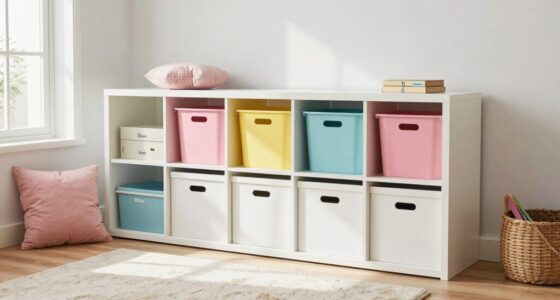

To declutter for a move without panicking, break down the process into small, manageable steps and set specific daily times for each task. Focus on one room at a time, and use boxes or bins to sort belongings into keep, donate, sell, or discard. Remember to take breaks, ask for help if needed, and celebrate small wins along the way. Staying organized and patient will ease stress—if you keep going, you’ll discover simple strategies to stay motivated throughout.
Open a free Amazon Business account
Business pricing, bulk buying and tax-exempt orders.
As an affiliate, we earn on qualifying purchases.
Key Takeaways
- Break down the decluttering process into small, manageable tasks and set specific daily goals.
- Sort belongings into keep, donate, sell, or discard to reduce clutter efficiently.
- Use emotional support and take photos of sentimental items before letting them go.
- Stay motivated by celebrating small victories and visualizing the benefits of a clutter-free move.
- Enlist help from friends or family, and take regular breaks to manage stress and stay focused.

Moving can feel overwhelming, but with a clear plan, you can declutter without panicking. The key is to break down the process into manageable steps and adopt effective organizational strategies. Start by setting aside specific times each day for decluttering, so it doesn’t feel like an insurmountable task. As you go through your belongings, focus on one room at a time, sorting items into keep, donate, sell, or discard piles. This systematic approach helps you stay organized and prevents you from feeling intimidated by the sheer volume of clutter. Using labeled boxes or storage bins for each category keeps everything neat and makes it easier to transport items later.
While tackling clutter, remember that emotional support is just as important as practical strategies. Moving can stir up feelings of attachment, nostalgia, or even guilt about letting go of certain belongings. It’s normal to feel resistant to parting with items that have sentimental value. To manage this, give yourself permission to keep only what truly matters, and consider taking photos of sentimental objects before letting them go. Sharing your decluttering journey with a trusted friend or family member can also provide emotional reassurance. Sometimes, just talking about your feelings helps you make clearer decisions and stays motivated.
Staying organized throughout the process involves creating a schedule and sticking to it. Make a list of what needs to be done in each room and set realistic goals for each session. Mark off completed tasks to give yourself a sense of progress, which can be motivating. Keep a separate box for important documents, valuables, and essentials you’ll need immediately after the move. This prevents last-minute scrambling and reduces stress on moving day. Remember to take breaks and celebrate small victories along the way. Recognizing your efforts reinforces positive momentum, helping you stay calm and focused. Additionally, understanding the importance of decluttering can motivate you to stay committed and make the process more manageable. Incorporating specific organizational tools can further streamline your efforts and reduce chaos during the move. Creating a designated space for your essentials can also ease the transition and help you feel more prepared. Furthermore, maintaining a sorting system ensures that each item is handled efficiently and reduces the likelihood of misplaced belongings. Developing a cleaning routine during this process can also contribute to a healthier indoor environment, especially since clutter can sometimes impact overall air quality.
Don’t forget to ask for help if the task gets too intimidating. Enlisting friends or family can lighten your load and provide emotional support when you’re feeling frustrated or overwhelmed. They can also offer fresh perspectives on what to keep or discard. If you find yourself feeling anxious, take a moment to breathe deeply and remind yourself that decluttering is a temporary phase that leads to a fresh start. With patience, organization, and support, you’ll find yourself with a clutter-free space, ready for the next chapter without the stress of chaos.
As an affiliate, we earn on qualifying purchases.
Frequently Asked Questions
How Early Should I Start Decluttering Before Moving?
You should start decluttering at least 4-6 weeks before your move. This gives you ample time to follow your moving checklist and avoid last-minute stress. Begin with easy items, then tackle more sentimental or bulky belongings. Use packing tips like sorting items into keep, donate, and discard piles. Early decluttering makes packing more manageable, helps you save money, and guarantees a smoother shift to your new home.
What’s the Best Way to Handle Sentimental Items?
Handling sentimental items can feel overwhelming, like trying to contain a tsunami of memories. Start with sentimental sorting—choose your most cherished pieces that truly hold emotional value. Consider taking photos of items you can’t keep, preserving those memories without clutter. Focus on memory preservation by creating a special keepsake box for your favorites. This way, you honor your past while keeping your space organized and manageable for your move.
How Can I Stay Motivated During the Decluttering Process?
You can stay motivated during decluttering by focusing on your decluttering mindset, reminding yourself of the benefits, like a fresh start and less stress. Use motivation techniques such as setting small goals, rewarding yourself, and visualizing your organized space. Keep a positive attitude, celebrate progress, and remember why you’re decluttering. This approach helps maintain momentum and keeps you engaged, making the process more manageable and even enjoyable.
What Tools or Supplies Are Essential for Decluttering?
Think of yourself as a master organizer. You’ll need basic tools like sturdy boxes, labels, and trash bags to get started. Consider storage solutions like stackable bins and drawer organizers to keep things tidy. Keep a list of donation centers nearby to drop off items you no longer need. These supplies help you stay efficient and make the decluttering process smoother, turning chaos into control without breaking a sweat.
How Do I Manage Decluttering With Children Involved?
To manage decluttering with children involved, encourage child involvement by turning it into a fun activity, like sorting toys or clothes together. Use family teamwork by setting clear goals and dividing tasks based on ages and abilities. Keep it positive and patient, praising their efforts. This approach helps kids feel included, reduces stress, and makes the process more efficient, ensuring everyone contributes happily toward your moving preparations.
As an affiliate, we earn on qualifying purchases.
Conclusion
Remember, decluttering is like peeling an onion—layer by layer. When I moved years ago, I found that tackling one drawer at a time kept me calm and focused. The key is to stay patient and not rush. According to experts, decluttering reduces stress and makes unpacking easier. So, breathe deeply, stay organized, and trust the process—you’ll be settled in your new home before you know it, feeling lighter and more prepared for the next chapter.
As an affiliate, we earn on qualifying purchases.
As an affiliate, we earn on qualifying purchases.
Fall Picks
fall essentials
As an affiliate, we earn on qualifying purchases.