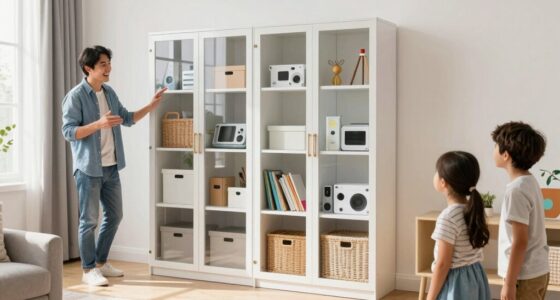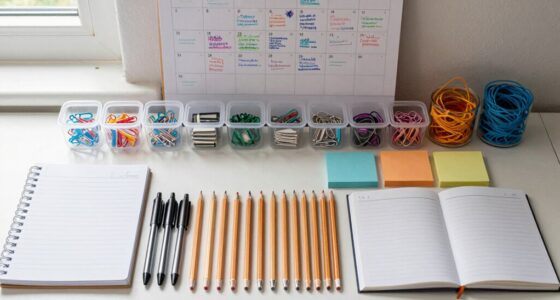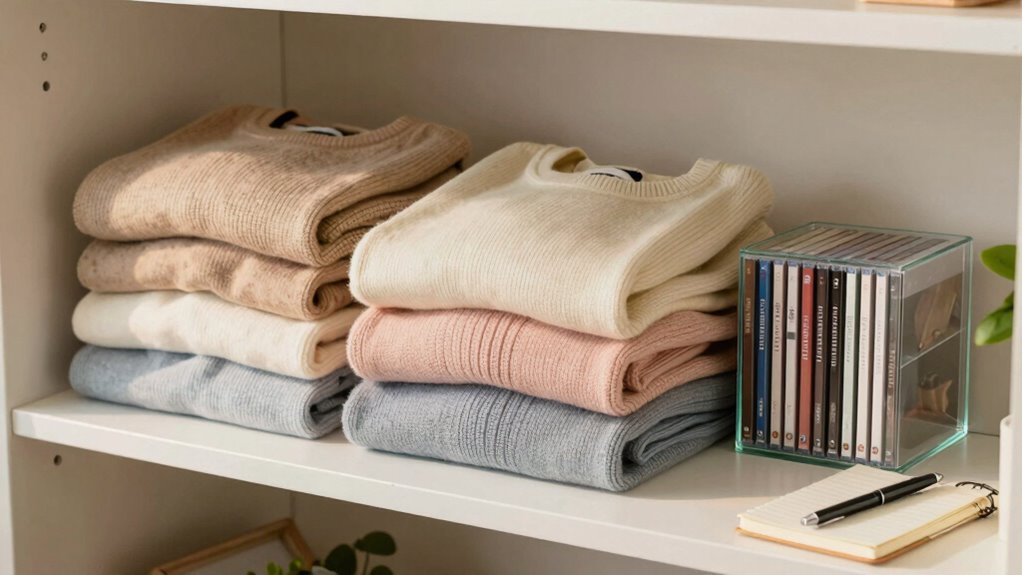

To declutter duplicates without regret, focus on what holds genuine emotional value rather than quantity. Categorize similar items and choose the most meaningful or evocative one, like a special photo or jewelry piece. Remember, preserving memories isn’t about keeping everything but selecting what truly sparks your feelings. Take photos of sentimental items before parting with them and set limits on duplicates. Keep trusting your instincts—they guide you to a space that reflects what matters most. Keep exploring to discover more helpful tips.
Key Takeaways
- Evaluate duplicates based on emotional significance and personal stories, not quantity or appearance.
- Select the most meaningful or representative item from each category to keep.
- Take photos of sentimental items before discarding to preserve memories without physical clutter.
- Trust your instincts and focus on items that evoke specific feelings or memories.
- Embrace diversity in belongings, recognizing each item’s unique story and personal value.
Decluttering duplicates can feel overwhelming, especially when you worry about losing something valuable or sentimental. It’s natural to hesitate, fearing that getting rid of extras might erase memories or diminish sentimental value. But with a thoughtful approach, you can preserve what truly matters while creating a more organized space. The key is understanding that memory preservation isn’t about holding onto every single item but about keeping what genuinely represents your experiences and feelings. When you evaluate duplicates, focus on the story behind each one rather than the item itself. Ask yourself if the item sparks a specific memory or if it’s simply a duplicate that no longer serves a purpose.
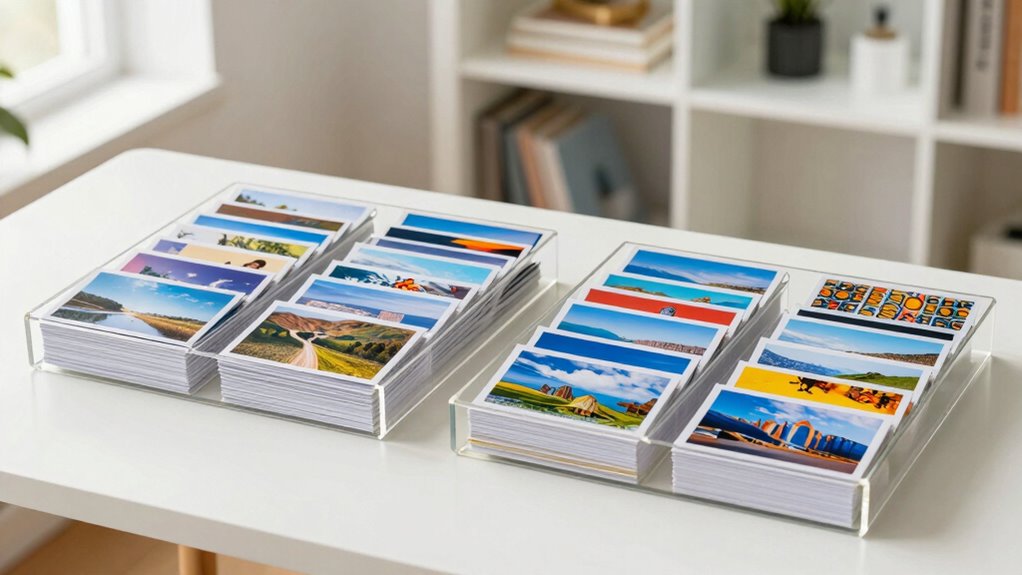
Start by sorting your duplicates into categories. For example, if you have multiple similar photographs, consider which ones truly capture the moment or evoke a special memory. You might find that a single, well-chosen photo can hold more sentimental value than several similar ones. When it comes to sentimental items, it’s often better to keep fewer, more meaningful pieces rather than cluttering your space with duplicates that don’t add emotional significance. Remember, sentimental value isn’t about quantity but about quality and personal meaning. If an item reminds you of a cherished moment or a loved one, keep it. If it’s just a spare or an almost identical copy, it’s okay to let it go.
As you go through your duplicates, consider ways to honor the memories attached to these items even as you declutter. For instance, if you’re discarding a duplicate piece of jewelry, you could take a photo of it before letting it go. This allows you to preserve the memory without holding onto the physical item. It’s also helpful to set limits for yourself, like only keeping one or two of each type of duplicate, especially if they hold sentimental value. This way, you’re balancing memory preservation with practical decluttering. Additionally, understanding the importance of biodiversity and variety can inspire you to appreciate the uniqueness of each item rather than clinging to multiple similar ones. Recognizing emotional attachment as a natural part of the decluttering process can help you make more mindful decisions. Embracing diversity in your belongings encourages you to see each item as part of a richer story rather than just an extra piece. Recognizing the value of diversity in your belongings can also help you see the importance of keeping a variety of items that reflect different memories and experiences. It’s valuable to remember that each item’s personal significance plays a crucial role in your decision-making process.
Ultimately, you want to make decisions based on your emotional connection to each item, not just its presence or quantity. Trust your instincts and remember that decluttering duplicates doesn’t mean losing your memories; it means making space for what truly matters. By focusing on the stories and feelings behind your belongings, you can clear clutter with confidence, knowing you’re preserving what’s most meaningful while creating a more peaceful, intentional living space.
As an affiliate, we earn on qualifying purchases.
Frequently Asked Questions
How Do I Decide Which Duplicate to Keep?
You decide which duplicate to keep by considering your organization tips and storage solutions. Think about which item you use most often or serves a better purpose. Check the condition—keep the one in better shape. Consider space limitations and how each item fits into your system. Trust your instincts, and don’t hesitate to let go of duplicates that no longer serve you, making room for more meaningful organization.
What Should I Do With Sentimental Duplicate Items?
Think of sentimental duplicates as treasured chapters in your life’s story. If emotional attachment runs deep, keep the most meaningful piece, like a letter or photo, and consider passing others to family or donating. If you’re overwhelmed, create a special keepsake box for your top items, ensuring those memories stay close without clutter. Remember, it’s about honoring your sentimental value while making space for new chapters.
How Can I Prevent Duplicates From Accumulating Again?
To prevent duplicates from piling up again, implement organizational strategies like dedicated folders or labels for digital management. Regularly review and delete unnecessary files, and set up automatic backups to avoid creating multiple versions. Keep a clear system for new items, like naming conventions, to minimize accidental duplicates. Staying consistent with your organization and digital habits helps maintain a clutter-free space and keeps duplicates at bay long-term.
Is It Okay to Keep Duplicates for Future Use?
It’s okay to keep duplicates for future use if you have effective organizational strategies and storage solutions in place. By categorizing and labeling your items, you can easily access duplicates when needed without clutter. Use clear bins or designated drawers to store extras, so they don’t pile up. Just make sure you regularly review and update your storage to prevent unnecessary accumulation, keeping your space organized and functional.
How Do I Handle Duplicates in Shared Spaces?
Handling duplicates in shared spaces is like walking a tightrope; balance is key. Use organizational strategies like labeled bins and clear storage solutions to designate specific spots for duplicates. Communicate openly with everyone involved, setting rules for what stays and what gets donated. Regularly review and rotate items to prevent clutter from overtaking your shared space. This way, you keep harmony while efficiently managing duplicates.

Vicoter Velvet Jewelry Box 24 Grid Jewelry Ring Display Organiser Box Tray Holder Earrings Storage Case for Girls Wife Mom Women (Pink)
- Premium Velvet and Durable Material: High-quality velvet with sturdy composite boards
- Compact and Lightweight Design: Measures 8x6x1.8 inches, easy to carry
- Transparent Glass Lid: Allows quick jewelry viewing
As an affiliate, we earn on qualifying purchases.
As an affiliate, we earn on qualifying purchases.
Conclusion
Decluttering duplicates can feel tough, but remember, nearly 60% of people report feeling more organized and less stressed after simplifying their belongings. By thoughtfully choosing what to keep and letting go of extras, you create a cleaner, more functional space without regrets. Trust your judgment and focus on what truly adds value to your life. Embrace the process, and you’ll enjoy a lighter, more peaceful environment that reflects your true priorities.
As an affiliate, we earn on qualifying purchases.
As an affiliate, we earn on qualifying purchases.