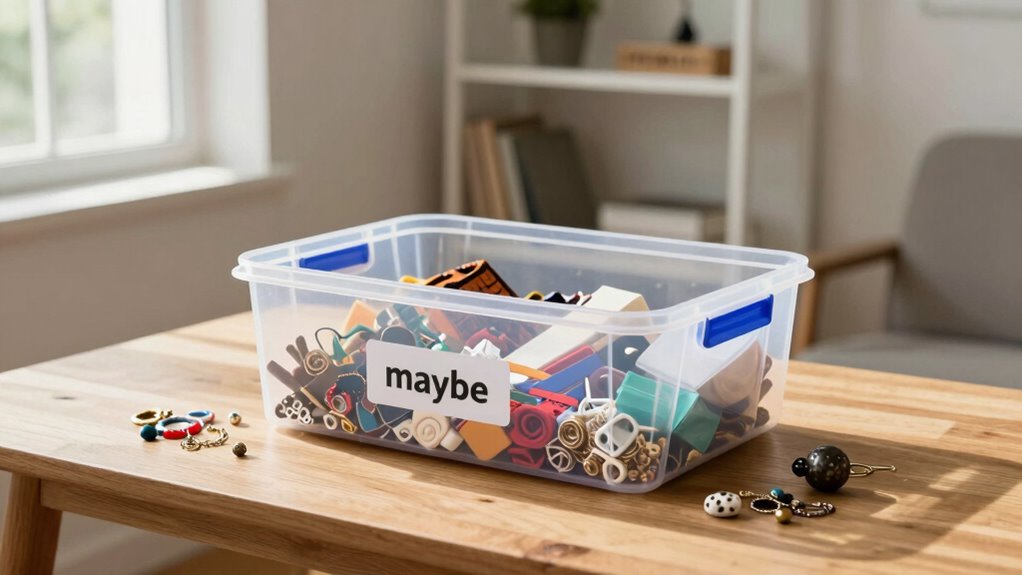

To declutter with a Maybe Box without delaying forever, set a clear timeframe—like one or two months—to revisit it regularly. Be intentional about what you put in, focusing on sentimental items and useful things. Use separate piles to decide whether to keep, donate, or discard, and stick to your decisions during each review. This process helps prevent procrastination and keeps you from endlessly debating. Keep going, and you’ll discover more tips to make decluttering easier.

Get the little things that make your day delivered free — and shop member deals
- Fast, free delivery on millions of items
- Access to Prime Big Deal Days deals on October 6–7
- Prime Video, Amazon Music and more included
Key Takeaways
- Set a strict, realistic timeframe (e.g., 1-2 months) for reviewing the Maybe Box to prevent indefinite delays.
- Regularly schedule reminders to revisit the box and make decisive choices.
- Use decision techniques like “keep,” “donate,” or “discard” piles during each review session.
- Limit the number of items placed in the Maybe Box to avoid overwhelming decision-making.
- Focus on the purpose of the box: to clarify what truly matters and reduce clutter efficiently.
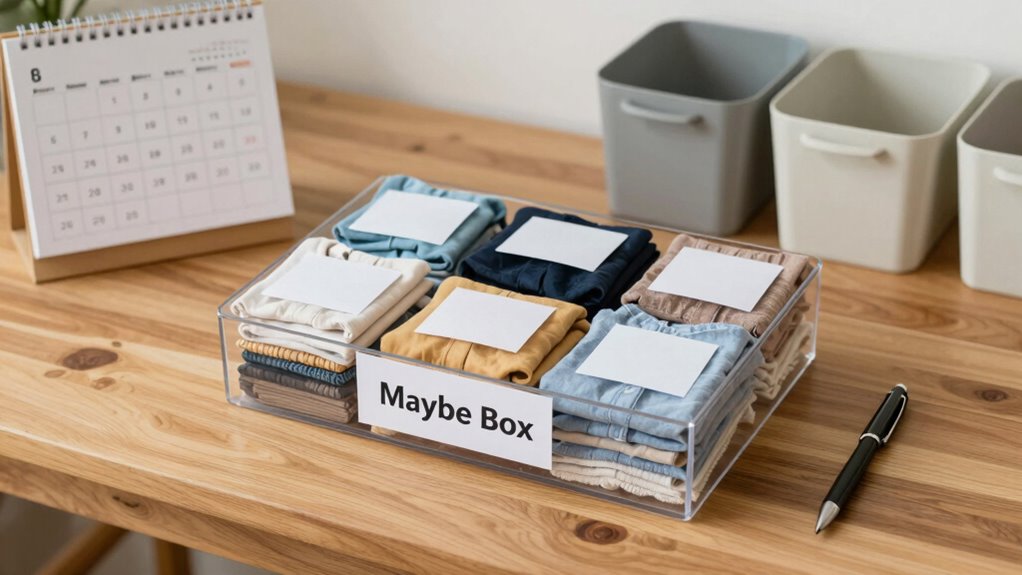
Decluttering can feel overwhelming, especially when you’re unsure whether to keep or toss certain items. One effective way to manage this uncertainty is by using a Maybe Box. This box acts as a holding zone for items you’re torn about, giving you a clear timeframe to decide whether they belong in your space or should go. It’s a practical method that prevents you from endlessly debating over each item, which often leads to procrastination.
When you’re sorting through your belongings, you’ll likely come across sentimental items—things that hold emotional value but no longer serve a practical purpose. Instead of immediately deciding to keep or discard these, place them in the Maybe Box. This gives you time to reflect on their true significance without cluttering your space or feeling pressured. Over time, you may realize that some sentimental items no longer resonate with you, making it easier to let go. For others, you’ll discover that their sentimental value warrants keeping them, and you can return them to your home with renewed purpose.
Using a Maybe Box also helps you explore better storage solutions. As you sort through your belongings, you might find items that are useful but poorly stored, contributing to clutter. When you put these items in the box, it offers a chance to think about how to store them better—whether through new containers, shelves, or designated spaces. This approach encourages you to be intentional about your storage solutions and can help you develop a more sustainable and organized home environment. Incorporating biodiversity awareness into your decluttering process can inspire more sustainable choices, such as donating or repurposing items rather than discarding them unnecessarily. Being mindful of environmental impact can motivate you to make more eco-friendly decisions during your decluttering journey, which aligns with a holistic view of personal well-being.
The key is setting a specific timeframe for revisiting the items in your Maybe Box—say, a month or two. When that period ends, go through the box with a clear mind. If you haven’t thought about or missed certain items, chances are you don’t really need them. Take advantage of decision-making techniques to help clarify your choices and avoid unnecessary attachment. If you still feel unsure about some items, consider creating a separate “keep” or “donate” pile. The goal is to avoid keeping everything just because it’s sentimental or because you’re unsure. This process helps you make more deliberate decisions and prevents the cycle of procrastination that keeps clutter lingering.
As an affiliate, we earn on qualifying purchases.
Frequently Asked Questions
How Long Should I Keep Items in the Maybe Box?
You should keep items in the maybe box for about a month, setting decision deadlines to prevent endless hesitation. Use this storage solution to give yourself time to decide if you truly need the items or if they can go. After the deadline, if you haven’t used or thought about them, it’s best to donate or discard. This approach keeps clutter at bay and makes decluttering more manageable.
What Types of Items Are Best Suited for the Maybe Box?
Imagine holding a dusty, forgotten keepsake—sentimental items or duplicate belongings—that spark a flicker of nostalgia or practicality. These are perfect for your maybe box. You should include items you’re unsure about but might need later, like old clothes, unused gadgets, or sentimental mementos. These items evoke emotion or serve a purpose, yet aren’t urgent. The maybe box helps you decide what truly belongs in your space.
How Do I Prevent Emotional Attachment to Items in the Maybe Box?
To prevent emotional attachment to items in your maybe box, recognize your emotional triggers and remind yourself that sentimental items don’t hold your memories—they’re in your mind. When you feel tempted to keep something, ask if it truly adds value or if it’s just a sentimental item you’re holding onto out of habit. Focus on creating new memories rather than clinging to objects that evoke emotional triggers.
What if I Forget to Revisit the Maybe Box?
Remember, out of sight, out of mind. To prevent forgetting the maybe box, set regular reminders or schedule specific dates to revisit it. Use memory triggers like seasonal changes or anniversaries to prompt your review. When revisiting, consider sentimental value carefully, and ask yourself if you truly need to keep each item. This way, you stay mindful, and your clutter stays under control without losing meaningful keepsakes.
How Can I Stay Motivated to Declutter Over Time?
You stay motivated by turning decluttering into a habit. Use motivation techniques like setting small, achievable goals and rewarding yourself for progress. Schedule regular declutter sessions, so it becomes part of your routine, not a chore. Remind yourself of the benefits, like a cleaner space and less stress. Keep track of your progress, and celebrate milestones to maintain your momentum. Over time, decluttering will feel natural and rewarding.
storage containers for sentimental items
As an affiliate, we earn on qualifying purchases.
As an affiliate, we earn on qualifying purchases.
Conclusion
By using a maybe box, you stay organized without feeling overwhelmed, giving yourself permission to keep items temporarily. Remember, it’s about progress, not perfection—think of it as a parking spot for your indecision. If after a few months you haven’t needed or thought about an item, it’s time to let it go. Visualize your decluttered space, free from clutter, and enjoy the lighter, more peaceful environment you’ve created.
decluttering decision-making tools
As an affiliate, we earn on qualifying purchases.
As an affiliate, we earn on qualifying purchases.
reminder system for home organization
As an affiliate, we earn on qualifying purchases.
As an affiliate, we earn on qualifying purchases.
NFL season / tailgating Picks
team gear
As an affiliate, we earn on qualifying purchases.