
Decluttering is a powerful act of self-care that can considerably reduce stress and boost emotional well-being. When you tidy your space, you create a calming environment that helps clear mental clutter, improve focus, and strengthen self-esteem. It’s not just about organization; it’s about nurturing your mental and physical health, gaining a sense of control, and fostering resilience. Discover how making decluttering a routine can truly transform your well-being.
Key Takeaways
- Decluttering promotes emotional well-being by reducing chaos and visual noise, fostering calm and mental clarity.
- Incorporating decluttering into routines transforms it into a self-care practice that enhances mental health.
- The therapeutic act of organizing boosts self-esteem, confidence, and feelings of accomplishment.
- Small, consistent decluttering efforts build sustainable habits that maintain a peaceful and inviting environment.
- Clearing clutter improves physical health by reducing allergens and supporting better hygiene, contributing to overall self-care.
The Connection Between Clutter and Stress Relief

Clutter directly contributes to stress because it creates a chaotic environment that overwhelms your senses. When your space is messy, your mind struggles to process everything around you, leading to feelings of worry and frustration. The visual noise of clutter can make it harder to relax and focus, increasing your cortisol levels—the stress hormone. This constant sensory overload leaves you feeling overwhelmed, anxious, and mentally drained. By contrast, a tidy space fosters a sense of calm and control, helping you feel more centered. Removing clutter reduces this mental clutter, making it easier to breathe, relax, and think clearly. When your environment is organized, you experience less stress and create a peaceful sanctuary that supports your emotional well-being. Incorporating simple design principles can further enhance your sense of order and tranquility in your space.
How Decluttering Enhances Mental Clarity and Focus
When your environment is disorganized, it competes for your attention, making it difficult to concentrate on tasks. Clutter overloads your visual space, increasing mental load and distraction. Decluttering helps by:
- Removing visual chaos, allowing your mind to focus on what’s important
- Creating a sense of order that reduces mental clutter
- Improving your ability to track progress and stay motivated
With a tidy space, your brain isn’t constantly scanning for distractions. Instead, it can allocate energy to problem-solving and creative thinking. You’ll notice better concentration, quicker decision-making, and enhanced productivity. The mental clarity from decluttering clears the way for sharper focus, making everyday tasks less overwhelming. Less clutter means less mental noise, helping you stay present and engaged. Additionally, connecting with your inner wisdom through organized surroundings can deepen your self-awareness and promote personal growth.
Emotional Benefits of Creating a Tidy Environment
Creating a tidy environment can considerably boost your emotional well-being by fostering a sense of calm and control. When your space is organized, you feel less overwhelmed and more grounded, which reduces feelings of anxiety. Decluttering helps lift emotional burdens by symbolizing a fresh start and letting go of past stressors. It also creates a soothing atmosphere, encouraging relaxation and mental peace. As you tidy up, you experience a sense of accomplishment, which boosts your confidence and self-esteem. This act of caring for your environment reinforces a positive self-image and nurtures emotional resilience. Ultimately, a clean, orderly space promotes feelings of pride, safety, and emotional stability, making it easier to face daily challenges with a clearer mind and a calmer heart. Engaging in regular decluttering can also improve your overall mental health by reducing clutter-related stress and creating space for positive activities.
Boosting Creativity and Productivity Through Organization

Organizing your space can considerably boost your creativity and productivity by providing a clear environment that fosters focus. When your surroundings are tidy, your mind is less distracted, making it easier to generate ideas and complete tasks efficiently. A decluttered space helps you prioritize what matters and minimizes mental overload. Plus, seeing tangible progress from organizing can motivate you to tackle more projects. You’ll find it easier to stay on track and maintain momentum. Incorporating simple systems into your routines can make ongoing organization more manageable and less overwhelming. To enhance your focus and output, consider: – Creating designated zones for different activities to streamline workflow – Keeping only essential tools nearby to avoid unnecessary searching – Using visual cues like labels or color coding for quick identification
A tidy space boosts focus, sparks creativity, and keeps you motivated to accomplish more.
These small changes can make a significant difference in your daily productivity.
Physical Health Perks of a Decluttered Space

A cluttered space can considerably impact your physical health, as it often harbors dust, mold, and pests that pose health risks. Excess clutter traps dirt, making it harder to keep your environment clean and increasing allergy or asthma symptoms. Piles of clutter can also hide mold or pests, which further threaten your respiratory health. When you declutter, you remove these hazards, creating a cleaner, safer space. Tidying up reduces dust buildup and minimizes exposure to allergens. Additionally, a more organized environment encourages better hygiene habits, making cleaning easier and more effective. Improving your indoor air quality through decluttering can also enhance ventilation and reduce airborne contaminants. Ultimately, a decluttered space supports healthier breathing, lowers the risk of respiratory issues, and promotes overall physical well-being. Taking these steps makes your environment safer and more conducive to good health.
Building Self-Esteem and a Sense of Control

Taking charge of your environment through decluttering can substantially boost your self-esteem and sense of control. When you decide what stays and what goes, you reinforce your ability to shape your space and life. This act of choice builds confidence and reduces feelings of helplessness. As you organize, you’ll notice:
Taking control through decluttering boosts self-esteem and reinforces your ability to shape your space and life.
- You feel more competent handling your surroundings.
- Gaining control over belongings decreases guilt and anxiety.
- A tidy space makes social interactions more comfortable.
- Incorporating sustainable transportation options like e-bikes can further enhance your sense of agency and well-being.
These small victories remind you that you’re capable of managing your environment. Over time, this sense of mastery extends beyond your space, strengthening your self-worth and resilience. Decluttering becomes a powerful tool for fostering a positive self-image and reclaiming your personal power.
Practical Steps to Incorporate Decluttering Into Self-Care Routines
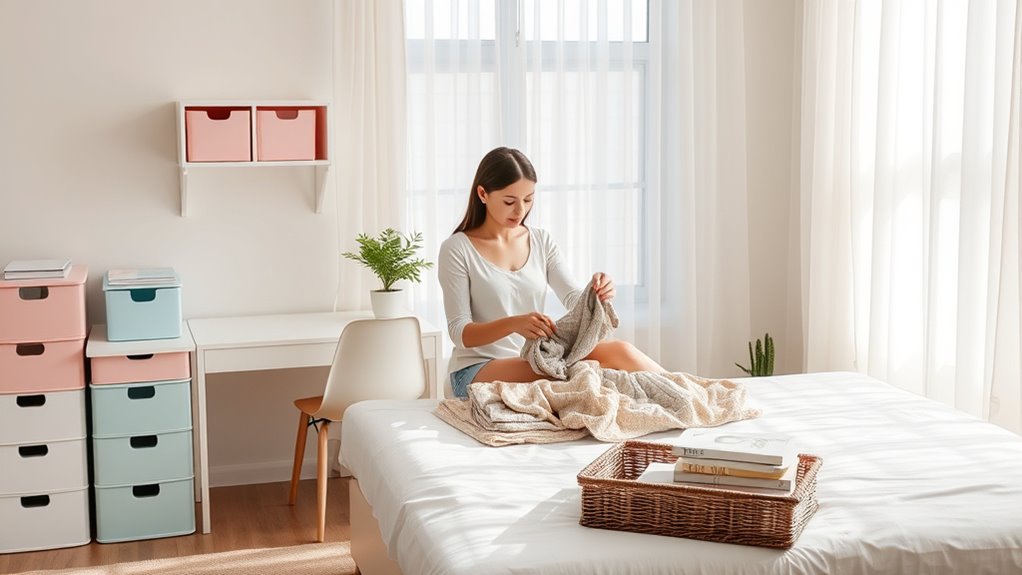
To make decluttering a consistent part of your self-care, start by setting clear, achievable goals that motivate you. Establish routine habits, like dedicating a few minutes each day or week to tidying up, so it becomes second nature. By creating a structured plan, you’ll find it easier to stay organized and enjoy the emotional benefits of a clutter-free space. Incorporating home décor inspiration can also help motivate you to personalize your space and make the process more enjoyable.
Set Clear Goals
Establishing clear goals is essential for turning decluttering into an effective self-care routine. When you define what you want to achieve, you stay focused and motivated. Start by identifying specific areas or items to tackle, like your closet or kitchen drawers. This targeted approach helps prevent overwhelm and keeps you on track. To make it manageable, consider setting goals such as:
- Completing one area each weekend
- Reducing clutter by a certain percentage
- Creating a more organized space for relaxation
Having clear objectives gives you a sense of direction and progress. It turns decluttering from a formidable task into a purposeful act of self-care. Remember, small, achievable goals lead to lasting change and a more calming environment. Incorporating energy-efficient solutions can also enhance your space’s sustainability and comfort.
Establish Routine Habits
Incorporating decluttering into your daily or weekly routines makes self-care more sustainable and effective. Set specific, manageable habits, like spending five minutes each morning tidying your workspace or dedicating Sunday afternoons to organizing a closet. Consistency transforms decluttering from a one-time task into a natural part of your life. Use reminders or alarms to stay on track, and celebrate small wins to maintain motivation. Establishing routines helps prevent clutter buildup, reduces overwhelm, and keeps your environment calm and inviting. Over time, these habits strengthen your sense of control and self-efficacy. Remember, the goal isn’t perfection but progress. Small, deliberate actions create lasting changes, making self-care through decluttering a rewarding, ongoing practice. Incorporating routine habits can also support your overall mental well-being by fostering a sense of order and calm.
Frequently Asked Questions
How Often Should I Declutter for Optimal Stress Relief Benefits?
You should declutter at least once a month to experience peak stress relief benefits. Regular tidying helps maintain an organized environment, reducing clutter-induced anxiety and lowering cortisol levels. It also keeps your space calm and manageable, preventing overwhelm. If possible, do quick weekly tidies to stay on top of clutter, and schedule deeper decluttering sessions seasonally or bi-monthly for sustained emotional and mental clarity.
Can Decluttering Help With Specific Mental Health Conditions?
Yes, decluttering can help with specific mental health conditions like anxiety, depression, and ADHD. It reduces overwhelm, creates a sense of control, and eases mental clutter, which can improve mood and focus. By organizing your space, you may experience decreased stress, enhanced emotional well-being, and better concentration. Regular decluttering supports mental clarity, helps manage symptoms, and boosts confidence, making it a valuable self-care practice for mental health maintenance.
What Are Quick Decluttering Tips for Busy Schedules?
Quickly clear clutter by tackling tiny tasks—sort, sweep, and sort again. Break your busy day into manageable moments, like five-minute fixes or a swift sweep through your space. Prioritize problem areas first to make an immediate impact. Keep containers close for quick organization, and develop a ritual of regular, rapid tidying. These simple steps help you stay structured, stress-free, and serene despite your hectic schedule.
How Do I Maintain a Clutter-Free Space Long-Term?
To maintain a clutter-free space long-term, set up daily routines like putting things away immediately, and schedule weekly tidying sessions. Use storage solutions to keep belongings organized and visible. Regularly assess what you no longer need, and avoid bringing unnecessary items home. Keep surfaces clear and create designated spots for everything. Staying consistent with these habits makes it easier to enjoy a tidy, calming environment every day.
Is Professional Organizing Worth Investing in for Self-Care?
Yes, investing in professional organizing is worth it for self-care. It helps you create a personalized, clutter-free environment that reduces stress, boosts mood, and enhances focus. A professional organizer can teach you effective habits to maintain order, giving you a sense of control and accomplishment. Plus, the physical activity involved improves your well-being. Overall, it’s a smart investment in your mental and emotional health.
Conclusion
Think of your space as a garden. When you clear away the weeds and tend to your plants, it blooms beautifully, just like your mind when you declutter. Each item you let go of makes room for growth, clarity, and peace. By nurturing your environment, you nurture yourself. Embrace decluttering as your personal tending ritual—watch how your mental landscape blossoms, transforming stress into serenity and chaos into calm.