
To manage a tiny home mess, start by evaluating and prioritizing clutter, focusing on high-traffic areas and items you genuinely use. Maximize storage with multi-purpose furniture, vertical shelves, and clear bins. Create designated zones for sleeping, cooking, and relaxing to improve flow. Establish daily and weekly routines for tidying and decluttering, and stay consistent to prevent buildup. Keep your space organized and peaceful by applying these tips—there’s more to discover below.
Key Takeaways
- Prioritize high-traffic areas and frequently used items to maximize space and reduce clutter quickly.
- Utilize multi-use furniture and vertical storage solutions to optimize limited space efficiently.
- Create designated zones for sleeping, cooking, and relaxing to improve flow and organization.
- Establish daily routines like tidying after use and weekly decluttering to maintain order over time.
- Regularly review and adjust storage systems and habits to prevent clutter buildup in your tiny home.
Assess and Prioritize Your Clutter
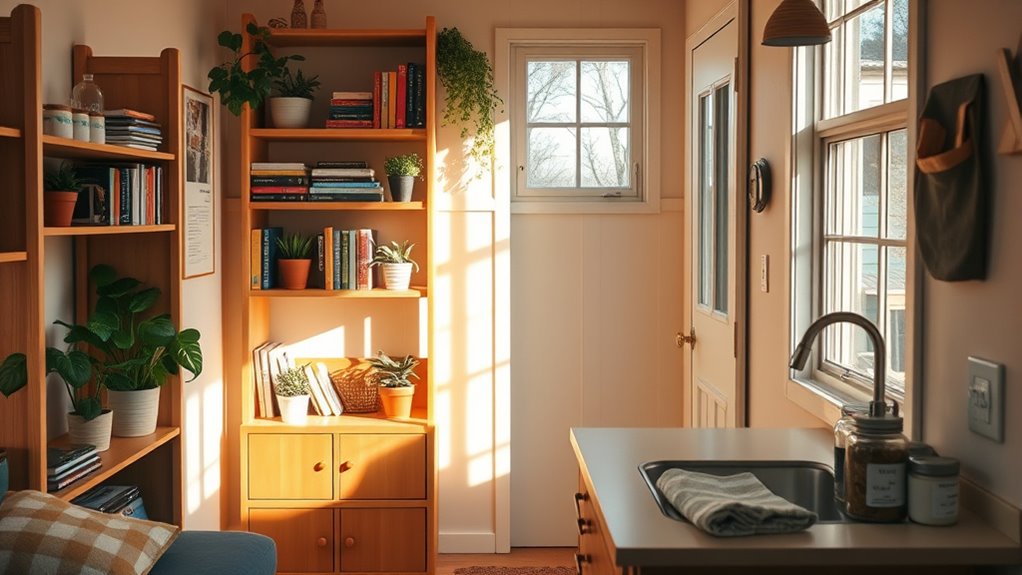
Before you begin decluttering, it’s essential to assess and prioritize your clutter. Understanding the clutter causes helps you identify what truly needs to go. Some items might be sentimental, while others are simply unnecessary or forgotten. Organizing basics start with sorting through your belongings and recognizing what adds value versus what clutters your space. Focus on high-traffic areas first, as clutter in these spots affects daily living. Ask yourself which items you use regularly and which ones you haven’t touched in months. Prioritizing helps prevent overwhelm and ensures you tackle the most impactful clutter first. Additionally, understanding the causes of clutter can help you develop more effective strategies to manage and prevent future buildup. Being aware of how water-related clutter can accumulate in small spaces highlights the importance of regular maintenance and organization. Recognizing common clutter triggers can also help you address underlying issues and maintain a tidy space over time. Identifying silly clutter habits that contribute to messes can help you create lasting habits for tidiness.
Maximize Storage Solutions
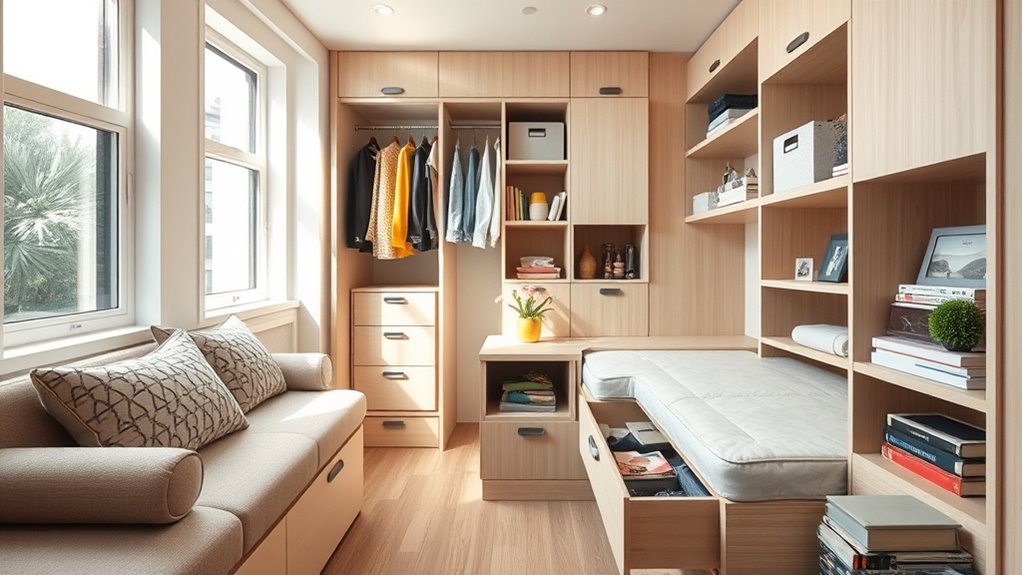
Once you’ve identified what needs to be decluttered, the next step is to make the most of your available space with smart storage solutions. Using multi-use furniture, like ottomans with hidden compartments or beds with built-in drawers, helps save space while providing extra storage. Vertical storage is another game-changer; install wall-mounted shelves or tall cabinets to keep belongings organized without crowding your floors. Hang hooks or pegboards for frequently used items, freeing up drawers and countertops. Opt for stackable containers and clear bins to maximize closet and pantry space, making everything easier to see and access. Incorporating storage ratios can further optimize space utilization, ensuring your tiny home remains functional and clutter-free. Additionally, integrating smart home organization systems, such as automated closet management or digital inventory apps, can help you keep track of your belongings more efficiently. Research shows that smart storage solutions not only increase efficiency but also enhance the overall aesthetic of small living spaces. For example, selecting appropriate storage ratios tailored to your needs can prevent overcrowding and maintain a balanced environment. By combining these strategies, you’ll create a more organized, functional tiny home that feels spacious and clutter-free.
Create Functional Zones
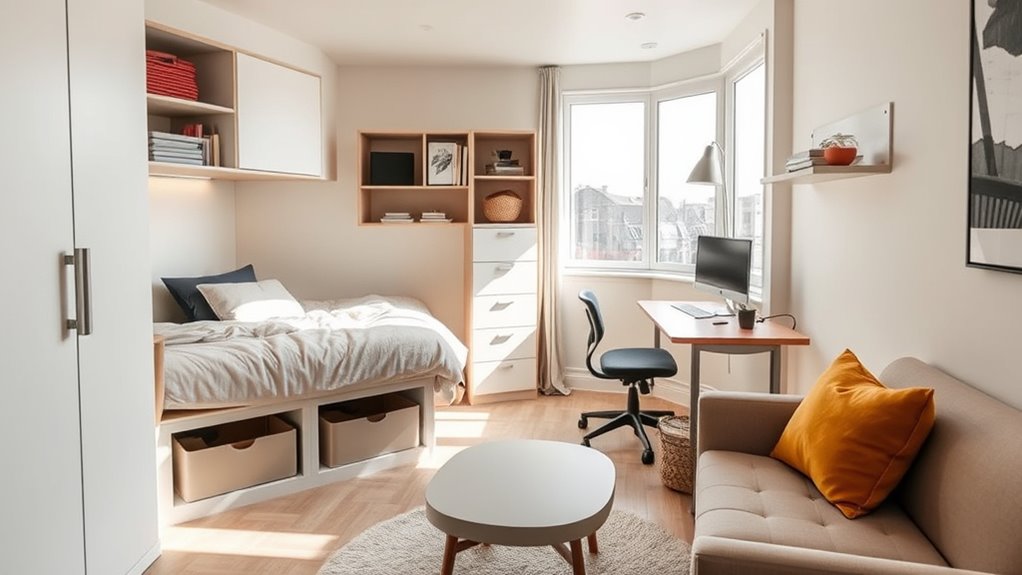
Creating distinct functional zones in your tiny home helps maximize space and improve flow. Designate areas for sleeping, cooking, working, and relaxing to prevent clutter from spreading. Use multi purpose furniture, like sofa beds or fold-away desks, to serve dual functions and save space. Incorporate decorative storage solutions, such as attractive baskets or wall-mounted shelves, to keep items organized within each zone. Clear boundaries between areas can be defined with rugs, curtains, or furniture arrangements, making each zone feel intentional. This setup not only keeps your home tidy but also enhances usability, allowing you to transition seamlessly from one activity to another. Additionally, understanding the importance of proper storage solutions can help protect your belongings and ensure your tiny home remains clutter-free. Implementing tool organization techniques, such as labeled bins and wall-mounted hooks, can further streamline your space and make daily routines more efficient. Recognizing the importance of storage in small spaces can dramatically improve the overall functionality of your home. Incorporating ventilation considerations can also help maintain a fresh and comfortable environment, especially in compact living areas. Utilizing electric power generation options like bike generators can provide a sustainable energy source for powering small appliances or charging devices in your tiny home, further optimizing your limited space.
Establish Daily and Weekly Decluttering Routines
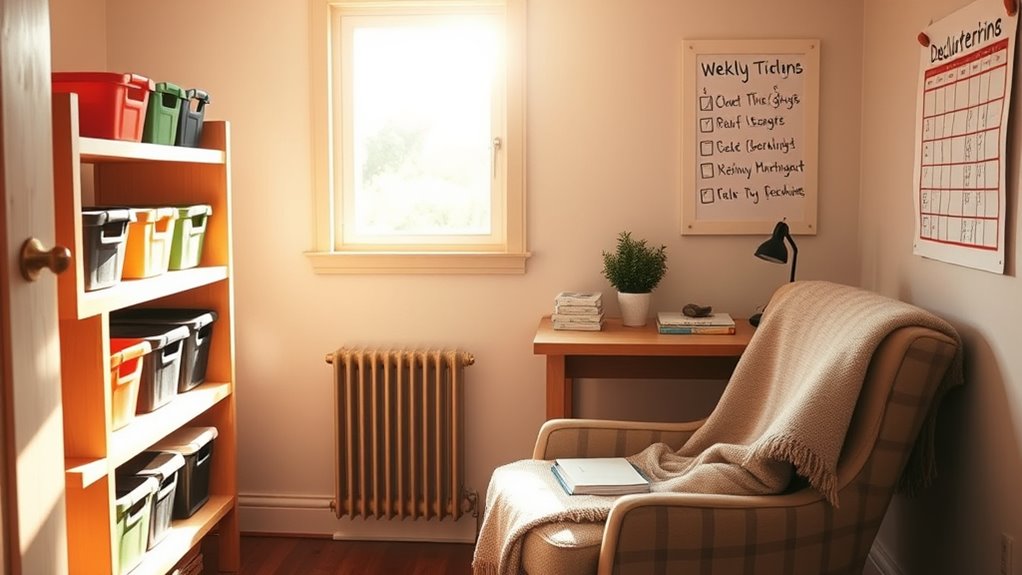
Establishing daily and weekly decluttering routines is essential for maintaining an organized tiny home. Each day, spend a few minutes organizing digital files, deleting unnecessary emails, and updating folders. This practice helps prevent digital clutter from piling up and becoming overwhelming. Weekly, set aside time to manage sentimental items—decide what to keep, donate, or discard. Regularly tidying your physical space, like putting away items after use, helps avoid clutter buildup. Create a schedule that fits your lifestyle, whether it’s a quick 10-minute daily tidy or a more thorough weekly declutter. Consistency makes the process manageable and less overwhelming. Incorporating energy-efficient cloud solutions can also help streamline your digital organization and reduce energy consumption. Utilizing smart decluttering tools can further simplify maintaining order in your small space. Over time, these routines become second nature, making your tiny home feel more spacious and peaceful. Staying committed to routine decluttering keeps clutter from taking over your small space.
Frequently Asked Questions
How Do I Decide What to Keep and What to Discard?
You decide what to keep and discard by using organizing strategies that focus on practicality and emotional attachment. Ask yourself if the item serves a purpose or brings you joy. If it’s not useful or meaningful, it’s time to let go. Be honest about what you really need, and set aside items with sentimental value only if they truly add to your happiness. This helps create a clutter-free, functional space.
What Are the Best Space-Saving Furniture Options?
You should choose multi functional furniture like sofa beds or ottomans with storage to maximize your space. Folding storage solutions, such as collapsible tables or wall-mounted shelves, help keep clutter out of sight when not in use. Opt for pieces that serve multiple purposes, allowing you to save space and stay organized. This way, your small space remains functional, tidy, and comfortable without feeling cramped.
How Can I Maintain Motivation During Decluttering?
Imagine your motivation as a flame that needs stoking—you can do this! Keep your spirits high by surrounding yourself with motivational quotes that inspire you, and celebrate progress no matter how small. Each item you declutter is a victory, fueling your momentum. When you hit a rough patch, remember your goal and focus on how amazing your space will feel once it’s clutter-free. Keep going—you’ve got this!
What Are Eco-Friendly Ways to Dispose of Unwanted Items?
You can eco-friendly dispose of unwanted items by taking them to recycling centers or donation charities. Recycling centers guarantee materials like paper, plastic, and metal are reused, reducing waste. Donation charities gladly accept clothes, furniture, and household goods, giving them a new life instead of ending up in landfills. This way, you declutter responsibly and help others, making your small space more sustainable and organized.
How Do I Involve Family Members in Decluttering Efforts?
You involve family members in decluttering by encouraging family collaboration and sharing responsibilities. Start by explaining the benefits of a tidy space and set clear goals together. Assign each person specific tasks based on their strengths or interests, making it a team effort. Keep the mood positive, celebrate small wins, and guarantee everyone feels involved and valued. This approach makes decluttering more efficient and strengthens your family bond.
Conclusion
Living in a tiny home means staying organized is key. By decluttering regularly, you can free up space and enjoy a more peaceful environment. Did you know that the average person spends 12 minutes a day searching for misplaced items? That adds up! So, keep these tips in mind, create routines, and prioritize what truly matters. Small space living is about quality, not quantity—embrace it and make your tiny home a cozy, clutter-free haven.