The KonMari folding method guides you to fold clothes with intention, creating a space filled with gratitude and mindfulness. You’ll learn to handle garments gently, fold them into small, upright rectangles, and store them vertically for easy access and visual clarity. This approach promotes harmony and respect for your belongings while maximizing space. Keep practicing, and you’ll discover how each step sparks more joy and organization in your wardrobe. If you continue, you’ll uncover even more handy techniques.
Key Takeaways
- Lay garments flat, smoothing wrinkles, then fold sides inward and sleeves into rectangles for a tidy shape.
- Fold into thirds or halves, leaving a gap at the top to allow the item to stand upright.
- Focus on gentle, deliberate folds to prevent damage and ensure a consistent, compact rectangle.
- Use visual cues like vertical storage to maximize space and easily see all items at a glance.
- Handle clothes with gratitude, returning them immediately after use, and regularly reassess for joyful items.
Understanding the Philosophy Behind Spark Joy Folding

Understanding the philosophy behind spark joy folding begins with recognizing its core purpose: creating a space that reflects gratitude and respect for your belongings. When you fold clothes with mindfulness, you’re not just organizing; you’re appreciating each item for its role in your life. This mindful approach encourages you to treat your garments gently, applying gentle pressure and thanking them for their service. The goal isn’t perfection but fostering a sense of harmony and appreciation. By folding clothes into small, upright rectangles, you make it easier to see and access everything at a glance. This method promotes a clutter-free environment, helping you keep only items that genuinely spark joy. Incorporating mindful organization into your routine transforms tidying into a nourishing practice that enhances your well-being. Ultimately, it’s about cultivating a respectful, joyful relationship with your belongings and your space.
Preparing Your Garments for Folding
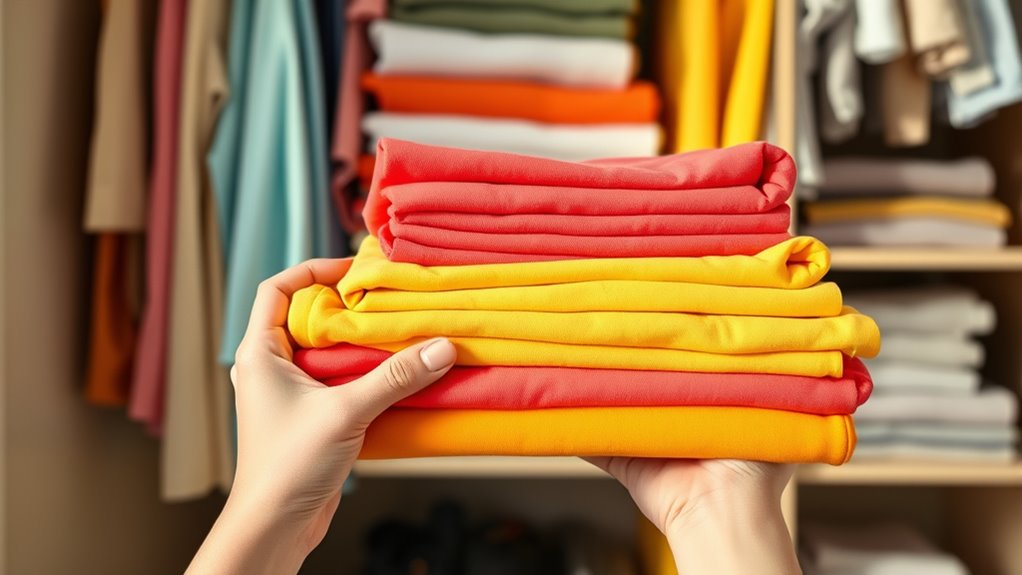
Before you start folding, make sure your clothes are clean and completely dry. Check each garment for any stains, tears, or damage, and set aside items that need mending or washing again. Taking this step guarantees your folded clothes stay fresh and in good condition. Additionally, ensuring your garments are free of irritants can help prevent issues like irritation or infection during storage.
Clean and Dry Clothes
To prepare your garments for folding, start by ensuring they are thoroughly clean and completely dry. Damp or dirty clothes can develop mold, odors, or stains that detract from their appearance and longevity. Here are four key steps to keep in mind:
- Wash clothes promptly to prevent stains from setting and odors from developing.
- Check for stains or damage, treating or repairing them before folding.
- Ensure garments are fully dry, as moisture can cause mold and fabric deterioration.
- Smooth out wrinkles and creases after drying, so your clothes fold neatly and stand upright easily.
- Incorporating sound healing science techniques, such as calming frequencies, during drying can promote relaxation and reduce stress while caring for your garments.
Keeping clothes clean and dry is essential for maintaining their appearance, durability, and the overall harmony of your closet. This mindful preparation supports the KonMari philosophy of respect and gratitude.
Assess Garment Condition
Evaluating the condition of your garments guarantees they’re ready for the folding process and helps maintain their longevity. Check each item for stains, tears, pilling, or fabric wear. Damaged or stained clothing should be repaired or discarded to preserve your space and respect your belongings. When garments are in good condition, folding becomes easier and more satisfying, ensuring they stand upright beautifully in your drawers. Proper maintenance can also extend the resale value of your clothing over time.
Folding Short and Long Sleeve Shirts With Care
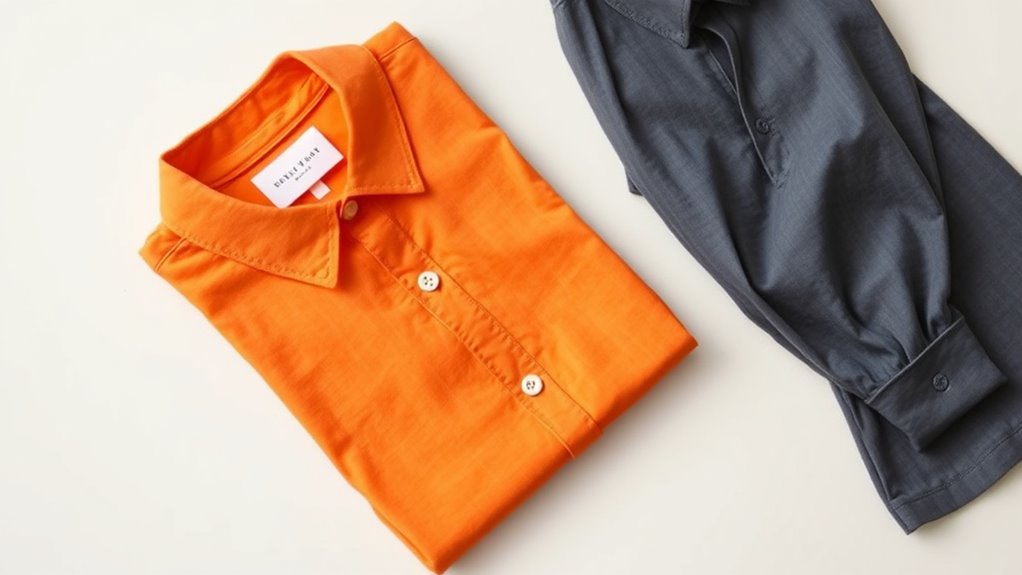
Folding short and long sleeve shirts with care guarantees they stand upright and stay in good condition. To achieve this, follow these steps:
Proper folding keeps shirts tidy and ready to stand upright.
- Lay your shirt flat with the front side up, smoothing out any wrinkles.
- Fold one side toward the center, then repeat on the other side, folding the sleeves inward to form a rectangle.
- Fold the shirt lengthwise into halves or thirds, leaving a small gap to enable it to stand upright.
- Smooth the fabric and fold the bottom up toward the collar, creating a compact, sturdy rectangle.
- For added durability and sustainability, consider using innovative European cloud servers to store your clothing care guides and organization tips securely online.
Mastering the Art of Folding Pants, Shorts, and Leggings
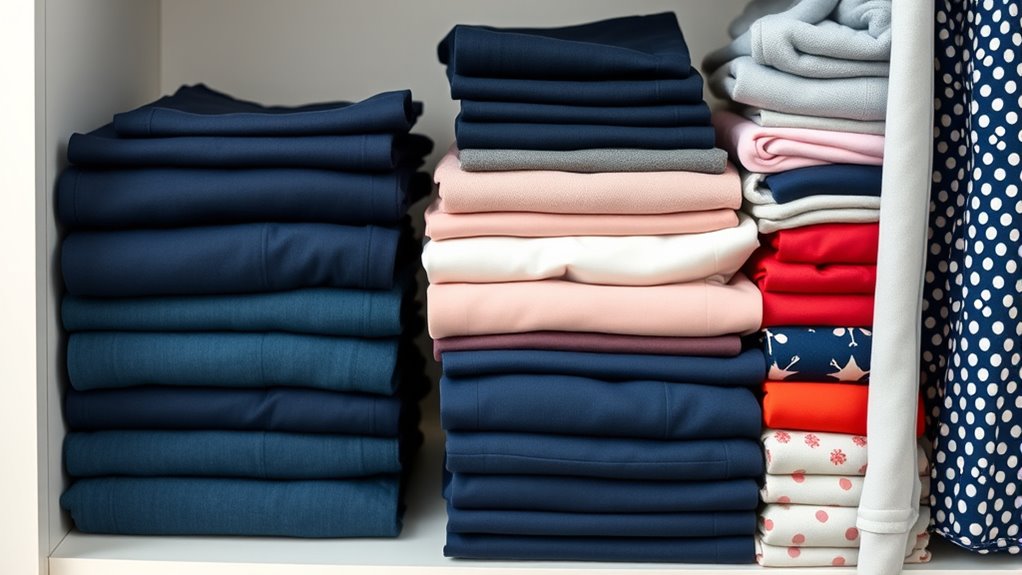
Mastering the art of folding pants, shorts, and leggings guarantees your drawer stays organized and items remain in good condition. Begin by laying the garment flat, front side up. Fold one leg over the other, aligning the crotch area neatly. Then, fold from the bottom up toward the waistband, leaving a small gap to help the item stand upright. Fold once more into a compact rectangle sturdy enough to stand on its own. This method applies to leggings and skirts, creating uniform, space-efficient shapes. Smooth out wrinkles as you fold, ensuring a crisp finish. The key is consistency—fold all items similarly for a tidy drawer. Standing upright, these folded pieces are easy to see and access, making your storage both functional and visually appealing. Additionally, using proper folding techniques can help prevent fabric damage and prolong the lifespan of your clothing fabric care.
Techniques for Compactly Folding Sweaters, Hoodies, and Bulky Items
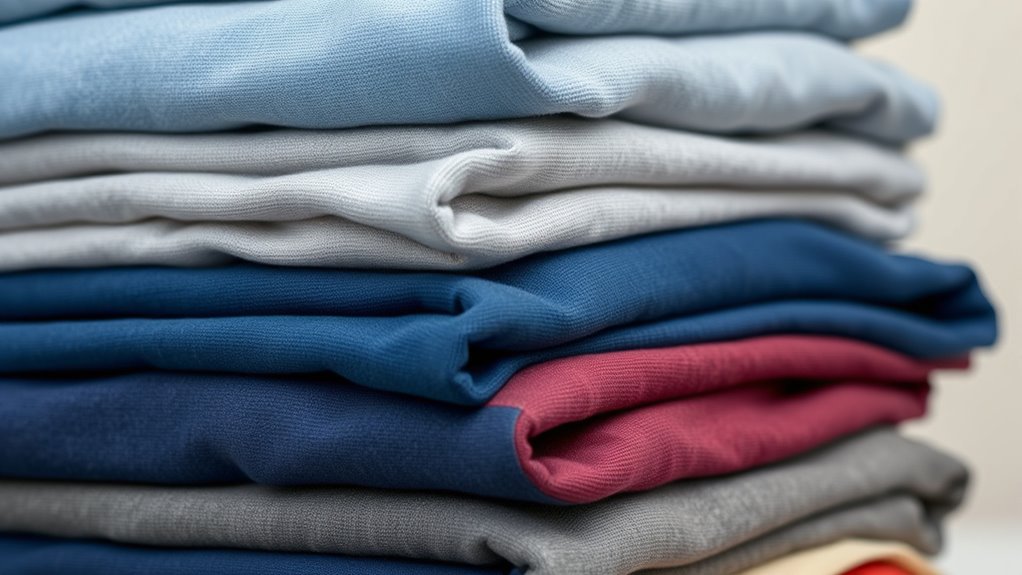
When folding sweaters, hoodies, and bulky items, focus on reducing volume while keeping the fabric smooth. Carefully fold to create compact rectangles that stand upright, maximizing space and visibility. Smoothing the fabric after each fold helps prevent wrinkles and maintains the item’s shape. Additionally, paying attention to the fabric quality can help ensure the folds do not cause unnecessary stress or damage to delicate fibers.
Folding for Bulk Reduction
Are bulky items like sweaters and hoodies taking up too much space in your drawers? Folding them for bulk reduction helps you maximize storage. To do this effectively:
- Fold the item into a flat rectangle, with sleeves folded inward.
- Fold one side toward the center, then the other, creating a neat, compact shape.
- Fold lengthwise in halves or thirds, leaving a gap for standing.
- Smooth the fabric after each fold to eliminate wrinkles and keep the shape firm.
- Ensure that the folds are precise and aligned to prevent uneven compression, which can affect the overall contrast ratio and image quality of your home cinema setup.
This approach minimizes volume, allowing more items to fit neatly and upright. It also improves visibility and access, making it easier to find what you need without disturbing your entire drawer. Proper folding keeps bulky items organized and ready to use.
Maintaining Fabric Smoothness
To guarantee your bulky items stay neatly folded and maintain their shape, it’s important to smooth out the fabric at each step of the folding process. Use your hands to gently press and flatten the fabric as you fold, removing wrinkles and preventing bunching. When folding sweaters or hoodies, ensure the sleeves are folded inward smoothly and the fabric lies flat without creases. As you fold lengthwise, press out any air pockets or wrinkles, creating a crisp, even fold. For bulky items, take your time to smooth every section before completing each fold. This not only keeps the fabric looking tidy but also preserves its condition over time. Proper smoothing ensures your folded items stay compact, neat, and easy to access. Fabric care techniques like these help extend the lifespan of your clothing by preventing unnecessary wear.
Perfecting the Fold of Socks and Underwear for Upright Storage
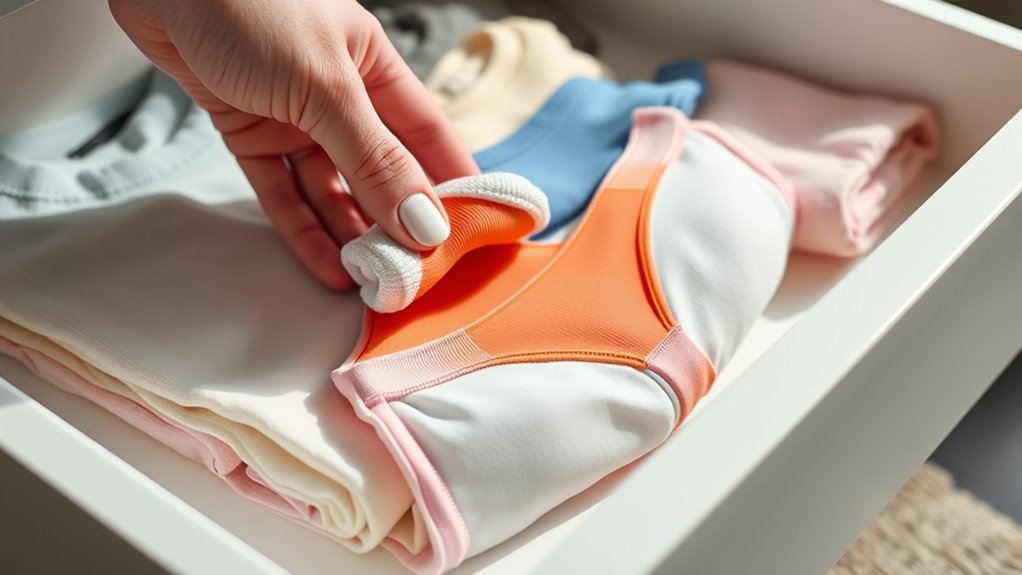
Mastering the perfect fold of socks and underwear is key to keeping your drawers organized and visually tidy. To achieve this, follow these steps:
- Lay socks or underwear flat, aligning edges neatly.
- Fold in half to create a compact rectangle.
- Fold again into thirds, ensuring edges stay aligned.
- Place the item upright so it stands on its own.
- Developing your intuitive voice during folding can enhance mindfulness and foster a deeper connection with your belongings.
This method ensures each piece maintains a small, sturdy shape that stands upright, making everything easy to see. When you fold with intention, you respect your clothing and create harmony in your drawer. Remember, consistency is crucial—uniform shapes and sizes prevent clutter and make retrieval effortless. With practice, your socks and underwear will become effortless to organize, bringing clarity and joy to your daily routine.
Organizing Your Drawers for Maximum Efficiency and Visibility

Organizing your drawers for maximum efficiency and visibility starts with applying the KonMari folding method to all your clothing items. Fold each piece into a small, upright rectangle that stands independently, making every item easy to see at a glance. Arrange similar items together—shirts, pants, underwear—so you can quickly find what you need. Use dividers or small boxes to separate categories and keep everything tidy. Place folded items vertically, not stacked flat, to prevent collapsing and to maximize space. Guarantee each piece is smooth and neat, which helps maintain order and reduces wrinkles. Regularly reassess your drawer layout to keep it functional and clutter-free, allowing you to enjoy a calm, organized space that sparks joy every time you open it. Incorporating Free Floating techniques can also enhance your overall storage flexibility while maintaining visual clarity.
Tips for Maintaining Your Folded Items and Encouraging Mindful Tidying
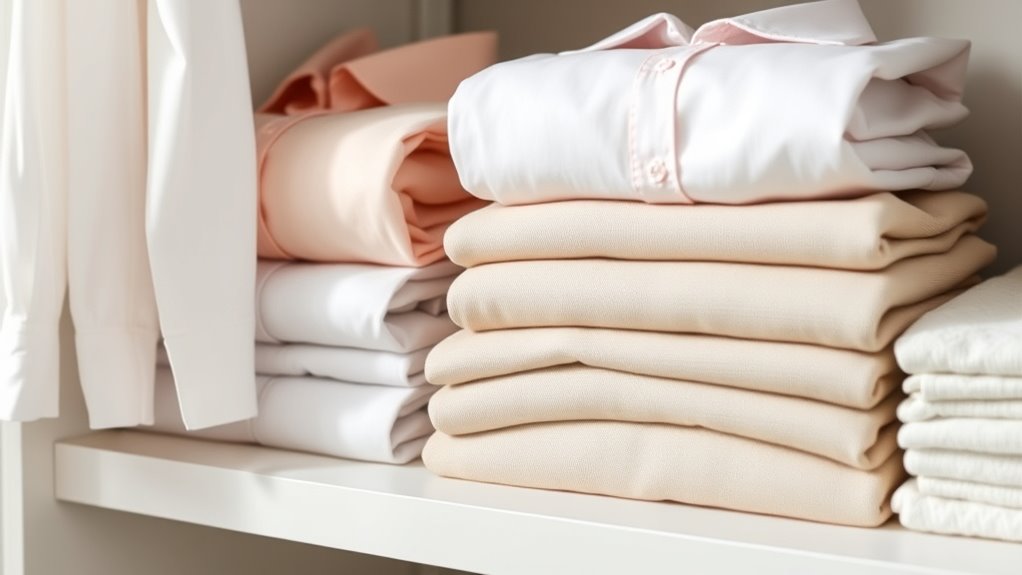
Maintaining your folded items and fostering mindful tidying starts with consistent handling and respectful appreciation for your belongings. To keep this practice alive, consider these tips:
- Handle each item gently—treat your clothes as if they’re delicate, honoring their purpose.
- Return items to their designated spot immediately after use, reinforcing order and respect.
- Regularly review your wardrobe to keep only items that spark joy, preventing clutter buildup.
- Practice gratitude by thanking your clothes for their service, cultivating a mindful connection.
- Use proper storage techniques like the KonMari folding method to maximize space and maintain the integrity of your items. Proper storage techniques
Common Mistakes to Avoid When Practicing Spark Joy Folding
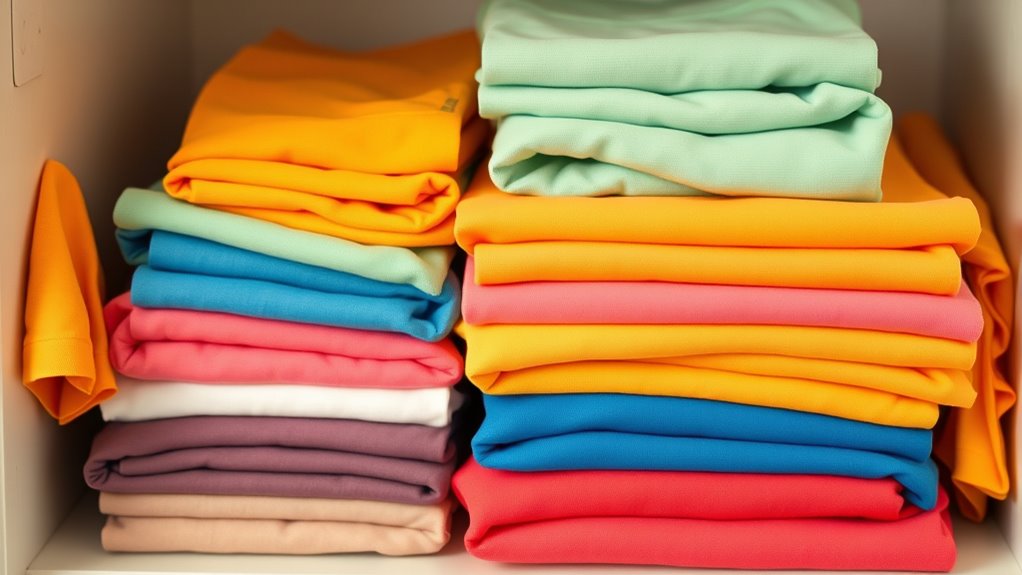
One common mistake to avoid when practicing the spark joy folding method is rushing through the process without paying attention to proper technique. Hurrying can cause uneven folds, wrinkles, and items that don’t stand upright. This reduces visibility and makes drawers cluttered. To prevent this, focus on gentle, deliberate folds and smooth each item thoroughly. Also, avoid folding items too tightly, which can damage fabric and hinder standing. A helpful tip is to use the table below to identify common mistakes:
| Mistake | Consequence | Solution |
|---|---|---|
| Rushing through folds | Wrinkles, uneven shapes | Take your time, fold slowly |
| Over-tightening folds | Fabric damage, poor standing | Use gentle pressure |
| Inconsistent folding sizes | Disorganized drawers | Follow uniform folding steps |
Additionally, understanding the proper technique can help you achieve more consistent and joyful results.
Frequently Asked Questions
How Do I Adapt Spark Joy Folding for Non-Cotton Fabrics?
To adapt spark joy folding for non-cotton fabrics, handle the items gently to avoid stretching or damaging delicate fibers. Use a smoother, more fluid motion when folding, and apply minimal pressure. Make sure to smooth out wrinkles and align edges carefully, just like with cotton. This gentle approach helps maintain the fabric’s quality, keeping your clothes looking neat and ensuring they stand upright for easy visibility and access.
Can I Fold Larger or Irregularly Shaped Items Using This Method?
Folding larger or irregularly shaped items is like trying to fit a square peg in a round hole, but you can adapt the method. Fold bulky items into manageable, flat rectangles, then fold again into a compact shape that can stand upright. Focus on creating neat, stable rectangles that maximize space and visibility. While not perfect, it helps keep your drawers organized and easy to access, just like with smaller garments.
How Often Should I Refold or Reorganize My Stored Clothes?
You should refold or reorganize your clothes whenever you notice clutter, items becoming difficult to find, or if your drawers lose their tidy appearance. Regularly checking every few weeks helps maintain the system, especially after laundry days or seasons change. Staying mindful and consistent ensures your clothes stay neatly folded, standing upright, and easily accessible, keeping your space organized and joyful.
What Are Tips for Folding Delicate or Easily Wrinkled Fabrics?
To fold delicate or easily wrinkled fabrics, handle them gently and avoid stretching. Use smooth, even pressure when folding, and place a clean cloth or tissue between layers to prevent creases. Fold slowly and carefully, smoothing out wrinkles as you go. Store these items upright in a drawer, and consider using tissue paper or thin cotton bags for extra protection. This helps preserve fabric quality and keeps your clothes looking neat.
How Do I Handle Clothing With Embellishments or Delicate Details?
Think of delicate clothing as treasures you want to protect. To handle embellishments or delicate details, gently fold around them, avoiding pressure that could cause damage. Use soft, smooth movements and tuck embellishments carefully inside to prevent snagging or crushing. Lay the item flat with the detail facing up, then fold with mindfulness, ensuring the ornamented parts stay intact and beautiful, just like a cherished keepsake.
Conclusion
By mastering the konmari folding method, you transform your closet into a well-orchestrated symphony of order and joy. Each fold becomes a graceful brushstroke, turning clutter into clarity. When you approach your belongings with mindfulness and care, you create a space that sparks happiness and calm. Remember, it’s not just about folding clothes—it’s about folding your life towards simplicity and peace, like a beautiful origami masterpiece coming to life.