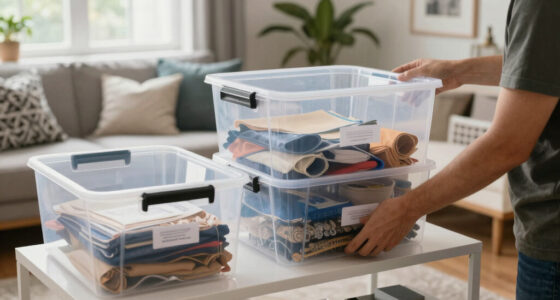

Before deciding to keep anything, ask yourself if the item evokes strong memories or if it’s just out of habit. Consider how often you use it, its condition, and whether it still serves a purpose. Think about how keeping it affects your environment and mental well-being. Reflect on whether it aligns with your current goals or if it brings guilt or nostalgia. Want to explore more questions that can simplify your choices? Keep exploring.

Get the little things that make your day delivered free with Prime
- Fast, free delivery on millions of items
- Prime Video, Amazon Music and more included
- Member-only deals all year
Key Takeaways
- Does the item evoke positive memories or feelings, or is the attachment more habitual or sentimental?
- How often do I actually use or need this item currently?
- Is the item still in good condition, functional, and space-efficient?
- Will keeping this item support my current goals and lifestyle?
- Can I repurpose, donate, or sell the item to reduce clutter and benefit others?
Have you ever kept something only to realize later that it wasn’t worth the space or effort? It’s a common experience, and it often comes down to emotional attachment and practical considerations. When you’re faced with deciding whether to hold onto an item, it helps to ask yourself some key questions that cut through the clutter. First, consider your emotional attachment. Does this object evoke strong memories or feelings? If it’s something you’ve outgrown or no longer brings joy, it’s worth questioning whether your attachment is healthy or just habit. Emotional ties can cloud your judgment, making it hard to see the true value of letting go. Recognizing whether your attachment is rooted in genuine sentiment or simply comfort can help you make clearer decisions.
Next, think about the practical considerations. How often do you use or need this item? If it’s been sitting unused for months or years, ask yourself if it’s truly necessary to keep it. Sometimes, holding onto things just in case they become useful again isn’t practical when space and time are limited. Consider the item’s condition—does it still work or serve its purpose? If it’s broken or outdated, keeping it might only create clutter. Also, evaluate whether you have the space to store it comfortably and conveniently. If keeping an item causes clutter that impacts your daily life or inhibits productivity, it’s probably time to let it go. Reflecting on your environmental impact when discarding items can also guide more sustainable choices. Additionally, understanding how clutter affects mental well-being can reinforce the importance of decluttering. Recognizing how habitual clutter accumulation influences your overall mental health can motivate more mindful decisions about what to retain. Incorporating the idea of regional culture and aesthetics, consider whether the item fits with your current environment or personal style—sometimes, cultural or regional influences shape what we value and keep, but reassessing their relevance can help in decision-making. Sometimes, our cultural preferences influence what we hold onto, even if it no longer serves a purpose.
Another useful question is whether keeping this item aligns with your current goals or lifestyle. Are you holding onto it because of nostalgia or because you feel guilty about discarding it? Guilt and nostalgia can distort your judgment, making it difficult to see the true cost of keeping something. Ask yourself whether the effort it takes to store or maintain the item outweighs any benefit it provides. If it’s more trouble than it’s worth, that’s a clear sign to part ways. Remember, the act of letting go can free up space — both physical and mental — for what truly matters. Sometimes, the emotional weight of possessions can be more burdensome than the actual items themselves. Finally, consider the potential for giving the item a new life with someone else who might value it more. If you’re holding onto things out of obligation or fear of waste, ask whether donating or selling could be a better choice. This way, your possessions can serve a purpose elsewhere, freeing you from unnecessary clutter. By asking yourself these questions—about emotional attachment, practical considerations, and overall utility—you make more mindful decisions about what to keep and what to let go. It’s about creating space for what truly matters, both physically and emotionally.
As an affiliate, we earn on qualifying purchases.
Frequently Asked Questions
How Often Should I Reassess My Belongings?
You should reassess your belongings every six months to stay on top of clutter. Regularly applying decluttering techniques helps you decide what to keep or donate, preventing accumulation. Re-evaluate your storage solutions too, ensuring they’re still functional and efficient. This habit keeps your space organized and manageable. Plus, seasonal changes are a good reminder to review your belongings, helping you maintain a clutter-free environment and making decluttering less overwhelming.
What if Sentimental Value Outweighs Practicality?
If emotional attachment outweighs practicality, trust your feelings but also consider balance. You might experience decision paralysis if you focus solely on sentimentality, making it hard to let go. To avoid this, set boundaries—like choosing only a few meaningful items—and find ways to honor your memories without clutter. Acknowledge your emotional attachment, but prioritize what truly adds value to your life, helping you make thoughtful, balanced decisions.
How Do I Handle Items I’M Unsure About?
When unsure about items, start with organizational techniques like sorting into keep, donate, or discard piles. Recognize that emotional attachment can cloud judgment, so take a step back to evaluate practicality. You might create a designated space for uncertain items, giving yourself time to decide later. This approach helps manage emotional ties while maintaining clarity, ensuring you only keep what truly adds value or meaning to your space.
Should I Donate or Sell Items I No Longer Need?
You should consider donating or selling items you no longer need, as it helps declutter and benefits others. Use organizational strategies to decide which option suits each item best; for example, donate items in good condition to charities or sell valuable pieces online. Think about storage solutions for items you might want to keep but don’t use often. This way, you maximize space and make thoughtful decisions about your belongings.
How Can I Prevent Clutter From Accumulating Again?
To stop clutter from rebelling, embrace clever storage solutions and organization techniques—think under-bed boxes or wall-mounted shelves. You’ll master the art of hiding chaos before it escapes. Regularly declutter, label everything, and assign a home for each item. Remember, if you don’t see it, you won’t miss it. Keep your space tidy by making organization a habit, not a one-time miracle.
As an affiliate, we earn on qualifying purchases.
Conclusion
Before holding onto something, ask yourself if it truly adds value or brings joy. Will keeping this item serve a purpose in your life, or is it just taking up space? Think about whether it reflects who you are today. Are you holding onto it out of habit or necessity? Remember, the best decisions come from asking the right questions—so why not start now and keep only what genuinely matters?
As an affiliate, we earn on qualifying purchases.
As an affiliate, we earn on qualifying purchases.
Halloween Picks
halloween
As an affiliate, we earn on qualifying purchases.