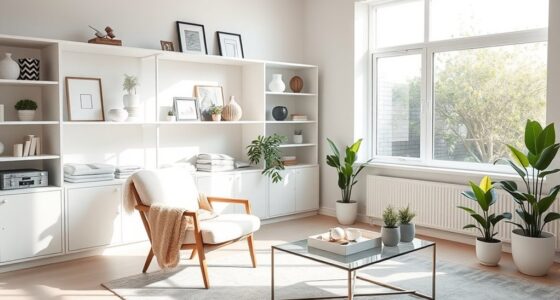
If clutter feels overwhelming, start by evaluating your most chaotic spaces like kitchen counters, closets, or your workspace. Set small, realistic goals and gather simple supplies like bins or boxes. Tackle one small area at a time, using the Four-Box Method to sort items into keep, donate, discard, or relocate. Establish a system for donations and organizing what you keep. Keep consistent routines and celebrate your progress—more tips will help you stay motivated and achieve a clutter-free home.
Key Takeaways
- Identify the most cluttered or stressful areas, like kitchen counters or closets, to focus your efforts effectively.
- Start with small, manageable projects to build confidence and momentum for larger decluttering tasks.
- Use sorting techniques such as the Four-Box Method—keep, donate, discard, or relocate—for organized decision-making.
- Create a system for donation and recycling, labeling boxes and setting regular drop-off routines to maintain progress.
- Establish a decluttering routine, celebrating small wins to stay motivated and prevent feeling overwhelmed.
Assess the Cluttered Spaces in Your Home

Before you begin decluttering, you need to identify which areas in your home are the most cluttered. Take a walk through each room and observe where clutter piles up or hampers your daily routines. Focus on spaces like your kitchen counters, closets, or your workspace, where clutter can quickly accumulate. Once you’ve pinpointed these areas, consider how storage solutions could help organize items and make cleaning routines easier. Think about adding shelves, bins, or drawer dividers to optimize space. Recognizing clutter hotspots allows you to prioritize your efforts, making the decluttering process more manageable. Incorporating **innovative storage solutions** can also introduce energy-efficient and sustainable options to your home organization. Using **multi-purpose furniture can further maximize space and reduce clutter. Additionally, understanding how visual cues influence perception of clutter can help motivate ongoing organization efforts. By understanding where clutter tends to gather, you set a clear starting point to create a more organized and functional home environment. Effective storage solutions** play a key role in maintaining a clutter-free space over time.
Set Realistic Decluttering Goals

Start by evaluating your priorities so you can focus on the areas that matter most. Then, set achievable targets that fit your schedule and energy level, avoiding overwhelm. Color accuracy is essential to maintain consistent image quality across different viewing sessions. Incorporating field‑of‑view ideas can also help you visualize and organize your space more effectively. Additionally, establishing a dedicated decluttering routine can make the process more manageable and less daunting. For example, using free floating organizational solutions can help you adapt your space more flexibly. Finally, plan regular decluttering sessions to stay consistent and see steady progress.
Assess Your Priorities
To effectively declutter your home, you need to set realistic goals based on your priorities. Begin by prioritizing possessions that truly matter to you, such as items with sentimental value or practical use. Recognize that balancing emotional attachment is essential; it’s natural to feel connected to certain belongings, but not everything deserves a place in your home. Consider what items align with your lifestyle and future goals. Focus on decluttering areas that will make the biggest impact first, rather than trying to clear everything at once. By understanding what is most important, you’ll create achievable targets, making the process less overwhelming and more satisfying. Clear priorities help you stay focused and motivated throughout your decluttering journey. Incorporating effective filtration can also help in organizing your space more efficiently, ensuring your home remains clean and clutter-free. Paying attention to nail styles and shapes can serve as a motivating way to refresh your personal space and boost your confidence during the decluttering process. Additionally, being aware of regulatory considerations related to storage and disposal can prevent future issues with clutter management.
Define Achievable Targets
After identifying your priorities, it’s important to set specific, achievable goals for your decluttering process. Adopting a minimalist mindset helps focus on what truly matters, making goals more realistic. Avoid decluttering myths that suggest you must clear everything in one go; instead, aim for manageable targets. To start, consider these steps:
- Break large areas into small sections, like one drawer or shelf.
- Set a time limit for each session to prevent burnout.
- Define clear criteria for what stays and what goes, based on your needs.
- Incorporate features Buddies principles to maintain focus and prevent clutter from returning.
Schedule Regular Sessions
Scheduling regular decluttering sessions makes the process more manageable and sustainable. By setting consistent times, you improve your time management and create habits that stick. Choose specific days and times that fit your schedule, making decluttering a routine rather than a chore. Consistency strategies help you stay motivated and prevent clutter from building up again. Break the task into small, focused sessions—perhaps 15 or 30 minutes—so it feels less overwhelming. Tracking your progress can boost your confidence and keep you accountable. Remember, the key is to be realistic about what you can accomplish in each session. Incorporating decluttering goals into your routine can help you stay focused and motivated over time. Establishing a dedicated space for sorting makes it easier to keep items organized and prevents clutter from spreading. Developing habit formation strategies can further enhance your consistency and long-term success. Additionally, setting up reminders or alerts can prompt you to stick to your schedule, ensuring that decluttering becomes a lasting habit. Using visual cues around your home can serve as helpful prompts to maintain your organization efforts. Over time, these regular efforts will lead to a cleaner, more organized home without feeling like an insurmountable task.
Gather Supplies to Aid the Process
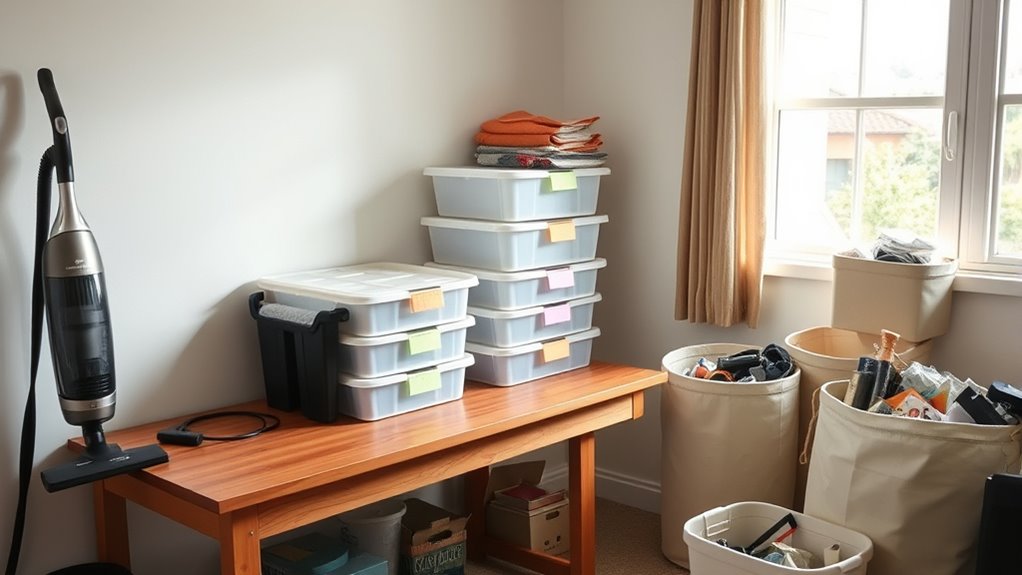
Before you start decluttering, gather the supplies you’ll need to make the process smoother and more efficient. Having a supplies checklist handy ensures you won’t forget essential tools. Start with basic decluttering tools like trash bags, storage bins, and labels. These essentials help you sort items quickly and keep your space organized as you go. Additionally, considering electric bikes and related gear can help streamline your transportation needs during your decluttering project if you plan to relocate or need to transport large items. Preparing these supplies beforehand conserves time and keeps you focused. Incorporating sound healing science principles, such as calming sounds during your decluttering sessions, can also enhance focus and reduce stress. Understanding personality assessments can help you identify your strengths and tendencies, making the decluttering process more tailored to your style. Recognizing mental clarity techniques can further improve your efficiency and motivation throughout the process. Being aware of existential themes can inspire a deeper sense of purpose in organizing your space, turning decluttering into a mindful activity. With the right decluttering tools at your fingertips, you can work more effectively, making the process less overwhelming and more productive.
Tackle Small Areas First to Build Momentum

Starting with small areas makes the decluttering process feel more manageable and less overwhelming. Focus on clutter hotspots like a messy drawer or a cluttered countertop. Clearing these small spaces quickly gives you small wins that boost your motivation. Tackling these areas first helps you see immediate progress, making it easier to stay committed. Plus, small projects are less intimidating and easier to fit into your schedule. As you complete each task, you’ll build confidence and momentum to move on to larger areas. Remember, starting small isn’t about avoiding bigger messes; it’s about creating a steady, achievable path forward. With each small victory, you’re one step closer to a clutter-free home that feels organized and calm.
Use the Four-Box Method for Sorting Items

Using the Four-Box Method streamlines your decluttering process by helping you make quick, decisive choices about each item. This categorization technique simplifies sorting by dividing items into four groups: keep, donate, discard, or relocate. As you work through your space, focus on these categories to determine the best action. To maximize efficiency, consider these steps:
Streamline decluttering by quickly sorting items into keep, donate, discard, or relocate.
- Assign items to each box based on their future use or value.
- Use storage solutions like bins or bags for items to keep or donate.
- Dispose of or recycle items in the discard box promptly.
- Incorporate professional organizing techniques by ensuring your decluttering process reflects expert advice, which can motivate you to stay committed and organized throughout your journey.
This method keeps you focused and prevents decision fatigue, making it easier to prioritize what truly belongs in your home. It’s a straightforward way to streamline your decluttering journey.
Establish Criteria for Keeping or Discarding Items

Establishing clear criteria for keeping or discarding items helps you stay focused and make confident decisions during your decluttering process. Start by asking yourself if an item serves a practical purpose or if it’s just taking up space. Consider how often you use it and whether it fits into your current lifestyle. For sentimental items, set specific limits—perhaps keep only the most meaningful pieces—and find creative storage solutions to preserve memories without clutter. Be honest about whether you have enough storage space for items you decide to keep. If an item no longer brings you joy or utility, it’s time to let it go. Clear criteria make it easier to stay motivated and ensure your home becomes more organized and functional.
Create a System for Donating or Recycling Unwanted Items
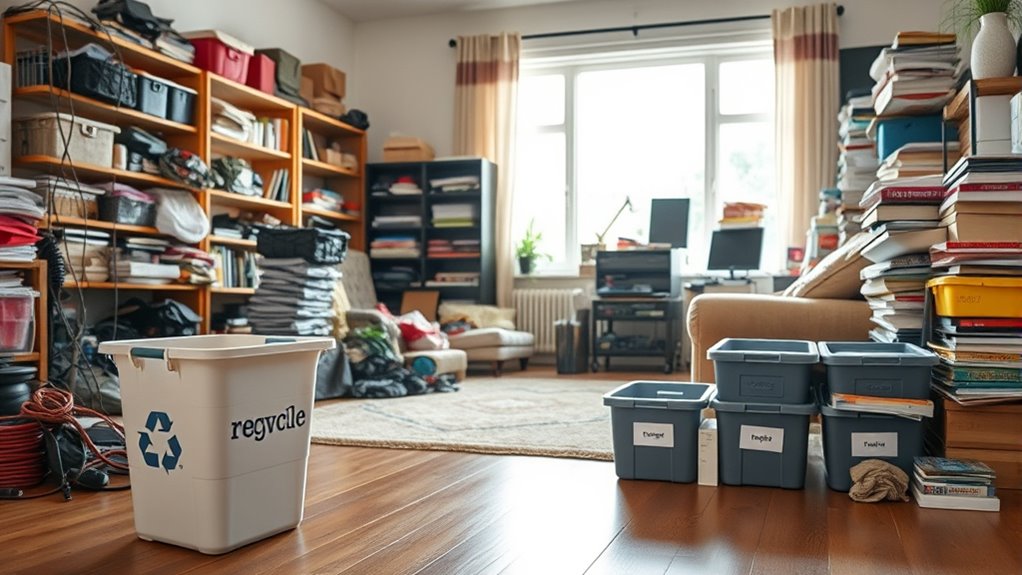
Once you’ve sorted your belongings and decided what to keep, it’s important to develop a plan for handling the items you no longer want. Creating a system for donating or recycling unwanted items helps keep your home clutter-free and supports sustainability. First, identify local charity opportunities where you can donate clothing, furniture, or household items. Second, locate nearby recycling centers that accept electronics, plastics, or metals to ensure proper disposal. Third, set specific drop-off times or arrange pickups to stay consistent. Label boxes clearly for donations and recyclables, making the process seamless. This organized approach not only clears space but also benefits others and the environment, turning your decluttering effort into a positive, eco-friendly initiative.
Organize What You Decide to Keep for Easy Access
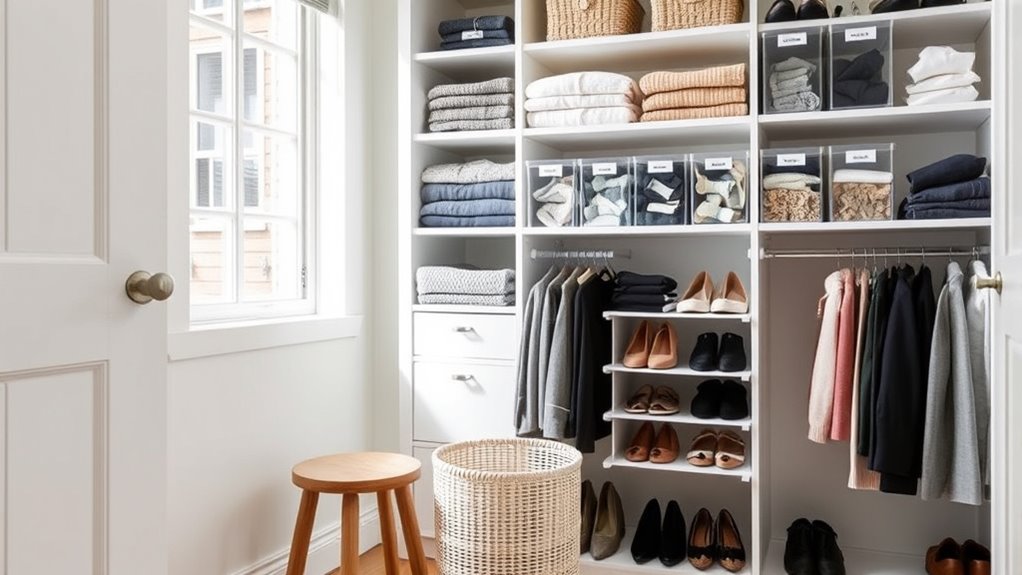
To keep your belongings accessible, start by grouping similar items together so you know exactly where everything is. Use clear labels to quickly identify each category, saving you time and frustration. Assign specific, easy-to-reach spots for frequently used items to make your daily routines smoother.
Group Similar Items Together
Grouping similar items together makes it easier to find what you need quickly. When you use effective organizing techniques, it’s simpler to access your belongings and reduce clutter. Start by sorting items into categories like books, kitchen tools, or holiday decorations. Then, use storage solutions that fit these groups, such as bins, baskets, or shelves. Here are some ideas to contemplate:
- Store all your office supplies in one drawer or container.
- Keep all craft materials in a designated bin or box.
- Organize seasonal items in labeled storage bins.
This method saves time and keeps your space tidy. By grouping similar items, you optimize your storage solutions and create a more functional, clutter-free environment.
Use Clear Labels
Clear labels make it easy to identify what’s inside your storage containers and access your belongings quickly. Using labels helps you stay organized by ensuring everything has a designated spot, reducing the time spent searching. When choosing storage solutions, opt for clear bins or containers that allow you to see contents at a glance, complemented by labels for added clarity. Organizational tools like label makers or even simple masking tape and a marker work well. Be specific with your labels—use descriptive words so you know exactly what’s inside without opening each container. Consistent labeling not only streamlines your decluttering process but also keeps your space tidy long-term. Clear labels are an essential step in creating an efficient, accessible storage system that makes maintaining your organized home easier.
Assign Easy Access Spots
Once you’ve decided what to keep, the next step is to assign easy access spots for those items. This makes daily routines smoother and prevents clutter from piling up again. Use smart storage solutions to keep frequently used items within arm’s reach. For example:
- Place everyday essentials like keys, wallets, and phones near your entryway for quick grab-and-go.
- Organize your closet with designated zones for daily wear, making clothing retrieval simple.
- Use labeled bins or baskets for smaller items, keeping them visible and easy to find.
Effective closet organization and thoughtful storage solutions assure your most-used items are always accessible, reducing frustration and saving time. Clear, designated spots help maintain your decluttering progress long-term.
Schedule Regular Maintenance to Prevent Re-Cluttering
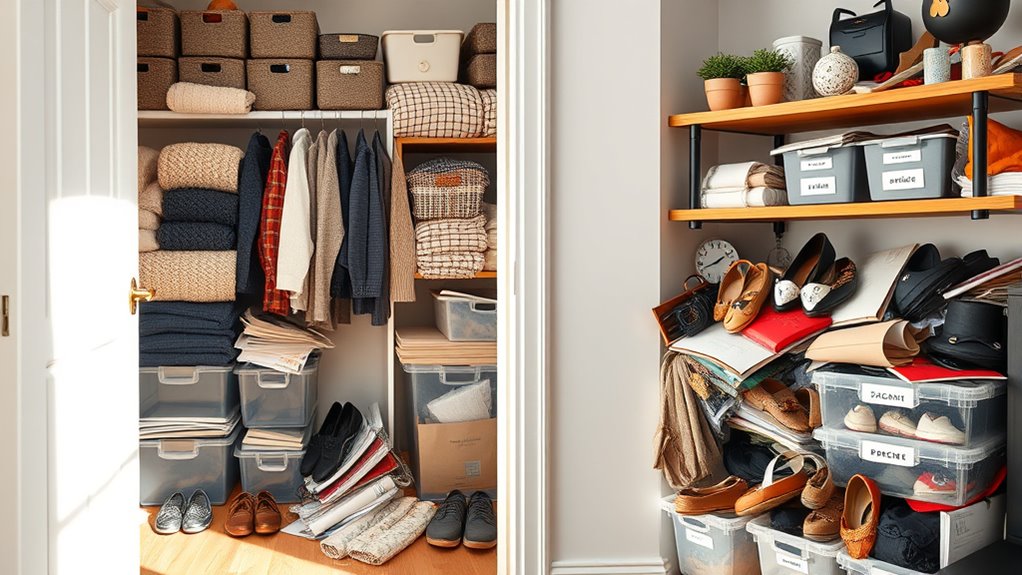
To keep your home clutter-free, scheduling regular maintenance is essential. Consistent home maintenance helps you stay on top of clutter prevention by addressing minor messes before they become overwhelming. Set aside a specific day each week or month to tidy up, organize, and review your belongings. This routine prevents clutter from accumulating and ensures everything stays in its designated spot. Regularly checking areas like closets, storage spaces, and surfaces helps you identify items you no longer need, making it easier to discard or donate them. Incorporating this habit into your schedule keeps clutter from re-establishing itself and makes managing your space more manageable. Ultimately, consistent home maintenance creates a clutter-free environment that stays organized and inviting.
Celebrate Your Progress to Stay Motivated

Celebrating your progress can boost your motivation and make maintaining a clutter-free home feel more rewarding. When you track progress and celebrate milestones, you reinforce your commitment and see tangible results. Here are some ideas to keep motivated:
- Acknowledge each milestone, like clearing a closet or decluttering a room.
- Share your achievements with friends or family for encouragement.
- Reward yourself with a small treat or break after completing a task.
Tracking progress helps you visualize how far you’ve come, and celebrating milestones keeps your spirits high. Recognizing your efforts reminds you that decluttering is achievable, making it easier to stay on course. Keep celebrating your wins, no matter how small—they’re the stepping stones to a clutter-free home.
Frequently Asked Questions
How Do I Stay Motivated During a Lengthy Decluttering Process?
To stay motivated during a lengthy decluttering process, use motivational techniques like rewarding yourself after completing each section. Set clear, achievable goals to track your progress and keep you focused. Break tasks into smaller steps, and celebrate those wins. Visualize the end result to maintain enthusiasm. Remember, consistent effort and positive reinforcement make the process feel less overwhelming and help you stay committed until your home is clutter-free.
What Are Eco-Friendly Options for Recycling or Disposing of Items?
Did you know that recycling just one aluminum can save enough energy to power a TV for three hours? For eco-friendly disposal, opt for sustainable disposal options like donation, repurposing, or eco-conscious recycling centers. Many communities offer special pickup services for electronics, textiles, and hazardous waste. By choosing these eco-friendly options, you help reduce landfill waste and promote a healthier planet while responsibly managing your clutter.
How Can I Involve Family Members in Decluttering Efforts?
You can involve family participation by setting up a group organization session where everyone shares their decluttering ideas. Make it fun by assigning specific tasks to each person, like sorting or donating items. Encourage open communication, so everyone feels heard. Use positive reinforcement to motivate family members, and set small goals together. This teamwork not only speeds up the process but also helps everyone take ownership of maintaining a clutter-free home.
What Are Effective Strategies for Decluttering Sentimental Items?
To declutter sentimental items, start by sorting through your belongings and recognizing emotional attachments. Use memory preservation techniques like photographing items before donating or discarding them, so you keep the memories without the physical clutter. Set limits on how many items to keep, focusing on those with the most significance. This approach helps you honor your feelings while creating a more organized, clutter-free space.
How Do I Maintain a Clutter-Free Home Long-Term?
You maintain a clutter-free home long-term by establishing simple daily routines and using effective storage solutions. Make it a habit to put things back in their designated spots every day, preventing buildup. Invest in smart storage options like bins and shelves to keep everything organized. Regularly declutter, evaluate your belongings, and adjust routines as needed. Consistency is key—stay committed, and your home will stay tidy effortlessly.
Conclusion
Think of your home as a garden—you can’t cultivate everything at once. By clearing one section, you make space for fresh growth and new beginnings. Each decluttered corner is like a blooming flower, bringing beauty and peace. Keep tending to your space regularly, and watch your home transform into a sanctuary of calm and clarity. Your efforts are the seeds, and a clutter-free home is the beautiful bloom that follows.