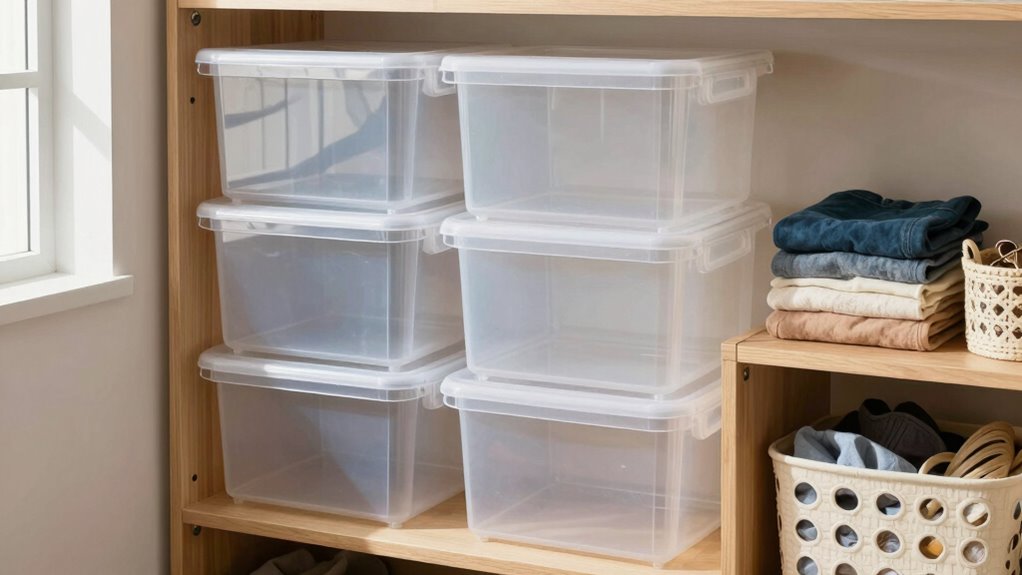

Before buying new organizers, focus on decluttering your space first. Accumulating more storage only adds to chaos and makes it harder to see what you truly need. Use existing containers and vintage options to organize what you have. Adopt a minimalist mindset and ask if new storage is really necessary. By planning your declutter effort, you’ll create a clearer, calmer space. Keep going, and you’ll discover simple steps to stop unnecessary purchases before they begin.

Get the little things that make your day delivered free with Prime
- Fast, free delivery on millions of items
- Prime Video, Amazon Music and more included
- Member-only deals all year
Key Takeaways
- Focus on optimizing existing storage solutions before purchasing new organizers.
- Adopt a minimalist mindset to prioritize quality and necessity over additional containers.
- Create a decluttering plan that emphasizes repurposing vintage and current storage options.
- Avoid impulsive buying by assessing actual needs and envisioning functional organization first.
- Recognize that effective organization relies on proper utilization, not the quantity of storage containers.
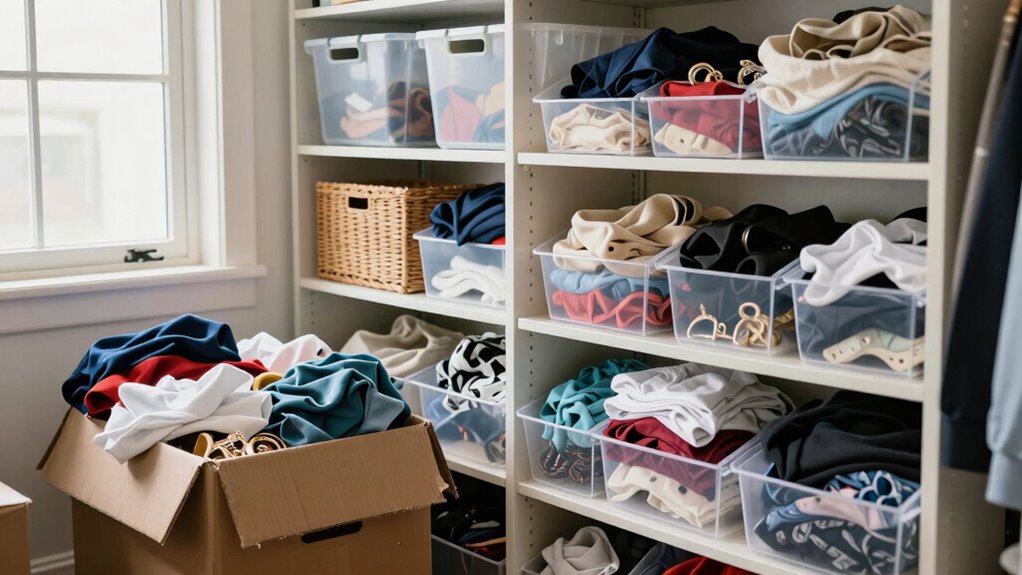
If you’re constantly buying new organizers before decluttering, you might be unintentionally delaying the process of actually simplifying your space. Every time you purchase another storage bin or container, you’re adding to the clutter rather than reducing it. Instead of helping, these new organizers can become just another layer of chaos, making it harder to see what you truly need. To break this cycle, start by evaluating what you already own. Look for vintage storage options that have character and history, which can add a unique touch to your space while serving a practical purpose. Vintage storage often offers durable, attractive solutions that don’t require a minimalist design’s sleekness but instead bring a sense of charm and personality. When you choose vintage pieces, you’re also making more mindful decisions, preventing impulsive buys that clutter your environment.
Next, shift your focus from constantly acquiring new organizers to developing a minimalist mindset. Minimalism isn’t about having less for the sake of less; it’s about having only what adds value to your life. This approach encourages you to prioritize quality over quantity and to be intentional with your storage solutions. Before shopping for more containers, ask yourself if your current setup is truly inadequate or if you’re just trying to avoid the hard work of sorting through your belongings. Often, the real solution is to organize what you already have, rather than adding more. Adopting a mindful approach to organizing can help you recognize that the key to a clutter-free space isn’t more organizers but smarter use of what you already own. Recognizing the importance of effective organization can help you stay motivated and avoid unnecessary purchases. Additionally, understanding the value of sustainable living can reinforce your decision to repurpose and choose eco-friendly storage options over new purchases.
Creating a decluttering plan can also deter unnecessary purchases. Set specific goals for each area of your home, and stick to them. As you sort through your belongings, consider whether a vintage storage piece could serve as a stylish, functional, and sustainable solution for that space. Remember, effective organization isn’t about the number of containers you buy; it’s about how well you utilize what you have. When you resist the urge to buy new organizers impulsively, you give yourself the chance to truly see what’s necessary and what’s superfluous. Incorporating storage solutions that are both functional and meaningful can help you stay motivated in your decluttering journey. With patience and a focused approach, you’ll find that decluttering becomes more manageable, and your space begins to reflect the simplicity and clarity you’re aiming for—without the clutter of unnecessary storage solutions.
Products Worth Considering

Dyson Big Ball Multi Floor Canister Vacuum, Yellow

Levoit Vital 100S-P Air Purifier with Washable Pre-Filter

Philips Hue Festavia Globe Outdoor String Lights, 8 Bulbs, 22 ft
As an affiliate, we earn on qualifying purchases.
Frequently Asked Questions
How Can I Resist Impulse Organizer Purchases?
To resist impulse organizer purchases, identify your impulse triggers and recognize your shopping habits. When you feel the urge, pause and ask yourself if you truly need the item. Create a shopping list and stick to it, avoiding spontaneous buys. Limit your visits to stores or online shops where these temptations occur. Developing awareness of your triggers helps you make mindful decisions, reducing unnecessary clutter and saving money.
What Are Alternative Ways to Organize Without Buying?
Like a true pioneer in the wild west, you can explore creative storage options without buying new organizers. Use DIY solutions by repurposing items like jars, boxes, or tins to keep things tidy. Look around your home for unused containers, and get crafty with labels or dividers. These creative storage hacks not only save money but also make your space uniquely yours, all while avoiding unnecessary purchases.
How Do I Set Budgeting Limits for Organizers?
You set budgeting limits for organizers by starting with budget planning, determining how much you’re willing to spend overall. Then, establish spending limits for each organizer based on their importance and your needs. Use a calculator or budgeting app to track expenses, and stick to your limits. This approach helps you avoid overspending while ensuring you get the right organizers that truly help with your decluttering goals.
Can Donating Existing Organizers Help Reduce Clutter?
Donating existing organizers definitely helps reduce clutter and supports sustainable organizer reuse. When you donate, you inspire donor motivation by showing how your items can benefit others. Plus, it clears space in your home, making it easier to maintain a tidy environment. By choosing to give away unused organizers, you embrace reuse and encourage a mindful approach to decluttering, preventing the urge to buy new ones unnecessarily.
How Do I Stay Motivated to Declutter Long-Term?
To stay motivated long-term, tap into the principles of organizational psychology and cultivate a strong decluttering mindset. Set clear, achievable goals and celebrate small wins to keep your enthusiasm high. Remind yourself of the benefits—less stress, more space, and a sense of control. Regularly reassess your progress, and when motivation dips, revisit your reasons for decluttering. Consistency and positive reinforcement will help you maintain momentum.
Conclusion
Think of your space as a garden; if you keep planting new flowers without clearing out the weeds, it’ll become overwhelming. Before grabbing another organizer, take a moment to weed out what no longer serves you. Clearing the clutter first allows your new storage solutions to truly shine, like healthy flowers in a well-tended garden. Only then will your space flourish, organized and serene, without the need for constant replanting.