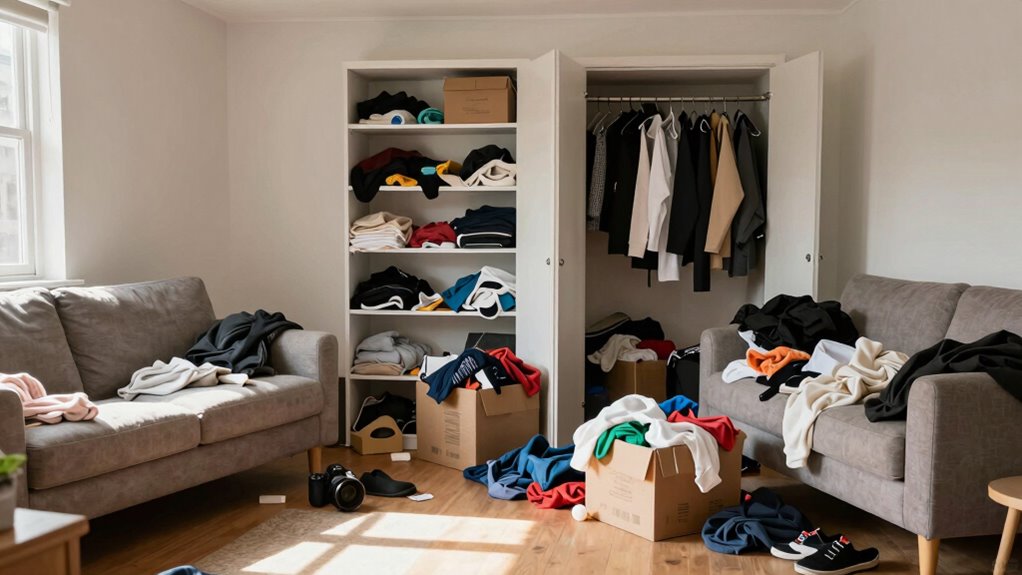

Decluttering feels so hard because emotional attachments make it tough to let go of items that carry memories or feelings, causing guilt and resistance. Decision fatigue sets in when you’re overwhelmed by choices, making it harder to move forward. Breaking the process into small steps helps manage emotions and prevent burnout. Using gentle strategies, like photographing sentimental objects, can ease the burden. If you keep exploring, you’ll discover how to overcome these barriers and achieve a more peaceful, simpler home.

Get the little things that make your day delivered free with Prime
- Fast, free delivery on millions of items
- Prime Video, Amazon Music and more included
- Member-only deals all year
Key Takeaways
- Emotional attachments to belongings create resistance due to memories and identity intertwined with possessions.
- Decision fatigue from numerous choices makes decluttering overwhelming and mentally exhausting.
- The process feels hard because breaking it into manageable steps is often overlooked, leading to burnout.
- Guilt and sentimental feelings hinder progress, making it difficult to let go of meaningful items.
- Fear of losing memories or making mistakes causes hesitation, even when the goal is a simpler, clutter-free home.

Decluttering can feel overwhelming, especially when you don’t know where to start or face emotional attachments to your belongings. You might look around your space and feel stuck, unsure which items to keep and which to part with. That emotional attachment can make even the simplest decision feel monumental. It’s not just about tidying up; it’s about confronting memories, habits, and identities tied to your possessions. Every item seems to carry a story or a sentiment, making it hard to let go, even if you know deep down that your home would be better with less clutter. This emotional weight can slow your progress and create resistance, leaving you feeling guilty or anxious about decisions.
At the same time, decision fatigue plays a significant role in why decluttering feels so hard. When you’re faced with countless choices—what to keep, donate, or throw away—your mental energy starts to drain. Over time, your ability to make clear, confident decisions wanes, and small choices become increasingly difficult. You may find yourself stuck in an endless loop of second-guessing or avoiding tasks altogether. As decision fatigue sets in, your motivation diminishes, and what could be simple tasks turn into exhausting endeavors. It’s easy to get overwhelmed by the sheer number of decisions involved, especially if you’re trying to declutter an entire room or home. Recognizing how decision-making processes impact your decluttering efforts can help you develop more effective strategies. Developing mindful decision-making techniques can also help you regain clarity and confidence in your choices. Understanding the psychology of clutter can provide insight into why letting go is so emotionally challenging.
Recognizing these emotional and mental barriers is the first step toward overcoming them. Instead of tackling everything at once, try breaking the process into manageable chunks. Focus on one area or category at a time, and give yourself permission to make imperfect decisions. Remember, decluttering isn’t about perfection; it’s about progress. When you encounter items with emotional attachment, take a moment to reflect on whether they truly serve you now or if they’re just holding onto memories. Sometimes, capturing a photo of a sentimental object can help preserve the memory without keeping the physical item. Additionally, understanding the importance of sustainable living practices can motivate you to declutter with a purpose that benefits both your home and the environment. Embracing a compassionate mindset towards yourself during this process can also reduce feelings of guilt and make the journey more sustainable emotionally. Setting clear boundaries and pacing yourself can help prevent burnout and keep the process manageable over time.
decluttering decision-making organizer
As an affiliate, we earn on qualifying purchases.
As an affiliate, we earn on qualifying purchases.
Frequently Asked Questions
How Do I Start Decluttering if I Feel Overwhelmed?
Start small to avoid feeling overwhelmed. Pick one area, like a drawer or shelf, and gather all items. Use storage solutions to organize what you decide to keep. As you go, recognize emotional attachments—they’re normal but don’t have to hold you back. Take breaks, and celebrate each win. This process makes decluttering manageable, helping you create a simpler, more organized home step by step.
What if I Can’t Decide What to Keep or Toss?
Imagine your belongings are like a garden, some plants sentimental, others just taking up space. To decide what to keep or toss, adopt a minimalist mindset: focus on what truly adds value or joy. For sentimental clutter, ask if each item reflects your current life or memories. If it doesn’t serve a purpose or spark happiness, it’s time to let it go. Trust your intuition to guide your choices.
How Do I Stay Motivated During Decluttering?
To stay motivated during decluttering, focus on mindset shifts that highlight the benefits of a simpler home. Use motivational strategies like setting small, achievable goals and rewarding yourself for progress. Remember why you started—visualize how much easier life will be with less clutter. Keep a positive attitude, and remind yourself that each item you let go of brings you closer to a peaceful, organized space.
Can Decluttering Improve My Mental Health?
Decluttering can be a refreshing change for your mind, clearing mental clutter and easing anxiety. By practicing mindfulness, you create space for calm and focus. Letting go of emotional attachments might feel like peeling away layers of an onion, but it ultimately lightens your emotional load. As you tidy, you’ll notice your mental health improves, like a garden blossoming after a thorough weeding.
What Are Quick Tips for Maintaining a Clutter-Free Space?
To keep your space clutter-free, use organizational tools like baskets, shelves, and drawer dividers to easily sort and store items. Practice space optimization by regularly evaluating what you truly need and donating or discarding the rest. Develop daily habits like returning items to their designated spots and doing quick tidy-ups. These strategies make maintaining a clutter-free environment easier and help you enjoy a more organized, calming home.
As an affiliate, we earn on qualifying purchases.
Conclusion
As you finally start decluttering, you might notice that old photo tucked away or that forgotten trinket surface unexpectedly. It’s almost like your belongings hold memories, making it hard to let go. But remember, the act of letting go isn’t about losing; it’s about creating space for new moments. Just as you find that missing sock, decluttering often reveals surprises that remind you: a simpler home isn’t out of reach—it’s right within your grasp.
As an affiliate, we earn on qualifying purchases.
As an affiliate, we earn on qualifying purchases.
NFL season / tailgating Picks
team gear
As an affiliate, we earn on qualifying purchases.