
To organize your emergency supplies for quick access, store essentials like water, snacks, and first aid in a designated, central spot that everyone knows. Use clear, durable containers labeled clearly and placed in easy-to-reach areas, keeping less-needed items in less prominent spots. Regularly review and update your supplies, practice retrieval drills, and keep your storage tidy. Following these steps will help you stay prepared and confident when it’s time to act—discover more tips to boost your readiness.

Get the little things that make your day delivered free with Prime
- Fast, free delivery on millions of items
- Prime Video, Amazon Music and more included
- Member-only deals all year
Key Takeaways
- Designate a central, easily accessible location for your emergency kit and keep it consistent.
- Use clear, labeled containers with waterproof labels for quick identification of contents.
- Organize supplies logically, placing frequently used items at the front or top for immediate access.
- Regularly review and update supplies, ensuring they are functional and not expired.
- Conduct periodic drills to practice quick retrieval and identify organizational improvements.
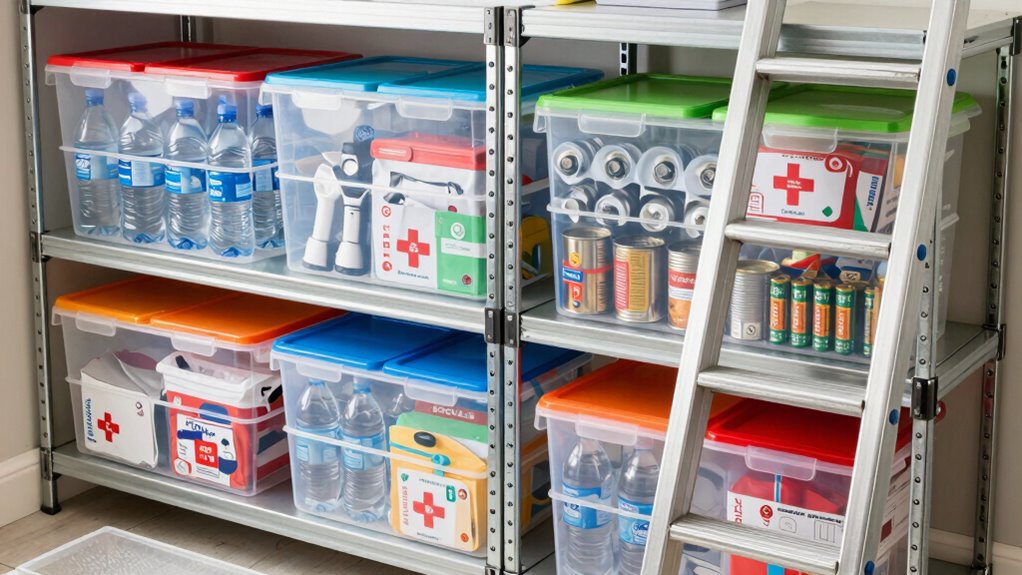
Organizing your emergency supplies can make all the difference when disaster strikes. When an emergency occurs, you need quick access to essential items, so proper organization is vital. Start by regularly checking your supplies to guarantee everything is in good condition. Emergency kit maintenance isn’t a one-time task; you should review it every few months, replacing expired items and updating supplies as needed. This keeps your kit reliable and ready to use at a moment’s notice. Additionally, creating a system for Emergency kit maintenance helps ensure your supplies remain functional and effective over time.
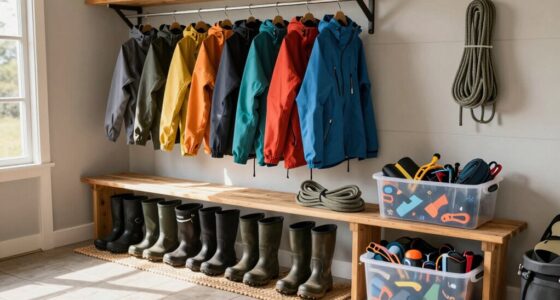
Next, consider the storage container options that work best for your space and lifestyle. Durable, waterproof containers with secure lids are ideal—they protect your supplies from moisture, pests, and damage. Clear containers are especially helpful because they allow you to see the contents at a glance, saving precious time during an emergency. Stackable bins or labeled plastic boxes make it easier to organize different categories of supplies, such as first aid, food, tools, or clothing. If you live in an apartment or small space, compact containers that fit neatly under beds or in closets work well. For larger households, consider larger storage units that can accommodate more supplies without cluttering your living area.
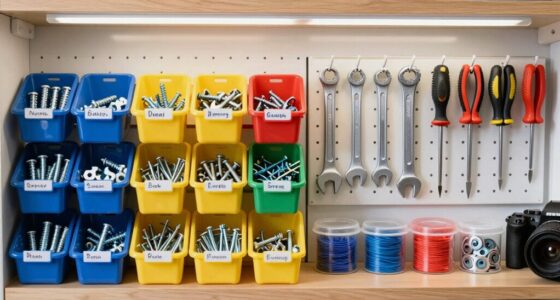
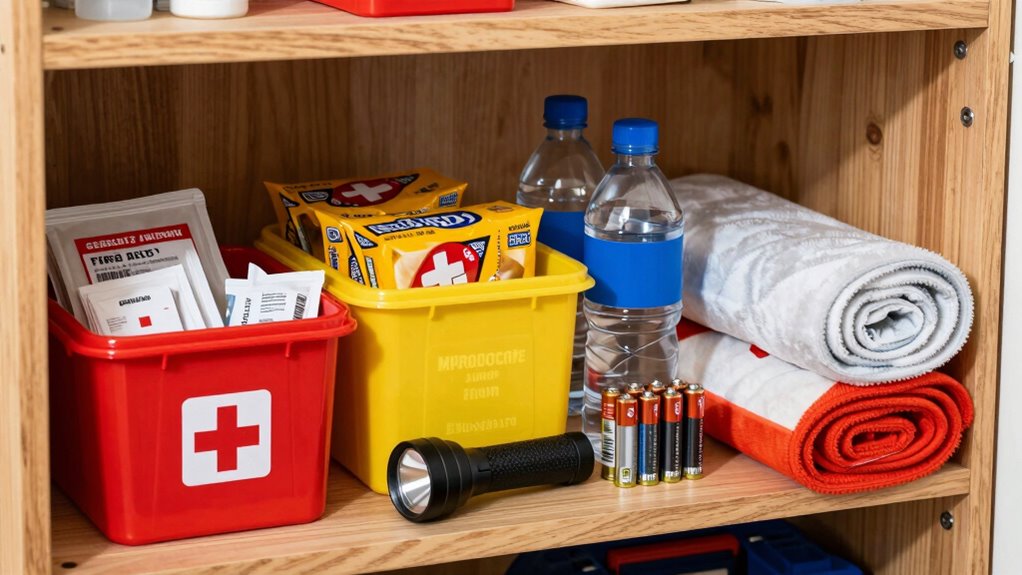
Once you’ve chosen your containers, organize your supplies logically. Keep items you’ll need immediately—like water, snacks, and first aid supplies—near the top or in easily accessible spots. Store less frequently needed items, such as extra clothing or blankets, in less prominent places. Label each container clearly with its contents, so you can grab what you need without rummaging through everything. Use waterproof labels or tape to prevent smudging in case of moisture exposure. Incorporating clutter-free storage techniques can further enhance quick access and reduce stress during emergencies. Properly organizing supplies can also help prevent delays when seconds matter most. Remember that a well-thought-out organizational plan can significantly reduce panic and confusion during stressful situations.
Creating an emergency kit station in a central, accessible location helps guarantee everyone in your household knows where to find supplies quickly. Whether it’s a closet, a storage room, or a dedicated shelf, make sure it’s easy to reach and free from obstructions. Keep your kit’s location consistent, so you don’t waste time searching when seconds count. Establishing a designated spot for your supplies ensures that everyone is familiar with their location and can act swiftly when needed. Additionally, considering space optimization techniques can help maximize storage efficiency in limited areas.
Finally, practice your emergency plan regularly. Conduct drills that include retrieving supplies swiftly and efficiently. This will help you identify any organizational gaps and reinforce good habits. Maintaining your emergency supplies and having smart storage options guarantees you’re prepared and can respond confidently when disaster strikes. Proper organization makes all the difference, turning chaos into control and giving you peace of mind amid uncertainty.
waterproof emergency storage containers
As an affiliate, we earn on qualifying purchases.
As an affiliate, we earn on qualifying purchases.
Frequently Asked Questions
How Often Should I Update My Emergency Supplies?
You should update your emergency supplies at least once a year to guarantee storage rotation and that all items are fresh and functional. Regularly check your emergency kit accessibility, replacing expired food, water, and medications. Consider doing a quick inventory every six months, especially after a disaster or during seasonal changes. This routine keeps your supplies reliable, ensuring you’re prepared when emergencies strike without delay.
What Are the Best Containers for Emergency Items?
The best containers for emergency items are sturdy, waterproof, and clearly labeled. Use durable plastic bins or waterproof containers to protect your water storage and first aid kits from moisture and damage. Opt for stackable bins for easy organization and quick access. Make sure they are lightweight enough to move easily and keep everything visible so you can grab what you need swiftly during an emergency.
How Can I Label Supplies for Quick Identification?
You can label supplies for quick identification by using color-coded labels to categorize items, making it easy to find what you need at a glance. Attach clear plastic tags to containers or individual supplies, allowing you to write detailed descriptions that remain visible. This combination guarantees that during emergencies, you swiftly locate essential items without confusion, saving precious time and reducing stress.
Should I Include Special Items for Pets?
Yes, include special items for your pets, like pet food and emergency toys, so they stay safe and comforted. Imagine grabbing your well-organized kit, where pet supplies sit right next to yours, easy to find in a flash. Having these essentials ready guarantees your furry friend stays nourished and calm during emergencies. Keep everything accessible, so you can quickly care for them when every second counts.
How Do I Organize Supplies in Small Living Spaces?
In small living spaces, you should use storage bins to keep emergency supplies organized and protected. Opt for compact shelving to maximize vertical space, making it easier to access essentials quickly. Label each bin clearly for quick identification, and keep frequently needed items near the front. Regularly check and update supplies to guarantee everything remains usable. This approach keeps your emergency kit accessible without cluttering your limited space.
clear labeled plastic bins for emergency supplies
As an affiliate, we earn on qualifying purchases.
As an affiliate, we earn on qualifying purchases.
Conclusion
Now that you know how to organize your emergency supplies for quick access, imagine the peace of mind you’ll have when disaster strikes. But what if something unexpected happens, and your supplies aren’t where you thought they’d be? Stay alert, keep your supplies well-organized, and regularly reassess your setup. Because in an emergency, every second counts—are you truly ready when it matters most? The key is in your hands.
As an affiliate, we earn on qualifying purchases.
stackable plastic storage bins for emergency supplies
As an affiliate, we earn on qualifying purchases.
As an affiliate, we earn on qualifying purchases.
NFL season / tailgating Picks
team gear
As an affiliate, we earn on qualifying purchases.