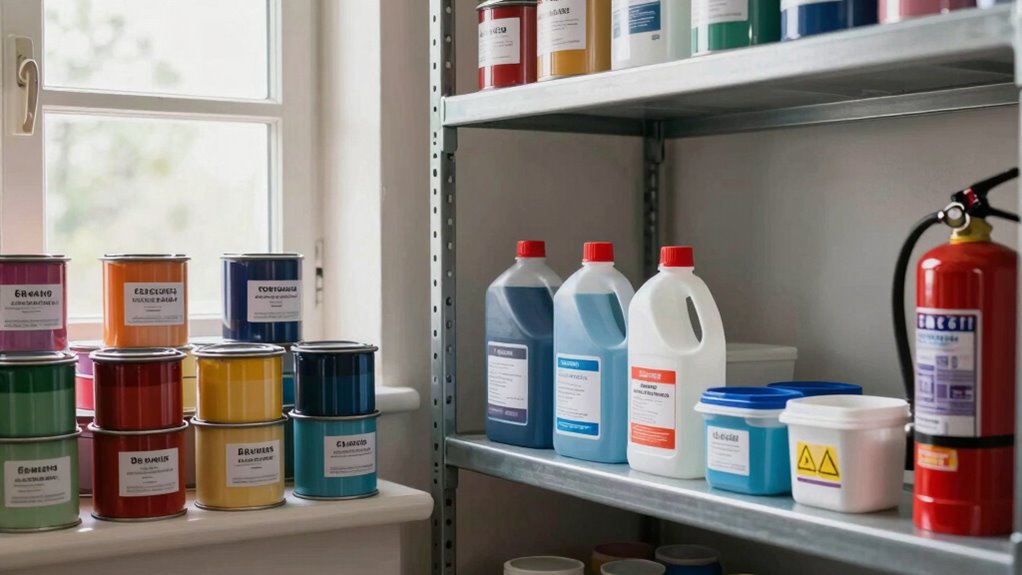

To store paint, chemicals, and cleaning supplies safely, use sturdy, leak-proof containers suited for each substance, preferably airtight glass or metal for paints and durable plastic for chemicals. Clearly label each container with contents and dates, and keep them in a cool, dry, well-ventilated area away from heat or flames. Regularly check for leaks or damage and dispose of expired items properly. Following these tips helps prevent accidents—stick around to find out even more expert storage advice.

Get the little things that make your day delivered free — and shop member deals
- Fast, free delivery on millions of items
- Access to Prime Big Deal Days deals on October 6–7
- Prime Video, Amazon Music and more included
Key Takeaways
- Use airtight, leak-proof containers made of glass, metal, or durable plastic, labeled clearly for easy identification.
- Store in a cool, dry, well-ventilated area away from heat, flames, and direct sunlight.
- Keep containers upright and sealed tightly to prevent spills and evaporation.
- Regularly inspect containers for leaks, damage, and replace labels as needed.
- Dispose of expired or unused substances following proper safety and environmental guidelines.
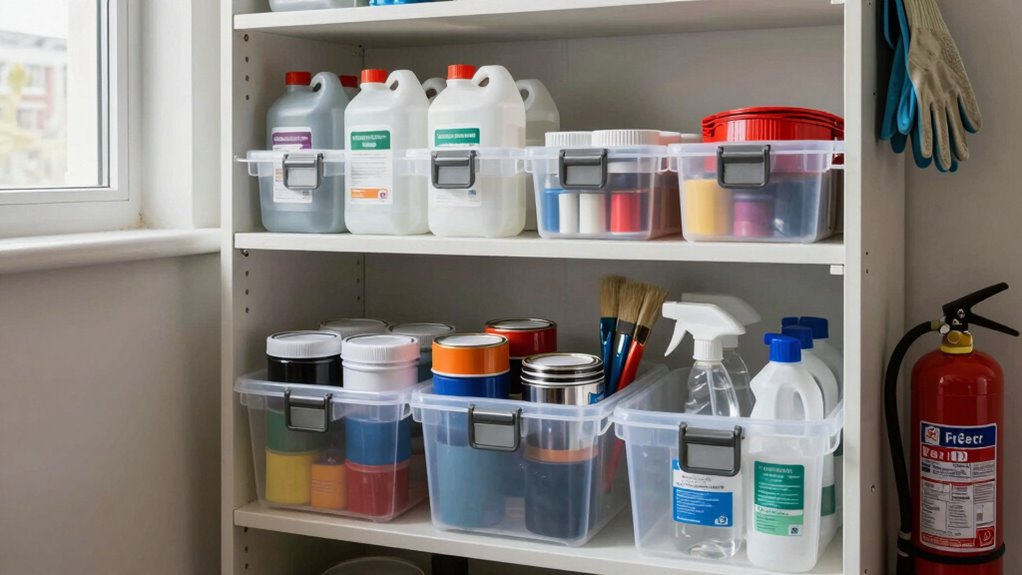
Proper storage of paint, chemicals, and cleaning supplies is essential for safety and maintaining their effectiveness. When you’re dealing with potentially hazardous substances, it’s crucial to follow proper safety precautions to prevent accidents and spills. Using the right storage containers is a key step in this process. You want containers that are sturdy, leak-proof, and designed specifically for the type of substance you’re storing. For paints, opt for airtight, glass or metal cans that won’t degrade over time. For chemicals and cleaning supplies, choose durable plastic containers with secure lids to prevent leaks and evaporation.
Ensuring your storage containers are properly labeled is another indispensable safety precaution. Clearly mark each container with its contents and date of purchase or opening. This helps you quickly identify what’s inside and know when to dispose of expired or unused products. Labels also serve as a safety reminder, alerting you and others to handle the substances with care. Keep these containers in a designated area, away from heat sources, open flames, or direct sunlight, which can cause chemical reactions or deterioration. Additionally, understanding the importance of proper chemical storage can help prevent dangerous incidents in your home. Proper storage practices are vital to minimize risk and ensure safe handling.
Temperature control is equally significant. Many chemicals and paints should be stored in a cool, dry place, ideally between 50 and 77 degrees Fahrenheit. Extreme temperatures can change the composition of these substances, making them less effective or even dangerous. Avoid storing chemicals in areas prone to moisture, such as basements or garages, unless they’re specifically designed for such conditions. Proper ventilation in storage areas can help prevent the buildup of fumes, reducing the risk of inhalation or fire hazards. Additionally, storing substances in their original containers helps ensure safety and prevents accidental misuse. Regularly inspecting storage areas for damage or leaks can further prevent accidents and ensure safe handling.
As an affiliate, we earn on qualifying purchases.
Frequently Asked Questions
How Often Should I Check Stored Chemicals for Leaks or Deterioration?
You should check stored chemicals for leaks or deterioration at least once every three to six months. Regular inspections help you catch issues early, preventing accidents. Make certain your storage area is well-ventilated, and always follow proper chemical disposal procedures if you find leaks or expired products. Keep storage labeled clearly with contents and safety info, making inspections easier and safer. Regular checks maintain safety and prolong the life of your chemicals.
Can I Store Different Chemicals Together Safely?
You shouldn’t store different chemicals together unless they’re compatible. Check chemical compatibility charts before mixing or storing chemicals side-by-side. Use appropriate storage containers designed for each chemical, ensuring they’re clearly labeled and sealed tightly. Keep incompatible chemicals apart to prevent reactions or leaks. Regularly inspect containers for deterioration, and store chemicals in a cool, well-ventilated area away from heat sources and direct sunlight for added safety.
What Should I Do if a Chemical Spills During Storage?
If a chemical spills during storage, act quickly with a proper chemical spill response. First, wear protective gloves and eyewear to avoid contact. Contain the spill with absorbent materials like kitty litter or spill pads, and carefully dispose of contaminated materials following storage safety tips. Ventilate the area to disperse fumes, then clean the spill thoroughly. Always have a spill kit nearby and follow your facility’s emergency procedures to stay safe.
Are There Specific Storage Conditions for Particular Types of Paint?
For ideal paint durability and safety, store different types of paint under specific conditions. Water-based paints should stay in a cool, dry area away from direct sunlight, which can impact chemical reactivity. Oil-based paints need a tightly sealed container in a well-ventilated space to prevent evaporation and spoilage. Always keep paints upright, label containers clearly, and avoid extreme temperatures to maintain their quality and guarantee safe storage.
How Long Can Chemicals Be Stored Before They Expire or Become Unsafe?
You can usually store chemicals for 1 to 5 years, but this varies based on chemical toxicity and storage container durability. Check labels for expiration dates and follow safety guidelines. Make sure your storage containers are durable, leak-proof, and properly sealed to prevent leaks or contamination. Regularly inspect your chemicals, and dispose of any expired or degraded substances responsibly to avoid health hazards or environmental harm.
leak-proof chemical storage containers
As an affiliate, we earn on qualifying purchases.
As an affiliate, we earn on qualifying purchases.
Conclusion
By following these simple storage tips, you’ll keep your home safe and your supplies in perfect condition. Think of your storage area as a well-guarded treasure chest, protecting your valuable paints, chemicals, and cleaning extras from spills, leaks, and accidents. When you treat your supplies with care and organization, they’ll serve you better and last longer. So, lock up your treasures wisely, and enjoy a safer, more efficient space that’s ready for any project that comes your way.
durable plastic cleaning supply bottles
As an affiliate, we earn on qualifying purchases.
As an affiliate, we earn on qualifying purchases.
chemical and paint storage safety kit
As an affiliate, we earn on qualifying purchases.
As an affiliate, we earn on qualifying purchases.
Fall Picks
fall essentials
As an affiliate, we earn on qualifying purchases.