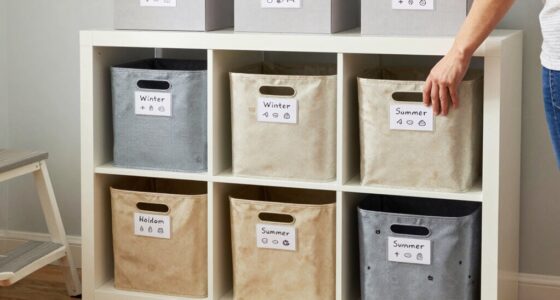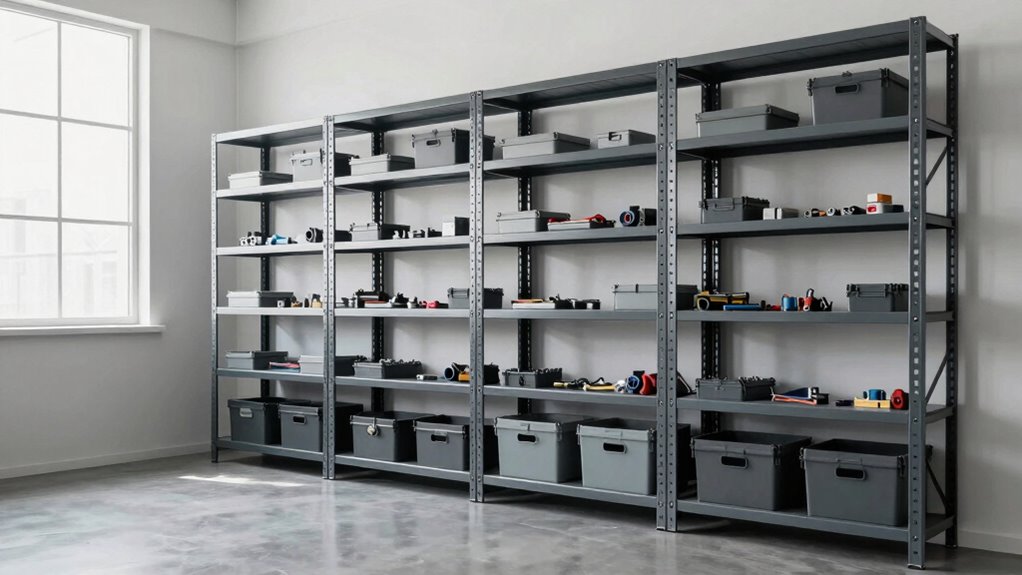

To prevent your heavy-duty shelving from turning into a giant bin wall, plan your layout carefully by assigning specific shelves for different items and grouping similar items together. Distribute weight evenly across shelves, avoiding overloading or placing heavy items on edges. Secure shelves to the wall to guarantee stability and regularly check their condition. Using proper storage organization strategies helps maintain safety and efficiency. Keep exploring for more tips to optimize your shelving system and avoid clutter buildup.

Get the little things that make your day delivered free with Prime
- Fast, free delivery on millions of items
- Prime Video, Amazon Music and more included
- Member-only deals all year
Key Takeaways
- Assign specific shelves for heavy and bulky items to prevent clutter and maintain accessibility.
- Distribute weight evenly across shelves to avoid creating a bulky, unstable wall.
- Group similar items together and organize by size to reduce visual bulk and improve navigation.
- Secure shelves to the wall and regularly check stability to prevent tipping or collapsing.
- Limit the height of stacked items and avoid overloading shelves to maintain a streamlined, functional space.
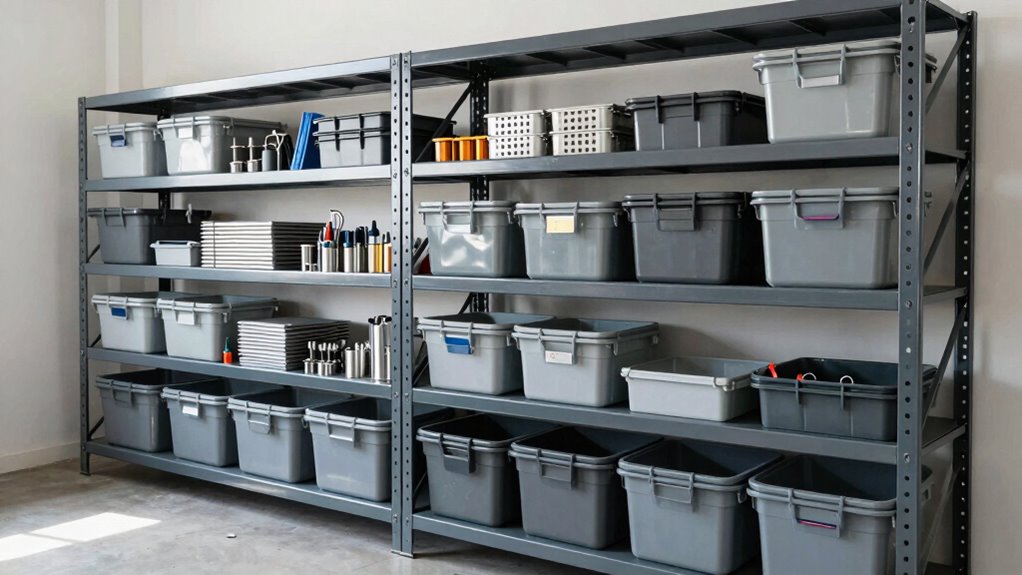
Heavy-duty shelving is an excellent solution when you need to maximize storage space for heavy or bulky items. It helps you organize your workspace efficiently, but if you’re not careful, it can quickly turn into a cluttered, unwieldy mess. To avoid creating a giant bin wall, you should focus on storage optimization. This means planning your shelving layout carefully, considering the size and weight of items, and making sure each shelf is suited for its intended purpose. Instead of stacking everything haphazardly, group similar items together and assign specific shelves for different categories. This way, you can quickly locate what you need without digging through a mountain of boxes, keeping your space orderly and functional.
While optimizing storage, it’s equally important to observe safety precautions. Heavy-duty shelves are designed to hold substantial weight, but overloading them can lead to accidents or damage. Always check the manufacturer’s weight limits and distribute weight evenly across shelves. Avoid placing overly heavy items on the edges of shelves or on the topmost units, as this increases the risk of tipping or collapsing. Secure shelves to the wall if possible, especially in high-traffic areas or spaces prone to vibrations, to prevent tipping. Use proper lifting techniques when loading or unloading heavy items to protect yourself from injury. If you’re working in a shared space, communicate with others about the weight limits and safety measures, so everyone stays aware and cautious. Additionally, understanding the importance of shelf safety can help prevent accidents and ensure your shelving system remains secure over time. Incorporating storage organization strategies can further enhance both safety and efficiency, making your workspace safer and more functional. Regularly educating yourself on safe handling practices can also contribute to maintaining a secure environment. Paying attention to shelf stability can further prevent accidental collapses and ensure long-term durability of your setup. Being aware of weight distribution techniques will help prolong the lifespan of your shelving and prevent unnecessary wear.
As an affiliate, we earn on qualifying purchases.
Frequently Asked Questions
Can Heavy-Duty Shelving Be Installed Outdoors Safely?
Yes, you can install heavy-duty shelving outdoors safely if you choose weatherproofed materials. Look for shelves with outdoor weatherproofing and corrosion resistance to withstand the elements. Guarantee proper anchoring to prevent tipping, and regularly check for signs of rust or wear. Using coated or stainless steel shelves helps prolong lifespan. With the right materials and installation, your heavy-duty shelving will remain durable and secure outside.
What Are the Best Materials for Heavy-Duty Shelving Brackets?
You should choose brackets made from materials with high durability like steel or stainless steel, as they can handle heavy loads without bending or breaking. Consider brackets that are compatible with your shelving system, ensuring secure attachment and stability. Metal brackets with corrosion-resistant coatings are ideal for long-term use, especially outdoors. Prioritize strong, durable materials that fit well with your shelving to maintain safety and functionality.
How Do I Prevent Heavy Shelves From Sagging Over Time?
Did you know that improperly supported shelves can sag by up to 20% over time? To prevent this, focus on shelf reinforcement and proper load distribution. Use sturdy brackets and consider adding support braces, especially for heavier loads. Distribute weight evenly across the shelves, avoiding concentrated points. Regularly check for signs of sag and reinforce as needed, ensuring your shelves stay sturdy and safe for years to come.
Are There Weight Limits for Different Shelving Configurations?
Yes, there are weight limits for different shelving configurations. Always check the weight capacity listed by the manufacturer and follow safety guidelines to prevent accidents or damage. Distribute weight evenly across shelves and avoid overloading them beyond their specified limits. Staying within recommended weight capacities guarantees stability, safety, and longevity for your heavy-duty shelving, helping you maximize storage without risking collapse or damage.
How to Organize Items Efficiently on Heavy-Duty Shelving?
Think of your shelves as the stage for a well-choreographed dance. You’ll want to use labeling strategies to keep each item in its solo spot, making retrieval a breeze. Incorporate accessory options like bins, hooks, or dividers to create distinct zones. This way, you stay organized and efficient, turning your heavy-duty shelving into a smooth, streamlined performance rather than a chaotic jumble.
As an affiliate, we earn on qualifying purchases.
Conclusion
By strategically organizing your heavy-duty shelving, you’ll transform chaos into order—turning your storage space into a well-oiled machine. Avoid turning it into a monstrous bin wall that eats up your space and sanity. Instead, think vertically, use proper weight distribution, and keep things accessible. With these tips, your storage area will be so efficient, it’ll feel like you’ve opened a secret vault of space—making clutter a thing of the past and your sanity intact.
As an affiliate, we earn on qualifying purchases.
As an affiliate, we earn on qualifying purchases.
Halloween Picks
halloween
As an affiliate, we earn on qualifying purchases.