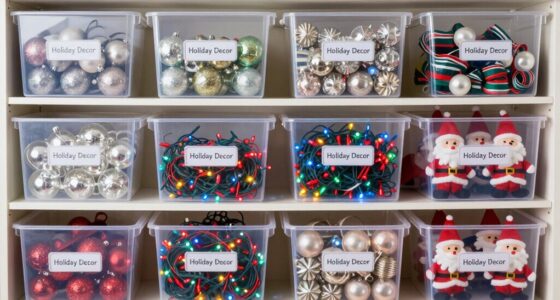
Overhead storage works best in homes with high ceilings and sturdy structures that can support racks safely. If your ceilings are low or sloped, installing overhead units may be unsafe or impractical. You also need to evaluate safety, load capacity, and whether your space can handle the weight. In some homes, the limitations outweigh the benefits, but understanding these factors can help you decide if overhead storage is right for you—more details are just a glance away.

Get the little things that make your day delivered free with Prime
- Fast, free delivery on millions of items
- Prime Video, Amazon Music and more included
- Member-only deals all year
Key Takeaways
- Ceiling height determines whether overhead storage can safely and effectively accommodate items.
- Structural integrity and ceiling support are crucial for securely installing overhead racks.
- Space limitations, such as low or sloped ceilings, restrict the feasibility of overhead storage options.
- Safety considerations and adherence to building codes influence suitability for overhead storage.
- Home usage needs and storage priorities affect whether overhead storage enhances organization.

Have you ever contemplated overhead storage as a smart way to maximize space in your home or garage? If you’re running out of room for your belongings, installing overhead shelves can be a game-changer. With a little creativity, you can design storage solutions that fit your specific needs. Creative installation involves thinking outside the box—using ceiling-mounted racks or custom-built platforms tailored to your space and items. This approach not only keeps your floor clear but also gives a sense of organization and efficiency. However, before jumping into it, you should weigh the cost considerations. Overhead storage options vary widely in price, depending on materials and complexity. Basic wire racks are affordable, but more durable and custom solutions can get pricey. It’s important to assess how much you’re willing to spend versus the benefits you’ll gain.
The effectiveness of overhead storage really depends on your home’s structure and your personal needs. If your ceilings are high enough, you can install sturdy racks that hold seasonal decorations, sports equipment, or rarely-used tools without cluttering your living space. But if your ceilings are low or sloped, overhead storage might not be feasible or safe. In such cases, creative installation can help you find alternative solutions, like wall-mounted shelves or under-stair storage, that make better use of available space without risking safety or accessibility. Additionally, considering home electrical systems can be important when installing overhead storage, especially if wiring or lighting fixtures are nearby. Incorporating proper load assessment ensures that the storage solutions you choose are safe and reliable, particularly for heavier items. It’s also crucial to consider safety precautions to prevent accidents or damage when installing overhead storage, especially in areas prone to movement or vibrations. An understanding of building codes and regulations might be necessary to ensure your installation complies with safety standards. Furthermore, evaluating storage capacity and accessibility can help you optimize your space and ensure the storage is practical for daily use. Another factor to evaluate is the weight capacity and safety. Overhead storage must be securely anchored to prevent accidents, especially if you plan to store heavier items. If you’re handy and comfortable with DIY projects, you might enjoy designing and installing your own storage systems. This can save money and give you a customized fit. On the other hand, if you’re not confident in your skills, professional installation might be a safer and more reliable choice. Remember, the initial investment in professional help could be offset by the long-term durability and peace of mind it provides.
As an affiliate, we earn on qualifying purchases.
Frequently Asked Questions
How Much Does Overhead Storage Typically Cost to Install?
Overhead storage typically costs between $200 and $1,000 to install, depending on the size, material, and complexity of the project. When considering the cost comparison, you’ll find that simple DIY setups are more affordable, while professional installation might be pricier but more secure. The installation process involves evaluating your ceiling space, choosing the right brackets and shelves, and ensuring proper support, which influences the overall cost.
Can Overhead Storage Be Customized for Specific Room Sizes?
Think of overhead storage as a tailor-made suit—you can customize it perfectly to fit your space. Yes, overhead storage can be tailored with various customization options to match your room’s size adaptability. Whether your ceiling is high or low, you can choose adjustable shelves, custom brackets, or modular units. This guarantees your storage solution is not just practical but seamlessly integrated, maximizing your space’s potential with precision and style.
What Safety Precautions Are Needed for Overhead Storage Installation?
When installing overhead storage, you need to prioritize safety. Wear appropriate safety gear like goggles and gloves to protect yourself during installation. Always check and adhere to the weight limits specified by the manufacturer to prevent accidents or collapse. Use proper tools and secure the storage firmly into ceiling joists or studs. Taking these precautions guarantees a safe setup that lasts and keeps your space organized without risks.
How Do I Maintain Overhead Storage to Ensure Longevity?
To maintain overhead storage and guarantee longevity, regularly review and remove unnecessary items, preventing overloading. Dust and wipe surfaces with damp cloths, especially on design ideas and material choices that resist moisture. Use sturdy materials like metal or treated wood, and inspect brackets and supports periodically. Proper maintenance, mindful material choices, and careful organization keep your overhead storage safe, durable, and looking great for years to come.
Is Overhead Storage Suitable for All Types of Items?
Overhead storage isn’t suitable for all items, especially heavy ones that could strain the structure or cause safety issues. It’s best for lightweight, decorative options like seasonal decorations or infrequently used items. Avoid storing heavy items overhead to prevent damage or accidents. When using overhead storage, choose options that support your needs and keep heavy items elsewhere to maintain safety and the longevity of your storage system.
As an affiliate, we earn on qualifying purchases.
Conclusion
In the end, overhead storage can be a game-changer or a total flop, depending on your space and needs. It’s not a one-size-fits-all solution, so weigh the pros and cons carefully. If you’re willing to think outside the box, it might just save your sanity and free up precious floor space. Remember, sometimes you have to see the forest for the trees—don’t let overlooked storage options fall by the wayside.
As an affiliate, we earn on qualifying purchases.
heavy-duty overhead storage solutions
As an affiliate, we earn on qualifying purchases.
As an affiliate, we earn on qualifying purchases.
Halloween Picks
halloween
As an affiliate, we earn on qualifying purchases.