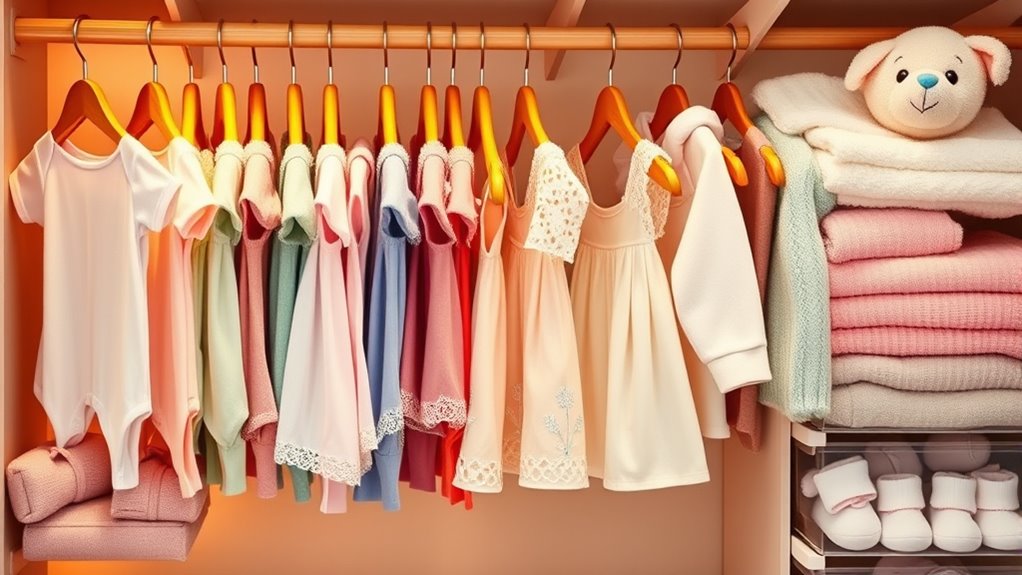

To organize all those adorable baby outfits, start by gathering and evaluating each piece for wear or damage, then sort clothes by size, season, and type. Use clear, stackable bins or drawers labeled for easy access, and fold items neatly for space-saving storage. Regularly rotate seasonal items and remove outgrown clothes promptly. Keeping a consistent system makes your baby’s wardrobe manageable and accessible—continue exploring these tips to master the art of wardrobe organization.
Key Takeaways
- Gather all baby clothes in one place, assess their condition, and discard or donate damaged items.
- Sort clothing by size, season, and type using labeled bins or dividers for easy access.
- Use space-saving folding techniques and clear containers to maximize storage efficiency.
- Rotate seasonal clothing regularly, packing out-of-season items in labeled bins for neatness.
- Maintain organization with consistent folding, labeling, and periodic reviews to keep the wardrobe manageable.
Gathering and Assessing Your Baby’s Wardrobe
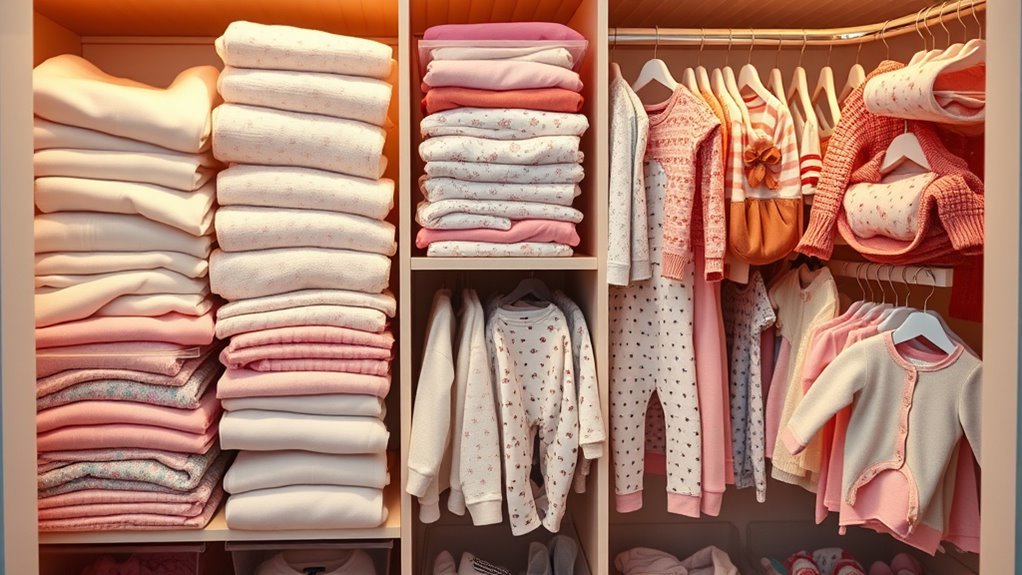
To effectively organize your baby’s wardrobe, start by gathering all clothing in one central location. This helps you get a clear picture of what you have and what might be missing. As you lay everything out, examine each piece for wear, stains, tears, or damage. Set aside items that are heavily damaged or stained—these aren’t worth keeping. Separate clothes by size, keeping in mind how quickly your baby grows. Keep favorite or gently used items in a separate pile for potential storage or donation. This initial step gives you control over the clutter and makes future sorting much easier. Additionally, understanding clothing lifespan can help you decide which items to keep or discard as your baby grows. Once everything is assessed, you’ll have a solid foundation to organize efficiently and make smarter decisions about what to keep, donate, or discard.
Sorting Clothes by Size, Season, and Type
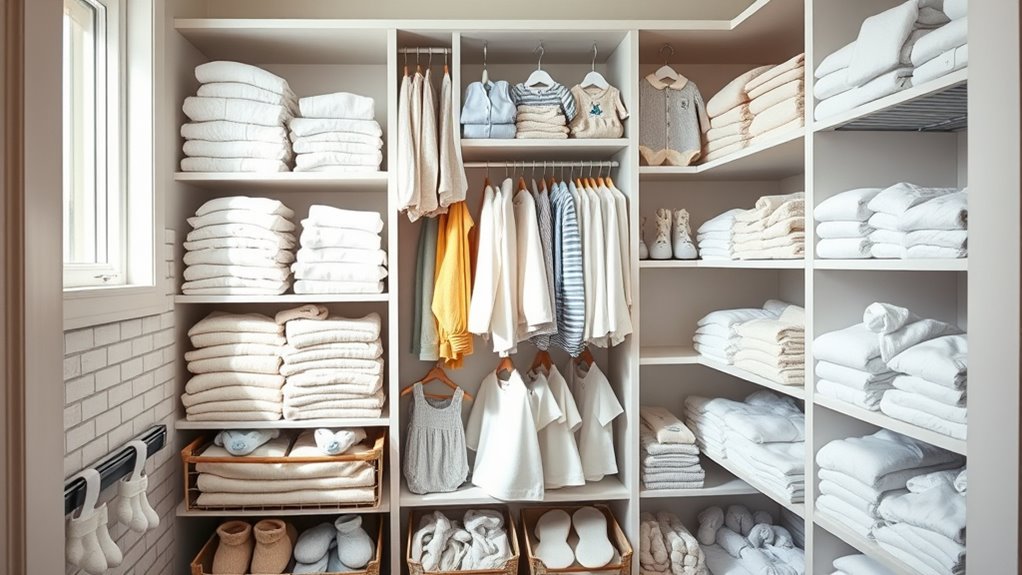
Once you’ve gathered and assessed your baby’s clothes, the next step is to sort them by size, season, and type. Begin by grouping outfits based on current or upcoming size changes, making it easier to find appropriate clothes quickly. Separate seasonal items so you can access the right outfits for hot or cold weather without digging through everything. Categorize clothes into types like onesies, sleepers, pants, dresses, and special occasion pieces to streamline outfit selection. Use dividers or bins to keep these groups distinct, and consider sorting by sleeve length and color as secondary steps. This organization helps you maintain a clear overview, prevents clutter, and guarantees your baby’s wardrobe remains manageable as they grow. Additionally, incorporating energy-efficient storage solutions can help keep your baby clothes in optimal condition while reducing energy consumption.
Choosing the Best Storage Solutions for Baby Clothes

Choosing the right storage containers and space-saving techniques can make organizing baby clothes much easier. You’ll want to pick containers that keep items accessible and protected, while maximizing limited space with clever folding and stacking methods. Clear labeling guarantees you can quickly find what you need and keep everything neatly organized over time. Incorporating safe storage practices ensures your baby’s clothing remains in good condition and free from damage.
Optimal Storage Containers
Selecting the right storage containers is essential for keeping your baby’s clothes organized and easily accessible. Use clear plastic bins with lids to protect items from dust and moisture while allowing you to see contents at a glance. Stackable containers maximize space and keep seasonal or outgrown clothes separate. Drawer dividers or small baskets are perfect for organizing socks, hats, and accessories, preventing clutter. Consider fabric bins for a softer look and easier handling, especially for lightweight items. Label each container with size, season, or clothing type to streamline retrieval. For long-term storage, airtight bins protect clothes from pests and humidity. Choose durable, easy-to-clean containers to make ongoing organization simple and efficient, saving you time and reducing stress when searching for the right outfit. Incorporating simple storage strategies can further enhance your overall organization system and keep your baby’s wardrobe tidy.
Space-Saving Techniques
Maximizing space when storing baby clothes is essential to keep your nursery organized and clutter-free. Use vertical stacking to keep folded clothes visible and accessible, saving valuable drawer space. Incorporate drawer dividers for small items like socks and accessories to prevent scattering. Match baskets or bins by season, size, or clothing type to streamline retrieval. Designate specific drawers or shelves for each category, making it easier to find what you need quickly. Fold garments consistently, using space-efficient techniques such as folding pants in thirds or onesies with sleeves tucked in. Store outgrown clothes in labeled bins or baskets, freeing up space for current sizes. Additionally, understanding clothing organization techniques can help optimize your storage solutions. By implementing these space-saving strategies, you’ll maintain a tidy, functional nursery where everything has its place.
Labeling and Organization
Once you’ve implemented space-saving techniques, clear labeling becomes the key to maintaining an organized nursery. You want to assign labels to each storage container, drawer, or bin, so you can easily identify what’s inside without rummaging. Use adhesive labels, printable labels, or sticky notes to mark clothing by size, season, or type. For example, label bins for “3-6 Months,” “Winter Sleepers,” or “Pants.” Consistent labeling helps you quickly locate the right outfit and keeps everything in its designated place. When clothes outgrow a size, mark those bins for future use or donation. This system reduces clutter, saves time, and makes it simple to keep your baby’s wardrobe neat and accessible as they grow. Incorporating labeling techniques that are durable and easy to update ensures your organizational system remains effective over time.
Mastering Folding Techniques for Space Efficiency

Are you looking for ways to save space and keep your baby’s wardrobe organized? Mastering folding techniques is key. Start by folding onesies with the sleeves brought toward the back, then fold the bottom upward to create a compact rectangle. For pants or leggings, fold them in half lengthwise, then in thirds horizontally to maximize space. Dresses and shirts should be folded with sleeves tucked toward the back before folding in half. Consistency is essential—use the same method for each garment type to keep your storage uniform. Stack folded clothes vertically within each category, so you can see all items at a glance. This approach not only saves space but also makes outfit selection quick and simple, keeping your baby’s wardrobe neat and accessible. Incorporating proper folding techniques can also help preserve the quality of delicate fabrics over time.
Using Labels to Keep Your Closet Organized
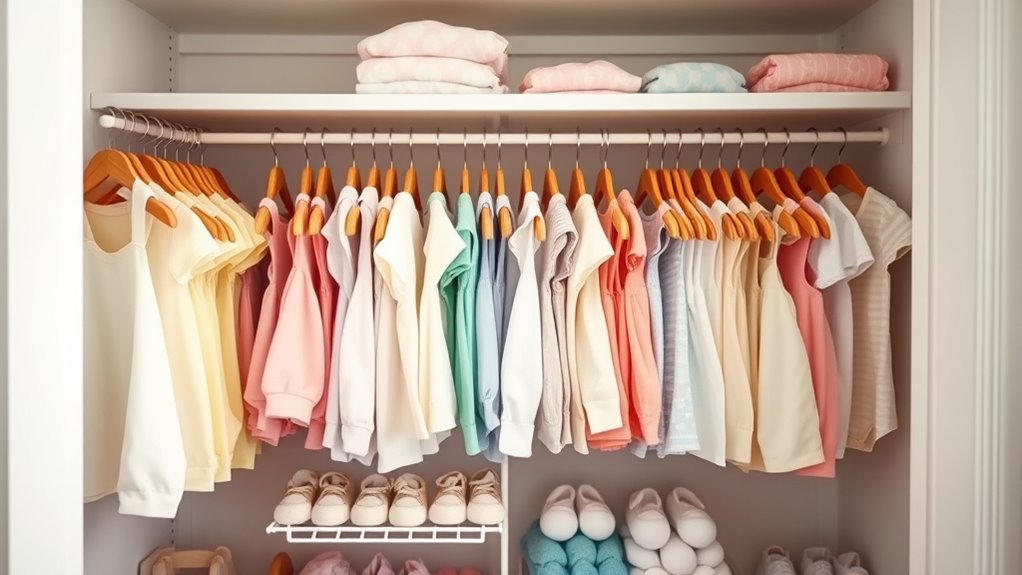
After mastering consistent folding techniques, adding clear labels to your storage solutions makes organization even more effective. Labels help you quickly identify what’s inside each bin, drawer, or basket, saving time and reducing frustration. Use adhesive labels, printable options, or sticky notes to mark contents by size, season, or clothing type. This way, you can easily locate the right outfit for any occasion or weather. Labeling also streamlines the process of rotating seasonal clothes and managing outgrown items. Keep labels simple and legible for quick recognition. Regularly update labels as your baby grows or clothing needs change. Clear labels create a visual system that keeps your closet tidy, organized, and accessible, making daily dressing and laundry routines smoother. Incorporating electric bikes into your routine can also inspire eco-friendly habits while managing your household chores.
Managing Outgrown Clothing and Rotation Strategies
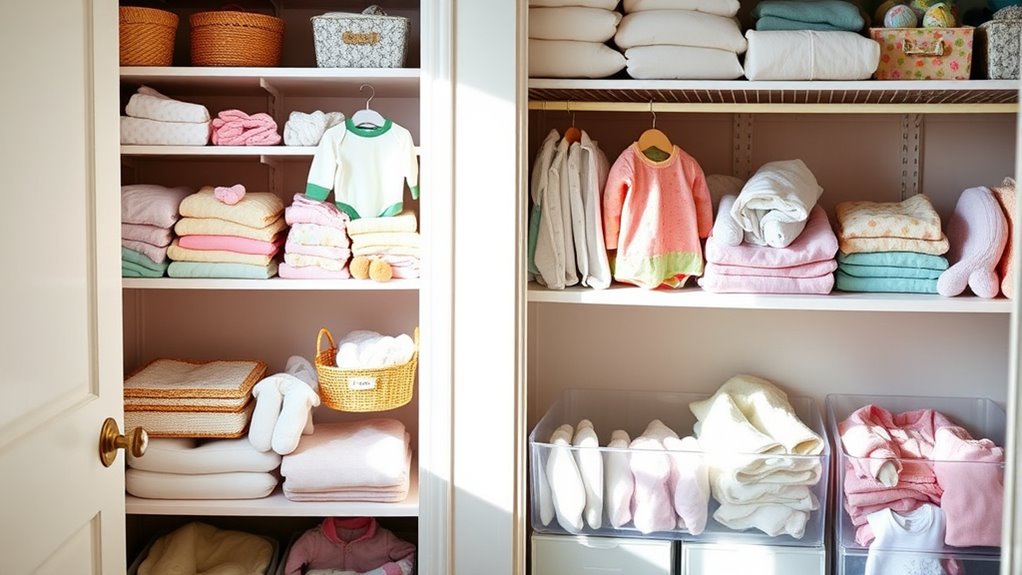
When your baby outgrows clothes, it’s important to remove those items from daily use quickly to free up space. You should sort out gently used pieces for donation or storage, keeping sentimental favorites separate. Regularly managing and rotating outgrown clothing helps keep your storage organized and makes outfit selection easier. Incorporating clothing rotation strategies can also prevent clutter and ensure your baby’s wardrobe remains manageable.
Outgrown Clothing Disposal
Managing outgrown clothing effectively is key to maintaining an organized and functional baby wardrobe. When clothes no longer fit, it’s important to dispose of them properly to free up space and reduce clutter. Start by evaluating which items are truly beyond repair or reuse. Then, consider the best disposal method:
- Donate gently used clothes to shelters or charity organizations
- Recycle damaged or stained garments if possible
- Repurpose fabric for cleaning rags or crafts
- Dispose of items that are torn or heavily stained in the trash
- Being aware of clothing disposal options can help you make environmentally responsible choices.
Rotation and Storage
Efficiently handling outgrown clothing is essential to keeping your baby’s wardrobe organized and accessible. As your baby outgrows clothes, promptly remove these items from active rotation to free up space. Place outgrown pieces into dedicated baskets during laundry, preventing clutter. For long-term storage, pack these items into larger plastic bins and store them in the basement or a designated area. Donations of gently used clothes help clear space and support others. Keep sentimental favorites or special pieces in a separate, long-term storage box for future generations or potential future children. Regularly review stored items to ensure they remain in good condition and accessible when needed. Implementing these rotation strategies helps maintain an organized wardrobe and makes dressing your little one quicker and stress-free. Additionally, understanding personality traits can assist in creating a more tailored and efficient organization system that suits your needs.
Creating a System for Seasonal Clothing Changes
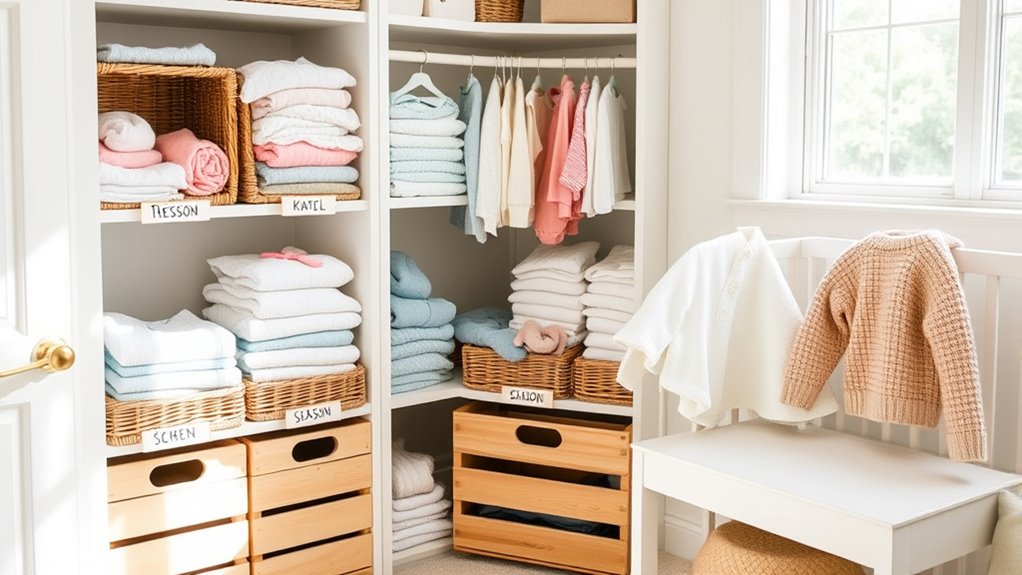
Creating a system for seasonal clothing changes starts with organizing your baby’s wardrobe into clearly labeled sections for each season. This helps you quickly access appropriate outfits and keeps everything tidy. You can implement these strategies:
Organize your baby’s wardrobe into seasonal sections for quick access and tidiness.
- Use separate bins or drawers labeled “Spring,” “Summer,” “Fall,” and “Winter” for seasonal clothes.
- Rotate clothing at the start of each season, placing out-of-season items in storage.
- Pack away off-season clothes in clearly marked containers, freeing space for current-season items.
- Keep a dedicated spot for seasonal accessories like hats, mittens, and sunglasses to avoid last-minute searches.
- Incorporate outdoor living and design principles by creating a dedicated space for seasonal clothing storage that is both functional and organized.
Tips for Maintaining an Organized Baby Wardrobe
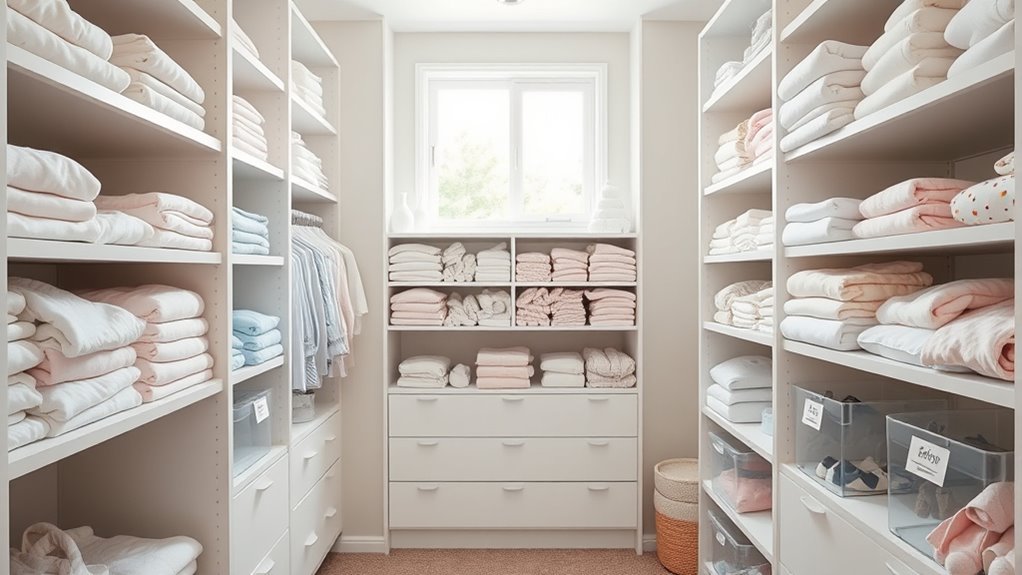
To keep your baby’s wardrobe organized over time, regular maintenance is essential. Start by routinely evaluating the contents—remove outgrown or damaged clothes immediately to prevent clutter. Stay consistent with your folding and storage methods; use the same techniques to make it easier to find and put away items. Keep seasonal clothing in designated bins or sections, rotating them as needed. Label containers clearly so you can quickly identify sizes, seasons, and types of clothing. Incorporate a quick tidy-up into your weekly routine to fold and organize new or dirty clothes. Periodically review your system, adjusting storage solutions and labels to match your baby’s growth and changing needs. This consistent upkeep ensures your baby’s wardrobe stays manageable and easy to navigate. Additionally, investing in garage door openers with smart features can streamline your home organization by providing remote access and enhanced security for your household space.
Frequently Asked Questions
How Often Should I Review and Reorganize My Baby’s Wardrobe?
You should review and reorganize your baby’s wardrobe every three to six months. As your baby grows quickly, new sizes and seasons come up fast, so regular checks help you remove outgrown clothes and add new essentials. Keep an eye out for damaged items or stained clothes that need replacing, and make certain everything stays tidy and accessible. This routine keeps your baby’s wardrobe functional, organized, and ready for any occasion.
What Is the Best Way to Store Seasonal Clothing Long-Term?
To store seasonal clothing long-term, you should first clean and thoroughly dry each piece. Then, fold or roll clothes neatly, labeling storage bins or containers with the season and size. Use airtight plastic bins to protect against pests and moisture, and store them in a cool, dry place like a basement or attic. Regularly check on these storage boxes, and rotate items into active wardrobes as seasons change.
How Can I Prevent Clothes From Getting Wrinkled or Damaged?
To prevent clothes from getting wrinkled or damaged, handle them carefully and store them properly. Fold fabrics flat using consistent folding techniques, and avoid overstuffing drawers or bins, which can cause creases and tears. Keep clothes in cool, dry spaces away from direct sunlight, and use soft storage containers. Regularly rotate clothing to prevent unnecessary stretching or sagging, ensuring each piece stays pristine and protected over time.
What Are the Safest Storage Options for Baby Clothes?
You should store baby clothes in clean, dry, and cool areas to prevent damage. Use plastic bins with tight-fitting lids or fabric storage containers that are breathable, and avoid stacking heavy items to prevent crushing delicate fabrics. Label everything clearly for easy access, and keep outgrown clothes in separate bins or drawers to protect them from dust and pests. Regularly check storage areas to guarantee ideal conditions.
How Can I Make Clothing Rotation Quick and Stress-Free?
You can make clothing rotation quick and stress-free by sorting clothes into labeled bins for each size and season. When your baby outgrows an item, toss it into the appropriate bin immediately—no second-guessing needed. Keep a dedicated spot for outgrown clothes, so swapping outfits becomes a breeze. Simplify your life by folding consistently and stacking by category, making it easy to grab the right size and style in a flash.
Conclusion
By staying organized, you’ll save time and keep your baby’s wardrobe tidy—no need to channel your inner Marie Kondo or summon the ghost of Marie Antoinette! Regularly assess, rotate, and label clothes so everything stays accessible and fresh. With a little effort, your baby’s adorable outfits will be as well-organized as a medieval king’s treasury. Soon, dressing your little one will feel less like a quest and more like a royal decree!