
To organize kids’ keepsakes year by year, start by choosing storage solutions tailored to each child’s needs, like waterproof bins and labeled folders for each grade. Keep your system consistent by using uniform labels and color-coding for easy identification. Regularly sort through items, selecting meaningful keepsakes while digitizing bulky ones. Update your system annually to stay clutter-free and meaningful. Learning more will help you master a simple, effective approach that lasts.
Open a free Amazon Business account
Business pricing, bulk buying and tax-exempt orders.
As an affiliate, we earn on qualifying purchases.
Key Takeaways
- Use labeled folders sorted by grade or year, with consistent fonts and colors for easy identification.
- Limit saved keepsakes annually to meaningful items like artwork, report cards, and awards.
- Digitize bulky or oversized items by photographing them for space-saving digital archives.
- Implement a yearly review routine to purge duplicates, update labels, and add new keepsakes.
- Store physical keepsakes in waterproof, clearly labeled boxes or keepsake containers organized by child and school year.
waterproof kids keepsake storage bins
As an affiliate, we earn on qualifying purchases.
As an affiliate, we earn on qualifying purchases.
Choosing the Right Storage Solutions for Each Child
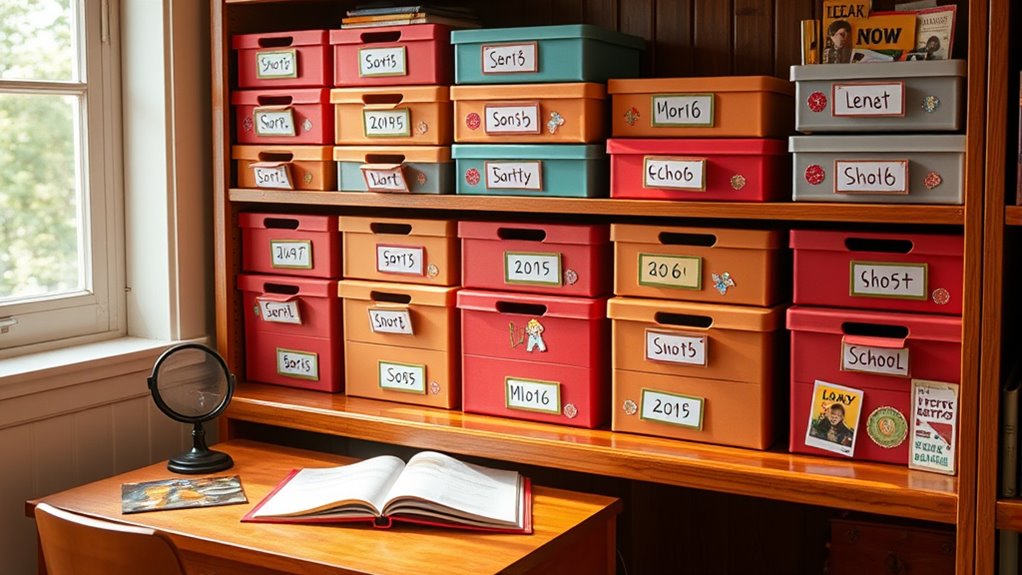
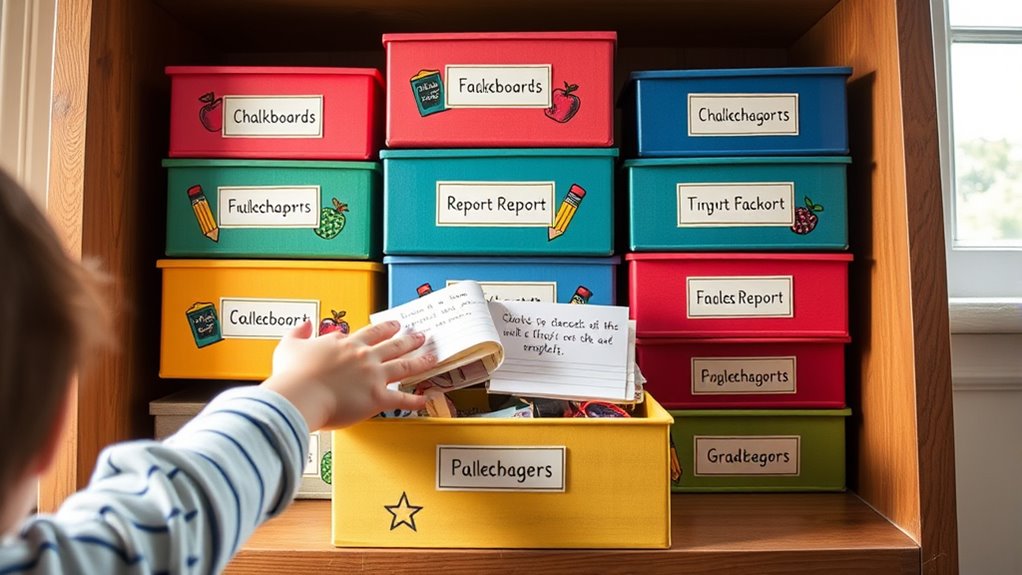
Choosing the right storage solutions for each child begins with evaluating their specific needs and available space. Start by considering how much keepsake material each child generates and their organizational habits. A large filing box or waterproof storage bin works well for protecting items and accommodating growth. Use hanging file folders with divider tabs, one per grade or year, to keep items organized chronologically. Color-coding folders by child or year can simplify identification. Label each folder clearly with grade, year, or category. For the storage container, label the exterior with your child’s name and school years. Keep bulky or special items separate, either by photographing them or storing them in dedicated keepsake boxes. Incorporating color accuracy into your labeling and display methods can help ensure that the true colors of your child’s artwork and memorabilia are preserved and appreciated over time. Tailoring storage solutions guarantees your child’s memories stay organized and protected over time.
labeled file folders for school memorabilia
As an affiliate, we earn on qualifying purchases.
As an affiliate, we earn on qualifying purchases.
Creating a Clear and Consistent Labeling System
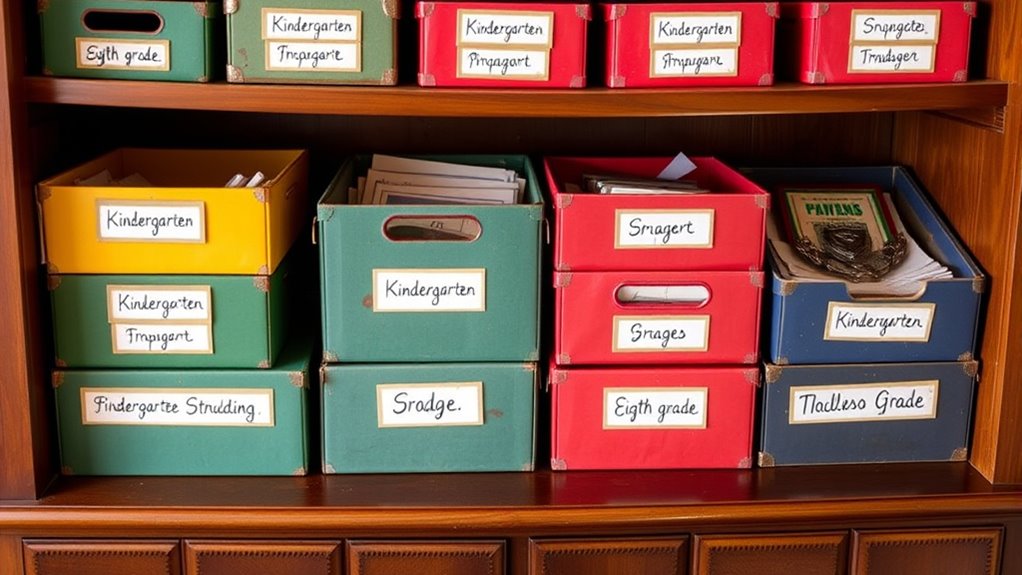
Establishing a clear and consistent labeling system is essential for keeping school memory boxes organized and easily accessible. Use uniform styles, fonts, and colors for labels to avoid confusion. Label each folder with the grade or year, and add category labels like “Report Cards” or “Achievements” for quick reference. Applying a consistent format helps you find items effortlessly later. To enhance organization, create a table to track labels:
| Label Type | Description |
|---|---|
| Year/Grade | 1st Grade, 2nd Grade, etc. |
| Category | Report Cards, Photos, Art |
| Child’s Name | For multi-child households |
| Special Items | Medals, Certificates |
| Date | When items were stored |
Stick to this system to maintain clarity as your collection grows. Additionally, user consent management plays a crucial role in ensuring your organization process aligns with privacy best practices, especially if sharing labels or information online.
color-coded storage boxes for children's artwork
As an affiliate, we earn on qualifying purchases.
As an affiliate, we earn on qualifying purchases.
Sorting and Selecting Keepsakes to Save Each Year

To keep your school memory box manageable, it’s important to thoughtfully select which keepsakes to save each year. Start by reviewing the items from the past year and choosing only those that hold meaningful value or represent significant milestones. Limit yourself to one or two pieces of artwork, a report card, and a special project or award. Use a weekly or monthly approach—saving a few key items rather than everything. Purge duplicates or less meaningful papers to prevent clutter. Consider how each item will fit into your storage system and whether it truly captures your child’s growth. If an item feels sentimental but bulky, photograph it to preserve the memory digitally. Be intentional, and prioritize quality over quantity to keep the collection manageable and meaningful. Incorporating energy-efficient cloud storage options can help securely archive digital copies and free up physical space.
digital photo album for kids' school projects
As an affiliate, we earn on qualifying purchases.
As an affiliate, we earn on qualifying purchases.
Managing Bulky Items and Digital Archiving Options
Managing bulky items can be challenging, but digital archiving offers an effective solution to preserve memories without clutter. Take photos of 3D projects, medals, or oversized artwork, then store these images on your computer or cloud service. This way, you keep the memory without sacrificing space. For physical keepsakes that are too large or fragile, create a dedicated keepsake box labeled with the child’s name and school years, and store only items with high sentimental value. Use clear labels to organize the box contents, so you can easily find what you need later. Regularly review and declutter these bulky items, photographing or digitizing new keepsakes as they come in. Implementing a consistent organization system can streamline retrieval and maintenance of your archive. This approach helps maintain a manageable collection, balancing physical and digital storage for a clutter-free, meaningful archive.
Maintaining Your Organization System Yearly
Maintaining your organization system each year keeps memories fresh and clutter under control. At the end of each school year, review your folders and purge items that no longer hold sentimental value or are duplicates. Update the labels on your folders and the exterior box with the child’s current grade or year. Add new items such as report cards, photos, and achievements, guaranteeing everything stays organized and accessible. Complete any annual questionnaires and include milestone keepsakes. Take time to photograph or scan bulky items before storing or discarding them. Regular maintenance prevents backlog and keeps your system manageable. Incorporating simple routines into your yearly process can make updating your memory boxes easier and more consistent. This yearly upkeep ensures your memory boxes remain a meaningful, streamlined collection of your child’s growth and accomplishments.
Frequently Asked Questions
How Often Should I Review and Update My Child’s Memory Box?
You should review and update your child’s memory box at least once a year, ideally after each school year. This helps you stay organized, purge unnecessary items, and add new keepsakes like photos and milestone items. Regular updates guarantee the box remains manageable and meaningful, capturing your child’s growth. Setting a yearly reminder makes it easier to keep the process consistent and enjoyable for both of you.
What’s the Best Way to Store Oversized or Fragile Keepsakes?
Ever wonder how to protect your child’s oversized or fragile keepsakes? You should store them separately in a sturdy, labeled box with padding like tissue paper or foam. For extra safety, consider wrapping delicate items in acid-free tissue and placing them in rigid containers. Photograph or scan bulky items for digital preservation. Do you really want to risk damage to those precious memories? Proper storage keeps them safe and in great condition.
How Can I Involve My Child in the Organization Process?
You can involve your child by giving them age-appropriate tasks like choosing favorite keepsakes, helping label folders, or decorating the box. Encourage their input on what to keep and how to organize it, making the process fun and interactive. Let them decide on colors or themes for folders, and regularly ask for their opinions. This involvement makes the organization meaningful and helps them feel proud of their memories.
What Are Eco-Friendly Options for Storing or Displaying Keepsakes?
You’re probably surprised eco-friendly options exist for keepsake storage, but they do! Use recycled cardboard or repurposed wooden boxes instead of plastic bins. Consider fabric or vintage suitcases for display, adding charm and sustainability. You can even upcycle old jars or tins for smaller items. Not only do you reduce waste, but you also create a unique, eco-conscious display that’s full of character—saving the planet, one keepsake at a time.
How Do I Handle Keepsakes From Multiple Children in One System?
To handle keepsakes from multiple children, assign each kid their own storage bin or labeled section within a shared system. Use different colors or labels for easy identification. Organize their items chronologically or by category, and consider adding a photo or name tag to each folder. Regularly review and purge to keep the system manageable, ensuring each child’s memories stay organized and accessible without mixing keepsakes.
Conclusion
By staying consistent with your organization system, you’ll easily find and cherish your child’s memories. For example, Sarah started labeling each box by year and found it much simpler to locate her son’s artwork from third grade during a recent move. Regularly reviewing and updating your storage keepsakes guarantees your collection remains manageable and meaningful. With a bit of effort each year, you’ll create a lasting, organized treasure trove of your child’s growth and milestones.
Flea & tick season Picks
flea and tick prevention
As an affiliate, we earn on qualifying purchases.