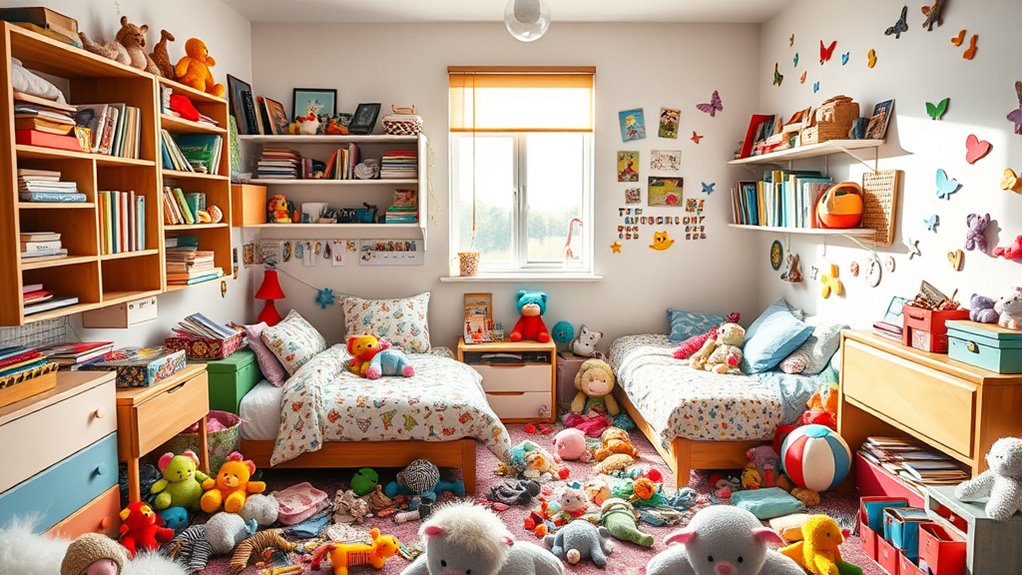

To organize a small shared kids’ room, maximize vertical space with wall shelves and use multi-functional furniture like beds with drawers. Designate personal zones with labels or colors for each child to create boundaries. Keep items sorted with baskets, bins, and clear containers, and involve your kids in regular tidying routines. For more ideas on maintaining a tidy, harmonious space, explore simple strategies that make organization manageable and fun.
Open a free Amazon Business account
Business pricing, bulk buying and tax-exempt orders.
As an affiliate, we earn on qualifying purchases.
Key Takeaways
- Establish distinct personal zones for each child, marked with labels or colors to promote ownership and boundary respect.
- Utilize vertical storage, baskets, and clear bins with labels for easy organization of toys, clothes, and supplies.
- Incorporate multi-functional furniture with built-in storage and space-saving solutions to maximize room efficiency.
- Create daily routines with visual cues and involve children in tidying to foster responsibility and habit formation.
- Use visual cues, labels, and fun activities to encourage kids to maintain the room’s organization and reduce clutter.
As an affiliate, we earn on qualifying purchases.
Maximize Vertical Space With Clever Storage Solutions
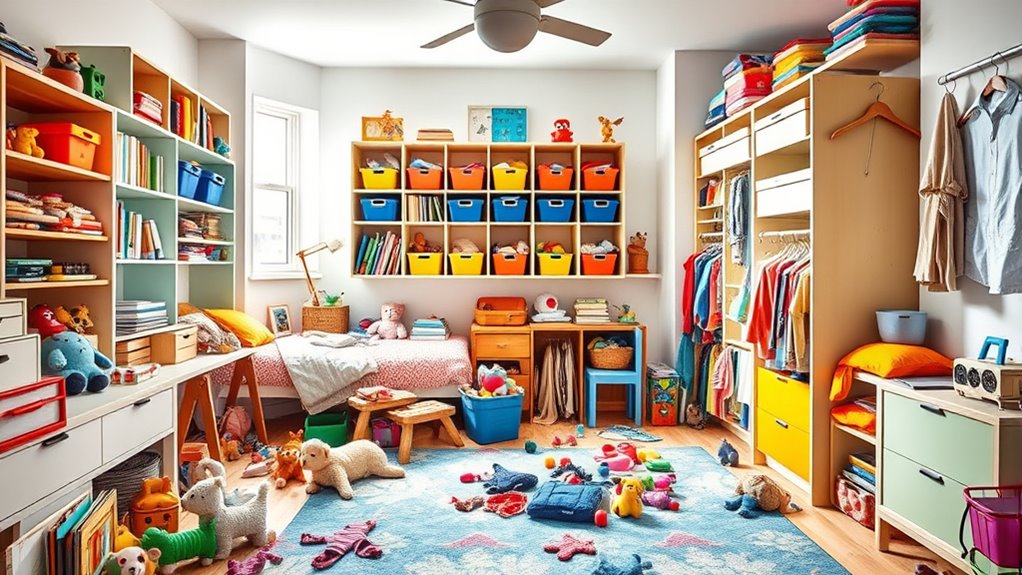
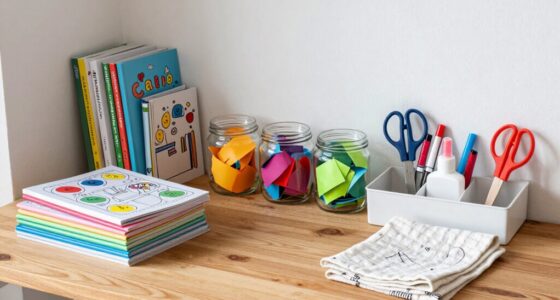
Maximizing vertical space is essential when organizing a shared kids’ bedroom, especially when floor space is limited. One effective strategy is to use wall-mounted shelving, which keeps toys and supplies off the floor and within easy reach. Install shelves at different heights to create designated spots for books, toys, and decorative items, reducing clutter and making the room feel more open. Incorporating a toy rotation system helps keep toys fresh and organized; rotate toys on the shelves regularly to prevent overwhelm and encourage kids to appreciate what they have. Using vertical storage solutions not only maximizes space but also promotes a tidy environment where everything has a place. This approach makes it easier for kids to find and put away their belongings, fostering independence and reducing mess.
multi-functional kids bed with drawers
As an affiliate, we earn on qualifying purchases.
As an affiliate, we earn on qualifying purchases.
Designate Personal Zones for Each Child
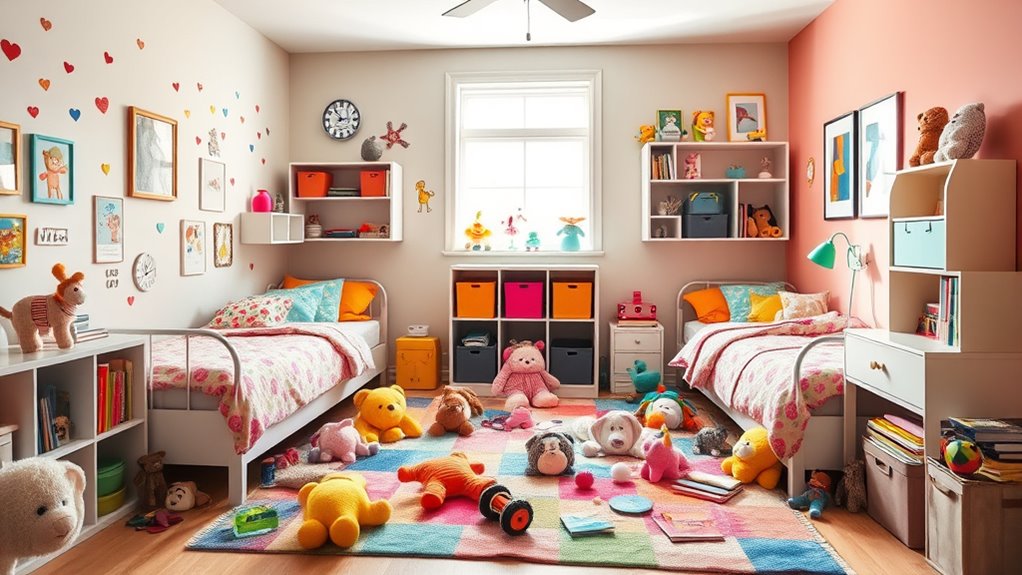
Creating personal zones for each child helps establish a sense of ownership and order in a shared bedroom. When you assign specific areas, you help your kids respect personal boundaries and sibling privacy. Use distinct colors, labels, or decor to clearly mark each child’s space. This visual cue minimizes conflicts and encourages responsibility for their belongings. Additionally, incorporating European cloud servers into your organization system can help keep digital files and schedules synchronized across devices, promoting overall order and efficiency. Creating designated personal spaces allows children to feel comfortable and secure in their environment. To make it clearer, consider this layout:
| Child A’s Zone | Shared Area | Child B’s Zone |
|---|---|---|
| Personal Bed | Play Area | Personal Bed |
| Storage | Common Shelf | Storage |
| Study Corner | Reading Nook | Study Corner |
Designating zones fosters respect, reduces clutter, and helps your kids feel a sense of control over their environment. Incorporating digital organization tools can further streamline their daily routines and responsibilities.
As an affiliate, we earn on qualifying purchases.
Incorporate Multi-Functional Furniture Pieces
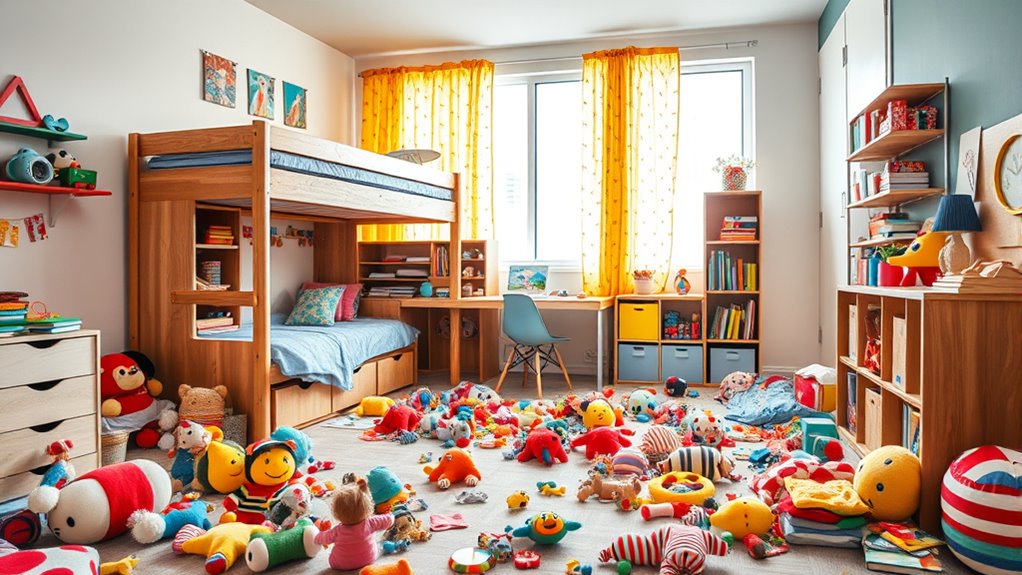
Multi-functional furniture can considerably maximize space in a shared kids’ bedroom. Think about storage beds or desks that double as organization hubs, helping keep clutter under control. These dual-purpose pieces make the room more efficient and comfortable for both children. Incorporating customized furniture tailored to your space can further optimize organization and usability.
Space-Saving Storage Solutions
In a shared kids’ bedroom, space can quickly become limited, but smart storage solutions can make a big difference. Incorporate multi-functional furniture pieces like beds with built-in drawers or storage underneath to maximize space. Use decorative wall art to add personality without cluttering surfaces, and choose themed bedding that complements storage furniture to keep the room looking cohesive. Floating shelves can hold books, toys, or small decorative items, freeing up floor space. Opt for storage ottomans or benches that serve as seating and hidden compartments for toys or clothes. By selecting furniture that combines style and function, you’ll create a tidy, inviting space that efficiently uses every inch while reflecting your kids’ personalities. Additionally, selecting electric bikes for outdoor adventures can encourage physical activity and fun, helping keep the room organized by providing a dedicated space for active play. Incorporating space-saving storage solutions aligned with living room design principles can further enhance organization and make the room more functional for everyone, especially when they integrate multi-functional furniture to serve dual purposes. Moreover, choosing at-home tech devices like smart storage systems can streamline clutter management and improve overall organization.
Dual-Purpose Furniture Pieces
To make the most of limited space in a shared kids’ bedroom, choosing furniture that serves more than one purpose is essential. Multi-functional pieces like beds with built-in drawers or loft beds with desks underneath help maximize every inch. These items not only save space but also enhance your room decor with sleek, modern designs. When selecting dual-purpose furniture, prioritize safety considerations—look for sturdy construction, smooth edges, and secure fittings to prevent accidents. Multi-purpose furniture encourages organization by reducing clutter and providing designated spots for toys, clothes, or study materials. Incorporating space-saving solutions can further optimize the room layout and functionality. Additionally, selecting furniture with safety features is crucial for ensuring your kids’ safety in a shared space. Using modern design elements can also help create a more inviting and visually appealing environment. By integrating these versatile pieces, you create a functional, stylish shared space that’s easier to keep tidy and safe for your kids. Moreover, choosing systems that integrate home security features can help monitor the room and ensure your children’s safety. Incorporating durable materials ensures the furniture withstands active use and lasts longer, making it a smart investment for your child’s room.
As an affiliate, we earn on qualifying purchases.
Create a Consistent Cleaning Routine and Organization System
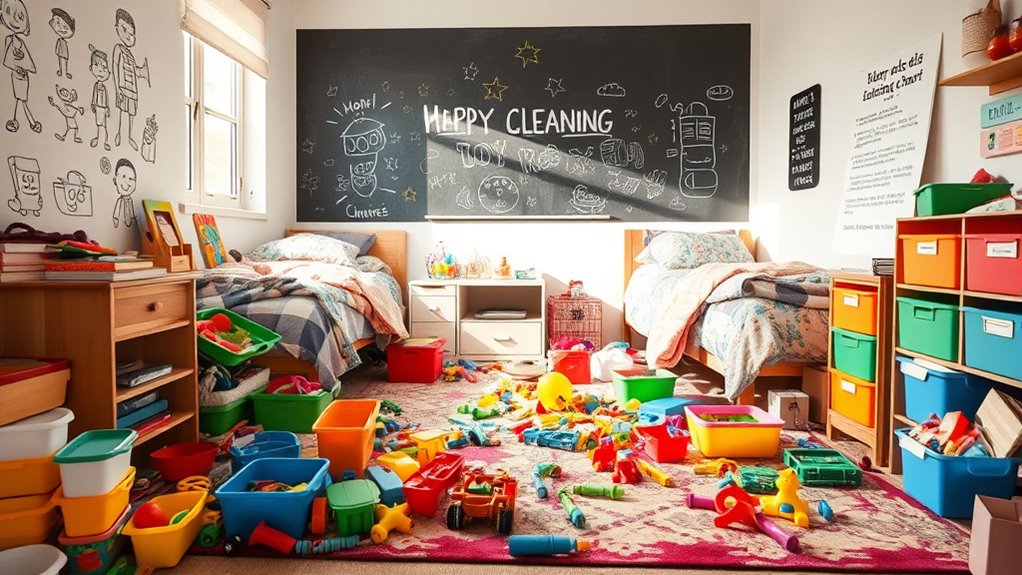
Establishing a consistent cleaning routine and organization system is essential for keeping your kids’ shared bedroom tidy and functional. When you set clear expectations, your kids learn responsibility and develop good habits. Incorporate daily chores like making beds, tidying up toys, and sorting laundry to keep clutter manageable. Keep cleaning supplies accessible but organized so your kids can help without hassle. To make routines stick, consider:
- Creating a daily cleaning checklist for your kids
- Using visual timers to signal chores
- Assigning specific tasks to each child
- Reinforcing routines with regular reminders
- Understanding CADR ratings can help you choose air purifiers that improve air quality in the room
Additionally, teaching your children about age-appropriate cleaning techniques empowers them to participate safely and effectively. Incorporating proper cleaning tools can make the process more efficient and ensure a thorough job. Building a contingency plan for unexpected messes or busy days can help maintain consistency even when schedules are disrupted. Staying consistent with your routines promotes habit formation and helps your kids understand that maintaining a clean room is part of their daily routine.
Use Baskets, Bins, and Labels to Keep Items Sorted
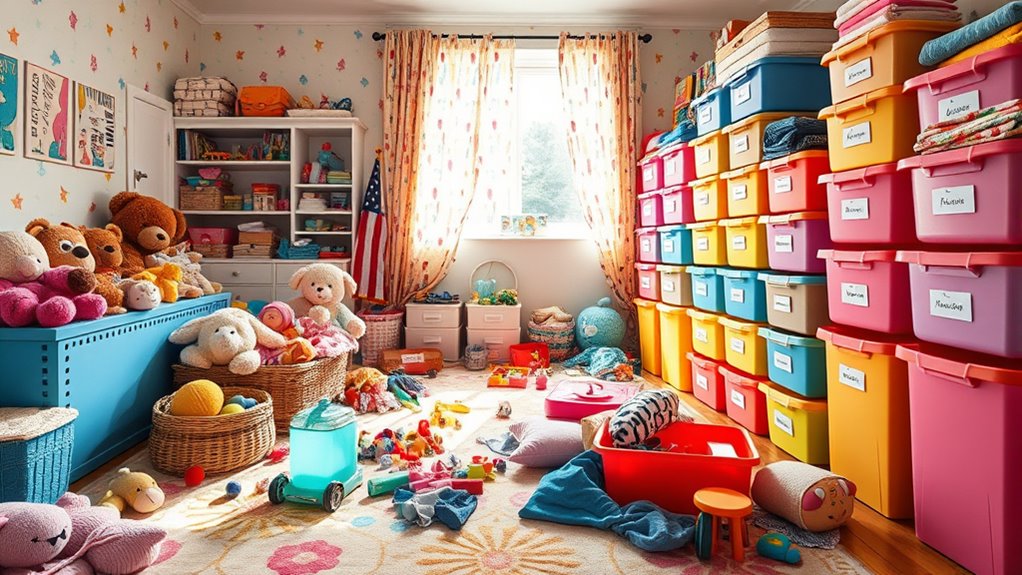
Using baskets, bins, and labels makes it easy to keep your kids’ belongings organized and accessible. Clear storage solutions help everyone see what’s inside without opening everything up. When items are clearly labeled, your kids can find and put away their things quickly, reducing clutter and confusion. Incorporating visual cues can also create a more inviting and functional shared space. Moreover, utilizing data analytics can help track which storage methods are most effective for your family’s needs.
Clear Storage Solutions
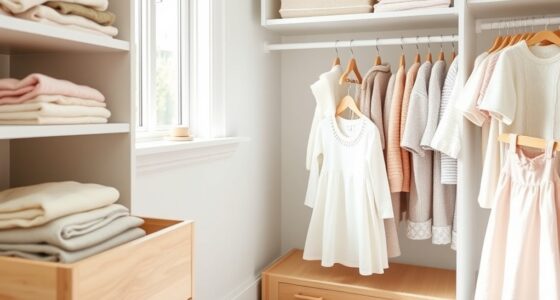
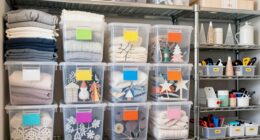
Keeping kids’ belongings organized becomes much easier when you incorporate clear storage solutions like baskets and bins. These make it simple to see what’s inside, reducing clutter and encouraging kids to put things away. Use baskets for toy storage, so toys stay contained yet accessible. Clear bins help with closet organization, making it easy to find clothes or accessories at a glance. Label each bin or basket to ensure everything has a designated spot, especially when sharing a room. For example, you might have separate containers for art supplies, books, and small toys. This system not only keeps the room tidy but also teaches kids responsibility for their belongings. Incorporating visual cues like color coding or pictures can further enhance organization and help younger children identify where items belong. Overall, clear storage solutions create a visual order that makes maintaining a tidy shared kids’ bedroom manageable.
Easy Item Identification
To make it easy for kids to find and return their belongings, incorporate baskets, bins, and labels into your organization system. Use labeled toy storage bins to separate different types of toys, making cleanup quick and straightforward. For clothing organization, assign bins or drawers for each child’s clothes, and clearly label them to prevent mix-ups. This visual system helps your kids identify what belongs where and encourages independence. Baskets and storage bins keep clutter contained, while labels remove confusion and save time during busy mornings. By sorting toys and clothes into designated containers, you’ll create a tidy space that’s easy for everyone to maintain. Clear, labeled storage solutions turn chaos into order and make shared living easier.
Involve Your Kids in Decluttering and Organizing
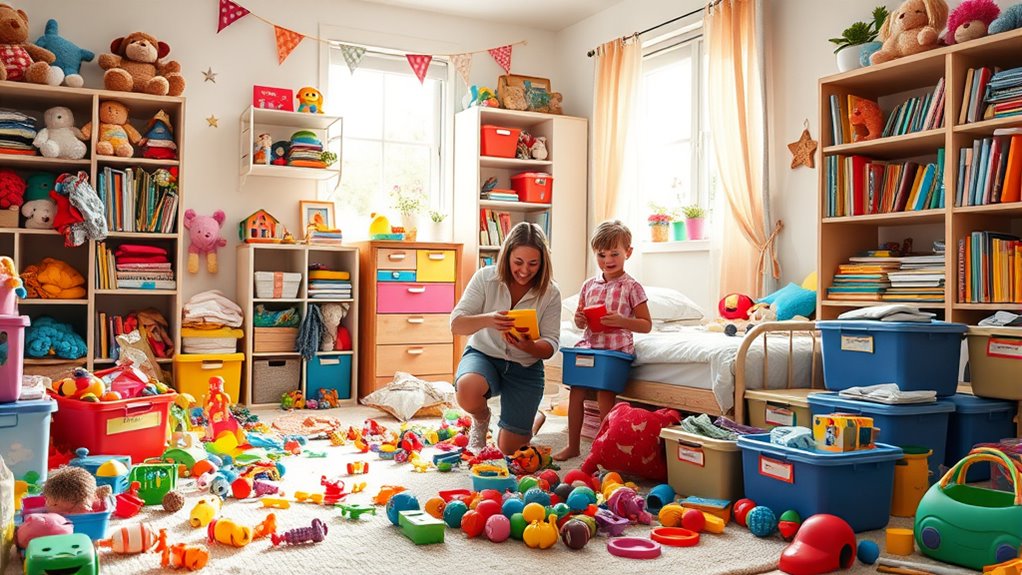
Getting your kids involved in decluttering and organizing their shared bedroom can make the process smoother and more effective. By encouraging parent-child communication, you help your children feel valued and responsible. Tailor tasks to their age, making them feel capable and engaged. Assign simple, age-appropriate tasks like sorting toys, folding clothes, or choosing items to donate. This approach fosters independence and teamwork. When managing shared spaces, teaching children about support breakfast can help them understand the importance of maintaining a healthy environment. Additionally, incorporating fun organizational activities can motivate kids to participate willingly. Let them decide what stays or goes. Set clear, manageable goals. Use labels or bins for easy sorting. Praise their efforts to boost motivation. Introducing effective organization techniques can further enhance their skills in maintaining a tidy space. Involving your kids creates a sense of ownership, making them more likely to maintain the organization long-term. Plus, it teaches valuable skills and helps build a collaborative environment in their shared space.
Frequently Asked Questions
How Can I Involve My Kids in Organizing Their Shared Space?
You can involve your kids in organizing their shared space by giving them age-appropriate organizing tips and encouraging their kids’ involvement. Let them decide where to put their favorite toys or clothing, and set up fun sorting activities. Praise their efforts to boost motivation, and make it a team project. This way, they learn responsibility and feel proud of keeping their shared bedroom tidy.
What Are the Best Eco-Friendly Storage Options for Kids’ Rooms?
They say “waste not, want not,” so choose eco-friendly storage options like biodegradable bins and recycled containers. These options help reduce environmental impact while keeping your kids’ room tidy. Look for colorful, durable options made from sustainable materials—kids love them! Not only do they promote eco-conscious habits, but they also make organizing fun and responsible. Your kids will learn to care for their space and the planet, one bin at a time.
How Do I Manage Different Age Groups’ Storage Needs?
You should tailor storage solutions to each age group, ensuring they’re age-appropriate and promote independence. Use clear bins, labeled shelves, and accessible drawers for younger kids, while investing in more organized, specialized storage for older children’s books, toys, and clothes. To optimize space, incorporate vertical storage and multifunctional furniture. This approach helps manage different storage needs efficiently, keeps the room tidy, and encourages kids to take responsibility for their belongings.
What Safety Considerations Should I Keep in Mind for Storage Solutions?
Imagine this: safety’s your top priority, just like in a vintage 1950s home. You should child-proof locks on cabinets and drawers, ensuring little hands can’t access hazards. Use non-toxic materials for shelves and storage bins to prevent accidents and exposure to harmful chemicals. Keep heavy or sharp items out of reach, and anchor furniture securely to the wall. These steps help create a safe environment where your kids can explore freely and confidently.
How Can I Personalize Shared Storage to Reflect Each Child’s Interests?
You can personalize shared storage by incorporating themed storage solutions that reflect each child’s interests, like superhero bins or princess shelves. Use personalized labels with their names or favorite characters to clearly identify their belongings, making organization easier and more fun. This approach not only keeps the room tidy but also helps each kid feel a sense of ownership and individuality, encouraging them to take responsibility for their space.
Conclusion
With these tips, your kids’ shared room can transform from a tornado zone into a sanctuary of order. Think of organization as tending a garden—regular care and attention help everything flourish. By involving your children and creating designated spaces, you’ll foster responsibility and teamwork. Soon, the clutter will be just a distant memory, replaced by a harmonious space where your kids can grow, play, and dream without the chaos.
Flea & tick season Picks
flea and tick prevention
As an affiliate, we earn on qualifying purchases.