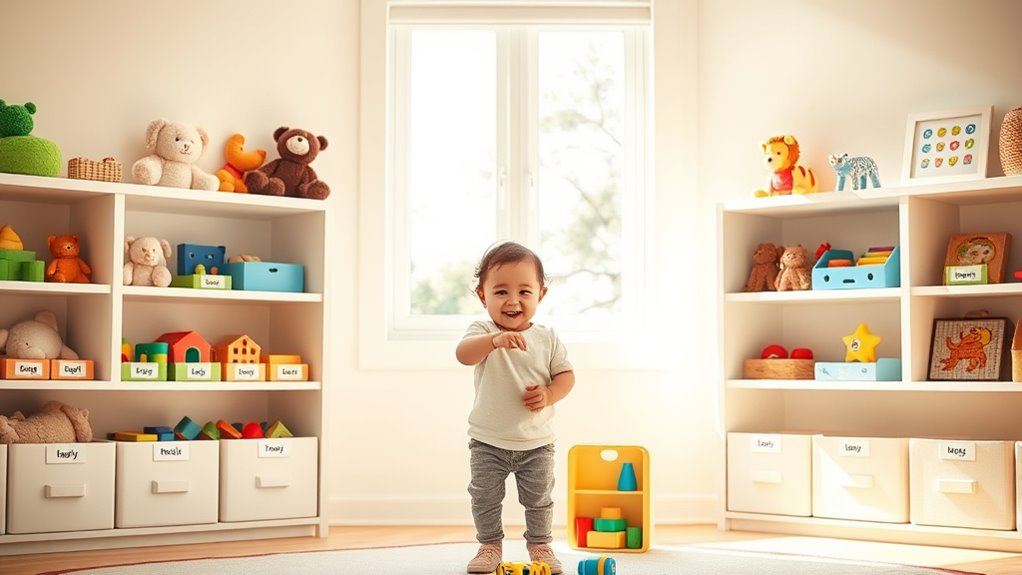

To manage fewer toys for more fun, start by evaluating your collection and removing toys that no longer interest your child. Keep a manageable number—about 5 to 10 per category—and organize them in labeled, safe storage. Establish a rotation schedule, swapping toys every week or two, and involve your child in choosing and caring for their toys. This approach keeps play fresh and clutter-free, and if you keep exploring, you’ll find simple tips to make toy rotation effortless.
Key Takeaways
- Take inventory of toys and sort them by interest, then rotate selected toys periodically to maintain novelty and engagement.
- Keep a manageable number of toys per category (5-10) using labeled containers for easy access and organization.
- Involve children in choosing and rotating toys to foster decision-making, ownership, and responsibility.
- Establish a consistent rotation schedule (weekly or biweekly) and include cleaning and repair routines.
- Incorporate surprise rotations and creative play combinations to boost imagination and keep playtime fun.
Assessing Your Child’s Toy Collection
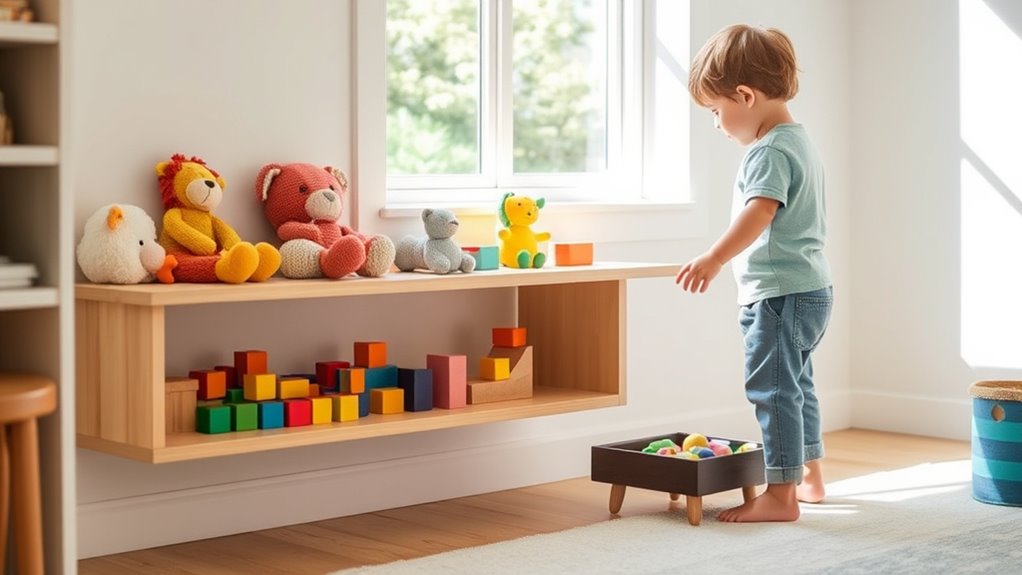
Before you begin rotating toys, it’s important to evaluate what your child has. Start by taking stock of your toy inventory and sorting through everything. This helps you see what toys are well-used, forgotten, or rarely played with, making clutter management easier. As you assess, consider which items spark your child’s interest and which ones might be better stored away temporarily. Removing toys that no longer engage your child reduces clutter and creates space for new play ideas. Keep a list of toys to rotate in and out, ensuring you maintain a manageable collection. Incorporating toy rotation strategies can also help keep your child’s interest fresh and prevent boredom. Additionally, understanding the benefits of play-based learning can motivate you to select toys that support your child’s development and curiosity. Exploring the impact of outdoor play and incorporating outdoor toys can further enrich your child’s play experience and foster a love for nature.
Choosing the Right Number of Toys to Keep Out
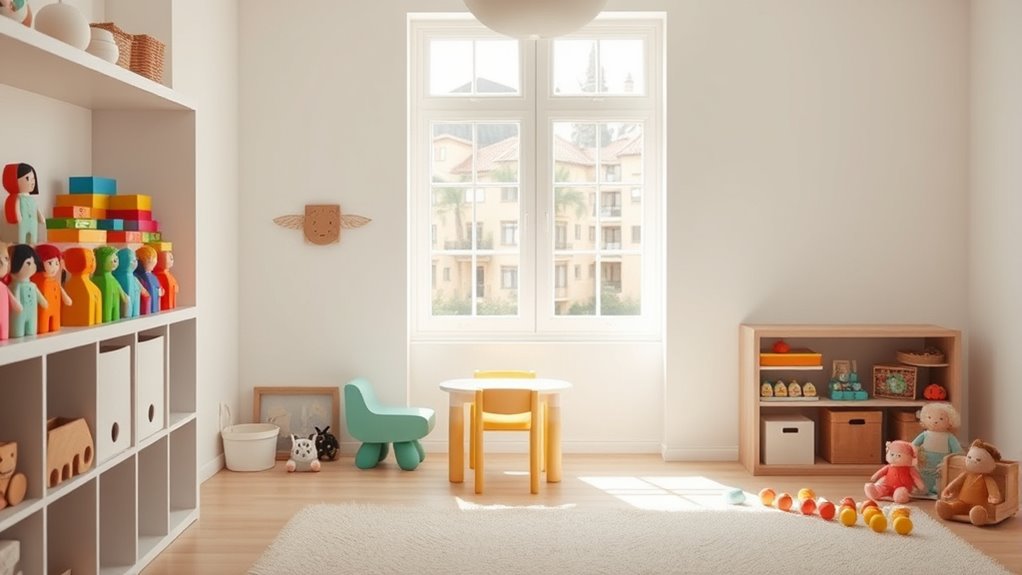
Choosing the right number of toys to keep out is essential for maintaining an organized play space and encouraging focused play. Setting clear number limits helps prevent overwhelm and guarantees your child engages deeply with their toy selection. Start by identifying a manageable amount—around 5 to 10 toys per category. Use a simple chart to track toy limits:
| Toy Type | Number Limit | Examples |
|---|---|---|
| Building blocks | 5 | Wooden blocks, LEGO |
| Art supplies | 3 | Crayons, markers |
| Dolls | 4 | Dolls, plush toys |
| Puzzles | 2 | Jigsaw puzzles |
Adjust these limits based on your child’s interests and space. Keeping within these bounds makes toy selection easier and keeps play areas tidy. Implementing toy rotation techniques can further enhance your child’s engagement and reduce clutter. Additionally, periodically reviewing and updating the toy collection helps maintain a fresh and stimulating environment for your child. Understanding child development principles can also guide you in choosing appropriate toys and structuring play routines that promote growth and learning. Recognizing individual traits such as personality and interests can help tailor toy organization strategies to better suit your child’s unique needs. Properly managing zodiac traits and understanding your child’s unique personality can also influence how you structure their toy organization and play routines.
Creating a Rotating Toy Storage System
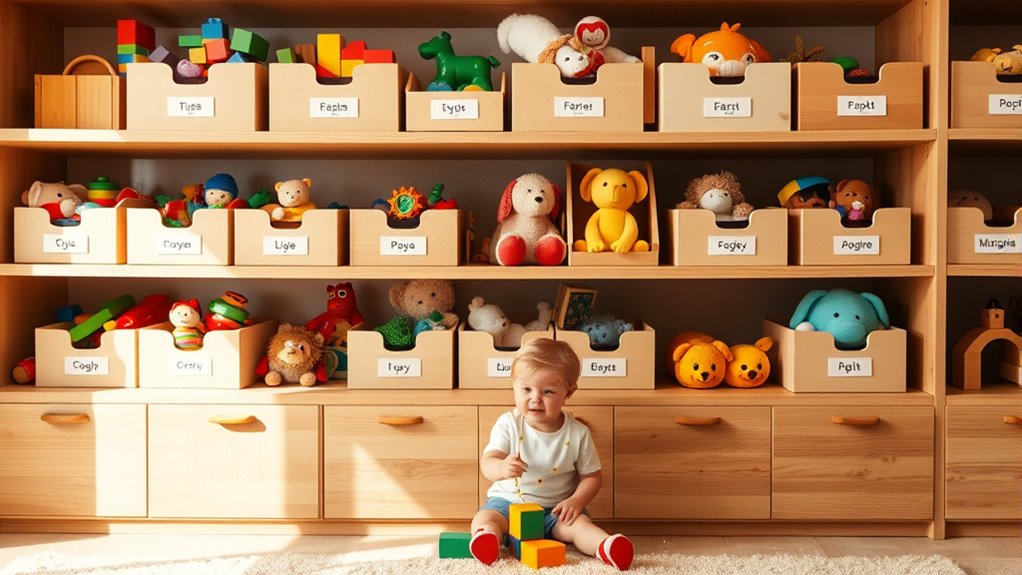
Creating a rotating toy storage system helps keep your child’s play area organized and stimulates their interest in different toys. Start by choosing storage solutions that are safe and accessible, like clear bins or shelves at a child’s height. Make certain all storage units are sturdy, free of sharp edges, and meet toy safety standards to prevent accidents. Designate specific containers for different toy types and label them clearly to make swapping toys easier. Rotate toys by removing some from the play area and storing them out of sight, then bringing in others to refresh your child’s environment. This approach not only keeps the space tidy but also encourages your child to engage with a variety of toys, promoting better play and development. Additionally, incorporating organized storage solutions can simplify the rotation process and make it more efficient. Using high-quality storage options ensures durability and safety for your child’s belongings. Incorporating a well-designed storage and organization system can further streamline toy management and enhance overall safety, especially when it includes features that support child safety standards.
Establishing a Toy Rotation Schedule
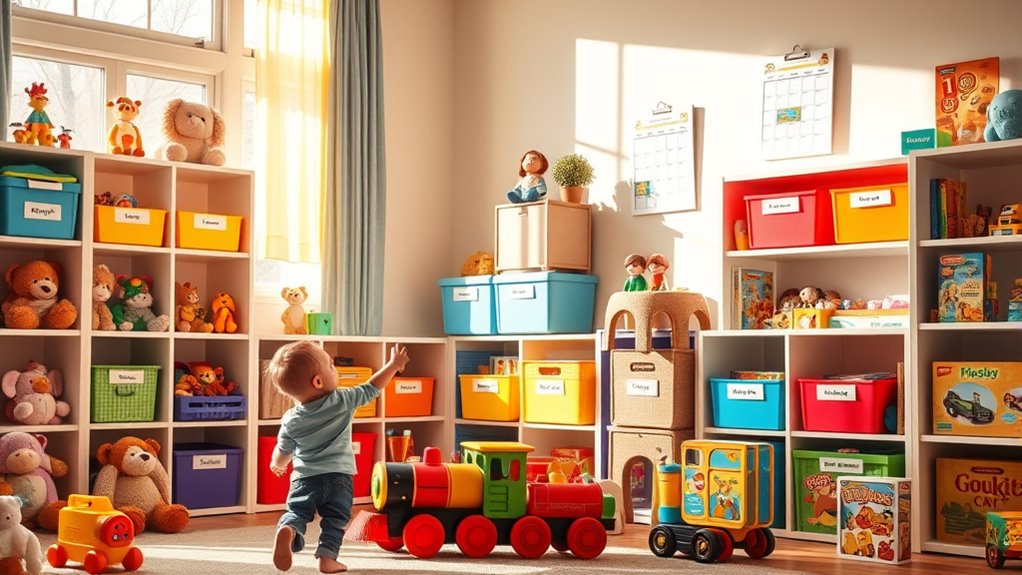
Establishing a toy rotation schedule guarantees you consistently keep your child’s play area fresh and engaging. By planning when to swap out toys, you prevent clutter and encourage new play experiences. Use a simple schedule to determine rotation intervals, like weekly or biweekly. When rotating toys, take time for toy cleaning to ensure they’re safe and hygienic. Consider setting aside certain toys for donation once they’ve been rotated out, helping teach your child about sharing and generosity. To keep things organized, here’s a sample rotation plan:
| Week 1 | Week 2 |
|---|---|
| Rotate in favorite toys | Rotate in educational toys |
| Toy donation prep | Toy cleaning & storage |
This method keeps play fresh and manageable while making toy maintenance easier. Incorporating a toy inventory system can help track which toys are in rotation and ensure none are overlooked. Additionally, establishing clear rotation intervals helps maintain consistency and simplifies planning. Regularly reviewing your toy collection size can also prevent accumulation and make the rotation process more effective.
Involving Kids in the Rotation Process
You can involve your kids in the toy rotation process to give them a sense of ownership and responsibility. Letting them choose which toys to keep out encourages decision-making skills and makes the process more engaging. When kids participate, they’re more likely to enjoy and respect the rotation system. Incorporating community features like sharing their ideas or displaying their favorite toys can further motivate children and foster a positive attitude toward the process. Additionally, involving children in setting routines related to toy rotation helps reinforce consistency and accountability. Engaging kids in positive reinforcement strategies can also boost their enthusiasm and cooperation during the process. Creating a home environment that supports these practices can make toy management more seamless and enjoyable for everyone. Integrating personal development strategies can help children develop a lifelong appreciation for organization and mindfulness.
Encourage Ownership Opportunities
Have you ever considered how involving kids in the toy rotation process can boost their sense of ownership? When children take part, they see their role in managing toys, which enhances ownership opportunities and responsibility development. To do this effectively:
- Let kids choose which toys to rotate in and out, giving them a sense of control.
- Assign simple tasks like sorting toys or cleaning up, fostering responsibility.
- Encourage kids to set goals for toy organization, promoting accountability.
- Discuss the benefits of personalized learning paths driven by their involvement, helping them understand the value of their contributions and how it can support development of new skills.
- Incorporate alarm clocks to establish routines for toy cleanup and organization, making the process consistent and time-managed. Using visual schedules can also help children understand the steps involved and stay engaged throughout the process.
- Explaining the concept of ownership can further motivate children to take care of their toys and understand the importance of their participation.
Involving children in these decisions helps them feel empowered and accountable for their belongings. This active participation nurtures ownership opportunities, which build confidence and independence. Over time, your kids will develop a stronger sense of responsibility and pride in maintaining their toys—making toy management smoother and more engaging for everyone.
Foster Decision-Making Skills
Involving kids in the toy rotation process naturally fosters their decision-making skills. When you let them choose which toys to keep accessible and which to rotate out, they practice making choices and weighing options. This involvement encourages thoughtful toy selection, helping children understand their preferences and develop confidence in their decisions. To facilitate this, set simple guidelines, such as selecting a specific number of toys or considering their interests. Talk with your child about why certain toys stay out and others go into rotation. Over time, they’ll learn to prioritize and make informed decisions about their play options. This active participation not only improves decision-making skills but also creates a sense of ownership and responsibility over their toys and playtime. Incorporating smart home technology, such as voice assistants, can also help manage the rotation schedule more efficiently and engage children in the process. Additionally, using organization systems like labeled bins or designated play areas can make the rotation process smoother and visually reinforce their involvement.
Refreshing Play Ideas With Rotated Toys
When you surprise your kids with rotated toys, they often come up with new play ideas that boost their creativity. Mixing different toys can lead to unexpected combinations that inspire fresh ways to play. This simple change keeps playtime exciting and encourages your children to explore new possibilities.
Surprise Element Boosts Creativity
Ever wonder how a simple surprise can spark a burst of creativity in your child’s play? Incorporating a surprise element into toy rotation keeps play fresh and engaging. When your child’s expectations are pleasantly disrupted, it boosts creativity by encouraging exploration and problem-solving. To achieve this, consider these strategies:
- Rotate toys unexpectedly, so your child never knows what’s coming next.
- Hide a favorite toy and reveal it as a surprise during playtime.
- Introduce a mystery box containing various toys for spontaneous discovery.
These surprises excite your child, making playtime more dynamic and inspiring imaginative ideas. The surprise element creates an environment where your child feels motivated to invent new stories, scenarios, and uses for their toys, markedly boosting creativity.
New Combinations Inspire Play
Rotating toys opens up endless opportunities for creating new combinations that spark fresh play ideas. When you mix different toys, you introduce toy diversity, which encourages your child to see familiar items in new ways. This boosts play variety, making each session more exciting and engaging. By combining blocks with figurines or puzzles with art supplies, you foster creativity and problem-solving skills. These fresh pairings inspire imaginative scenarios and extend the lifespan of toys, reducing boredom. To make it easier, keep a list of potential combinations to try. Remember, it’s about encouraging curiosity and exploration, not perfection. Play becomes more dynamic and meaningful when your child experiences the joy of discovering new ways to enjoy their toys.
| Toy combinations spark imagination | Endless play possibilities |
|---|---|
| New pairings ignite curiosity | Keeps play fresh and fun |
| Diverse toys enhance creativity | Stimulates problem-solving |
Maintaining a Clutter-Free Play Area
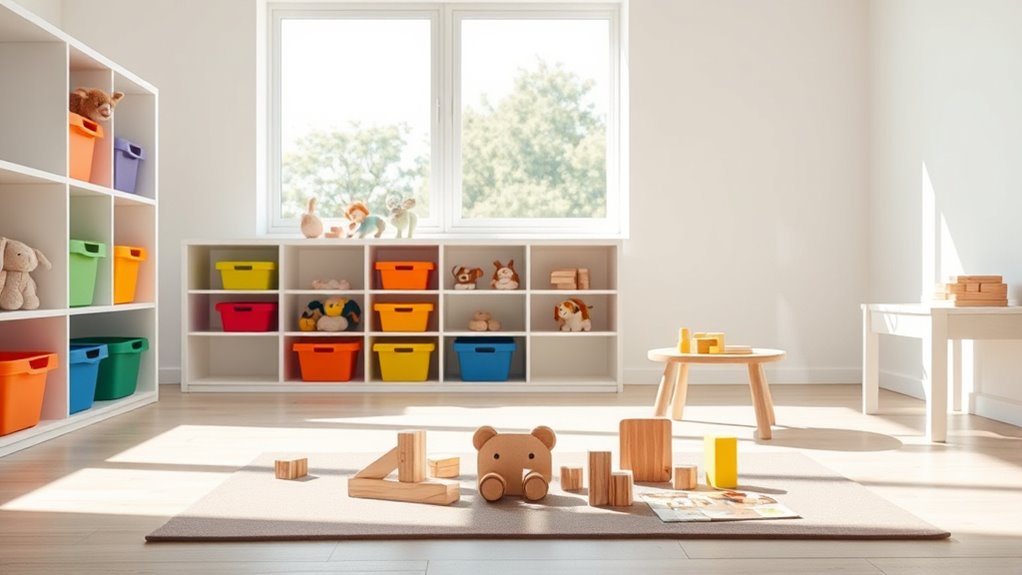
Keeping your child’s play area tidy can seem challenging, but with a few simple strategies, it becomes manageable. Focus on toy organization to keep clutter at bay and create a welcoming space for play. To maintain a clutter-free environment, consider these steps:
- Designate specific storage spots for different toy types to streamline cleanup.
- Regularly review and remove toys that are no longer played with to reduce clutter.
- Use clear bins or labeled containers to make toy retrieval easy and tidy.
Tips for Storing and Repairing Toys
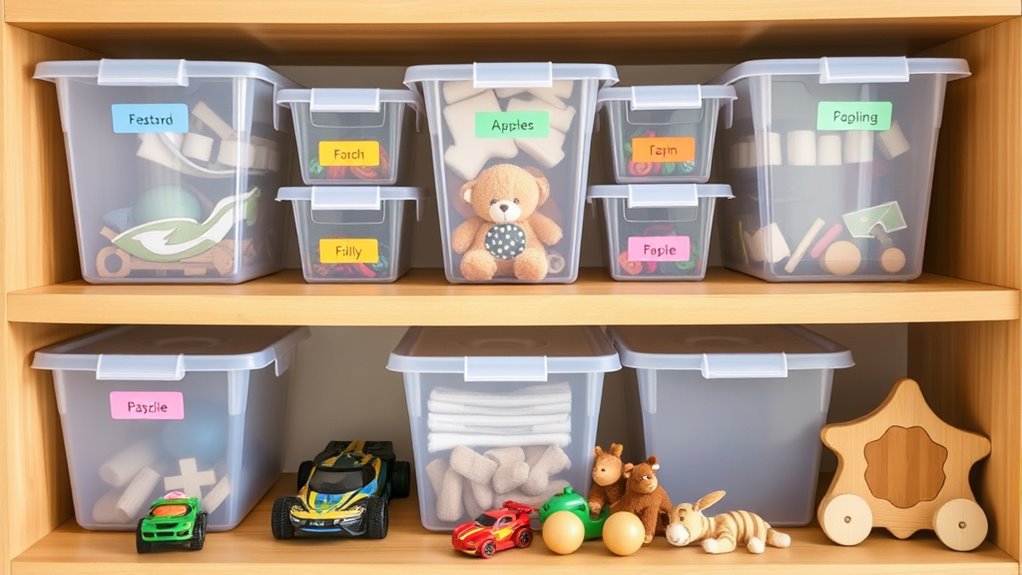
Storing and repairing toys efficiently can extend their lifespan and keep play areas organized. Start by choosing simple toy storage solutions, such as clear bins or labeled containers, so you can easily find and access toys. Regularly inspect toys for damage, and follow toy repair tips like gluing broken parts or replacing batteries promptly. Keep small repair tools handy to quickly fix issues before they worsen. To prevent clutter, designate specific storage spots for different toy types, and rotate toys to maintain variety while reducing mess. Proper storage not only prevents damage but also makes cleanup easier, encouraging kids to take responsibility. With these toy storage solutions and repair tips, you’ll simplify maintenance and keep toys in great condition for longer-lasting fun.
Frequently Asked Questions
How Can I Encourage My Child to Enjoy Rotated Toys More?
To encourage your child to enjoy rotated toys more, motivate curiosity by introducing each new set with excitement and a story. Create anticipation by revealing the toys gradually, maybe with a countdown or special reveal. Let your child choose which toys to rotate and play with, making them feel involved. This sense of discovery keeps their interest high and makes the toys feel fresh and engaging every time.
What Are Eco-Friendly Options for Toy Storage Solutions?
For eco-friendly toy storage, you can choose biodegradable containers and recycled storage bins. These options help reduce plastic waste and are better for the environment. You might store toys in bamboo baskets or boxes made from recycled cardboard. Not only do they look nice, but they also promote sustainability. Using these eco-conscious solutions makes tidying up more responsible and encourages your child to value eco-friendly practices.
How Do I Handle Toys That Are No Longer Safe or Repairable?
When toys are no longer safe or repairable, start with a safety inspection to identify hazards. For unsafe toys, do toy disposal responsibly by recycling or discarding them properly. If repairs are possible, fix them to extend their lifespan. Remember to remove any broken or dangerous items from your play area promptly to keep your children safe and maintain a clutter-free environment.
Can Toy Rotation Help Reduce Screen Time Effectively?
Yes, toy rotation can help reduce screen time effectively. When you limit access to toys and introduce a variety of physical, hands-on options, your child is more likely to choose active play over digital devices. This approach encourages engaging with tangible toys, fostering creativity and reducing screen time. By offering appealing digital device alternatives alongside rotated toys, you create a balanced environment that naturally encourages less screen dependence.
What Are Creative Ways to Introduce New Toys During Rotation?
You can introduce new toys during rotation by creating themed discovery boxes that encourage interactive play and sensory exploration. Surprise your child with a mystery box, filled with tactile toys, puzzles, or art supplies, sparking curiosity. Incorporate storytelling with the toys, or set up simple challenges that promote hands-on engagement. This approach keeps play fresh and exciting, encouraging your child to explore and learn through active, sensory-rich experiences.
Conclusion
By rotating fewer toys, you can boost your child’s creativity and reduce clutter. Did you know kids play more creatively when they have fewer options? Managing toy rotation not only keeps playtime fresh and exciting but also teaches your child about organization. With simple steps, you’ll create a happier, more organized space. Start today, and watch your child’s imagination soar while keeping your home clutter-free!