To organize your kitchen for prep, cooking, and clean-up efficiency, create dedicated zones tailored to your routines. Keep frequently used tools and ingredients within arm’s reach in the prep area, arrange appliances for smooth workflow at the cooking station, and position trash and cleaning supplies near the clean-up zone. Use proper storage solutions, keep pathways clear, and maintain routines to stay organized. Continue exploring ways to optimize each zone for a more functional kitchen space.
Key Takeaways
- Design dedicated zones for prep, cooking, and clean-up to streamline workflow and reduce clutter.
- Arrange appliances and tools within each zone for easy access and ergonomic efficiency.
- Use organized storage solutions, clear containers, and labels to keep items accessible and tidy.
- Incorporate layered lighting and durable surfaces tailored to each zone’s function for safety and visibility.
- Establish daily habits like cleaning and returning items to their zones to maintain an organized and efficient kitchen.
Understanding the Concept of Kitchen Zones
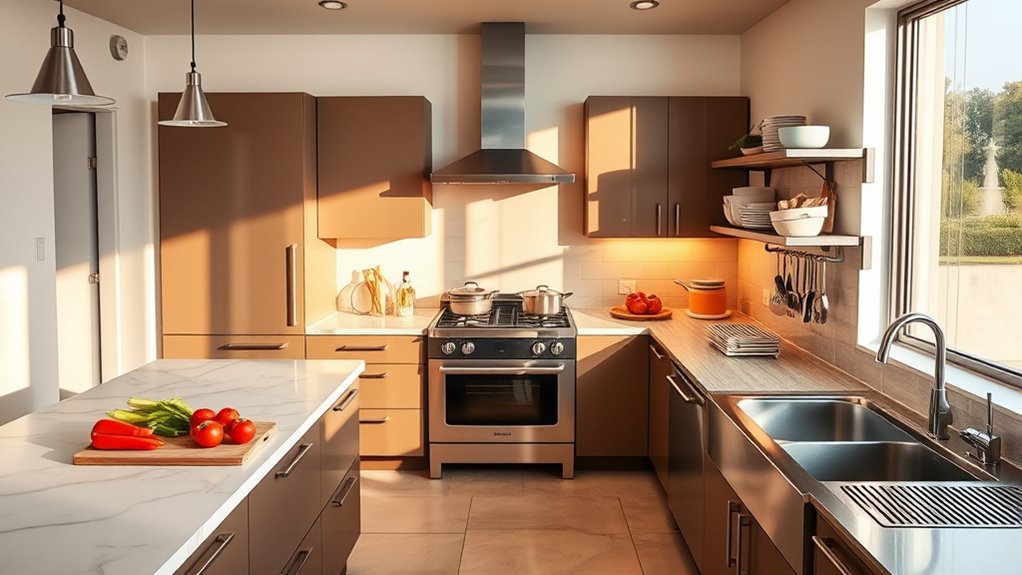
Understanding the concept of kitchen zones is essential for creating an efficient and organized cooking space. When you optimize your kitchen flow, each zone serves a specific purpose, reducing movement and saving time. You can personalize each zone based on your cooking habits, making them more functional and tailored to your needs. For example, the prep area might include cutting boards and knives, while the cleanup zone contains dishwashers and sinks. Zone personalization allows you to adapt the layout to fit your routines, ensuring everything you need is within reach. By clearly defining these zones, you streamline your workflow, eliminate clutter, and make cooking more enjoyable. Recognizing how each area contributes to overall efficiency is the first step toward a well-organized kitchen. Incorporating innovative solutions such as energy-efficient appliances can further enhance your kitchen’s functionality and sustainability. Additionally, understanding the importance of quality assurance in your organization can help maintain consistent standards and improve overall efficiency. Paying attention to storage solutions can also help keep each zone tidy and accessible, supporting your overall organization goals and promoting a more efficient workspace.
Designing Your Prep Area for Maximum Efficiency
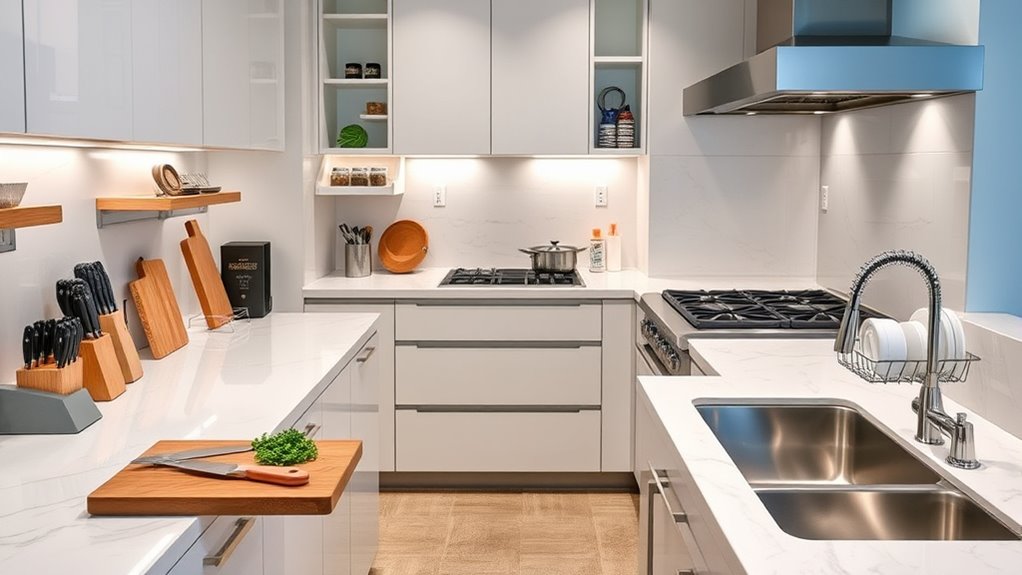
Designing your prep area for maximum efficiency involves carefully arranging tools and surfaces to streamline your workflow. Selecting the right countertop materials, like durable quartz or butcher block, ensures a smooth surface for chopping and mixing. Proper lighting options, such as under-cabinet LEDs or adjustable task lights, reduce shadows and improve visibility. To enhance your prep space, consider these key points: 1. Choose a sturdy, easy-to-clean countertop material suited to your cooking habits. 2. Install layered lighting that combines ambient, task, and accent lighting for optimal illumination. 3. Keep frequently used tools and ingredients within arm’s reach, minimizing movement during prep. Additionally, incorporating functional zoning can further optimize your kitchen layout for efficiency, and understanding design principles can help you create a balanced and ergonomic workspace.
Optimizing the Cooking Station for Flow and Safety

To create a cooking station that flows seamlessly and remains safe, you need to arrange your appliances and tools strategically. Keep your most-used appliances within easy reach, avoiding countertop clutter that can cause accidents or slow you down. Place heavy or hot appliances, like the stove and oven, centrally for efficient movement. Ensure there’s enough space between appliances to prevent overcrowding and accidents. Proper appliance placement reduces the risk of spills and burns, while clear pathways improve flow. Here’s a visual guide:
| Zone | Key Focus | Tips |
|---|---|---|
| Stove & Oven | Heavy appliances, safety | Keep accessible, avoid cluttered area |
| Countertop | Prep space, minimal clutter | Clear workspace for safety |
| Small Appliances | Convenience, accessibility | Store when not in use to reduce clutter |
Additionally, implementing ergonomic principles in your layout can enhance comfort and efficiency during cooking. Incorporating safe and accessible storage solutions also helps minimize hazards and makes it easier to reach items without strain. For example, integrating proper ventilation can improve air quality and safety in your kitchen workspace. Proper placement of ventilation systems can significantly improve air circulation and reduce smoke or odors during cooking. Utilizing smart appliances with automation features can further streamline your workflow and improve safety by alerting you to potential issues before they become hazards.
Creating an Effective Clean-Up Zone
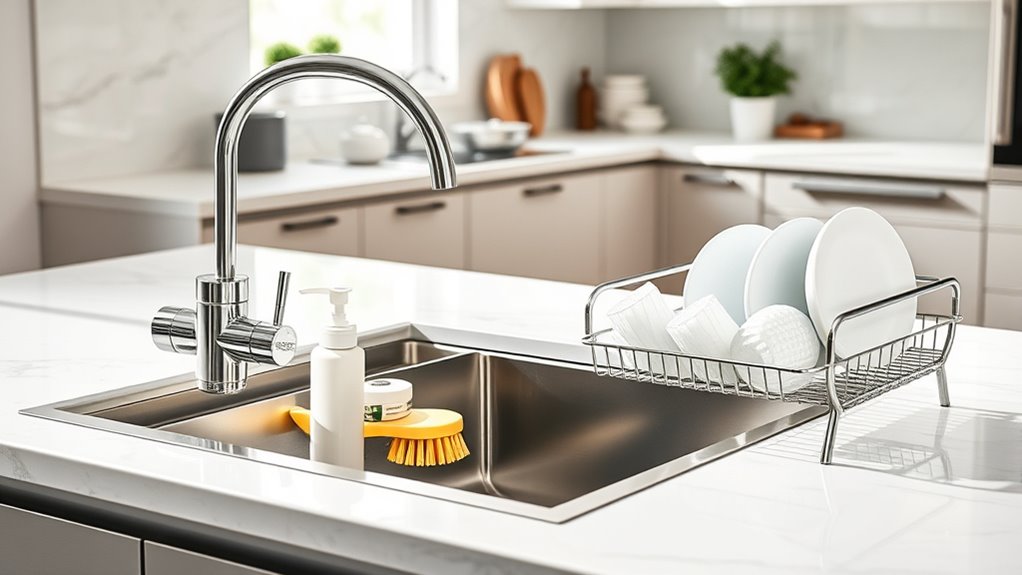
To create an effective clean-up zone, start by designating a specific spot for your cleaning supplies so everything stays organized. Make sure your waste disposal system is simple to access and use, encouraging quick cleanup. Establish a clear post-meal routine to guarantee the area stays tidy without extra effort. Additionally, incorporating smart-home integrations can help automate reminders or control cleaning devices to maintain cleanliness effortlessly. Using organized storage solutions can further enhance efficiency and ensure everything has a designated place. Incorporating task management systems can also help keep track of cleaning schedules and supplies, reducing chaos and promoting consistency. Implementing energy-efficient appliances in your cleaning routines can also help minimize energy use while maintaining an effective clean-up process. Installing home automation devices can further streamline your cleaning tasks and improve overall efficiency.
Designate Cleaning Supplies Storage
Creating an effective clean-up zone starts with clearly designated storage for your cleaning supplies. Use storage bins to categorize items like sprays, scrubbers, and cloths, keeping everything organized and easily accessible. Implement labeling systems on each bin so you instantly know where each item belongs, reducing clutter and saving time. Consider these steps:
- Choose sturdy, stackable storage bins to maximize space.
- Label each bin clearly with large, legible tags or tape.
- Group similar supplies together for quick retrieval during cleaning tasks.
- Incorporate affiliate links to quality storage solutions that enhance organization and durability.
- To prevent contamination, ensure bins are made from materials that are easy to clean and sanitize. Using antimicrobial containers can further reduce the risk of bacterial growth.
- Regularly check and replace cleaning supplies to maintain air quality, especially if they are stored close to the kitchen prep area. This practice helps avoid the buildup of dust and allergens that could compromise air purity.
- Choosing durable materials for storage containers ensures longevity and easy maintenance, keeping your clean-up zone in top condition.
This approach keeps your supplies organized, prevents cross-contamination, and makes cleaning more efficient. With designated storage and clear labels, you’ll streamline your clean-up process and maintain a tidy kitchen zone.
Streamline Waste Disposal System
A well-organized waste disposal system is essential for maintaining a clean and efficient kitchen zone. To streamline clean-up, set up clearly labeled recycling bins and compost containers close to prep and sink areas. This encourages immediate disposal and reduces clutter. Use a dedicated bin for plastics, glass, and paper, and a separate compost container for organic waste. Position these containers where they’re easily accessible but don’t obstruct movement. Regularly empty and clean them to prevent odors. Here’s a simple setup:
| Waste Type | Container Type | Placement |
|---|---|---|
| Recycling | Recycling bins | Near prep area |
| Organic waste | Compost containers | Close to sink |
| General waste | Trash bin | Under or beside sink |
| Other recyclables | Special bins | Near disposal zone |
Implementing a waste separation system can significantly improve your kitchen’s overall cleanliness and efficiency.
Establish Post-Meal Routine
After setting up your waste disposal system, establishing a consistent post-meal routine helps keep your kitchen clean and organized. Developing effective kitchen cleaning habits ensures everything stays tidy and ready for the next use. To create a smooth clean-up process, consider these steps:
- Clear and rinse dishes immediately after eating to prevent buildup.
- Wipe down counters and stove to remove crumbs and spills.
- Sort and store leftovers, placing them in containers for easy access later.
Choosing the Right Storage Solutions for Each Area
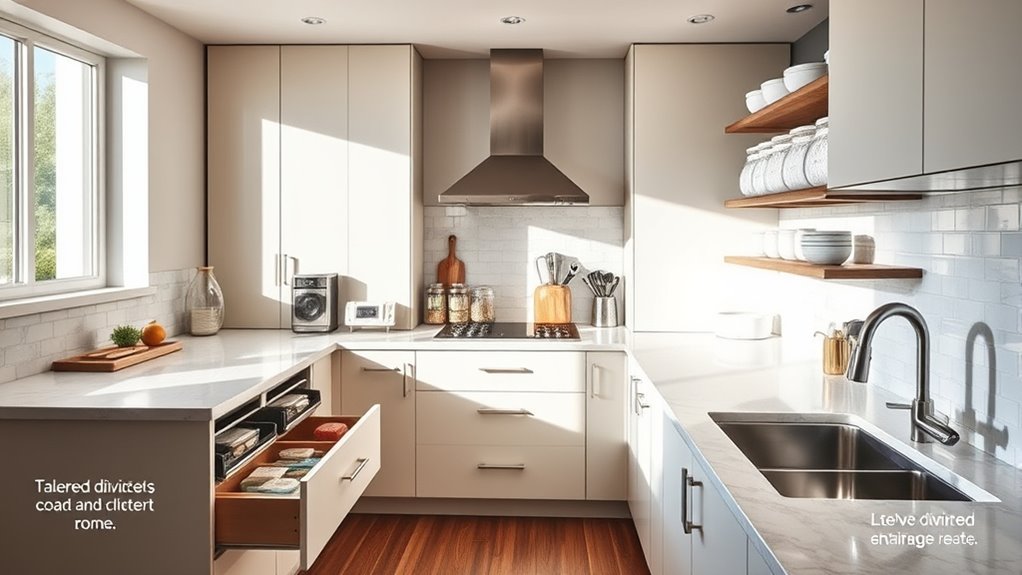
To keep your kitchen organized, you need to choose storage solutions tailored to each area. Custom shelving, clear containers, and drawer organizers help maximize space and improve accessibility. Selecting the right options makes your kitchen more efficient and easier to maintain. Awareness of urban myths and folklore can also inspire creative and themed storage ideas for unique kitchen decor.
Custom Shelving Options
How do you choose the perfect custom shelving for each kitchen zone? Start by evaluating your needs and space. Opt for custom shelving that fits seamlessly into your layout, maximizing storage. Adjustable shelving is a smart choice, allowing you to modify heights as your storage needs change. Consider these key factors:
- Material durability – Choose sturdy materials like wood or metal for longevity.
- Accessibility – Place frequently used items within easy reach, using adjustable shelves to customize height.
- Organization – Use custom shelving to create specific zones, such as spice racks or utensil holders, enhancing efficiency.
Clear Container Choices
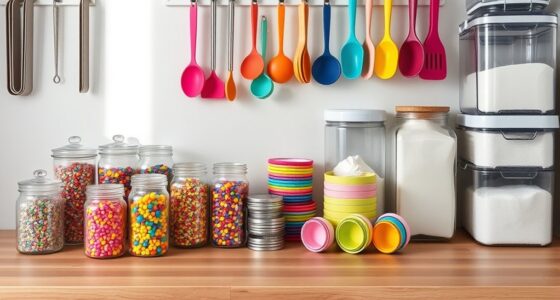
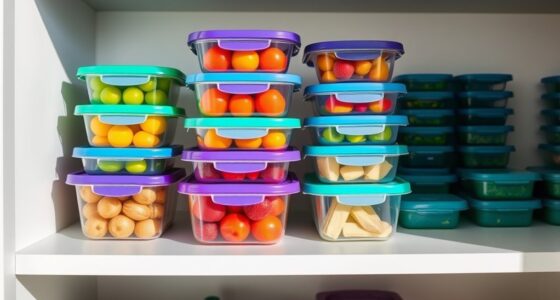
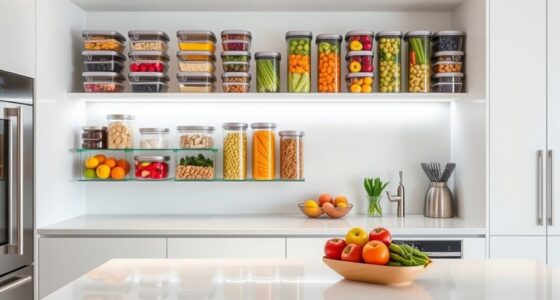
Choosing the right storage solutions begins with selecting clear containers that keep your kitchen organized and accessible. Clear storage makes it easy to see contents at a glance, saving time and reducing waste. Opt for airtight containers to preserve freshness and prevent spills. Use uniform sizes to maximize space and maintain a tidy look. Consider labeling containers for quick identification. To help you decide, here’s a helpful guide:
| Food Type | Best Container Type | Benefits |
|---|---|---|
| Dry Goods | Clear, airtight jars | Keeps contents fresh, visible |
| Leftovers | Clear, stackable containers | Easy to store and reheat |
| Spices | Small clear jars | Access at a glance |
| Bulk Items | Large clear bins | Saves space, easy to refill |
This combination ensures your kitchen stays functional and clutter-free. Additionally, selecting containers with airtight seals can help extend the freshness of your stored items.
Drawer and Cabinet Organizers
Effective drawer and cabinet organizers can transform cluttered spaces into efficient storage zones. Proper organization makes utensil organization seamless and spice rack placement intuitive. To optimize your storage:
- Use drawer dividers for utensils, keeping knives, spoons, and tools separated and easy to find.
- Install pull-out shelves or lazy Susans in cabinets for better access to pots, pans, and spices.
- Place spice racks near the cooking area for quick access, reducing clutter and streamlining meal prep.
These solutions help you maximize space and improve workflow. Clear, designated zones for utensils and spices make your kitchen more functional and less chaotic. Choosing the right organizers guarantees everything has a place, saving time and reducing mess.
Arranging Appliances and Tools by Zone
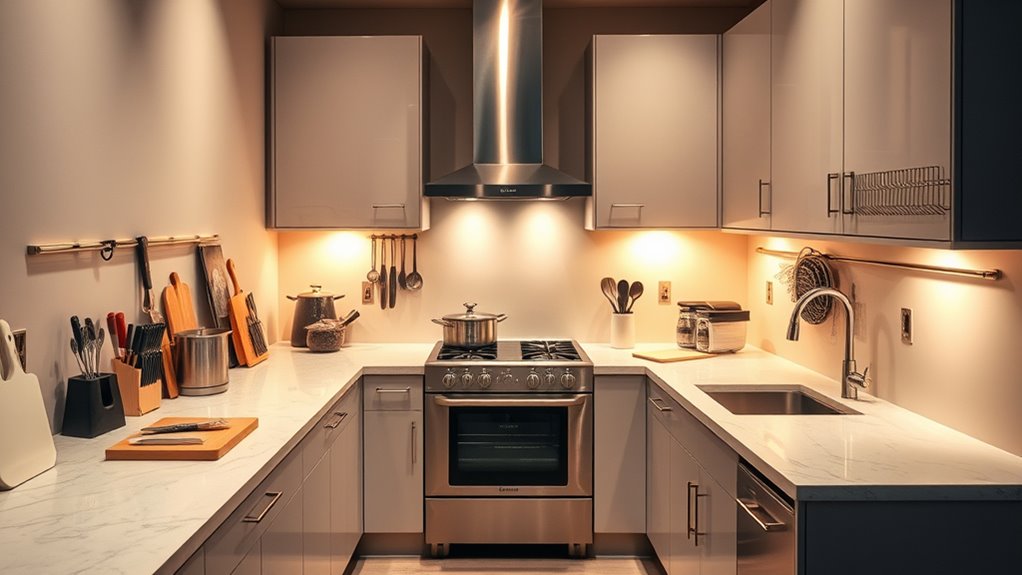
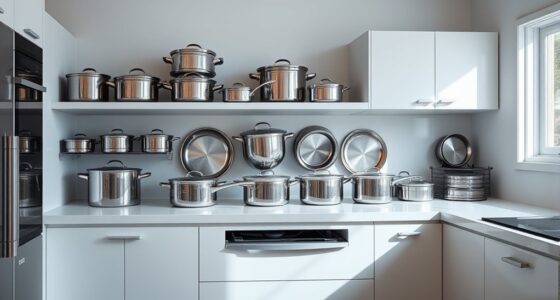
To create an efficient kitchen layout, you should carefully arrange appliances and tools according to their respective zones. Proper appliance placement guarantees you can access what you need quickly, reducing movement during meal prep and cleanup. Place frequently used appliances like the blender, toaster, and coffee maker in the prep zone for easy reach. In the cooking zone, keep tools such as spatulas, tongs, and ladles nearby, organized by tool categorization to streamline cooking tasks. Make sure bulky appliances like the microwave or stand mixer are positioned for convenience but don’t clutter your workspace. By thoughtfully arranging appliances and tools in designated zones, you optimize functionality, minimize clutter, and create a seamless flow for every kitchen task.
Tips for Maintaining a Clutter-Free Kitchen
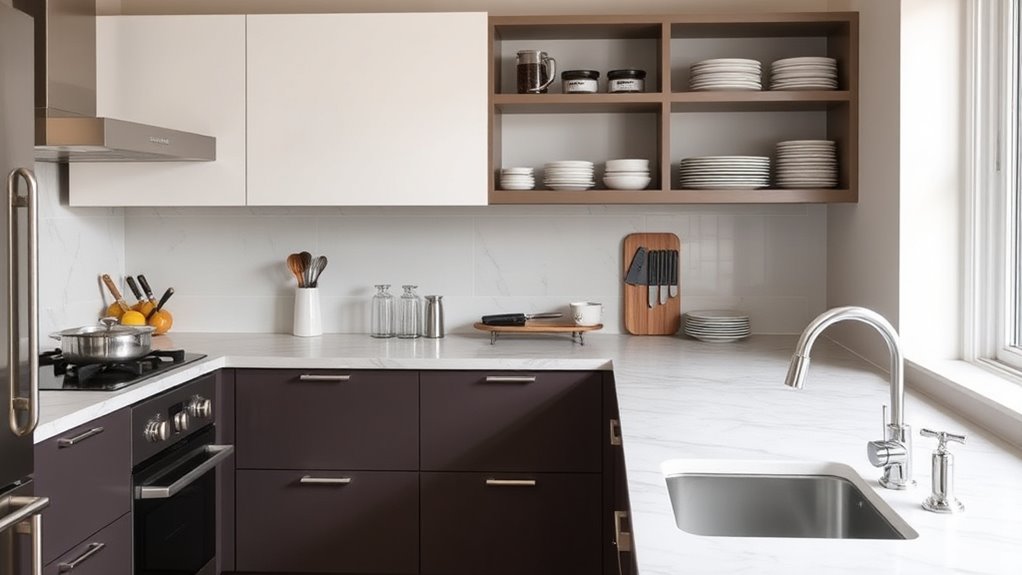
To keep your kitchen clutter-free, establish regular decluttering routines so unnecessary items don’t pile up. Use smart storage solutions to organize your tools and ingredients efficiently, making cleanup easier. Incorporate daily tidying habits to maintain order and prevent clutter from taking over your space. Additionally, implementing seasonal cleaning can help you stay on top of dust and debris buildup, ensuring your kitchen remains a clean and efficient environment. Understanding personality assessments can also encourage you to develop consistent routines that support long-term organization and cleanliness, much like optimizing home theater setups for better enjoyment.
Regular Decluttering Routines
Maintaining a clutter-free kitchen requires establishing regular decluttering routines that become part of your weekly habits. This keeps clutter from piling up and maintains efficiency. Start by scheduling seasonal decluttering sessions to reassess pantry supplies and discard expired items. Incorporate digital organization by regularly deleting unused recipes or updating shopping lists to avoid digital clutter. To stay consistent, try these strategies:
- Dedicate 10 minutes weekly to clear countertops and organize loose items.
- Review and discard outdated or unused kitchen gadgets monthly.
- Set aside time each season to evaluate and refresh your digital recipe files and grocery lists.
These routines help you stay proactive, prevent clutter accumulation, and ensure your kitchen remains functional and inviting. Consistency is key to long-term organization success.
Smart Storage Solutions
Smart storage solutions are essential for keeping your kitchen organized and clutter-free. Utilizing modular storage options allows you to customize your space, making it easier to access everyday items and adapt as your needs change. These versatile units can be stacked or rearranged, maximizing limited space and reducing visual clutter. Hidden compartments are also a game-changer; they provide discreet storage for less frequently used items or valuables, keeping countertops tidy and surfaces clear. Incorporate pull-out drawers, under-cabinet organizers, or concealed shelves to optimize storage without sacrificing style. By integrating these smart solutions, you’ll create a more functional kitchen that promotes efficiency and easy maintenance. With thoughtful storage, your kitchen stays neat, organized, and ready for any culinary task.
Daily Tidying Habits
Establishing daily tidying habits is key to keeping your kitchen consistently clutter-free. When you develop a routine, meal prep becomes smoother, and ingredient access remains efficient. To stay on top of clutter, try these tips:
- Clear countertops after each meal, putting away utensils and ingredients used during prep.
- Return items to their designated zones, especially ingredients, to streamline your cooking process.
- Spend five minutes at the end of each day tidying the prep and clean-up zones, ensuring everything is in place for your next use.
Adapting Zones to Fit Your Cooking Style

Your kitchen layout should reflect how you cook most often, allowing you to work efficiently and comfortably. Customizing zone layouts lets you focus on what you do most, whether that’s baking, grilling, or preparing meals. To tailor zones to your cooking style, consider how you move through tasks. If you bake frequently, allocate a dedicated baking zone with your mixer, utensils, and ingredients nearby. If you love stir-frying, create a prep area close to your stove with all essentials within reach. Adjust storage and workspace to suit your habits, making sure each zone supports your flow. By customizing zones, you streamline your cooking process, reduce clutter, and turn your kitchen into a space that truly works for you.
Incorporating Safety and Accessibility in Your Layout

As you customize your kitchen zones to match your cooking habits, it’s important to also consider safety and accessibility. Prioritize child safety by installing safety locks on cabinets containing sharp or hazardous items. Focus on ergonomic design by arranging frequently used tools at waist level to reduce strain. Guarantee pathways are clear to prevent trips and falls, especially around cooking and cleaning areas. To enhance safety and accessibility, consider these steps:
- Place heavy or bulky items within easy reach to minimize lifting strain.
- Install non-slip mats in high-traffic zones for stability.
- Use lever-style handles instead of knobs for easier operation, especially for those with limited dexterity.
Examples of Well-Organized Kitchen Zones

Well-organized kitchen zones streamline your workflow and make cooking more efficient. For example, your prep zone could feature a dedicated counter with accessible utensils and a cutting board that matches your kitchen aesthetics, such as sleek stainless steel or warm wood tones. Your cooking zone might include a stove and oven arranged for easy movement, with cookware stored nearby in a color-coordinated cabinet or drawer. The clean-up zone can be optimized with a trash can and dishwashing station close together, enhancing efficiency. To create visual harmony, choose a cohesive color scheme that ties each zone together, making the space inviting and functional. Well-designed zones reduce clutter and improve flow, turning your kitchen into a harmonious, practical environment.
Frequently Asked Questions
How Can I Customize Kitchen Zones for a Small Space?
You can customize your small kitchen by creating multi-use zones that maximize compact storage. Combine prep, cooking, and clean-up areas into one efficient space, using vertical storage and clever organizers. Keep frequently used tools within arm’s reach, and choose multi-purpose appliances to save space. This approach helps you stay organized, reduces clutter, and makes your small kitchen more functional and enjoyable to cook in every day.
What Are the Best Lighting Options for Each Kitchen Zone?
Imagine bright, focused beams illuminating your prep area, soft ambient lighting casting a warm glow over your dining space, and task lighting providing clear visibility for cooking. For each zone, choose task lighting like under-cabinet LEDs, ambient lighting such as pendant or recessed lights, and adjustable fixtures to customize brightness. These lighting options make certain your kitchen feels inviting, efficient, and perfectly lit for every task.
How Do I Integrate Smart Technology Into Zone Organization?
You can integrate smart technology into your kitchen zones by adding smart appliances that sync with your home automation system. For example, install smart lights, thermostats, and connected appliances like refrigerators or ovens to streamline tasks. Use automation integration to control these devices remotely or set schedules, making your prep, cooking, and clean-up more efficient and effortless. This seamless connectivity enhances your kitchen’s functionality and saves you time.
What Are Eco-Friendly Storage Solutions for Kitchen Zones?
Looking for eco-friendly storage solutions? You’re in luck! You can use biodegradable containers to replace plastic ones, reducing environmental harm. Incorporate recycling solutions within your kitchen zones, making it easy to sort waste efficiently. Opt for bamboo or other sustainable materials for storage bins and shelves. These choices not only keep your space organized but also help protect the planet—because saving the Earth starts with smart, green storage!
How Can I Adapt Zones for Multiple Cooks or Families?
To adapt zones for multiple cooks or families, you should establish clear multi-cook coordination by designating separate prep, cooking, and clean-up areas. Use labeled storage to streamline family meal planning, ensuring everyone knows their space. Incorporate adjustable or modular zones so they can be customized for different needs. Communicate effectively, and consider adding extra surfaces or portable stations to accommodate busy, multi-user kitchens, making everyone’s workflow smooth and efficient.
Conclusion
By blending smart zones with swift organization, you’ll create a kitchen that’s safe, simple, and satisfying. Focus on flow, find functional storage, and foster a clutter-free zone to boost your baking, boiling, and baking bliss. With a little planning and persistent patience, your space transforms into a seamless sanctuary where every task takes just a touch of time. Turn your kitchen into a streamlined, sensational space that’s as efficient as it is enjoyable.