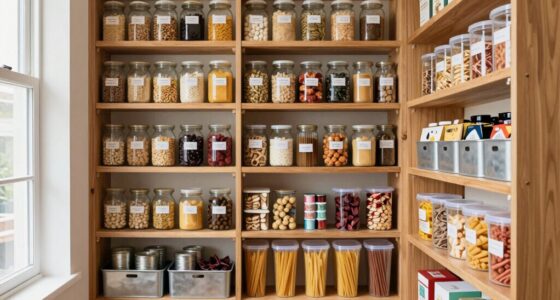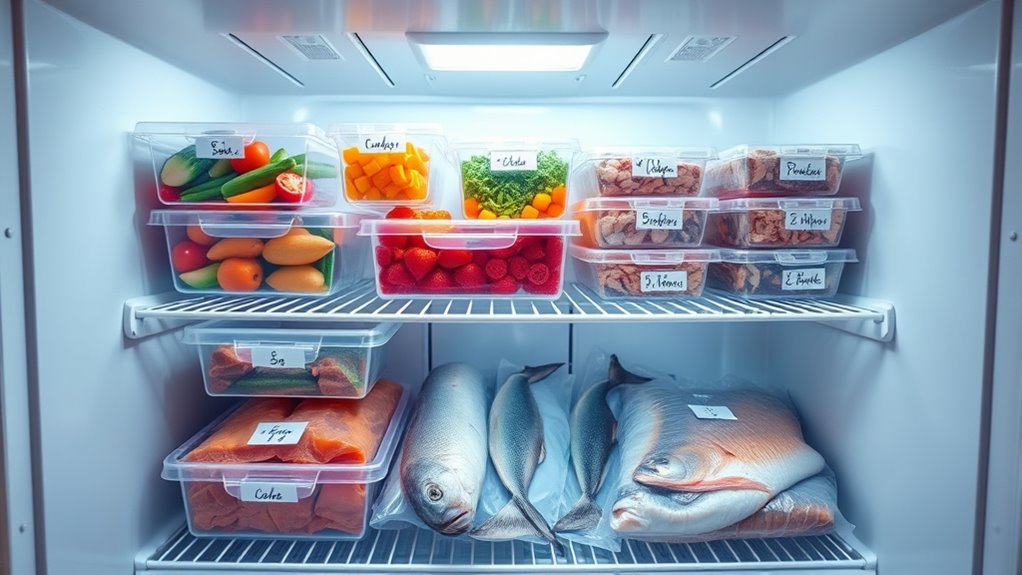
To organize your deep freezer effectively, use clear containers and bins to see everything at a glance. Designate zones for meats, vegetables, and prepared foods, stacking items vertically like files for easy access. Label everything with dates and contents to follow the FIFO system and remove excess packaging to save space. Regularly rotate and reorganize to keep things fresh and tidy. If you keep practicing these tips, you’ll discover even smarter ways to maximize space and maintain order.

Get the little things that make your day delivered free — and shop member deals
- Fast, free delivery on millions of items
- Access to Prime Big Deal Days deals on October 6–7
- Prime Video, Amazon Music and more included
Key Takeaways
- Use clear, labeled containers and bins to categorize and easily identify frozen items.
- Designate specific zones for meats, vegetables, and prepared foods to streamline access.
- Implement the FIFO system by placing new items behind older ones and labeling with dates.
- Remove excess packaging and store items in flat, stackable bags or containers to save space.
- Regularly reorganize and clean the freezer to maintain freshness, accessibility, and overall efficiency.
clear plastic freezer storage containers
As an affiliate, we earn on qualifying purchases.
As an affiliate, we earn on qualifying purchases.
Use Clear Storage Containers and Bins
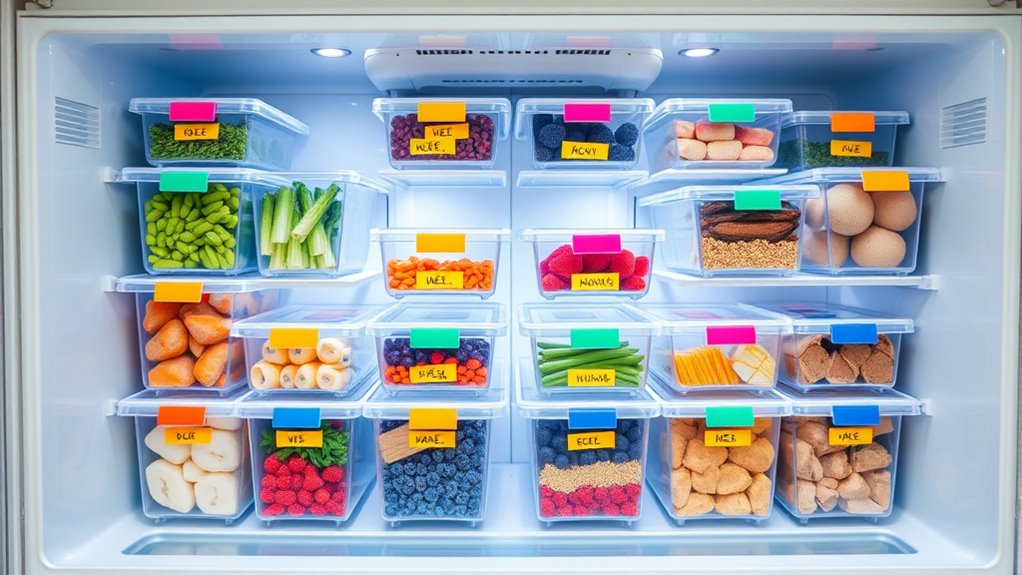
Using clear storage containers and bins is essential for maintaining an organized deep freezer. They let you see what’s inside without opening each one, saving time and preventing forgotten foods at the bottom. Small bins from dollar stores are affordable and perfect for grouping similar items, like snacks or small portions. Clear plastic containers improve visibility, helping you quickly locate ingredients or leftovers. Color-coded plastic crates distinguish categories such as meats, vegetables, or baked goods, while bins with handles make accessing stacked items easier. Flexible options like canvas or market bags can be compressed to fit tight spaces, maximizing storage. By choosing transparent containers, you streamline your freezer management, reduce waste, and prevent unnecessary thawing or defrosting of frozen items. Proper organization can also make it easier to follow food safety guidelines and ensure that food stays fresh longer.
stackable freezer bins with labels
As an affiliate, we earn on qualifying purchases.
As an affiliate, we earn on qualifying purchases.
Designate Zones by Food Type
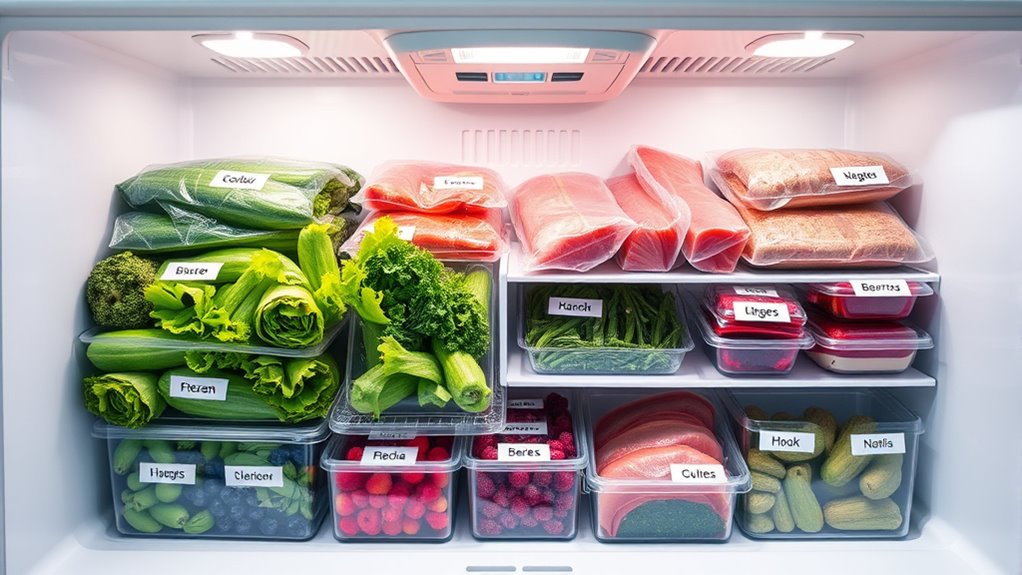
Organizing your freezer by food type helps you find items quickly and keeps everything orderly. Designating specific zones prevents cross-contamination and streamlines access. For example, keep meats in one area, vegetables in another, and baked goods separately. Use clear bins or labels to mark each zone clearly. To visualize, consider this layout:
| Meat & Fish | Vegetables | Prepared Meals |
|---|---|---|
| Bins or shelves | Bins or shelves | Bins or shelves |
| Clearly labeled | Clearly labeled | Clearly labeled |
This setup reduces search time and prevents mixing. Allocate space based on how often you use each type, placing frequently accessed items at the front or top. Proper zoning ensures efficient, stress-free organization. Additionally, maintaining appropriate temperature control is essential for preserving food quality and safety.
food storage bins for deep freezer
As an affiliate, we earn on qualifying purchases.
As an affiliate, we earn on qualifying purchases.
Implement the FIFO System (First In, First Out)
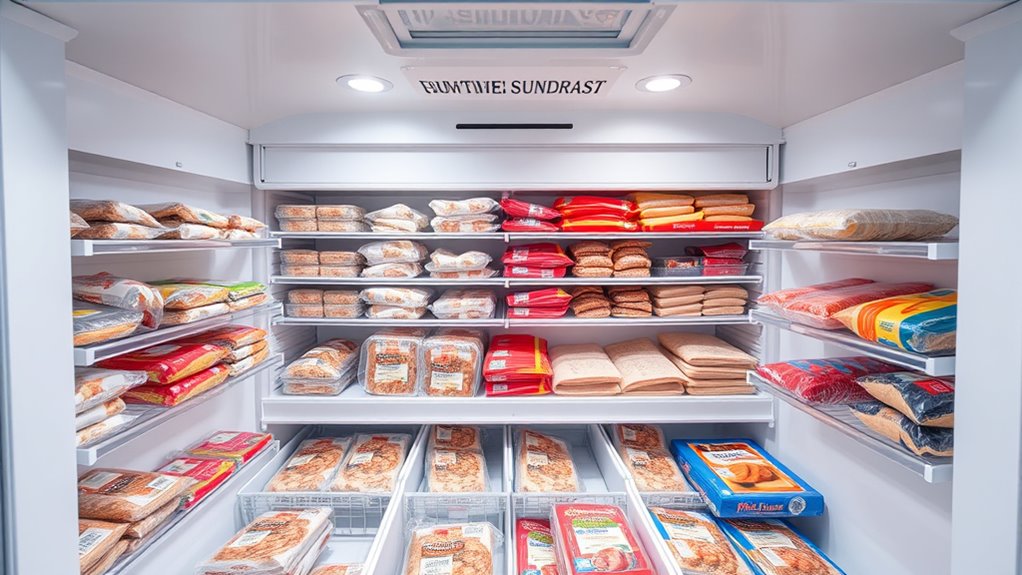
To keep your freezer efficiently organized, implementing the FIFO (First In, First Out) system is key. Place new items toward the back of each zone, so older products come to the front naturally. This rotation guarantees you use up older food before it expires, reducing waste. Discipline in restocking is essential—always move older items forward when adding new stock. Regularly check your freezer to confirm items are properly rotated and discard any that show signs of spoilage. Using clear containers and labeling with dates helps you quickly identify what’s oldest. By consistently practicing FIFO, you’ll prevent forgotten foods from taking up space and avoid unnecessary purchases. This method keeps your freezer fresh, organized, and minimizes food waste over time. European cloud innovation can offer sustainable solutions for managing home appliances and energy-efficient storage systems.
As an affiliate, we earn on qualifying purchases.
Remove Excess Packaging Before Storage

Removing excess packaging is a simple yet effective way to maximize freezer space. Bulky cardboard boxes around frozen vegetables take up unnecessary room and can be discarded or broken down. For individually wrapped items, carefully remove excess packaging while keeping cooking instructions intact—this helps save space and preserves important info. If frozen foods are stored in large bags, transfer contents into smaller, loose containers or flat bags to optimize storage. Doing this reduces the overall volume of each item by about 30%, freeing up valuable space in your freezer. Additionally, keep cooking directions or labels with the food to maintain easy access to preparation instructions. Proper organization in your freezer can prevent overcrowding, making it easier to find and access your frozen items quickly. Removing excess packaging not only improves organization but also helps prevent overcrowding, making it easier to find and access your frozen items quickly.
Label Everything With Dates and Contents
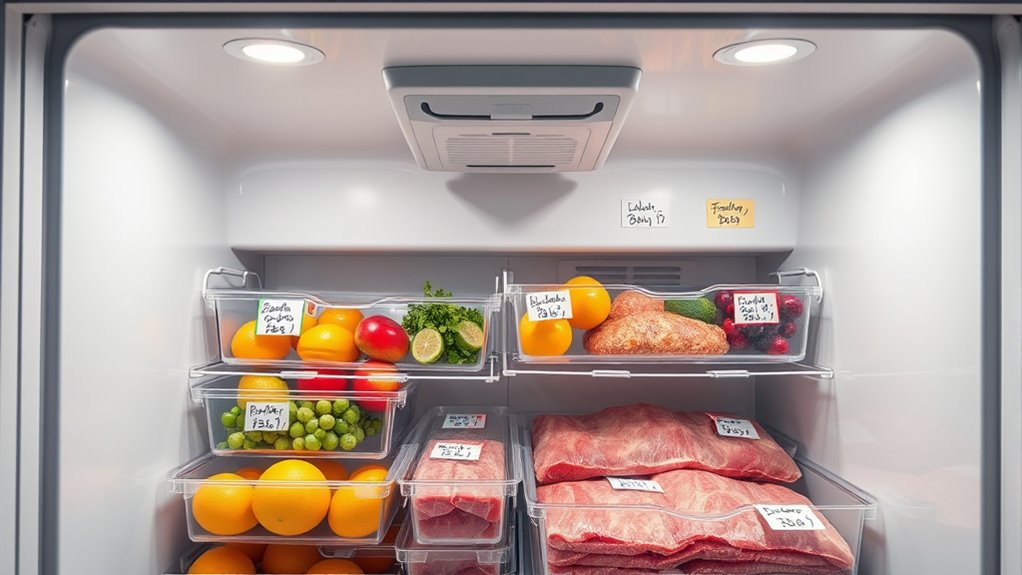
Make sure you use waterproof labels that stay clear and legible in the freezer’s moisture. Track expiration dates so you know when to use or discard items, preventing waste and spoilage. Clearly mark each container with both the contents and the date to keep your freezer organized and easy to manage. Utilizing connected appliances can also help monitor your inventory and expiration dates automatically.
Use Waterproof Labels
Using waterproof labels is essential for maintaining clear, durable, and legible identification of your frozen items. These labels prevent smudging or washing away when exposed to moisture or cold temperatures, keeping your organization intact. Make sure to write the contents and freezing date on each label to easily track freshness. Adhesive labels stick securely to containers, bins, and bags, ensuring they stay in place over time. Avoid using paper or markers directly on the freezer surface, as they can smudge or peel. Proper labeling helps you quickly find what you need without rummaging through the freezer, reducing waste and preventing expired items from remaining unnoticed. Consistent labeling keeps your deep freezer organized, accessible, and efficient for daily use. Smart organization techniques can further optimize your freezer management by integrating digital tools or labels that update automatically.
Track Expiration Dates
Labeling your frozen foods with dates and contents is essential for maintaining an organized and efficient freezer. When you clearly mark each item, you can easily identify what needs to be used first, preventing waste. Use waterproof labels or adhesive labels that stick well in cold, moist conditions to guarantee readability over time. Write the date you froze the item and its contents, so everyone in your household knows its age. Regularly check labels to discard outdated foods and rotate older items to the front for quick access. Proper dating helps you stick to the FIFO system, reducing spoilage and saving money. Consistent labeling simplifies meal planning and keeps your freezer tidy, making it easier to find what you need quickly. Incorporating a total-cost clarity approach to your freezer organization can also help you track expenses and optimize your storage solutions.
Store Items Vertically Like Files
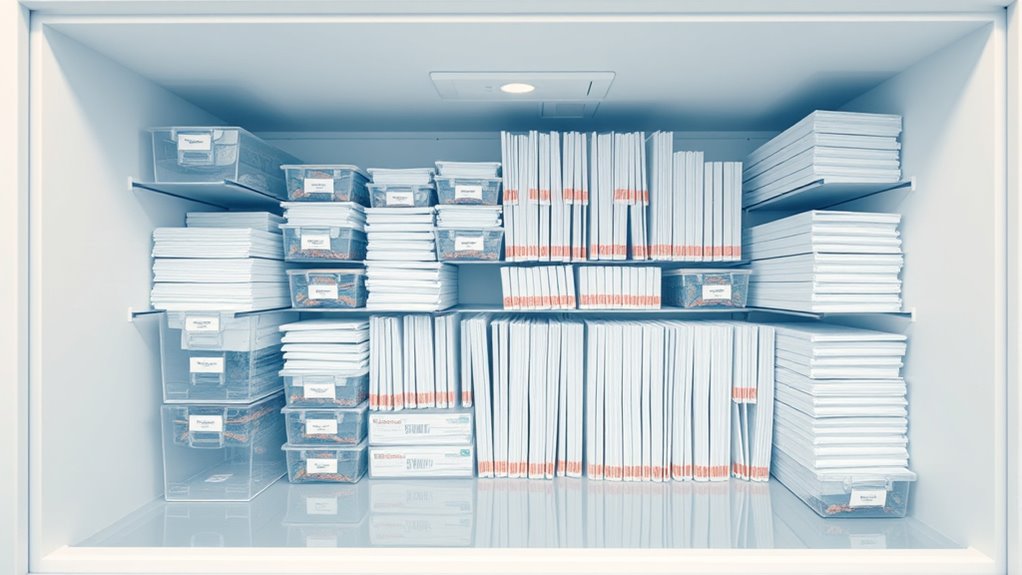
Store items vertically like files using resealable bags and clear containers. Group similar foods by category and arrange them for easy access, making sure to regularly reorganize your freezer. This method keeps everything organized, reduces waste, and saves you time when searching for specific items. Incorporating safe installation practices when setting up your freezer ensures reliable operation and longevity.
Use Resealable Bags
Resealable bags are an excellent way to store frozen items vertically, much like files in a cabinet. They keep food organized, prevent leaks, and make retrieval easier. Fill bags flat and freeze until solid, then stand them upright in bins or on shelves. This method improves visibility and access, saving time and reducing waste. Label each bag with contents and date to track freshness effectively. Using resealable bags also maximizes space, allowing you to stack or arrange items neatly. Keep similar foods together for quick meal prep. This simple step transforms chaos into order, making your freezer more efficient and less stressful. Incorporating proper storage techniques ensures that your frozen goods stay fresh longer and are easier to find when you need them.
Arrange by Category
Arrange items in clear bins or containers by category—meat, vegetables, desserts. You can also optimize ventilation to maintain proper airflow and prevent spoilage. Label everything with dates and contents for easy identification. Keep similar items together to streamline meal prep. Store frequently used categories at the front for quick access.
Vertical storage makes it easier to see all your options at a glance, reduces waste, and keeps your freezer organized. This method saves space and minimizes the chance of forgotten or expired items.
Regularly Reorganize Freezer
Regularly reorganizing your freezer makes sure that stored items stay accessible and fresh. It guarantees you’re using older foods first and prevents clutter from building up. To do this effectively, store items vertically like files, which improves visibility and quick access. Use gallon bags to freeze items flat, then stand them upright in bins. This method helps you see everything at a glance, reducing waste and missing items. Keep your freezer organized by zones, such as meats, vegetables, and desserts. Regular checks also help identify expired foods or empty space that needs filling.
| Benefit | Explanation |
|---|---|
| Improved Access | Items are easy to locate and grab quickly |
| Space Efficiency | Vertical storage maximizes available space |
| Reduced Waste | FIFO rotation prevents spoilage and waste |
| Better Visibility | Clear view of all stored foods at once |
Group Similar Items Together for Easy Access
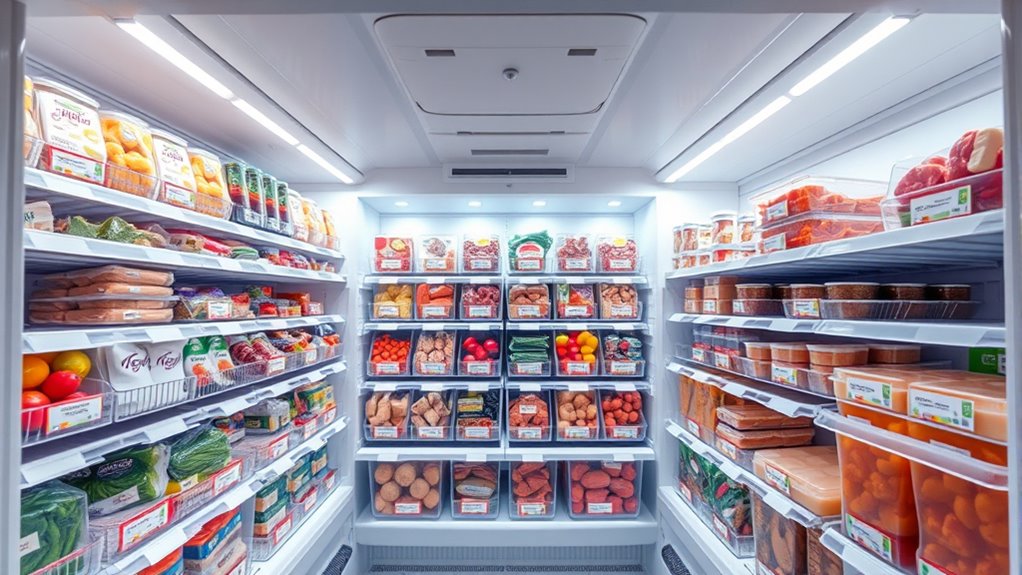
Have you ever struggled to find what you need in your freezer because items are scattered randomly? Grouping similar items makes access much easier and saves time. Start by organizing food into categories like meats, vegetables, and prepared meals. Use bins or containers to keep each group together. Label everything clearly with dates to prevent confusion and waste. Keep frequently used items at the front for quick grab-and-go access. Consider these tips:
- Store all meats in one designated zone or bin
- Keep vegetables and side dishes together for fast meal prep
- Designate a zone for leftovers and ready-to-eat foods
- Place baked goods in a separate, easily accessible area
- Group frozen fruits, snacks, and desserts for quick retrieval
- Additionally, using temperature controls effectively can help preserve food quality and safety.
This method streamlines your freezer and simplifies meal planning.
Maintain Regular Rotation and Reorganization
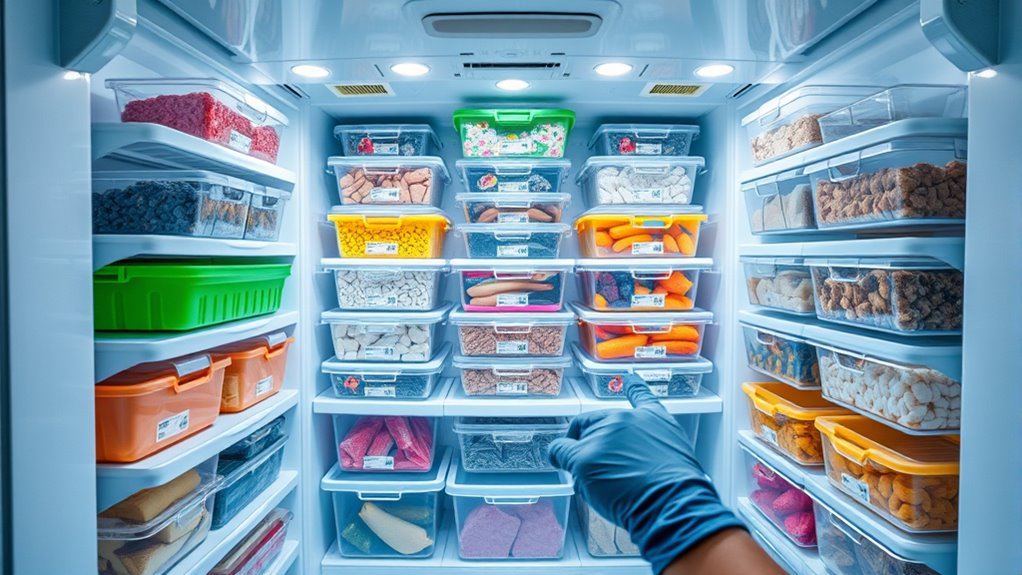
To keep your freezer efficiently organized, you need to establish a routine for rotating and reordering items. Regularly check expiry dates and move older items to the front for easy use. Reorganize zones as needed to accommodate new food and ensure everything remains accessible. This habit prevents waste and keeps your freezer tidy. Use labels and the FIFO system to maintain order and avoid forgotten items. Schedule weekly or bi-weekly cleanouts to remove expired or unnecessary items, then re-stock with fresh goods in their designated zones. Consistent reorganization creates a streamlined system, saving space and time. Keeping your freezer well-maintained ensures you always have what you need, ready to use without digging through clutter.
| Rotation Routine | Reorganization Tips |
|---|---|
| Check expiry dates regularly | Label everything clearly |
| Move older items forward | Reassess zone placement |
| Schedule cleanouts | Update storage containers |
Maximize Space With Smart Stacking Techniques

Smart stacking techniques can substantially increase your freezer’s capacity by making the most of vertical space. You should organize items to maximize storage efficiency and easy access. Use flat, sturdy containers or bags for soups, sauces, and prepped meals, then stand them upright to resemble files. This way, you can quickly identify what you need without digging through layers. Incorporate these strategies:
Maximize freezer space with upright, flat storage and smart stacking for easy access and efficiency.
- Store flat items in gallon-sized bags and stand them upright
- Use stackable bins or crates to create multiple levels
- Place heavier or bulkier items at the bottom for stability
- Arrange similar items together for quick retrieval
- Leave space between stacks to allow air circulation and avoid crushing items
- Consider electric road sweepers to efficiently clean your freezer area and maintain hygiene
Implementing these techniques helps prevent waste, improves visibility, and maximizes every inch of your freezer space.
Frequently Asked Questions
How Often Should I Reorganize My Freezer for Optimal Efficiency?
You should reorganize your freezer every three to six months to maintain peak efficiency. Regular checks help you identify expired or forgotten items, prevent clutter buildup, and guarantee proper rotation using the FIFO system. When you reorganize, it’s also a good time to clean out any spills or old food, update labels, and adjust zones as needed. This routine keeps your freezer orderly, prevents waste, and makes food retrieval quicker.
What’s the Best Way to Prevent Freezer Burn on Stored Foods?
To prevent freezer burn, you should guarantee your foods are properly wrapped or stored in airtight containers. Use clear, moisture-resistant labels with dates and contents. Remove excess packaging before storing, and store items vertically to minimize air exposure. Keep the freezer at the right temperature, around 0°F, and avoid opening it unnecessarily. Regularly check for signs of freezer burn, and repackage items if needed to maintain freshness.
How Do I Handle Thawed or Partially Used Frozen Items?
When handling thawed or partially used frozen items, you should promptly assess their quality. If they’re still safe, transfer them into airtight containers or resealable bags, removing excess air to prevent spoilage. Label each with the date and contents, then store them in designated zones for easy access. Use the FIFO system to prioritize older items and avoid refreezing thawed foods unless cooked thoroughly, ensuring safety and freshness.
Are There Specific Containers Best Suited for Long-Term Freezer Storage?
You might be surprised, but the best containers for long-term freezer storage are airtight, BPA-free plastic or silicone options that resist freezer burn. Consider vacuum-sealed bags for maximum freshness, as they remove air and extend shelf life. Clear, stackable containers with tight-fitting lids allow quick identification and maximize space. These durable choices keep your food safe, preserve flavor, and prevent spoilage, making your freezer organization both efficient and reliable.
How Can I Prevent Cross-Contamination Between Different Food Groups?
To prevent cross-contamination, always store raw meats separately from cooked or ready-to-eat foods. Use designated zones or bins for each food group, and keep raw meats on the bottom shelves or in separate containers to avoid drips. Regularly clean your freezer to eliminate any spills or bacteria, and label everything with dates. This way, you guarantee safety and reduce the risk of foodborne illnesses.
Conclusion
A well-organized freezer keeps your food accessible and reduces waste, saving you money. But beyond neatness, it’s about peace of mind—knowing exactly what’s inside and when it was stored. While stacking and labeling are practical steps, the real reward is the confidence that comes with a clutter-free space. So, take control of your freezer today; because in the chaos of frozen food, clarity can be your greatest asset.
NFL season / tailgating Picks
team gear
As an affiliate, we earn on qualifying purchases.