
To organize your Tupperware, start by evaluating which containers and lids are in good shape, discarding damaged or mismatched pieces. Sort everything by size and type, then stack smaller containers inside larger ones and pair lids with their matching bases. Use clear bins, labels, or color-coding for quick access, and create designated zones for frequently used items. Keep up with maintenance and storage best practices to keep your space tidy—if you want to perfect your system, there’s more to discover ahead.
Key Takeaways
- Sort containers and lids by size and type, discarding mismatched or damaged pieces for a streamlined collection.
- Use stackable, uniform containers and clear bins with labels to maximize space and improve visibility.
- Match lids with their containers and organize them separately to prevent mismatches and clutter.
- Establish consistent routines for regular cleaning, inspection, and replacement to maintain organization long-term.
- Store frequently used items within easy reach and label zones for quick access and simplified maintenance.
Assessing and Clearing Out Your Tupperware Collection
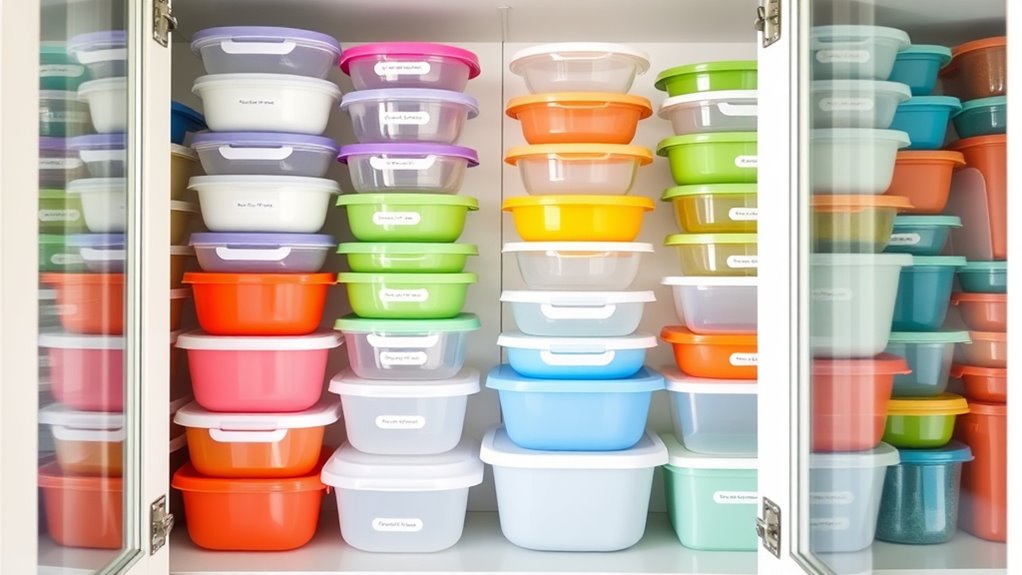
Before you begin clearing out your Tupperware collection, take a moment to assess what you actually use regularly. Focus on containers with good container durability; if a piece is cracked or warped, it’s time to let it go. Check lid compatibility—discard lids that no longer fit or seal properly, as they won’t serve their purpose. Be honest about what you truly need daily, and set aside duplicates or rarely used items. Sorting through your collection now will make future organization easier and more effective. Remember, a streamlined Tupperware collection reduces clutter and makes meal prep simpler. By evaluating each piece’s condition and how well its lid fits, you’ll create a foundation for a tidy, functional system that lasts. Additionally, considering the resale value of your containers can help you decide which pieces are worth keeping or donating. Recognizing the longevity of your containers can guide your choices about which ones are most worth maintaining. Taking a moment to assess your storage needs can also help prevent future clutter buildup and keep your kitchen organized.
Sorting Containers and Lids by Size and Type
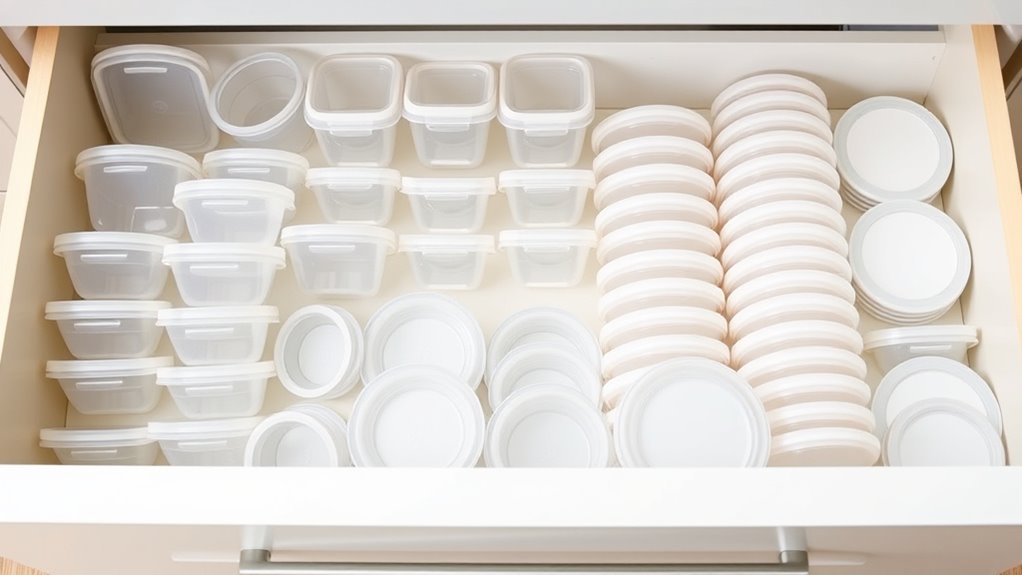
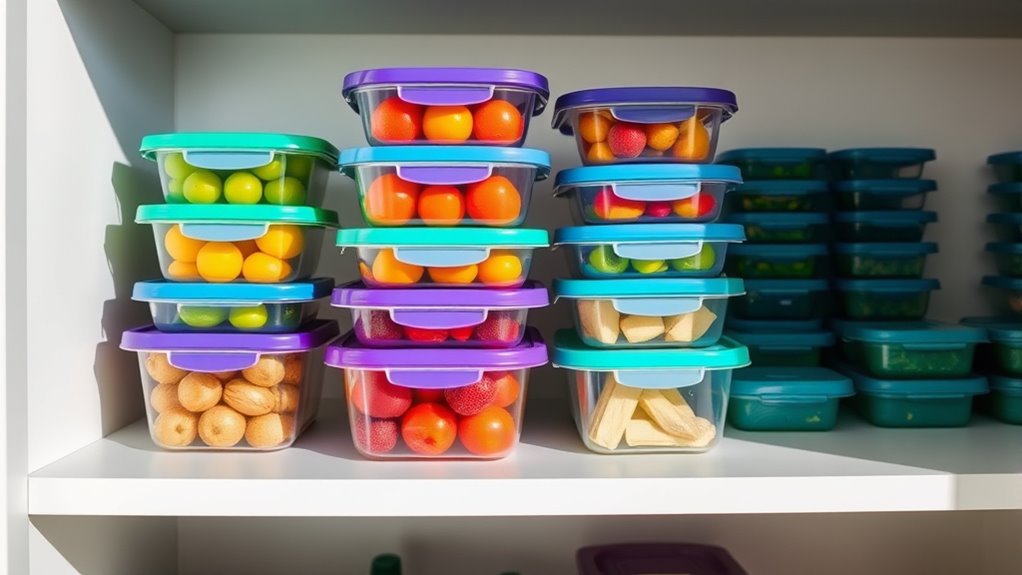
To organize your Tupperware effectively, start by sorting your containers and lids into groups based on size and type. Use stacking techniques to nest smaller containers inside larger ones, saving space and making retrieval easier. Keep matching lids with their containers and set aside mismatched or damaged pieces. Consider label customization—adding labels or color-coded markers can help identify sizes and types quickly, reducing search time. Group similar items together, such as rectangular containers or round ones, to streamline your storage. As you sort, discard any broken lids or containers that no longer serve a purpose. This method not only maximizes space but also makes it easier to maintain an organized system over time. Clear categorization guarantees your Tupperware stays neat and accessible. Additionally, implementing space-efficient stacking techniques can further optimize your storage capacity, especially when considering organizing small items to prevent clutter and loss.
Choosing the Perfect Storage Solution for Your Kitchen
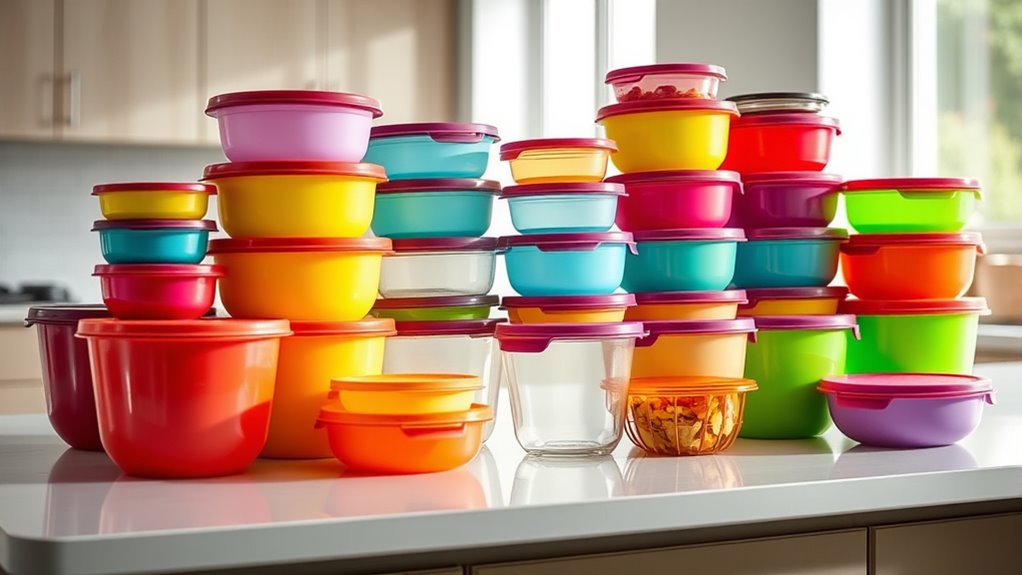
Choosing the right storage solution can transform your kitchen into a more organized and efficient space. To do so, consider stacking techniques that maximize vertical space and keep containers stable. Use labeling strategies to identify contents quickly, reducing time spent searching. Select containers with uniform shapes or nesting features for easy stacking and storage. Think about clear bins for visibility or drawer dividers for lids. Here’s a quick guide:
| Storage Type | Best For | Tips |
|---|---|---|
| Stackable Bins | Maximizing vertical space | Use labels for contents |
| Drawer Dividers | Lid organization | Group lids by size or type |
| Clear Containers | Easy identification | Label with contents and date |
| Nesting Containers | Space-saving storage | Choose matching sizes for stacking |
A new sentence with AI training jobs and the rest of the sentence.
Implementing Easy-to-Follow Organization Systems
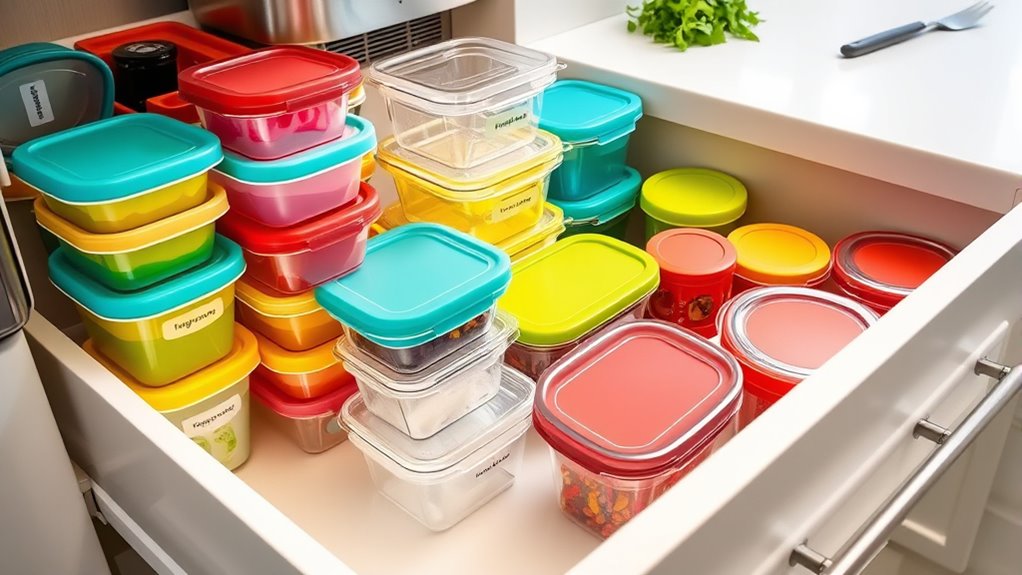
Implementing an easy-to-follow organization system starts with establishing clear, consistent routines that everyone in your household can follow. Use simple stacking techniques to maximize space, stacking containers of similar sizes and shapes to keep your cabinet neat. Consider container material when organizing—lighter plastic containers are easy to handle, while glass ones can be more durable but heavier. Group lids separately from containers to prevent mismatches and streamline retrieval. Label storage zones clearly to maintain order and make it easy for everyone to find what they need quickly. Keep frequently used items accessible, storing seldom-used containers elsewhere. By creating straightforward routines and paying attention to stacking techniques and container material, your organization system will stay effective and easy to uphold long-term.
Maintaining Tidy Tupperware Long-Term
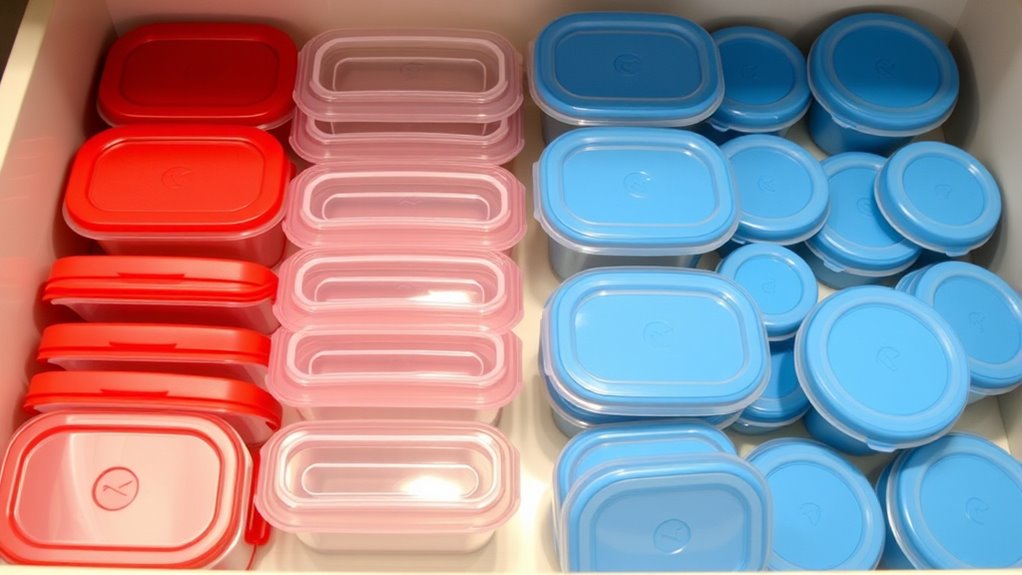
Once you’ve set up a simple, effective organization system for your Tupperware, maintaining it over time becomes much easier. Regularly check for damaged containers to ensure durability and replace any that crack or warp. Properly cleaning and drying your containers prevents mold and prolongs their lifespan. When it’s time to discard old containers, consider plastic recycling options to reduce waste. Store lids and containers together to avoid losing parts, making cleanup quicker. Keeping an eye on container condition helps you avoid clutter and unnecessary replacements. Incorporating storage best practices can further streamline your organization process and keep your kitchen tidy. Additionally, selecting appropriate container materials can prevent warping or cracking, further extending the life of your Tupperware. Practicing these maintenance routines regularly ensures your food storage remains functional and clutter-free over the long term, and staying aware of food safety guidelines helps prevent contamination.
Frequently Asked Questions
How Can I Prevent Tupperware From Cracking or Warping Over Time?
To prevent Tupperware from cracking or warping, choose containers made from durable materials like BPA-free plastic or tempered glass. Avoid exposing them to extreme temperatures, such as hot or freezing conditions, which can weaken the material. Use proper storage techniques by stacking containers carefully and avoiding over-tightening lids. Regularly inspect your Tupperware for signs of damage, replacing any that show cracks or warping to guarantee longevity and safe food storage.
What Are Eco-Friendly Options for Replacing Plastic Food Containers?
Did you know that over 300 million tons of plastic are produced annually, much of which ends up in landfills? You can reduce this by choosing eco-friendly options like biodegradable containers or glass ones. Glass containers offer benefits such as durability, microwave safety, and no chemical leaching. Switching to these alternatives helps protect the environment and keeps your food fresh without the worries of plastic’s harmful effects.
How Do I Handle Damaged or Stained Tupperware?
When handling damaged or stained Tupperware, start by cleaning stains with baking soda and warm water for a fresh look. For cracks, try repairing them with food-safe silicone sealant if possible. If the damage is severe or stains won’t come out, consider replacing the container. Regular maintenance and prompt cleaning help extend your Tupperware’s life, keeping it functional and looking good longer.
Can I Use Dishwasher-Safe Labeling for Better Organization?
Yes, you can use dishwasher-safe labels for better organization. Labeling techniques, like using waterproof, dishwasher-safe labels, guarantee your labels stay intact through washing cycles. Simply apply the labels to clean, dry Tupperware lids or containers, and they’ll stay put, making it easy to identify contents. This method keeps your kitchen tidy and saves time, especially when you’re organizing large food storage areas or batch-prepping meals.
What Is the Best Way to Store Tupperware When Not in Use?
Remember, even the most advanced tech can’t beat good old stacking techniques. When storing Tupperware, nest smaller containers inside larger ones, and stack lids separately to save space. Use uniform storage containers to maximize efficiency and keep your cabinets tidy. Avoid clutter by investing in a storage solution that allows easy access and prevents damage. This way, your Tupperware stays organized, accessible, and ready for use, like a vintage radio in a modern home.
Conclusion
Did you know that the average person owns around 40 food containers? By organizing your Tupperware with these simple tips, you’ll save time, reduce clutter, and keep your kitchen efficient. Maintaining an organized collection isn’t just about looks—it makes everyday meal prep easier and less stressful. Stay consistent with your system, and your Tupperware will stay tidy long-term. Start today, and enjoy the benefits of a perfectly organized kitchen!