
To organize your freezer for easy dinner access, categorize foods like vegetables, meats, and leftovers. Use clear, labeled containers or freezer bags to quickly identify items. Arrange new items behind older ones, following the first-in, first-out rule, and keep similar items together. Regularly check for expired or freezer-burned foods and keep the temperature steady at 0°F. With a solid system in place, you’ll save time on meal prep—discover more tips to improve your setup.
Key Takeaways
- Categorize and label all items with clear, visible labels for quick identification.
- Implement a stacking system with newer items behind older ones, following FIFO.
- Use uniform containers and bags to keep items organized and easily accessible.
- Store raw meats separately on the bottom in leak-proof containers to prevent cross-contamination.
- Regularly review and rotate freezer contents, removing expired or freezer-burned items for efficiency.
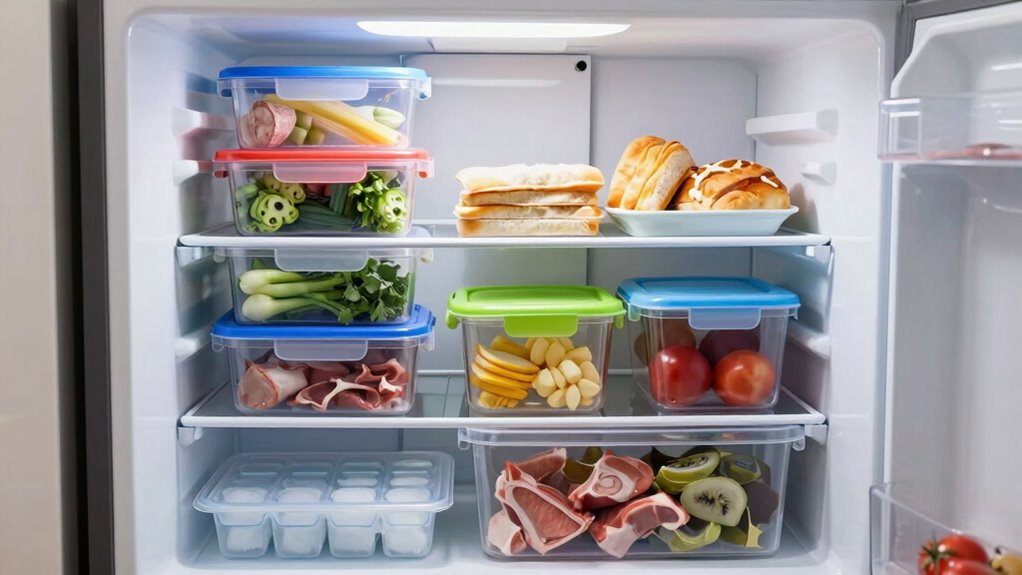
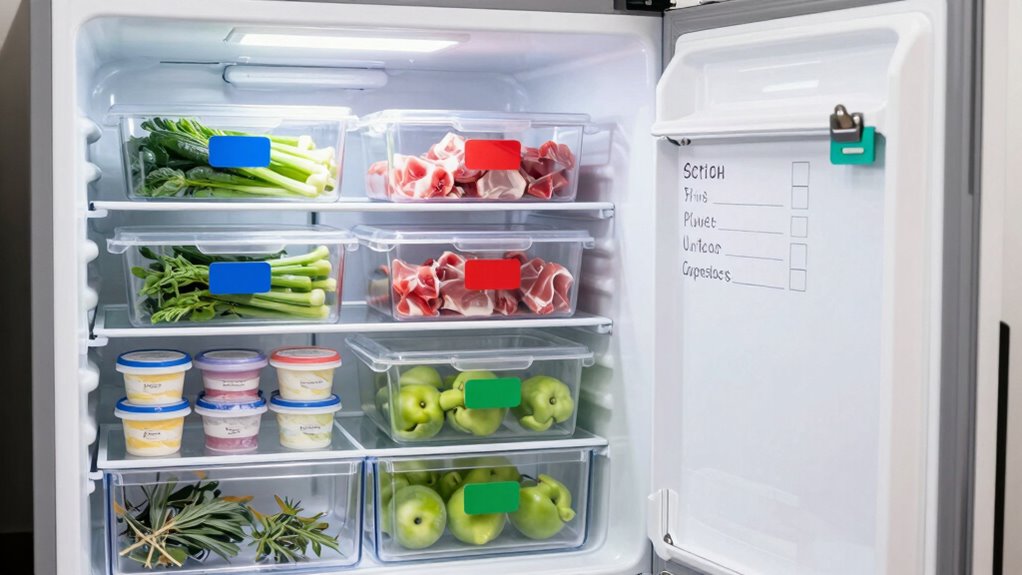
A well-organized freezer makes meal prep easier and helps prevent food waste. When everything has its place, you spend less time rummaging and more time enjoying your meals. To start, consider how you want to categorize your frozen items. Group similar foods together—vegetables, meats, leftovers, and baked goods—so you can quickly locate what you need. Use clear, labeled containers or freezer bags to keep items visible and organized. Labeling is especially vital if you freeze multiple portions or ingredients, as it prevents you from guessing or wasting time searching for specific items later.
Organize your freezer by categories with labeled containers for easy access and reduced food waste.
You should also think about creating a system for stacking and storing items. Place newer items behind older ones to follow the first-in, first-out rule, which helps you use older food before it spoils. This practice enhances freezer safety by reducing the chance of food spoilage and contamination. When you’re meal prepping, having everything sorted and labeled saves time and reduces the risk of accidentally eating expired food. It also makes it easier to plan meals in advance because you can see what ingredients are available without digging through piles of frozen bags. Incorporating freezer organization tips can further streamline your process and improve overall food safety. Additionally, maintaining proper freezer temperature is crucial to preserving food quality and safety over time. Regularly checking your freezer’s temperature control ensures optimal conditions for keeping food safe and fresh.
Incorporating freezer safety into your organization process is essential. Avoid overloading your freezer, as this can block air circulation and cause uneven freezing, which might compromise food quality and safety. Keep the temperature steady at 0°F (-18°C) to prevent bacteria growth and maintain the freshness of your food. Use a thermometer to monitor the temperature regularly, and defrost the freezer when necessary to keep it functioning efficiently. When storing raw meats, place them on a plate or in a leak-proof container on the bottom shelf to prevent drips onto other foods, minimizing cross-contamination risks. Regularly reviewing your freezer contents and removing expired or freezer-burned items helps maintain freezer safety and frees up space for fresh items. A consistent organization system can also help you identify food safety issues early and prevent potential health hazards.

Vtopmart 6 Pack Clear Stackable Storage Bins with Lids, Large Plastic Containers with Handle for Pantry Organizer and Storage,Perfect for Bathroom,Cabinet,Kitchen,Fridge,Closet Organization
- Versatile Home Storage: Suitable for pantry, bathroom, kitchen, and more
- Clear View & Stackable: See contents easily; save space by stacking
- Durable BPA-Free Material: Supports up to 8kg; sturdy and reliable
As an affiliate, we earn on qualifying purchases.
As an affiliate, we earn on qualifying purchases.
Frequently Asked Questions
How Often Should I Defrost My Freezer?
You should defrost your freezer whenever you notice significant ice crystal formation or frost buildup, usually every 3 to 6 months. Regular defrosting prevents frost buildup, which can reduce efficiency and storage space. To keep frost at bay, prevent excessive moisture by sealing foods tightly and avoiding frequent door openings. Staying on top of these steps guarantees your freezer runs smoothly, saves energy, and keeps your food fresh for longer.
What’s the Best Way to Label Frozen Items?
Irony aside, the best way to label frozen items is with clear labeling techniques like waterproof markers and sturdy labels. Use color coding to distinguish categories—red for meats, green for vegetables, etc.—so you can identify items at a glance. Write dates and contents clearly, and stick labels on the top or sides of packages. This way, you’ll save time and avoid the mystery meat lurking in the back.
How Do I Prevent Freezer Burn?
To prevent freezer burn, you should minimize ice crystal formation by using proper packaging techniques. Wrap foods tightly with plastic wrap or aluminum foil, then place them in airtight containers or resealable freezer bags. Remove as much air as possible before sealing to reduce exposure to moisture. Also, avoid overloading your freezer, as proper airflow helps maintain consistent temperatures, keeping your food fresher and free of freezer burn for longer.
What’s the Ideal Temperature for a Freezer?
Imagine a frozen landscape—crisp, still, and perfectly preserved. The perfect temperature for your freezer is 0°F (-18°C), ensuring ideal storage and preventing freezer burn. Proper freezer maintenance involves keeping this temperature steady, avoiding fluctuations that can compromise food quality. When you set your freezer to this level, you create a reliable environment that preserves freshness, flavor, and nutrients—making every meal a delicious, stress-free experience.
How Can I Maximize Freezer Space Effectively?
To maximize your freezer space, start by using a freezer basket to organize smaller items, keeping them accessible and preventing clutter. Freeze ice cubes in dedicated trays and store them in the basket to save space and easily grab when needed. Also, label and stack items vertically, and remove unnecessary packaging. This way, you’ll free up space, find dinner ingredients faster, and keep your freezer neat and efficient.

MSERCUOR Freezer Organizer Bins, 4 Pack Stackable Deep Chest Freezer Organizer Bins, Foldable Baskets with Handles, Black Storage Container Baskets for 5/ 7 Cu.FT Deep Freezer Sort Frozen Meats
- Durable Material: Made of rust-resistant, corrosion-proof metal
- Efficient Space Use: Straight sides maximize freezer space
- Generous Size: 15.1 x 8 x 6.5 inches fits large freezers
As an affiliate, we earn on qualifying purchases.
As an affiliate, we earn on qualifying purchases.
Conclusion
By keeping your freezer organized, you’ll save time and reduce mealtime stress. Imagine finding that bag of frozen chicken breasts instantly instead of digging through a pile of random items. For example, Sarah labeled and grouped her frozen foods, which made weeknight dinners much easier. When your freezer is tidy, you’ll always know where everything is, making dinner prep quicker and more enjoyable. Start organizing today—you’ll wonder why you didn’t do it sooner!

Syntus Vacuum Sealer Bags, 150 Gallon 11" x 16" and Quart 8" x 12" and Pint 6" x 10" Commercial Grade PreCut Bag, BPA Free Food Vac Bags for Storage, Meal Prep or Sous Vide
- Compatibility: Works with all desktop vacuum sealers
- PreCut Design: Includes 150 pre-cut bags in three sizes
- Durable Material: Made from puncture-resistant 4 mil high-tenacity material
As an affiliate, we earn on qualifying purchases.
As an affiliate, we earn on qualifying purchases.

2 Pack Refrigerator Thermometer, 30-30°C/20-80°F, Classic Fridge Thermometer Large Dial with Red Indicator Thermometer for Freezer Refrigerator Cooler
- Versatile Use: Suitable for refrigerators, freezers, and insulated boxes
- Clear Large Dial: Easy-to-read with blue and red indicators
- Wide Temperature Range: -20°F to 80°F / -30°C to 30°C
As an affiliate, we earn on qualifying purchases.
As an affiliate, we earn on qualifying purchases.