Start by removing all items from your cabinets to see exactly what’s inside. Sort everything into categories, then place the most frequently used items where you can easily reach, like at eye level or in open shelves. Store less-used items higher or in harder-to-access spots. Use drawer dividers and labels to keep things tidy, and regularly reassess your setup to stay organized. Keep exploring to discover even more tips for making your kitchen work better for you.
Listen free for 30 days with Audible
Thousands of audiobooks and originals — cancel anytime.
As an affiliate, we earn on qualifying purchases.
Key Takeaways
- Sort items into categories and prioritize frequently used items for easy access.
- Store daily essentials at eye level or in open, reachable shelves.
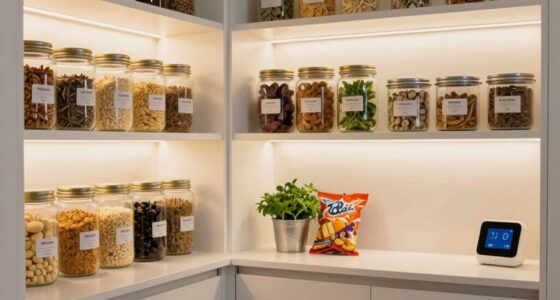
- Use labels and transparent containers to quickly identify regularly used ingredients.
- Keep infrequently used items higher or in less accessible cabinets.
- Regularly reassess and reorganize based on changing usage patterns.

A well-organized kitchen can make cooking and cleaning much more efficient and enjoyable. When you arrange your cabinets based on how often you use items, it saves you time and effort every day. Start by taking everything out of your cabinets and sorting items into categories—pots, pans, utensils, spices, and so on. This step gives you a clear picture of what you have and helps you decide where each item should go.
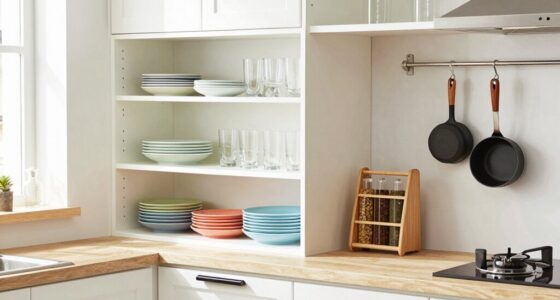
Once you have your categories, think about how frequently you reach for each one. Items you use daily or weekly should go in the most accessible spots. Items that are used frequently should be placed in high-traffic areas to streamline your workflow. For example, keep your most-used pots, pans, and utensils in the front of your cabinets or on open shelves where you can grab them easily. Less frequently used items, like holiday baking supplies or specialty gadgets, can be stored towards the back or in higher cabinets, freeing up space for everyday essentials.
Place daily essentials at eye level for easy access and store less-used items higher or in harder-to-reach spots.
To keep everything organized, use drawer dividers for utensils and smaller tools. Drawer dividers help prevent clutter and make it easier to find what you need quickly. Instead of rummaging through a jumble of spoons, spatulas, and knives, you can simply open the drawer and see everything at a glance. This not only speeds up your prep time but also keeps your drawers neat and tidy. Incorporating space-saving solutions can further enhance your organization by maximizing your available storage. Additionally, choosing multi-purpose storage containers can help reduce clutter and consolidate items.
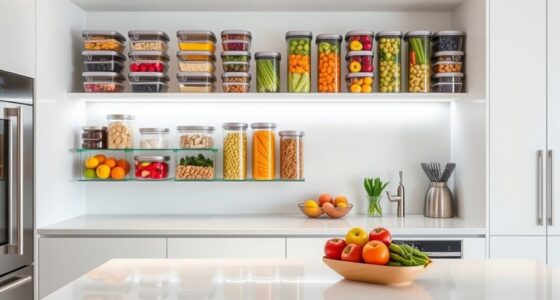
In addition, consider implementing pantry labeling. Clear labels on your pantry shelves or containers make it easier to locate ingredients and prevent overbuying or double-stocking. Labeling also helps everyone in the household know where items belong, maintaining order even when you’re busy. Use transparent containers for dry goods like flour, sugar, and pasta, and label each one clearly. This way, you know exactly what you have without opening multiple jars or bags. Incorporating organized storage ideas can also help maintain the system over time and adapt to your needs as they evolve.
As you reassemble your cabinets, prioritize accessibility. Place everyday essentials at eye level or within easy reach, and store less-used items higher or in harder-to-access areas. Use shelf risers or small bins to maximize vertical space and keep similar items grouped together. Regularly reassess your setup—what’s used frequently today might change over time, so adjust your organization system accordingly. Additionally, for better efficiency, consider using small storage solutions that are designed to optimize space and accessibility. Remember, a well-thought-out layout can make a significant difference in your kitchen’s functionality.
kitchen drawer dividers for utensils
As an affiliate, we earn on qualifying purchases.
As an affiliate, we earn on qualifying purchases.
Frequently Asked Questions
How Often Should I Reassess My Cabinet Organization?
You should reassess your cabinet organization at least every three to six months. Regularly updating your storage solutions keeps your kitchen functional and clutter-free. Incorporate a cleaning schedule during these checks to guarantee everything remains tidy and accessible. By doing this, you prevent clutter buildup, identify needed adjustments, and maintain an efficient space that suits your current needs. Staying proactive guarantees your kitchen stays organized and easy to use.
What Tools Are Best for Organizing Kitchen Cabinets?
You should use organizing tools like pull-out shelves, tiered racks, and drawer dividers to maximize space. Storage containers are essential for keeping items neat and accessible, especially for dry goods and smaller items. Opt for clear containers so you can see contents easily. Combining these tools helps you create a functional, tidy kitchen cabinet setup, making it simple to find what you need quickly and maintain organization over time.
How Can I Prevent Clutter From Accumulating?
It’s funny how clutter creeps in despite your best efforts. To prevent it, focus on pantry storage and utensil sorting, keeping only what you truly use. Regularly declutter and put things back in designated spots, so clutter doesn’t build up. Use clear containers for pantry items and drawer dividers for utensils. This way, your kitchen stays tidy, and you’ll always find what you need without the chaos.
Should I Label My Cabinet Sections?
Yes, labeling your cabinet sections improves clarity and makes it easier to find what you need quickly. Use clear, legible labels that suit your style for better organization. Custom storage solutions can complement this by providing designated spots, reducing clutter and confusion. When you label sections, you effectively streamline your kitchen, making daily tasks smoother and helping everyone in your household know exactly where everything belongs.
How Do I Handle Items I Rarely Use?
Handling rarely used items can feel like managing a treasure trove! Store these items in a dedicated, less accessible cabinet or a high shelf to maximize space and keep your everyday essentials within reach. Use clever storage solutions like labeled bins or stackable containers to keep things organized. Regularly reassess and declutter to prevent accumulation, ensuring your kitchen remains efficient and clutter-free, even with occasional-use items tucked away neatly.
clear pantry storage containers with labels
As an affiliate, we earn on qualifying purchases.
As an affiliate, we earn on qualifying purchases.
Conclusion
Think of your kitchen cabinets as a well-tended garden, where each item has a perfect spot to flourish. When you organize by how often you use things, it’s like planting your tools and ingredients where they’re most accessible—blooming with convenience. With this method, your space becomes a harmonious symphony of order, turning chaos into calm. Now, every time you open a cabinet, you’ll feel the satisfaction of a space that’s both beautiful and functional, ready to serve your culinary adventures.
adjustable cabinet shelf organizers
As an affiliate, we earn on qualifying purchases.
As an affiliate, we earn on qualifying purchases.
multi-purpose kitchen storage bins
As an affiliate, we earn on qualifying purchases.
As an affiliate, we earn on qualifying purchases.
NFL season / tailgating Picks
team gear
As an affiliate, we earn on qualifying purchases.