To store bulk groceries without clutter, choose airtight, food-grade containers that are clear and stackable to maximize space. Divide large bulk bags into smaller portions using resealable freezer bags or jars, and label everything with dates for easy rotation. Organize your pantry by food groups and use vertical space with shelves or stackable bins. Freeze grains and nuts to extend shelf life, and consider eco-friendly containers. Keep your space tidy and well-managed—next, you’ll discover how to streamline your storage even further.
Open a free Amazon Business account
Business pricing, bulk buying and tax-exempt orders.
As an affiliate, we earn on qualifying purchases.
Key Takeaways
- Divide bulk items into smaller, airtight portions like freezer bags or containers for easier storage and access.
- Use stacking, labeled containers, and designated zones to maximize space and maintain organization.
- Choose eco-friendly, reusable containers such as glass jars or biodegradable bins to reduce clutter and waste.
- Regularly inspect and rotate supplies, discarding expired items to prevent overflow and spoilage.
- Implement a clear labeling system with purchase and expiration dates to streamline inventory management.
airtight food storage containers set
As an affiliate, we earn on qualifying purchases.
As an affiliate, we earn on qualifying purchases.
Choosing the Right Storage Containers for Bulk Goods

Selecting the right storage containers for bulk goods is essential for maintaining freshness, preventing pests, and optimizing space. Food-grade buckets and bins are excellent for dry goods like grains and flour because they offer airtight seals that keep pests out and moisture in check. Use clear glass jars for smaller quantities or items you access often; they make it easy to see contents at a glance and prevent odor transfer. Combining freezer bags with sturdy Rubbermaid tubs allows segmented freezing, reducing clumping and waste. When dividing large bulk bags, portion out into smaller freezer-safe bags to make usage more manageable. Choose containers with secure lids and stackable designs to maximize storage efficiency. Properly selected containers protect your bulk foods and keep your pantry organized and clutter-free. Incorporating airtight seals into your storage solutions is vital for maintaining food freshness over time.
As an affiliate, we earn on qualifying purchases.
Organizing Your Pantry for Maximum Efficiency
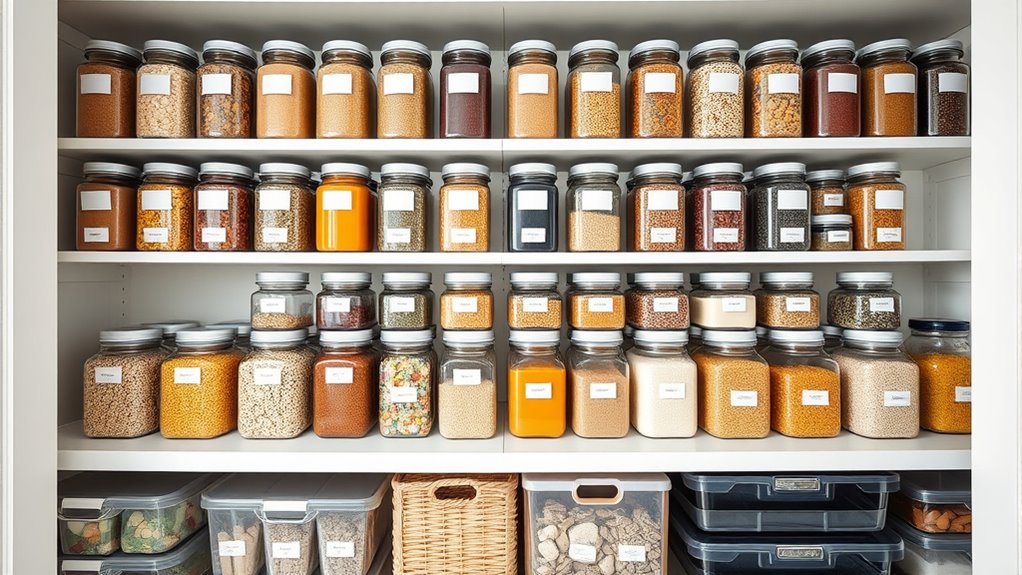
To make the most of your bulk storage, start by using stackable containers to save space and keep your pantry organized. Clearly label each container so you can quickly find what you need and track expiration dates. Group similar items together to reduce clutter and streamline your meal prep process. Utilizing passive voice detection tools can help identify and revise passive constructions to improve the clarity of your writing.
Use Stackable Containers
Maximizing your pantry space becomes much easier when you utilize stackable containers. These containers let you efficiently use vertical space, reducing clutter and making everything more accessible. Choose airtight, durable containers to keep your bulk items fresh and prevent pests. Clear lids or sides help you see contents at a glance, saving time when cooking or shopping. Opt for uniform sizes to create neat, stable stacks that won’t topple easily. Group similar items together within these containers—grains, snacks, or baking supplies—to streamline your organization. Regularly check and rotate contents to avoid spoilage. Educating yourself about product registration and safety standards can help ensure your storage solutions meet quality benchmarks. By investing in quality stackable containers, you’ll transform your pantry into a tidy, functional space that simplifies bulk storage and enhances your kitchen efficiency.
Label Everything Clearly
Clear labeling is essential for keeping your pantry organized and ensuring you can find what you need quickly. When you label containers with clear, legible tags, you eliminate confusion and reduce wasted time searching. Use waterproof markers or printed labels to withstand humidity and handling. Include the item name and, if possible, the date of storage or expiration. Group similar items together and label each section for easy access. Consistent labeling helps you track inventory, avoid duplicates, and prevent spoilage. If you transfer bulk goods into smaller containers, always relabel to reflect the new contents. Well-labeled storage makes your pantry more efficient, reduces clutter, and encourages responsible usage of your bulk purchases. Keep labels simple, clear, and updated regularly for best organization. Additionally, incorporating proper storage techniques can help maintain the freshness and quality of your bulk groceries over time.
Group Similar Items
Have you ever experienced digging through your pantry only to find similar items scattered across different shelves? Organizing your bulk groceries by grouping similar items makes everything easier to find and use. Start by sorting your bulk purchases into categories like grains, beans, snacks, and baking supplies. Use clear containers or labeled bins to keep each group together. This way, you’ll avoid clutter and reduce the time spent searching for what you need. Placing these groups in designated zones also helps streamline your meal prep. Keep frequently used items within easy reach, and rotate older supplies to prevent spoilage. Grouping similar items not only maximizes space but also keeps your pantry tidy, making your bulk buying more efficient and enjoyable. Effective organization techniques can further enhance your pantry management.
bulk food storage bins with lids
As an affiliate, we earn on qualifying purchases.
As an affiliate, we earn on qualifying purchases.
Best Practices for Freezing and Preserving Bulk Items

To keep your bulk items fresh, use proper freezing techniques like dividing large quantities into smaller, manageable portions. Make sure to store everything in airtight containers or freezer bags to prevent moisture loss and freezer burn. These methods help preserve flavor and extend shelf life, making bulk buying more cost-effective and convenient.
Proper Freezing Techniques
Proper freezing techniques are essential for maintaining the quality and longevity of your bulk food items. To prevent freezer burn and preserve freshness, always use airtight containers or high-quality freezer bags. Remove excess air before sealing to avoid moisture and ice crystals. Label each package with the date of freezing to track freshness. For large items like meats or bread, consider dividing them into smaller portions for easier thawing. Ensure your freezer is set to 0°F (-18°C) for ideal preservation.
- Use sturdy, airtight containers or freezer bags
- Remove as much air as possible before sealing
- Label packages with date and contents
- Divide large portions into smaller, manageable sizes
Airtight Preservation Methods
Achieving airtight preservation is essential for maintaining the freshness and quality of your bulk foods during freezing. Use high-quality freezer bags or vacuum-sealed containers to prevent air exposure, which causes freezer burn and spoilage. When using freezer bags, squeeze out as much air as possible before sealing to minimize oxygen contact. Dividing large portions into smaller, portion-sized packages makes it easier to thaw only what you need and reduces waste. Consider vacuum sealing for *ideal* airtightness, especially for delicate items like berries or meat. Label each package with the date of freezing to track freshness. Properly sealed, airtight storage protects your bulk groceries from moisture, pests, and odors, ensuring they stay fresh longer and retain their flavor and nutrients.
As an affiliate, we earn on qualifying purchases.
Space-Saving Tips for Small Kitchens and Pantries

Maximizing space in small kitchens and pantries requires strategic organization and smart storage solutions. First, use stackable containers to create vertical storage, freeing up valuable surface area. Next, group similar items together by category, which simplifies access and reduces clutter. Consider installing wall-mounted shelves or pegboards to utilize unused wall space for hanging tools and small containers. Additionally, label everything clearly to quickly locate items and maintain order. Rotate older bulk goods to prevent spoilage and ensure you’re using supplies efficiently. Regularly declutter and re-evaluate your storage setup to adapt to changing needs. Incorporating projector screen options can also be beneficial for those who want to maximize multifunctional use of their limited space. These tactics help you make the most of limited space, keep your pantry tidy, and streamline your bulk shopping experience.
Maintaining Freshness and Preventing Waste

Keeping your bulk foods fresh longer starts with smart storage practices that prevent spoilage and waste. Use airtight containers like food-grade buckets or bins to keep out moisture, pests, and odors. Divide large bulk bags into smaller portions, such as 1-2 gallon freezer bags, to make use easier and reduce exposure to air. Store dry goods in cool, dark places to slow spoilage. Label everything with dates to track freshness and rotate older items to the front. Regularly inspect your supplies for signs of mold, pests, or deterioration. Freezing grains and nuts extends their shelf life and prevents insect infestations. Be mindful of proper piercing care and hygiene to maintain your supplies’ quality and prevent contamination. By staying organized and attentive, you ensure your bulk purchases stay fresh longer, saving money and reducing unnecessary waste.
Sustainable and Eco-Friendly Storage Solutions

As more households seek environmentally responsible ways to store bulk foods, sustainable and eco-friendly storage solutions are gaining popularity. You can reduce waste and lessen your carbon footprint by choosing containers made from recyclable, biodegradable, or plant-based materials. These options help preserve your groceries while caring for the planet. Consider using reusable glass jars, which are durable and free from harmful chemicals. Bamboo or compostable containers offer natural alternatives that break down easily. Recycled plastic bins and biodegradable bags also make great choices for bulk storage, especially if they’re BPA-free and designed for reuse. By switching to these eco-friendly options, you support sustainable shopping habits and contribute to reducing packaging waste. Simple switches can make a significant positive impact on your environment. Incorporating traditional Italian craftsmanship into your storage solutions can also add a touch of local culture and promote artisanal practices.
Tips for Managing and Tracking Your Bulk Inventory

Effective management and tracking of your bulk inventory help you stay organized and reduce waste. Start by labeling all containers clearly with contents and purchase or expiration dates. Use a consistent system, such as color coding or categorization by food type, to simplify identification. Regularly check your stock to monitor quantities and identify items nearing their expiration dates. Keep an inventory list, either digitally or on paper, and update it after each shopping or use session. Implement a first-in, first-out (FIFO) approach to ensure older items are used first. Organizing your storage space with designated zones for different food groups makes tracking easier. Understanding cloud service reliance can help you prepare for potential disruptions, minimizing spoilage, preventing over-purchasing, and keeping your bulk pantry efficient and clutter-free.
Frequently Asked Questions
How Do I Prevent Pests in Bulk Dry Storage?
To prevent pests in bulk dry storage, you should keep your items in airtight, food-grade containers like buckets, bins, or glass jars. Regularly inspect and clean storage areas, and avoid leaving food exposed or in cardboard packaging. Use natural repellents like bay leaves or herbs, and keep storage areas dry and cool. Proper sealing and maintaining cleanliness are key to keeping pests out and your bulk foods fresh.
What Are the Safest Materials for Food Storage Containers?
You should choose food storage containers made from BPA-free, food-grade plastics, glass, or stainless steel. These materials are safe, non-toxic, and don’t transfer odors or chemicals to your food. Glass provides visibility and is easy to clean, while stainless steel is durable and pest-proof. Avoid containers with cheap plastics or unknown coatings, as they can leach harmful substances over time. Prioritize airtight, BPA-free options for maximum safety.
How Can I Maximize Space in a Small Pantry?
You can kill two birds with one stone by using stackable, compartmentalized containers to maximize your small pantry space. Label everything clearly for quick access and group similar items together to cut down on clutter. Store frequently used bulk items at eye level for easy reach, and regularly rotate older supplies to prevent waste. These smart organization tricks make the most of limited space without sacrificing accessibility or freshness.
What Are Cost-Effective Methods for Long-Term Bulk Storage?
To save money on long-term bulk storage, invest in food-grade buckets and bins with airtight seals, which protect your goods from pests and moisture. Divide large bulk bags into smaller freezer bags for easier use, and combine freezer bags with Rubbermaid tubs for segmented freezing. Label everything clearly, stack containers efficiently, and store similar items together to maximize space, reduce waste, and keep your bulk supplies fresh longer.
How Often Should I Rotate Bulk Food to Maintain Freshness?
You should rotate your bulk food every 3 to 6 months to maintain freshness. Regularly check for signs of spoilage, pests, or off odors, and use the first-in, first-out method to keep older items used before newer ones. Properly sealed containers and cool, dry storage help prolong shelf life, but consistent rotation guarantees your bulk items stay fresh and safe to consume.
Conclusion
By choosing the right containers and staying organized, you can turn bulk buying into a hassle-free experience. For example, imagine streamlining your pantry so that every item is visible and accessible, reducing waste and saving money. With these tips, you’ll keep your groceries fresh, clutter-free, and eco-friendly. Once you establish a system, you’ll find managing your bulk stock becomes second nature—making your kitchen more efficient and enjoyable every day.
NFL season / tailgating Picks
team gear
As an affiliate, we earn on qualifying purchases.