
TL;DR

Get the little things that make your day delivered free with Prime
- Fast, free delivery on millions of items
- Prime Video, Amazon Music and more included
- Member-only deals all year
Derek Wessman says he became a citizen of Japan and describes a naturalization process he began at a Legal Affairs Bureau in 2012. His account details extensive personal, family, financial and work records, while warning applicants to seek current guidance from the Ministry of Justice rather than rely on his experience.
Derek Wessman says he became a citizen of Japan, and in a first-person blog post he recounts starting the naturalization process at a Legal Affairs Bureau in 2012. His account describes requests for records covering his family, residence, education, work, taxes and finances, but it does not give the date of his approval or independently document the decision.
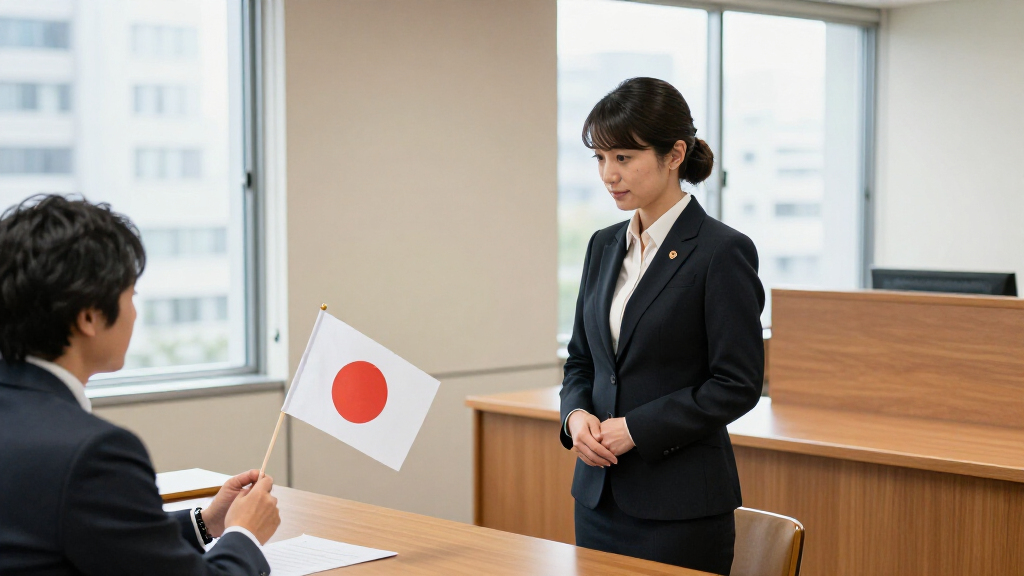
Wessman writes that he had considered applying for a long time before visiting the bureau for another matter in 2012. He went to the department handling naturalization and spoke with a Ministry of Justice official. The meeting covered questions such as his nationality, years in Japan, marital status and family situation. Wessman says he was proud of his Japanese fluency, community involvement and work in Japanese politics, but that the official focused on explaining the process rather than recognizing those accomplishments.
The paperwork he recalls included birth and marriage records for himself and relatives, a history of every address where he had lived, his education from preschool onward, and a complete employment history. He says English-language documents had to be submitted in their original form with Japanese translations and a certificate attesting to translation accuracy. Japanese documents, he writes, were submitted as an original and a copy.
His account also lists records related to his wife, children, household income and spending, loans, bank accounts, taxes, health insurance, pension payments and traffic violations. Because he operated a company, he says he was asked for business records, including financial statements, tax-payment proof, registration documents and information about clients. Wessman cautions that this is his recollection, not a standard checklist: he says the required documents depend on each applicant’s circumstances.
The Paperwork Behind Naturalization
Wessman’s account offers a personal view of the administrative demands involved in seeking Japanese citizenship. It illustrates how an application may reach beyond an applicant’s own identity and residence records to cover family relationships, household finances and business compliance. Those details may help readers understand why preparation can take substantial effort, while his post is not a substitute for official instructions.
The post also underscores a practical point for prospective applicants: paperwork requirements and procedures should be confirmed with the relevant authorities. Wessman explicitly advises readers to consult their local Legal Affairs Bureau and follow guidance from the Ministry of Justice, rather than treat a personal blog as authoritative. His account is useful as an experience report, but it cannot establish what any other applicant will be asked to provide.
Japanese naturalization application form
As an affiliate, we earn on qualifying purchases.
As an affiliate, we earn on qualifying purchases.
Wessman’s 2012 Application Start
Wessman says he first visited the naturalization department in 2012, when he was at a Legal Affairs Bureau for an unrelated reason. He describes an official accommodating an initial consultation, which he says would not happen in the same way today. He also recalls the Hachioji bureau then being located in Minami Osawa and says it later returned to the central area near the courthouse.
He characterizes the process as lengthy, documentation-heavy and partly reliant on official judgment. That characterization is Wessman’s assessment, not a formal statement of policy quoted from the Ministry of Justice. He also says applications had become more numerous since his first visit, but the post supplies no figures or time period to quantify that observation.
“I became a citizen of Japan.”
— Derek Wessman, in his blog post
Japanese translation certification services
As an affiliate, we earn on qualifying purchases.
As an affiliate, we earn on qualifying purchases.
Approval Date and Current Rules
The post does not state when Wessman’s citizenship was granted, how long his own application took, or what final steps followed the document-gathering stage. It also does not provide official records confirming the outcome. The details are presented as a mixture of personal recollection, opinion and facts, and Wessman says he cannot separate those categories sentence by sentence.
It is also unclear which parts of the document list applied specifically to Wessman and which might be required of other applicants. He acknowledges that his memory of some details is hazy and urges readers to obtain case-specific instructions from the Legal Affairs Bureau. The post gives no current official checklist or current processing-time estimate.
As an affiliate, we earn on qualifying purchases.
Applicants Should Seek Official Guidance
Wessman’s post identifies no scheduled follow-up announcement or next milestone in his own case. For people considering naturalization, his stated next step is to consult the local Legal Affairs Bureau and follow the instructions provided there. The Ministry of Justice is the official source he points readers toward; applicants should confirm current requirements directly rather than assume the documents in his account apply to them.
As an affiliate, we earn on qualifying purchases.
Key Questions
What does Derek Wessman say happened?
Wessman says he became a citizen of Japan. He describes beginning the naturalization process at a Legal Affairs Bureau in 2012, but does not state the date his citizenship was granted.
What documents did he say he had to gather?
His recollection includes identity and family records, residence and education histories, employment details, tax and insurance records, household finances, bank information and company documents. He says requirements are individual and his list should not be treated as a universal checklist.
How long did his application take?
The blog post does not give the duration of Wessman’s application. He describes the process as taking at least a year, but that is his characterization, not a case-specific timeline supplied in the account.
Where should prospective applicants get current requirements?
Wessman advises prospective applicants to consult their local Legal Affairs Bureau and follow official guidance from the Ministry of Justice, rather than rely on his personal account.
Source: hn
Halloween Picks
halloween
As an affiliate, we earn on qualifying purchases.