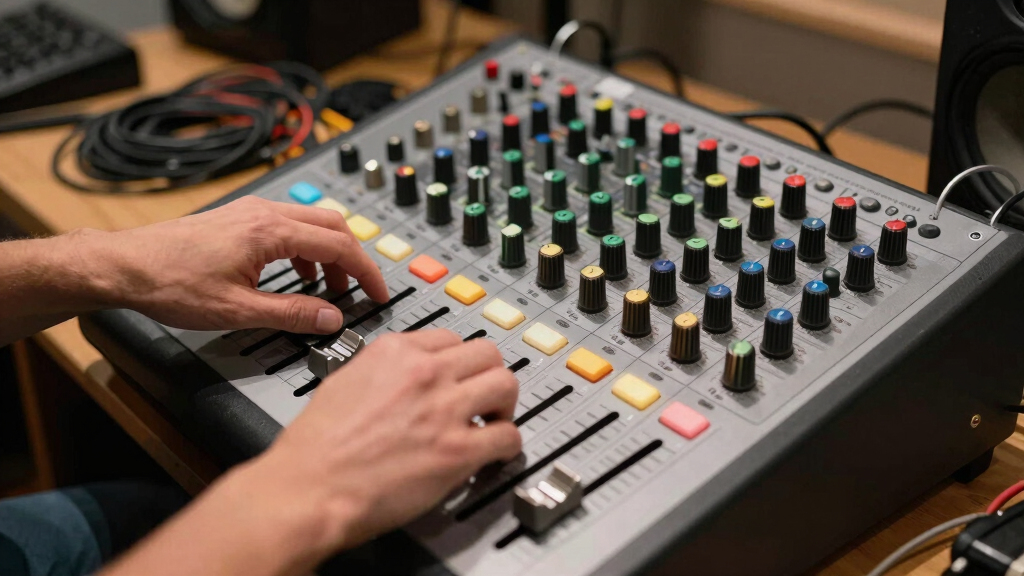
If you’re searching for the best 16 channel mixer in 2026, you’re likely balancing multiple needs—whether for live sound, recording, or DJ setups. The Mackie ProFX16v3 stands out for its versatility and built-in effects, making it ideal for small venues and home studios. The Yamaha MG16XU offers premium sound quality with effects, suitable for professional use. Meanwhile, the ALTO TMD16 brings digital features and app control at a more affordable price point. These options highlight the main tradeoffs: higher-end models offer more features and durability, but at a steeper cost, while budget options may lack advanced controls. Keep reading to see how these picks compare across key factors to help you find the perfect fit.
Key Takeaways
- Top-tier models like Mackie ProFX16v3 and Yamaha MG16XU combine extensive I/O with onboard effects, suited for serious users.
- Digital mixers such as ALTO TMD16 excel with app control and touchscreen interfaces, ideal for modern live setups.
- Budget-friendly options still deliver core mixing functions, but often sacrifice advanced features and build quality.
- The presence of effects, USB recording, and Bluetooth varies widely, and should align with your intended use.
- Durability and ease of use are consistent differentiators, with premium models offering better longevity and more intuitive controls.


More Details on Our Top Picks
Mackie ProFX16v3 16-channel Mixer with USB and Effects
The Mackie ProFX16v3 stands out for offering professional-quality features at an affordable price, including Onyx mic preamps with 60dB of gain and a robust effects engine with 24 built-in FX. Compared to the ALTO TMD16, it provides more comprehensive connectivity options and higher-resolution USB recording (24-bit/192kHz), making it ideal for both live sound and home recording. Its simple single-knob compression streamlines control, but the mixer’s size (17.7″ x 17.1″ x 4.41″) might be less portable for mobile setups. The inclusion of Waveform OEM software enhances its appeal for content creators, and the mix quality is generally clear and reliable. However, it lacks Bluetooth streaming, which is a feature more prominent on the ALTO TMD16.
This pick makes the most sense for users seeking a versatile, feature-rich mixer that balances sound quality, recording capability, and effects for both live and studio use.Pros:- Professional Onyx mic preamps with high headroom
- 24-bit/192kHz USB recording with zero-latency monitoring
- 24 built-in effects for versatile sound shaping
- Includes Waveform OEM recording software
Cons:- Relatively large size, less portable for mobile use
- No Bluetooth streaming capability
- Advanced features may be more than needed for simple setups
Best for: Musicians, content creators, and live sound technicians needing a reliable all-in-one mixer with USB recording and effects.
Not ideal for: Mobile performers or small venue setups where portability is critical, due to its larger footprint and weight.
- Number of Channels:16
- Connectivity Technology:USB
- Frequency Response:192kHz
- Built-in Effects:24 FX
- Power Source:Corded Electric
- Dimensions:17.1″ D x 17.7″ W x 4.41″ H
Bottom line: Ideal for users who want a comprehensive mixer with excellent recording and effects for both live and studio applications.
The W IN-MIX DX16 is tailored for DJ and stage performers, offering 14 XLR/6.35 mono inputs plus 2 stereo channels, with independent +48V phantom power on each, making it suitable for microphones and instruments. It excels with its 99 DSP effects and a 7-band EQ, giving DJs and performers extensive control over their sound. Compared to the Yamaha MG16XU, it provides more effects options and Bluetooth connectivity for wireless audio playback, which is a top feature for live shows. Its compact size (15.75″ x 21.85″ x 4.92″) makes it portable, but the interface and controls can be complex for beginners. It also includes USB recording, but the interface’s extensive controls may be overwhelming for casual users.
This is best suited for professional DJs and performers needing versatile effects, Bluetooth, and real-time recording for live events.Pros:- 99 DSP effects and 7-band EQ for versatile sound shaping
- Bluetooth connectivity for wireless audio streaming
- Multiple mono and stereo inputs with independent phantom power
- USB interface for recording and playback
Cons:- Complex interface may be challenging for beginners
- Larger size could limit portability for some users
- Some features may be underutilized in basic setups
Best for: Professional DJs, stage performers, and event organizers requiring multiple inputs, effects, and recording capability.
Not ideal for: Home users or small acoustic setups that don’t need extensive effects or multiple channels, as the complexity might be unnecessary.
- Number of Channels:16
- Connectivity Technology:Bluetooth, USB
- EQ Bands:7
- Phantom Power:48V
- Dimensions:15.75″ D x 21.85″ W x 4.92″ H
- Effects:99 DSP
Bottom line: Best for professional DJs and stage acts that need extensive effects, flexible inputs, and wireless streaming with recording options.
Mackie Onyx Series, 16-Channel Premium Analog Mixer with Multi-Track USB (Onyx16)
The Mackie Onyx16 is designed for users seeking top-tier sound quality, featuring high-resolution 96kHz / 24-bit multi-track USB recording directly to Mac/PC, a feature that sets it apart from many analog mixers. Its award-winning Onyx mic preamps with 60dB gain and Perkins British-style EQ deliver warm, professional tones. Compared to the Mackie ProFX16v3, it emphasizes higher audio fidelity and more advanced EQ options. Its all-analog interface with digital recording capabilities offers a straightforward workflow, but lacks onboard effects and Bluetooth, limiting versatility for some live applications. The build quality is robust, and the direct-to-SD card recording adds flexibility for field recordings. However, the absence of digital effects or Bluetooth might make it less appealing for multimedia use.
This model makes sense for musicians and audio engineers prioritizing studio-quality recording and premium analog sound with straightforward operation.Pros:- 96kHz / 24-bit multi-track USB recording
- High-quality Onyx mic preamps with 60dB gain
- British-style Perkins EQ for warm tone
- Robust build quality and direct SD card recording
Cons:- No onboard effects or Bluetooth streaming
- Limited to analog controls for EQ and gain
- Higher price point compared to standard digital mixers
Best for: Musicians, recording engineers, and producers needing high-fidelity multi-track USB recording with premium preamps and EQ.
Not ideal for: Live DJs or performers who rely heavily on onboard effects and wireless streaming, as this model focuses on recording quality over effects.
- Number of Channels:16
- Sample Rate:96kHz
- Recording Type:Multi-Track USB
- EQ:Perkins British-style
- Connectivity:XLR
- Build Quality:Robust
Bottom line: Ideal for high-end studio applications and live recordings where audio fidelity and preamp quality are paramount.
ALTO TMD16 16-Channel Digital Mixer with Bluetooth and 7″ Display, Capacitive Touchfaders, EQ and FX, App Control, for Live Sound Mixing in Small Venues and Practice Spaces
The ALTO TMD16 offers an intuitive digital mixing experience with a 7-inch capacitive touch display and tactile 100mm faders, making it accessible for newcomers and small venue operators. Its onboard studio processing includes parametric EQ, compression, and a 16-preset FX engine, providing professional sound shaping without extra gear. Compared to the Yamaha MG16XU, it emphasizes touch control and app-based remote operation, simplifying setup and adjustments. Bluetooth streaming, USB recording, and instant scene recall make it versatile for live performances, rehearsals, or worship services. Its durable metal chassis and lightweight design favor mobile use, though advanced users might find it less flexible than higher-end models. The interface’s simplicity is a benefit but can limit complex routing options.
This pick makes sense for beginners, small venue operators, and those who want fast, reliable setup in a compact form.Pros:- 7-inch touchscreen display with capacitive touchfaders
- Built-in parametric EQ, compression, and FX engine
- Scene recall for quick setup
- Bluetooth and USB recording capabilities
Cons:- Limited routing flexibility compared to larger mixers
- Touchscreen can be less tactile for detailed adjustments
- Less suited for complex live setups
Best for: Beginners, small venue operators, and worship leaders seeking straightforward digital control with Bluetooth and scene recall.
Not ideal for: Professional sound engineers or users requiring extensive routing and advanced effects customization, due to simplified interface.
- Number of Channels:16
- Display:7″ Color Touchscreen
- Effects:16 Presets
- Connectivity:Bluetooth, USB
- Fader Type:Capacitive Touch
- Build Material:Metal
Bottom line: Best suited for novices and small venues that need quick, reliable digital mixing with modern controls.
16 Channel Audio Mixer Professional Sound Mixing Board with 99 DSP Effects, 7-band EQ Digital DJ Mixer Console w/USB Bluetooth MP3 for Recording, Independent 48V Power & Mute Button
The 16 Channel Audio Mixer provides an impressive array of features tailored for DJs and live sound, including 99 DSP effects and a 7-band EQ for precise control. Its USB and Bluetooth functionalities support seamless playback and recording, making it versatile for performances, karaoke, and parties. Compared to the ALTO TMD16, it offers more effects options and dedicated controls for EQ and effects, though its interface may be more complex for beginners. Its independent gain, EQ, AUX, and PAN controls on each channel support detailed sound shaping, but the size (14.68″ x 22.16″ x 3.85″) makes it slightly less portable. The built-in MP3 player/recorder enhances its multimedia capabilities, but some users might find the extensive controls overwhelming.
This model is best for DJs, karaoke hosts, and event organizers seeking a feature-packed mixer with effects and recording in a portable form.Pros:- 99 DSP effects and 7-band EQ for detailed tone control
- Bluetooth streaming and MP3 recording/playback
- Multiple inputs with independent gain and EQ
- Compact and portable design
Cons:- Interface may be complex for first-time users
- Less suitable for very simple setups
- Size could limit transportability for some
Best for: DJs, karaoke hosts, and event technicians requiring extensive effects, Bluetooth playback, and recording functions.
Not ideal for: Basic home or acoustic performers who do not need advanced effects or multiple channels, as the feature set may be excessive.
- Number of Channels:16
- Effects:99 DSP
- EQ Bands:7
- Connectivity:Bluetooth, USB
- Dimensions:14.68″ D x 22.16″ W x 3.85″ H
- Power Source:Corded Electric
Bottom line: Perfect for DJs and live performers who want versatile effects, recording, and wireless playback in a portable package.
16 Channel Mixer, Professional Audio Mixing Console Studio DJ Board with Bluetooth, 99 DSP Effect,USB Recording, 48V Phantom Power, Reverb, MP3 Player for Live Sound Karaoke Performance
This mixer stands out for its extensive connectivity options, including Bluetooth and USB, which makes it ideal for live performances and recording sessions. Compared with the Yamaha MG16XU, it offers more digital effects and multi-source mixing, but this added versatility comes with a slightly steeper learning curve. The built-in 99 DSP effects and three-band EQ provide impressive control over vocal and instrumental effects, enhancing overall sound quality. Its user interface is intuitive thanks to clearly labeled controls, making it suitable for both beginners and pros who need flexible input sources. The +48V phantom power ensures compatibility with condenser mics, while the auxiliary outputs expand connectivity to external devices. The tradeoff? Its size and weight are less portable than smaller models, and some users note that the digital effects can be complex to master initially. Overall, this model makes the most sense for performers or streamers who require multi-source input, live sound flexibility, and recording options in one device.Pros:- Supports Bluetooth, USB, and multiple input sources for versatile connectivity
- Includes 99 DSP effects, offering extensive sound shaping options
- Independent gain and EQ controls per channel for precise customization
- Built-in 48V phantom power for condenser microphones
Cons:- Relatively heavy and bulky, less portable for mobile use
- Digital effects can be complex for beginners to fully utilize
- Lacks a dedicated display for detailed settings, relying on LED indicators
Best for: Musicians, DJs, or streamers needing flexible multi-source input and live recording capabilities.
Not ideal for: Travelers or small venue owners seeking a lightweight, space-saving solution due to its weight and size.
- Number of channels:16
- Connectivity technology:Bluetooth, USB
- Power source:Corded Electric
- Frequency response:30 KHz
- Output connector type:XLR
- Dimensions:25″D x 13.39″W x 1.46″H
- Item weight:14.66 kilograms
- Warranty:30-Day return, 1-year manufacturer
Bottom line: This mixer is ideal for users needing comprehensive input options and effects for live and recording scenarios, despite its size and complexity.
Yamaha MG16XU 16-Input 6-Bus Mixer with Effects
This model is distinguished by its high-end D-PRE discrete class-A preamps, offering a warm, natural sound that rivals professional studio equipment. Compared to the other Yamaha (B0FZBJCDD7), it emphasizes pristine audio quality with a focus on durability, thanks to its impact-resistant metal chassis. The built-in SPX digital effects and 3-band EQ provide comprehensive tone shaping, making it suitable for studio recording and live sound with a more straightforward user interface. Its rugged construction and impact resistance make it ideal for touring or mobile use, though it sacrifices some digital connectivity options found in more modern models. The single-knob compressors add to its appeal for acoustic and vocal clarity, but the lack of extensive digital effects or Bluetooth limits its multimedia flexibility. Overall, this is perfect for users who prioritize sound purity and durability over multi-source wireless connectivity.Pros:- Studio-grade discrete D-PRE preamps deliver warm, natural sound
- Impact-resistant, rugged metal chassis suitable for touring
- Built-in SPX effects with 24 presets and 3-band EQ for precise tone control
- Includes 1-knob compressors for easy dynamic control
Cons:- Lacks Bluetooth and USB connectivity for multi-source digital input
- Heavier and less portable than smaller mixers
- No onboard digital display; relies on LED indicators
Best for: Studio engineers, live sound technicians, or musicians who prioritize pristine audio quality and rugged durability.
Not ideal for: Beginners or mobile performers who need extensive wireless options or compact size due to its heft and limited digital features.
- Number of channels:16
- Connectivity technology:XLR, ¼” inputs
- Power source:Corded Electric
- Frequency response:20Hz-30kHz
- Output connector type:XLR, Phone
- Item weight:9.3 kilograms
- Warranty:1 year
- Built-in effects:SPX Digital
Bottom line: This mixer excels in delivering studio-quality sound with durable construction, ideal for fixed installations and serious recording needs.
Yamaha Mixer-Unpowered, Multicolored, 16-Input (MG16X CV)
This unpowered version emphasizes durability and simplicity, housed in a rugged steel chassis that withstands tough environments. It offers 16 inputs with discrete Class-A preamps, similar to the powered MG16XU but without onboard power. Compared to the powered model, it requires external amplification but provides excellent sound clarity for fixed installations or studio use. Its straightforward layout with lit switches and faders makes it suitable for those who prefer tactile control without digital effects or wireless features. The absence of effects and digital connectivity limits its versatility, but this tradeoff results in a more robust, easy-to-maintain unit. Its durability makes it suitable for touring or outdoor events, though it’s not ideal for users seeking digital effects or wireless streaming. Overall, it’s perfect for those who prioritize ruggedness and straightforward analog control.Pros:- Rugged steel chassis for high durability in demanding environments
- Discrete Class-A preamps for clear, natural sound
- Simple, tactile controls with lit switches and faders
- Ideal for fixed installations or outdoor use
Cons:- No onboard effects or digital connectivity
- Requires external power amplifier
- Limited modern feature set compared to powered models
Best for: Outdoor performers, touring sound engineers, or users seeking a durable, unpowered mixer for fixed or mobile setups.
Not ideal for: Home users or digital content creators needing effects, Bluetooth, or USB input due to its lack of digital features.
- Number of channels:16
- Connectivity technology:XLR, ¼”
- Power source:Unpowered
- Frequency response:Not specified
- Item weight:9.3 kilograms
- Build:Steel chassis
- Input type:Discrete Class-A preamps
Bottom line: This unpowered mixer offers unmatched durability and clarity for rugged environments but lacks digital versatility, making it ideal for fixed outdoor or touring setups.
Depensheng DX16 DJ Sound Controller Interface w/USB Drive for Computer Recording 16-Channel Studio Audio Mixer – XLR Microphone Jack, 48V Power, RCA Input/Output for Professional and Beginners
This mixer offers a surprisingly functional setup for beginners, with 16 channels and basic RCA and XLR inputs, making it suitable for simple recording and small live setups. Compared to the Yamaha MG16XU for its price, it provides essential features but lacks advanced effects and digital connectivity, limiting versatility. Its straightforward interface with basic controls makes it accessible for newcomers, but it does not support Bluetooth or extensive digital effects. The inclusion of 48V phantom power is a plus for condenser mics, yet the overall build and sound quality are more modest. The main tradeoff is its limited feature set, which may not satisfy more demanding users. Overall, it’s best suited for entry-level users or small projects where affordability outweighs advanced features.Pros:- Affordable price point for entry-level users
- Supports 16 channels with XLR and RCA inputs
- Includes 48V phantom power for condenser microphones
- Simple, easy-to-use interface suitable for beginners
Cons:- Limited effects and digital connectivity options
- Basic build quality and sound processing
- Lacks advanced features like Bluetooth or USB recording
Best for: Beginners or small project studios needing a basic, affordable mixer with microphone support.
Not ideal for: Professional performers or content creators requiring effects, Bluetooth, or multi-source digital input due to its simplicity.
- Number of channels:16
- Connectivity technology:XLR, RCA
- Power source:Not specified
- Input type:XLR, RCA
- Phantom power:Yes
- Dimensions:Not specified
Bottom line: This mixer is an excellent choice for beginners needing a straightforward, affordable solution for small recording or live setups, despite its limited features.
XTUGA 16 Channel Audio Mixer, Professional Sound Board Mixer, DJ Mixing Console System Audio Interface,48V Phantom Digital Effect for PC Podcast Studio Karaoke Streaming Live Recording(CT160)
The XTUGA CT160 stands out for its impressive compatibility across multiple devices, including iOS, Android, and PCs, making it highly adaptable for various setups. Compared with the Depensheng DX16, it offers more seamless Bluetooth integration and support for MP3 playback via USB, which enhances convenience during live performances or podcast recordings. Its low-noise, professional-grade XLR inputs with +48V phantom power ensure clean audio, suitable for studio quality recordings or streaming. The ultra-slim, durable design with sealed rotary knobs adds reliability in mobile or stage environments, but this slim profile might limit some physical controls for advanced users. The built-in Bluetooth and MP3 features make it ideal for users who need quick, wireless access to multiple sources without sacrificing sound clarity. However, it could be less suitable for those seeking extensive onboard effects or a more traditional analog interface. Overall, this mixer provides a balanced blend of versatility and sound quality, making it perfect for podcasters, mobile DJs, and streamers who prioritize ease of use and connectivity.
Pros:- Supports multi-device Bluetooth streaming and USB MP3 playback for flexible source management
- Professional-grade XLR inputs with +48V phantom power ensure clean, interference-free sound
- Slim, durable design with sealed rotary controls enhances portability and reliability
Cons:- Limited onboard effects and processing features compared to more advanced mixers
- Some users may find the control layout less intuitive for complex setups
Best for: Content creators and mobile performers who need versatile device compatibility and high-quality audio in a compact form.
Not ideal for: Professional studio engineers seeking extensive onboard effects and advanced signal processing options.
- Channels:16
- Phantom Power:+48V
- Connectivity:Bluetooth, USB MP3, XLR
- Build:Slim, durable metal casing
- Size:1.4 inches thick
- Audio Quality:High-definition professional sound
Bottom line: This mixer is ideal for users who need a portable, high-quality sound solution with broad device connectivity.
Depensheng DX16 DJ Sound Controller Interface w/USB Drive for Computer Recording 16-Channel Studio Audio Mixer – XLR Microphone Jack, 48V Power, RCA Input/Output for Professional and Beginners
The Depensheng DX16 makes a compelling choice for those new to mixing or looking for an easy-to-use interface with solid performance. Unlike the XTUGA CT160, which emphasizes device compatibility and high-end features, the DX16 offers straightforward controls with built-in 3-band EQ, LED peak indicators, and simple Bluetooth streaming, making it accessible for beginners and smaller setups. Its rugged, ultra-thin chassis ensures durability without bulk, but it may lack some of the advanced connectivity options found in the XTUGA. The combination of XLR and unbalanced 1/4″ inputs supports both professional and casual use, from live gigs to home studio recording. The intuitive controls for track switching and mode selection provide an immediate learning curve, yet it might fall short for advanced users needing comprehensive effects or digital integration. Overall, this mixer serves well for those starting out or needing a reliable, multi-purpose device that balances simplicity with professional features.
Pros:- Ease of use with simple controls and integrated EQ suitable for beginners
- Supports Bluetooth streaming and USB drive playback for flexible source options
- Compact, rugged design ideal for mobile performances and small setups
Cons:- Limited onboard effects and digital processing compared to higher-end models
- Less flexible connectivity options may restrict complex routing or multi-source mixdowns
Best for: Beginners, small venue performers, and home studio enthusiasts seeking straightforward operation with decent feature set.
Not ideal for: Experienced sound engineers or professionals requiring extensive onboard effects, complex routing, or digital effects processing.
- Channels:16
- Phantom Power:Yes
- Connectivity:Bluetooth, USB, XLR, RCA
- Built-in EQ:3-band
- Size:Ultra-thin chassis
- Controls:Sealed rotary knobs, LED peak indicators
Bottom line: This mixer is a smart pick for newcomers and small-scale performers who want reliable, easy-to-operate equipment without sacrificing essential features.
How We Picked
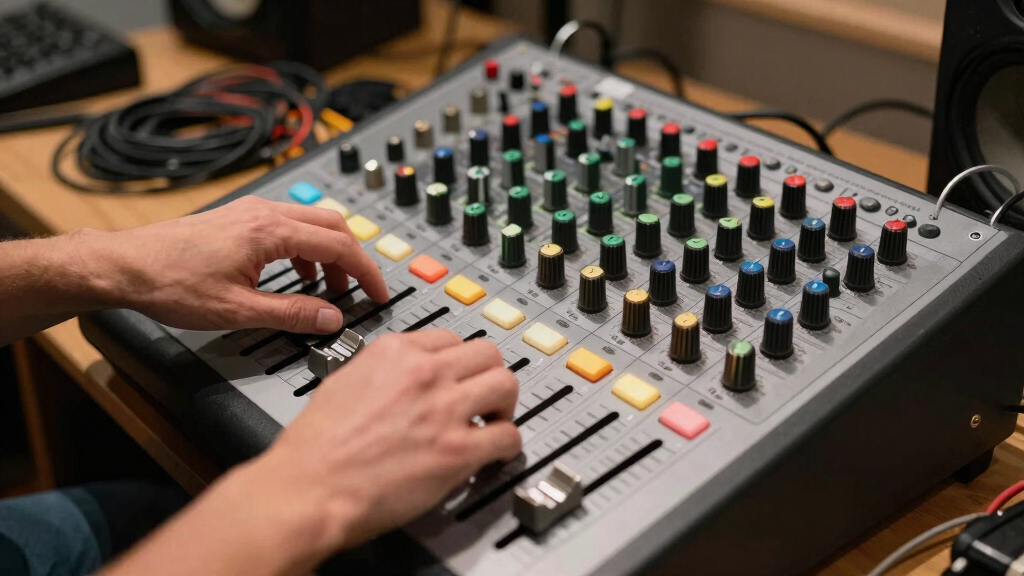
Our evaluation focused on performance, build quality, ease of use, and value for money. We selected products that represent the full spectrum of the 16-channel mixer market, from entry-level to professional-grade options. Each product was assessed on its connectivity options, onboard features like effects and USB recording, user interface, and overall durability. The rankings reflect a balance between feature set, price point, and target user needs, ensuring that both beginners and seasoned professionals find suitable choices. We prioritized models that offer reliable operation across different applications, whether for live sound, studio recording, or DJ setups.Factors to Consider When Choosing Best 16 Channel Mixer
Choosing the right 16 channel mixer depends on several key factors. Beyond just the number of channels, consider how the mixer fits into your existing setup, your skill level, and your budget. Features like onboard effects, USB recording, and digital controls can dramatically influence your workflow. It’s also important to think about build quality and future-proofing—will the mixer serve your needs as they grow? Understanding these broader considerations can help you avoid common pitfalls and select a model that offers the best balance of features and value for your specific use case.Connectivity and I/O Options
Look for a mixer that provides enough inputs and outputs for your setup, including XLR, TRS, and RCA connections. Consider whether you need direct USB or digital outputs for recording or streaming, which can simplify your workflow. Overlooking this can lead to frustrations or the need for additional adapters. Also, check if the mixer supports Bluetooth or other wireless options if you plan to connect smartphones or tablets. A well-rounded set of I/O options ensures flexibility and future expansion.
Built-in Features and Effects
Onboard effects like reverb, delay, or EQ can enhance your sound without external gear. However, more effects and control options often come with higher prices and complexity. If you’re a beginner, prioritize simplicity and intuitive controls; professionals may benefit from advanced routing and multiple effect presets. Beware of models that overpromise but underdeliver on quality—it’s better to have fewer, high-quality effects than a long list of mediocre ones. Matching effects to your specific needs will save time and improve your final output.
Digital vs Analog Control
Digital mixers often feature touchscreen interfaces, app control, and more precise parameter adjustments, making them appealing for modern workflows. Analog mixers, on the other hand, typically offer more tactile control and faster access to basic functions—valuable in live settings. Consider your comfort with digital interfaces and whether remote control via apps is a priority. Digital models can be more fragile and expensive to repair but offer greater flexibility; analog units tend to be more durable and straightforward but less feature-rich.
Build Quality and Durability
If you plan to transport your mixer frequently or use it in rugged environments, durability becomes a top concern. Metal chassis, sturdy knobs, and reliable fader mechanisms are signs of a well-built model. Cheaper plastics or flimsy controls may save money initially but can lead to problems over time. Remember, a solid build saves money in repair costs and downtime, especially for professional use or touring. Balance your budget with the need for longevity and reliability.
Price and Value for Money
While it might be tempting to pick the most affordable option, investing in a higher-quality mixer can pay off through better sound quality, more features, and longer lifespan. Consider whether the extra cost aligns with your current needs and future plans. Sometimes, paying a bit more upfront provides a significantly better user experience and fewer frustrations. Conversely, if your use is casual or temporary, a budget model might suffice, but expect to compromise on some features and durability.
Frequently Asked Questions
Can I use a 16 channel mixer for podcasting?
Absolutely. A 16 channel mixer provides ample inputs for multiple microphones, instruments, and external devices, making it suitable for podcasting setups. Look for models with USB interfaces to record directly to your computer and features like headphone monitoring for real-time audio checks. Choosing a mixer with good preamps and minimal noise will also enhance your audio quality. Even entry-level options can be effective if they meet these basic requirements.
Is a digital mixer worth the extra cost over an analog one?
Digital mixers often deliver more versatility, with features like remote control, built-in effects, and easy scene recall, which can be a significant advantage for complex setups. They also typically include integrated recording capabilities. However, they tend to be more expensive and can have a steeper learning curve. If you prefer tactile controls and simplicity, an analog mixer might be more straightforward and durable. The choice depends on your workflow preferences and whether the added features justify the cost for your needs.
What should I consider if I want to upgrade my existing mixer?
Start by evaluating what features are missing from your current setup—more channels, better effects, digital connectivity, or improved build quality. Consider the compatibility with your existing equipment and whether the new mixer offers future-proof features like USB recording or app control. Also, think about your space and portability needs; a larger mixer might not be practical for mobile use. Upgrading should align with your evolving requirements to ensure a worthwhile investment.
Are budget mixers reliable for professional use?
Lower-cost mixers can perform well for casual or semi-professional applications but often sacrifice durability, sound quality, or features needed for demanding environments. If you plan to use your mixer regularly in live performances or recordings, investing in a more robust, higher-end model can prevent frustrations and equipment failure. However, some budget options with good reviews can suffice for small venues or home studios, provided you don’t push their limits too hard.
How important is brand reputation when choosing a 16 channel mixer?
Brand reputation can be a helpful indicator of quality, support, and long-term reliability. Companies like Yamaha, Mackie, and ALTO have established histories of producing durable, high-performing equipment. However, newer or lesser-known brands may offer innovative features or better prices. It’s wise to read reviews and assess warranty and support options regardless of brand, ensuring you choose a mixer that meets your specific needs and provides peace of mind during operation.
Conclusion
The best overall pick for most users is the Mackie ProFX16v3 thanks to its balance of features, durability, and value. For those prioritizing sound quality and professional features, the Yamaha MG16XU stands out. Beginners or those on a tighter budget might prefer the ALTO TMD16 for its digital interface and ease of use. If portability and modern control options are key, digital models like ALTO or XTUGA provide excellent options. Ultimately, your choice should match your specific application, budget, and future needs, ensuring smooth operation now and later.