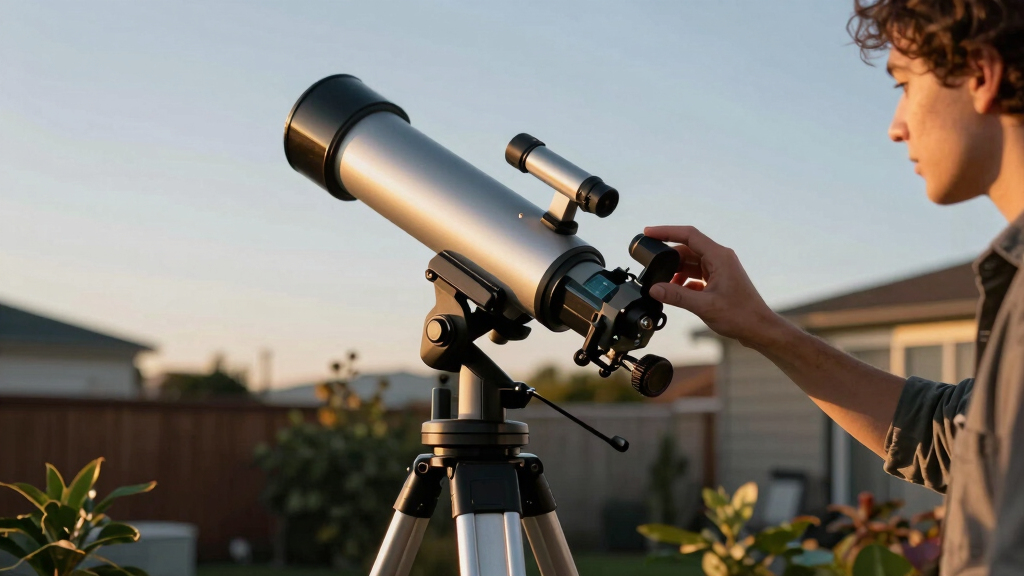

Searching for the best computerized telescope in 2026? The ideal choice depends on your experience level, budget, and what you want to observe. The Celestron NexStar 6SE stands out as the overall top pick, offering a blend of power and user-friendliness. For portability and astrophotography, the DWARFLAB Dwarf 3 provides advanced features in a compact form. Meanwhile, the Celestron NexStar 8SE delivers larger aperture and greater detail for more serious stargazers. Each option involves tradeoffs—more features often mean a higher price or increased complexity. Keep reading to see how these models compare and which fits your needs best.

Get the little things that make your day delivered free — and shop member deals
- Fast, free delivery on millions of items
- Access to Prime Big Deal Days deals on October 6–7
- Prime Video, Amazon Music and more included
Key Takeaways
- The best computerized telescopes balance ease of use with advanced features, making them suitable for a range of users.
- A larger aperture generally improves image detail, but can add to size, weight, and cost.
- Portability is crucial for mobile astronomers or those with limited storage space, often requiring lighter models.
- Smartphone compatibility and app integration significantly enhance user experience, especially for beginners.
- Higher-end models offer more automation and database objects but come at a premium, making budget considerations vital.


More Details on Our Top Picks
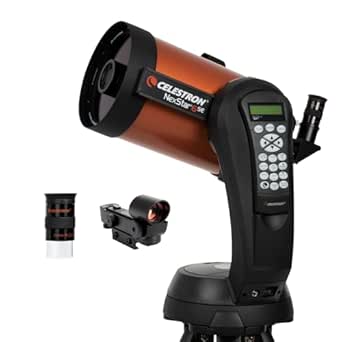
Celestron NexStar 6SE Computerized Telescope – 6-Inch Schmidt-Cassegrain Optical Tube – Fully Automated GoTo Mount with SkyAlign – Ideal for Beginners and Advanced Users – 40,000+ Object Database
This model stands out for balancing powerful optics with user-friendly automation, making it a top choice for both beginners and experienced astronomers. Its 6-inch Schmidt-Cassegrain optics gather ample light to reveal lunar surface details, planetary cloud bands, and faint galaxies, outperforming smaller scopes like the NexStar 4SE in light collection. Compared to more advanced mounts, the fully automated GoTo with SkyAlign ensures quick setup without star charts, but the larger size does add weight and bulk, which might challenge portability. The SkyAlign system simplifies initial setup, yet it can occasionally struggle with precise alignment in less-than-ideal conditions. Its compatibility with Celestron accessories offers upgrade paths, though that may come with extra costs. Overall, this telescope is best for serious hobbyists who want a reliable, mid-sized scope capable of deep-sky viewing without complex manual alignment.
Pros:- Large 6-inch aperture delivers bright, detailed images of the Moon, planets, and deep-sky objects
- Fully automated GoTo system with SkyAlign for quick, star-chart-free setup
- Compact and portable for an 8-inch scope, easy to carry to dark sky sites
Cons:- Heavier and bulkier than smaller or refractor models, reducing portability
- More expensive than entry-level scopes, with additional costs for accessories
Best for: Intermediate to advanced amateur astronomers seeking a versatile, powerful telescope that balances ease of use with deep-sky capability.
Not ideal for: Travelers and casual stargazers who prioritize portability over aperture or those who dislike bulk, as the 6-inch Schmidt-Cassegrain is relatively heavy and less compact.
- Optical Tube Diameter:6 inches
- Optical Design:Schmidt-Cassegrain
- Mount Type:Fully automated GoTo
- Object Database:40,000+
- Alignment System:SkyAlign
- Weight:20 lbs
Bottom line: This scope makes the most sense for dedicated amateur astronomers who want a powerful, all-around capable telescope that balances performance and ease of use.
Celestron – 114LCM Computerized Newtonian Telescope – Telescopes for Beginners – 2 Eyepieces – Full-Height Tripod – Motorized Altazimuth Mount – Large 114mm Newtonian Reflector
This pick shines for offering a large 114mm aperture at a budget-friendly price, making it ideal for newcomers who want quick, automated star hunting. Its computerized GoTo mount can automatically locate over 4,000 celestial objects, rivaling the more expensive NexStar 6SE but with a simpler Newtonian design that’s easier to transport and set up. The included full-height tripod and two quality eyepieces provide a complete starter package, and the Sky Tour feature simplifies choosing targets in real-time. However, compared to the NexStar 6SE, the Newtonian’s optical quality and light-gathering power are slightly less refined, and its manual operation can be less stable when aiming at faint objects. This scope is perfect for beginners wanting a straightforward, portable system that doesn’t compromise on aperture.
Pros:- Large 114mm aperture captures bright, detailed views of the Moon and planets
- Automatic object location with over 4,000 celestial targets in database
- Portable, lightweight design suitable for outdoor adventures
Cons:- Newtonian optics can require more maintenance or collimation over time
- Less refined image quality compared to Schmidt-Cassegrain scopes at similar price points
Best for: Beginners and casual astronomers who want a large aperture and automated features in a portable, affordable package.
Not ideal for: Advanced users or astrophotographers seeking high-precision tracking or deep-sky imaging, as the Newtonian design and mount have limitations in stability and tracking accuracy.
- Optical Tube Diameter:114mm
- Optical Design:Newtonian Reflector
- Mount Type:Motorized Altazimuth
- Object Database:4000+
- Included Eyepieces:25mm & 9mm
- Tripod:Full height
Bottom line: This telescope offers excellent value for beginners who prioritize aperture size and ease of use in a portable system.
Celestron NexStar 4SE Computerized Telescope – 4-Inch Maksutov-Cassegrain Optical Tube – Fully Automated GoTo Mount with SkyAlign – Ideal for Beginners and Advanced Users – 40,000+ Object Database
This model makes the most sense for users seeking a compact yet capable telescope, especially for planetary viewing and lunar detail. Its 4-inch Maksutov-Cassegrain optics produce high-contrast, sharp images of planets, rivaling larger scopes in planetary clarity. The fully automated GoTo system with SkyAlign makes setup quick, similar to the NexStar 6SE, but the smaller aperture limits deep-sky performance. This scope is lighter and easier to transport, ideal for those who want a portable system for quick sessions or travel. However, the smaller aperture means less light gathering for faint galaxies or nebulae, and it lacks the deep-sky capabilities of larger models like the NexStar 8SE. It’s best for planetary lovers or those with limited space.
Pros:- High-contrast 4-inch Maksutov-Cassegrain optics provide detailed planetary views
- Compact, lightweight, easy to transport for quick observing sessions
- Automated GoTo with SkyAlign for fast setup
Cons:- Limited light-gathering power restricts deep-sky object viewing
- Smaller aperture means less brightness for faint objects
Best for: Beginners or seasoned users who focus on planetary and lunar observation and need a portable, high-contrast optical system.
Not ideal for: Deep-sky enthusiasts or astrophotographers seeking extensive deep-sky object viewing or imaging, as the aperture is limited in light gathering.
- Optical Tube Diameter:4 inches
- Optical Design:Maksutov-Cassegrain
- Mount Type:GoTo
- Object Database:40,000+
- Included Accessories:None specified
- Weight:11 lbs
Bottom line: This telescope is ideal for planetary and lunar observers wanting a portable, sharp-optics system with automated setup.
Celestron NexStar 8SE Computerized Telescope – 8-Inch Schmidt-Cassegrain Optical Tube – Fully Automated GoTo Mount with SkyAlign – Ideal for Beginners and Advanced Users – 40,000+ Object Database
This model makes the most sense for dedicated astronomers craving maximum light collection and deep-sky capability. Its 8-inch Schmidt-Cassegrain optics outperform smaller scopes like the NexStar 6SE, revealing fainter galaxies, nebulae, and finer lunar details. The fully automated GoTo system with SkyAlign simplifies setup, comparable to smaller models, but the increased size and weight demand a sturdier mount and more space. The larger aperture makes it a favorite for serious hobbyists interested in astrophotography or deep-sky observing, yet it’s less portable and more expensive, with additional costs for accessories and mount upgrades. It is the ideal choice for those who want serious deep-sky exploration in a manageable, all-in-one package.
Pros:- Massive 8-inch aperture captures faint galaxies, nebulae, and lunar detail
- Automated GoTo with SkyAlign allows quick, accurate setup
- Compact design for an 8-inch scope makes it more portable than larger alternatives
Cons:- Heavy and less portable than smaller scopes, requiring sturdy mount and careful transport
- Higher cost, especially with accessories or upgrades needed for optimal use
Best for: Advanced amateur astronomers who prioritize deep-sky viewing, astrophotography, and high light-gathering power in a portable form factor.
Not ideal for: Casual users or those with limited space and seeking a lightweight, simple setup, as the 8-inch scope requires more setup effort and space.
- Optical Tube Diameter:8 inches
- Optical Design:Schmidt-Cassegrain
- Mount Type:GoTo
- Object Database:40,000+
- Weight:30 lbs
- Included Accessories:Optical tube, mount, tripod
Bottom line: This telescope makes the most sense for experienced hobbyists who want significant deep-sky capability without sacrificing all portability.
Celestron – NexStar 127SLT Computerized Telescope – Compact and Portable – Maksutov-Cassegrain Optical Design – SkyAlign Technology – Computerized Hand Control – 127mm Aperture
This pick makes the most sense for users who want a portable, versatile telescope with excellent planetary detail. Its 127mm Maksutov-Cassegrain optics produce crisp, high-contrast images of planets and the Moon, comparable to larger scopes but in a more compact form. The automated SkyAlign system simplifies setup similarly to larger models like the NexStar 6SE, but the aperture limits its deep-sky potential, making it less suitable for faint galaxy viewing. Its lightweight design makes it easy to carry to dark sky sites or for quick backyard sessions, though the smaller aperture means fainter objects will be less bright. This model is ideal for planetary enthusiasts or those with limited space looking for a high-quality, portable system.
Pros:- High-contrast 127mm Maksutov-Cassegrain optics for detailed planetary views
- Compact, lightweight, ideal for travel and quick setup
- Automated SkyAlign for easy star alignment
Cons:- Limited deep-sky capability due to smaller aperture
- Less suitable for astrophotography beyond planetary imaging
Best for: Beginners or planetary enthusiasts who want a portable, high-contrast optical system with automated features.
Not ideal for: Deep-sky explorers or astrophotographers seeking extensive faint object viewing or imaging, as the aperture is somewhat limiting.
- Optical Tube Diameter:127mm
- Optical Design:Maksutov-Cassegrain
- Mount Type:GoTo
- Object Database:40,000+
- Weight:11 lbs
- Included Accessories:None specified
Bottom line: This telescope is best for planetary and lunar observers needing portability and quick setup, with less emphasis on deep-sky objects.
DWARFLAB Dwarf 3 Smart Telescope – Portable Astrophotography Camera, Capture Astronomy/Wildlife/Panorama, AZ/EQ Mode, Built-in Processing, 4K Auto-Tracking, Ultra-Light 3lb, Ideal for All Ages
The DWARFLAB Dwarf 3 stands out for its exceptional portability, weighing only 3 pounds, making it the most travel-friendly option among computerized telescopes. Its dual imaging system offers versatility for both daytime wildlife shots and nighttime astrophotography, unlike bulkier models like the Celestron NexStar 130SLT. The built-in 4K auto-tracking and cloud-powered image processing mean you can capture stunning images effortlessly, even without a computer—perfect for beginners and all ages. However, this lightweight design may limit stability during high-magnification viewing, and its electronic features rely heavily on app connectivity, which could be a drawback in low-signal areas. Still, for spontaneous outdoor adventures and users seeking easy setup, this model delivers impressive imaging in a compact form.
Pros:- Extremely lightweight and compact, ideal for travel
- Dual imaging system supports day and night photography
- Built-in 4K auto-tracking simplifies capturing moving objects
- Cloud-powered processing makes editing straightforward
Cons:- Lightweight construction can lead to stability issues during high-magnification viewing
- Heavy reliance on app connectivity may pose problems in signal-deprived areas
Best for: Travelers, outdoor enthusiasts, and beginners looking for a portable, all-in-one astrophotography solution
Not ideal for: Users requiring maximum stability or advanced astrophotography capabilities with heavy magnification, as its ultra-light design may compromise steadiness
- Objective Lens Diameter:35mm
- Weight:3lb
- Auto-Tracking:4K
- Mount Type:AZ/EQ Mode
- Built-in Processing:Yes
- Connectivity:Smartphone App
Bottom line: This pick makes the most sense for mobile users and beginners who want a portable, all-in-one astrophotography device.
Celestron StarSense Explorer LT 114AZ App-Enabled Telescope – 114mm Newtonian Reflector with Smartphone Dock & StarSense App – iPhone & Android Compatible – Easy-to-Use for Beginners
The Celestron StarSense Explorer LT 114AZ makes astronomy accessible for newcomers with its innovative sky recognition technology, similar to the more advanced Celestron NexStar 130SLT, but in a more budget-friendly, manual mount setup. The StarSense app provides a curated list of celestial objects and guides users with on-screen arrows, making it extremely user-friendly for beginners who want to learn the night sky without complex setup. Its 114mm aperture offers bright, detailed views of the Moon and planets, though it lacks the automated tracking of higher-end models, requiring manual adjustments. While this simplicity is a plus for those new to astronomy, experienced users seeking automated tracking and deeper astrophotography might find it limiting.
Pros:- Intuitive StarSense app guides you to celestial objects
- Affordable price point for entry-level astronomy
- Portable and easy to assemble
- Bright views of the Moon, planets, and bright deep-sky objects
Cons:- Lacks automated tracking; requires manual movement during observation
- Limited to manual mount, restricting long-exposure astrophotography
Best for: Beginners and casual astronomers eager for guided star-hopping and easy setup
Not ideal for: Advanced users or astrophotographers needing precise tracking and long-exposure imaging, as it relies on manual adjustments
- Objective Lens Diameter:114mm
- Mount Type:Altazimuth
- Included Eyepieces:25mm and 10mm
- Focal Length:1000mm
- Sky Recognition Technology:Yes
- Compatibility:iOS and Android
Bottom line: Ideal for beginners who want guided, straightforward stargazing without the complexity of motorized mounts.
Celestron – NexStar 130SLT Computerized Telescope – Compact and Portable – Newtonian Reflector Optical Design – SkyAlign Technology – Computerized Hand Control – 130mm Aperture Grey
The NexStar 130SLT offers a significant upgrade in automation, boasting a database of over 4,000 celestial objects and precise object location with SkyAlign technology. Compared to the Celestron StarSense Explorer LT 114AZ, it provides fully automated object tracking, making it a better choice for users interested in long viewing sessions or astrophotography. Its 130mm aperture gathers more light, revealing finer details of planets and deep-sky objects. While it’s more portable than larger models like the Celestron NexStar 6SE, it still maintains a compact form factor suitable for transport and outdoor use. Its main tradeoff is the higher cost and complexity of setup, which might be intimidating for absolute beginners but rewarding for those wanting a more automated experience.
Pros:- Automated star locating with a database of 4,000+ objects
- High-quality 130mm aperture for detailed planetary views
- SkyAlign technology simplifies initial setup
- Compact and portable for outdoor adventures
Cons:- Requires a learning curve for setup and operation
- More expensive than manual or semi-automated models
Best for: Intermediate to advanced amateurs seeking automated tracking with a portable form factor
Not ideal for: Absolute beginners or those who prefer simple manual operation without a learning curve
- Optical Design:Newtonian Reflector
- Aperture:130mm
- Object Database:Over 4,000 objects
- Mount Type: computerized GoTo
- SkyAlign Technology:Yes
- Weight:10.4 pounds
Bottom line: Perfect for users wanting automated deep-sky exploration without sacrificing portability.
How We Picked
This lineup was selected based on a combination of performance, usability, build quality, and value. I prioritized models with reliable tracking, expansive object databases, and intuitive controls, ensuring they cater to both beginners and advanced users. The ranking favors versatility—products that perform well across different observing scenarios—while also considering portability and price. Tradeoffs like size, complexity, and cost were factored in, so each pick represents a distinct role for different types of users. Ultimately, these models stood out for their balance of features and user experience in the competitive landscape of computerized telescopes.Factors to Consider When Choosing Best Computerized Telescope
Choosing the best computerized telescope involves weighing several factors beyond just specs. Understanding these key considerations can help you avoid common pitfalls and select a model that truly matches your needs.Aperture Size and Optical Quality
The aperture determines how much light the telescope gathers, directly impacting the clarity and detail of celestial objects. Larger apertures, like 8 inches, reveal more detail but also tend to be heavier and more expensive. Optical quality, including the type of lens or mirror, affects image sharpness and contrast. For casual stargazing, a smaller aperture with good optics might suffice, while astrophotographers benefit from larger, high-quality optics despite the added cost and weight.
Automation and User Interface
Automation features like GoTo mounts simplify locating objects, especially for beginners. An intuitive user interface and app connectivity can make the experience more engaging and less frustrating. However, over-automated models may sacrifice some control or require more maintenance. Consider how much manual control you want versus ease of use, especially if you prefer learning the sky by hand or want quick setup.
Portability and Setup
If you plan to travel or set up in different locations, portability becomes a priority. Compact, lightweight models are easier to carry but may have smaller apertures. On the other hand, larger telescopes, while offering better viewing, require more space and time to assemble. Think about your typical observing environment and whether you need a quick-deploy setup or don’t mind a more involved assembly process.
Budget and Long-Term Value
Prices for computerized telescopes vary widely, from entry-level models to premium options. While cheaper models may be appealing initially, they often lack advanced features or durability. Investing in a slightly higher-priced telescope can pay off through better optics, more extensive object databases, and longer lifespan. Balance your current budget with potential future upgrades to avoid outgrowing your equipment too quickly.
Smartphone Compatibility and Accessories
Many modern telescopes offer smartphone adapters or app integration, which can enhance targeting and image capturing. These features are especially useful for beginners or casual observers who prefer the convenience of their device. However, relying too heavily on smartphones might limit manual learning or detailed astrophotography. Evaluate whether app features align with your observing style and whether accessories like additional eyepieces or mounts are necessary.
Frequently Asked Questions
Is a larger aperture always better for a computerized telescope?
While a larger aperture generally provides brighter, more detailed views of celestial objects, it also increases the telescope’s weight, size, and cost. For beginners or casual observers, a smaller aperture with good optics can deliver satisfying results without the hassle of handling a bulky instrument. Serious astronomers or astrophotographers often prefer larger apertures to maximize detail, but they should be prepared for the additional investment and setup complexity.
How important is smartphone compatibility in a computerized telescope?
Smartphone compatibility can significantly enhance the user experience by simplifying object alignment and providing easy access to star maps and guides. For beginners, it reduces the learning curve and makes locating objects more straightforward. However, relying solely on app features might limit manual skill development or detailed astrophotography. Consider your comfort with technology and whether you want a more traditional or tech-enabled observing experience.
Should I prioritize automation or manual control in my telescope?
Automation offers convenience, especially for those new to astronomy, by quickly locating objects with minimal effort. Manual control, however, allows for a deeper understanding of the night sky and greater engagement with celestial navigation. If you’re a beginner looking for ease, automation is preferable, but if you enjoy learning the sky by hand, a less automated model might suit you better. Many advanced models combine both features, giving flexibility for different observing sessions.
What features make a telescope suitable for astrophotography?
Astrophotography requires stable mounts, precise tracking, and often larger apertures to capture detailed images. A good computerized telescope for astrophotography should have accurate GoTo systems, motorized tracking, and compatibility with cameras or smartphones. Additional accessories like T-rings or adapters may be necessary. Keep in mind that dedicated astrophotography setups tend to be more complex and expensive but deliver much higher quality images than basic models.
Is it better to buy a beginner-friendly telescope or a more advanced model?
Choosing between beginner and advanced models depends on your goals and experience. A beginner-friendly telescope offers simplicity, ease of setup, and straightforward controls, making it ideal for learning the basics. If you anticipate growing into astrophotography or detailed celestial observation, investing in a more advanced, feature-rich model might be worthwhile. Starting with a versatile, user-friendly option can help you develop skills before upgrading to higher-end equipment.
Conclusion
The best overall pick, the Celestron NexStar 6SE, balances power and ease of use, making it suitable for most amateur astronomers. The DWARFLAB Dwarf 3 excels for portable astrophotography and outdoor use, perfect for those who prioritize mobility. For users seeking maximum detail and larger viewing capacity, the Celestron NexStar 8SE offers a substantial upgrade in aperture and performance. Beginners should lean toward models like the NexStar 4SE or StarSense Explorer LT 114AZ, which combine simplicity with solid features. Advanced users or budding astrophotographers will find the higher-end options justify their investment with richer features and greater flexibility.
NFL season / tailgating Picks
team gear
As an affiliate, we earn on qualifying purchases.