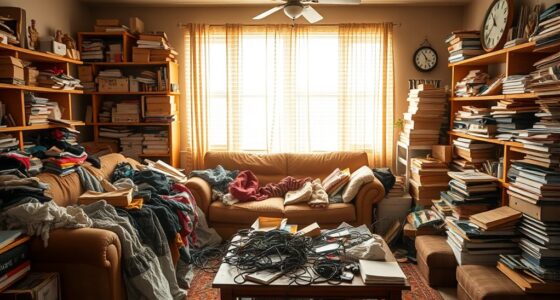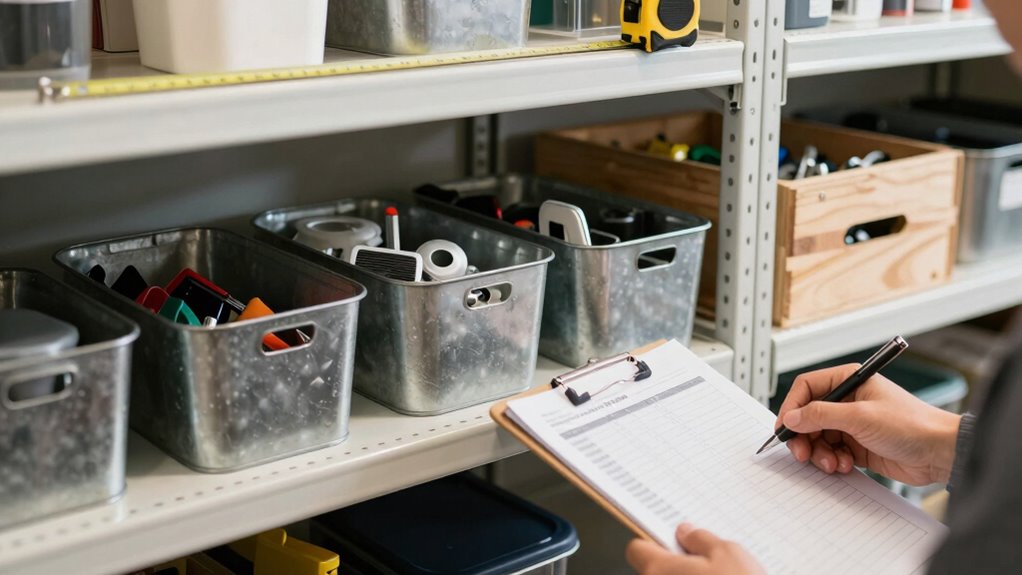

Before investing in furniture, inspect the storage zone thoroughly. Check for secure locks, surveillance cameras, and visitor logs to guarantee safety. Confirm the space is climate-controlled with reliable temperature and humidity monitoring to prevent damage. Observe cleanliness, pest control, and organization to protect your items. Evaluate accessibility features like loading docks and wide aisles for easy handling. If you keep exploring, you’ll discover more tips to help you make the best choice.
Key Takeaways
- Inspect security measures such as surveillance, locks, and visitor logs to ensure proper protection of stored furniture.
- Verify climate control systems are functional and monitor temperature/humidity stability for delicate items.
- Assess cleanliness, pest control, and organization to prevent damage and facilitate easy access.
- Confirm safety protocols and maintenance practices to safeguard furniture from environmental and security risks.
- Check accessibility features like flexible hours, loading docks, and aisle width for safe and convenient handling.

When considering a storage zone for your furniture, it’s vital to evaluate the space thoroughly before making any investments. You need to guarantee that the area provides adequate protection against potential damage and theft. First, assess the overall security of the storage zone. Ask yourself if the facility has proper security measures like surveillance cameras, secure locks, and controlled access. A secure environment minimizes the risk of theft or vandalism, giving you peace of mind that your furniture is safe. Don’t hesitate to inquire about how access is managed—whether the facility keeps a log of visitors or restricts entry to authorized personnel. The more stringent the security, the better your investment is protected.
Ensure your storage space has strong security measures like surveillance, locks, and controlled access for optimal furniture protection.
Next, examine the climate control capabilities of the storage zone. Furniture is sensitive to environmental conditions, especially temperature and humidity levels. A storage area with climate control maintains stable conditions, preventing warping, cracking, or mold growth. When touring the facility, ask whether the space is climate-controlled and how consistently it maintains ideal conditions. Check if there are temperature and humidity monitoring devices on-site, and verify their accuracy. If you plan to store valuable or delicate furniture pieces, climate control becomes even more essential. It guarantees your furniture remains in pristine condition, avoiding costly repairs or replacements later on. Proper storage environment is crucial for maintaining furniture quality over time.
Beyond security and climate control, pay attention to the cleanliness and organization of the storage zone. A well-maintained space reduces the risk of pests, dirt, and dust contaminating your furniture. Look for signs of pest control measures, such as traps or regular inspections, and ensure the area is free from debris. Also, evaluate the layout—an organized storage zone allows you to easily access your items without disturbing other stored belongings, minimizing potential damage. Proper storage organization can significantly impact the safety and preservation of your furniture. Regular maintenance and cleanliness are also vital components of a secure storage environment.
Additionally, understanding the security measures in place can help you better gauge the overall safety of the storage facility.
Finally, consider the accessibility of the storage zone. Check if the facility offers flexible hours, convenient loading docks, or wide aisles for moving large furniture pieces without hassle. The ease of access can prevent unnecessary handling, which might cause scratches or dents. Remember, investing in a storage zone with robust security, reliable climate control, cleanliness, and easy access will save you time, money, and stress in the long run. Take your time to visit the space, ask questions, and verify all features before committing. This thorough evaluation helps guarantee your furniture stays protected and in excellent condition, making your investment worthwhile.
As an affiliate, we earn on qualifying purchases.
Frequently Asked Questions
How Often Should Storage Zones Be Tested for Durability?
You should test your storage zone for durability at least twice a year. Regular checks help you catch material degradation early and assess how environmental factors like humidity, temperature, and pests affect the space. By monitoring these aspects, you guarantee the storage zone remains sturdy and safe, preventing costly damages and maintaining ideal conditions for your stored items. Consistent testing is key to long-term durability and reliable storage.
What Safety Measures Are Recommended During Testing?
You should always follow safety protocols and testing precautions to protect yourself during testing. Wear protective gear like gloves and goggles, and guarantee the area is clear of hazards. Use proper tools and handle equipment carefully to prevent accidents. Keep a first aid kit nearby, and have a colleague supervise or assist. By prioritizing safety measures, you minimize risks and ensure accurate, safe testing of the storage zone’s durability.
Can Testing Damage the Storage Zone or Furniture?
Testing a storage zone can potentially damage the area or furniture if you’re not careful. To prevent this, focus on surface inspection and assess material integrity first. Use gentle methods like visual checks or light pressure tests to spot weaknesses without causing harm. Avoid aggressive probing or heavy loads during testing, as these can compromise the storage zone’s structure or damage furniture surfaces. Always proceed cautiously to preserve integrity.
What Tools Are Needed for Effective Testing?
To effectively test a storage zone, you’ll need basic tools like a moisture meter, a material compatibility test kit, and a surface gauge. These help you follow proper testing protocols while ensuring materials won’t react negatively. A moisture meter checks humidity levels, and compatibility kits verify if furniture materials are suitable for the environment. With these tools, you can confidently assess the zone, making sure it’s ready for your investments.
How to Identify Hidden Issues During Testing?
To identify hidden defects during testing, you should carefully observe for irregularities like unusual odors, moisture, or structural inconsistencies. Use testing techniques such as moisture meters, visual inspections, and stress tests to uncover issues not immediately visible. Pay close attention to areas prone to damage, and don’t hesitate to probe deeper where surface signs suggest potential problems. This thorough approach helps guarantee you catch hidden defects before making an investment.
![Gamma2 Vittles Vault Pet Food Storage Containers - Sealed Dog and Cat Food Storage Container, Fits up to 25lbs, Made in the USA - [12"L x 13.75"H]](https://m.media-amazon.com/images/I/41XKsqOw1kL._SL500_.jpg)
Gamma2 Vittles Vault Pet Food Storage Containers – Sealed Dog and Cat Food Storage Container, Fits up to 25lbs, Made in the USA – [12"L x 13.75"H]
- Keeps Food Fresh and Flavorful: Airtight with Gamma Seal Technology
- Prevents Pest Infestation: Locks out ants and insects
- Food-Safe and Durable: Made from BPA-free HDPE plastic
As an affiliate, we earn on qualifying purchases.
As an affiliate, we earn on qualifying purchases.
Conclusion
Before you invest in furniture for a storage zone, take the time to test the space thoroughly. Check for size, accessibility, and how well it suits your needs. Don’t rush into a purchase—measure twice, cut once. Remember, a smart start pays off in the long run. When it comes to your storage zone, it’s better to be safe than sorry. Doing your homework now guarantees you’re not caught off guard later.
As an affiliate, we earn on qualifying purchases.
storage facility security camera
As an affiliate, we earn on qualifying purchases.
As an affiliate, we earn on qualifying purchases.