

When decluttering, choosing to donate, recycle, or upcycle instead of trashing items helps protect the environment and supports mental well-being. Donating reduces landfill waste, conserves resources, and benefits charities, while recycling recovers valuable materials from electronics and textiles. Upcycling turns old items into new treasures, extending their lifespan. Incorporating eco-friendly storage options and community efforts makes your process even greener. Continue exploring how these efforts can transform your space and mindset into sustainable practices.
Key Takeaways
- Donate usable items to charities or community programs to reduce waste and support those in need.
- Recycle electronics, textiles, and glass to recover valuable materials and prevent environmental contamination.
- Upcycle by repurposing or transforming old items into new, functional, or decorative objects, extending their lifespan.
- Use eco-friendly storage solutions made from sustainable materials like bamboo, glass, or recycled plastics.
- Incorporate technology and community resources, such as apps and workshops, to promote responsible decluttering practices.
Understanding the Environmental Impact of Waste Disposal

Waste disposal has a significant environmental impact that often goes unnoticed. When you toss items into the trash, they usually end up in landfills, where they decompose slowly or release harmful gases like methane, contributing to climate change. Electronic waste, or e-waste, is particularly hazardous because it contains toxic materials such as lead and mercury, which can leach into soil and water. Textile waste also accumulates rapidly—averaging over 80 pounds per person annually in the U.S.—and most of it ends up in landfills, creating pollution and wasting resources. Recycling, donating, and upcycling help divert these materials from landfills, reducing pollution, conserving natural resources, and lowering your carbon footprint. Understanding this impact motivates you to adopt more sustainable decluttering habits. Additionally, proper disposal of electronic waste supports the safe recycling of hazardous materials, preventing environmental contamination.
How Donation Supports Sustainability Goals

Donating items instead of throwing them away directly supports broader sustainability goals by reducing the volume of waste sent to landfills and conserving natural resources. When you donate clothes, toys, books, or household goods, you extend their lifespan, decreasing the need for new manufacturing and raw material extraction. This process lowers energy consumption and reduces greenhouse gas emissions associated with production and disposal. Charitable donations also help communities by providing affordable resources and supporting social programs. Additionally, donating prevents valuable items from becoming waste too soon, aligning with circular economy principles. Utilizing smart home automation can further optimize energy use during decluttering and donation processes. By choosing donation over disposal, you actively contribute to environmental preservation and resource efficiency, making your decluttering efforts more impactful in advancing sustainability.
Recycling Programs for Electronics and Textiles
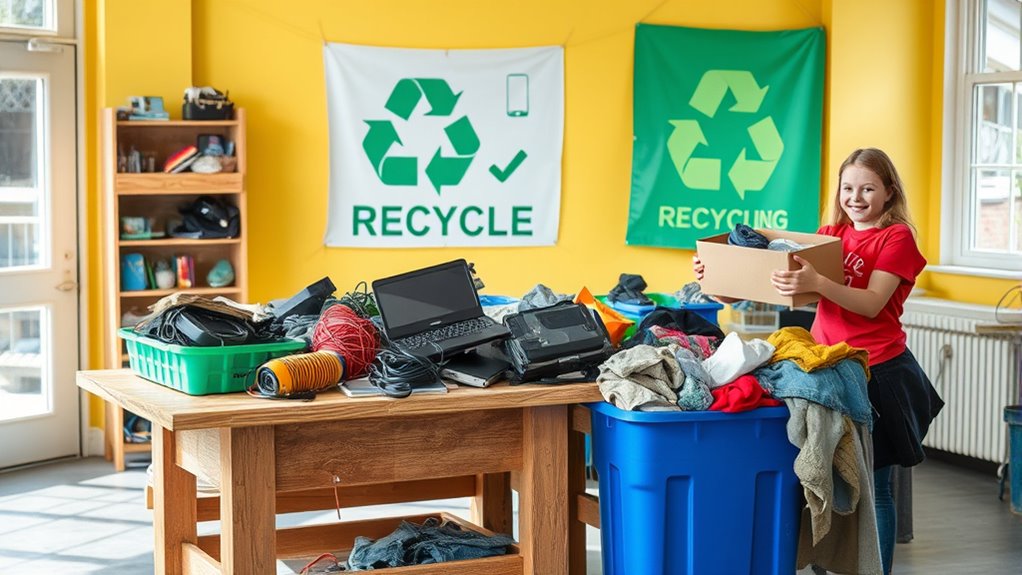
Have you considered how recycling programs for electronics and textiles can make your decluttering efforts more sustainable? These programs help prevent harmful waste from ending up in landfills and reduce resource extraction. Many retailers and local centers accept electronics like phones, tablets, and laptops, offering trade-in incentives. For textiles, take-back initiatives allow you to donate or recycle clothes, shoes, and fabrics, turning waste into new raw materials. Here’s a quick overview:
| Item Type | Recycling Program Options | Benefits |
|---|---|---|
| Electronics | Trade-in, e-waste recycling centers | Prevent hazardous waste, recover valuable materials |
| Clothes | Donation, textile recycling programs | Reduce landfill, repurpose fibers |
| Shoes | Shoe collection programs | Upcycle into new products or materials |
| Household textiles | Local textile recycling facilities | Minimize waste, conserve resources |
| Electronics & textiles | Specialized local or national programs | Support eco-friendly waste management |
Additionally, proper sorting and preparation of items before recycling ensures they are processed efficiently and effectively.
Creative Upcycling Ideas to Extend Item Lifespans
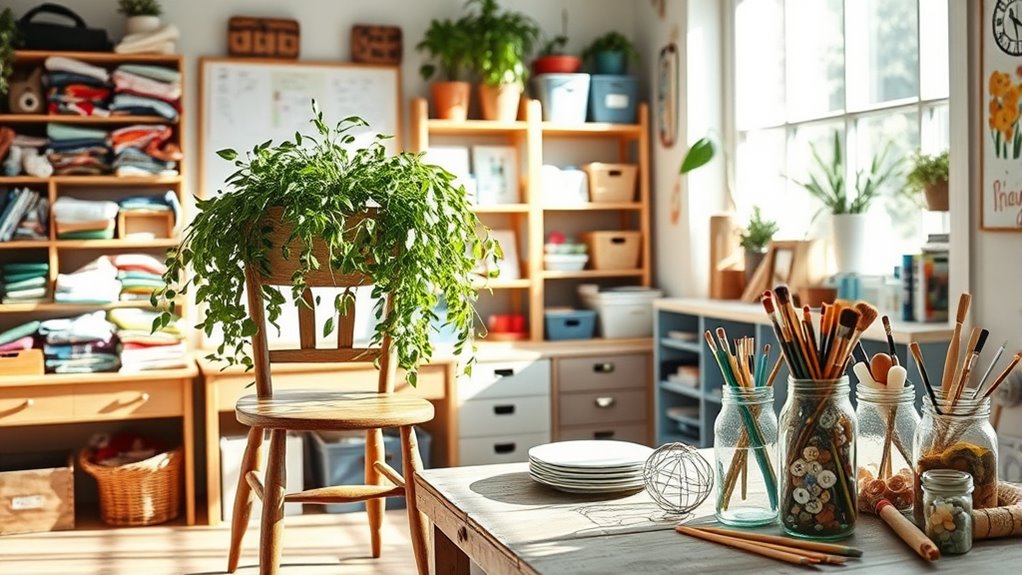
Upcycling transforms unwanted or discarded items into new, useful, or decorative objects, giving them a second life and reducing the need to buy new products. You can turn old furniture into statement pieces by repainting or reupholstering, adding personality to your space while avoiding waste. Repurpose glass jars into storage containers or planters, combining function with style. Old clothes can become cleaning rags, quilt patches, or art projects, extending their usefulness. Cracked plates and broken ceramics can be glued into mosaic art, creating unique decor. Using creative ideas online or at community workshops, you can discover countless ways to breathe new life into everyday items. Upcycling not only helps the environment but also sparks your creativity and personal expression. Embracing inner wisdom can inspire more mindful and innovative approaches to sustainable living.
Mental Health Benefits of Organized and Clutter-Free Spaces
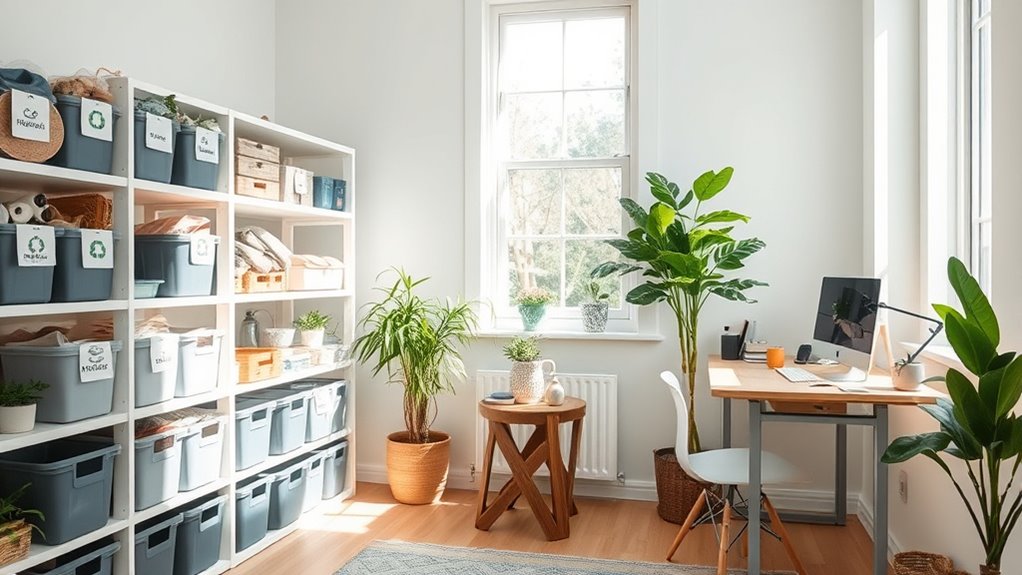
When your space is organized and clutter-free, you’ll notice a significant reduction in stress and anxiety. Clear environments help sharpen your focus and bring clarity to your daily tasks. Plus, a tidy space promotes better sleep, leaving you more refreshed and ready to face each day. Creating calm and organized homes through simple strategies can also boost your overall well-being by fostering a sense of accomplishment and control.
Reduced Stress Levels
Organizing your space can markedly reduce stress by creating a calm and predictable environment. When everything has a place, you spend less time searching for items and feeling overwhelmed. A clutter-free space minimizes visual chaos, helping your mind feel more at ease. This sense of order fosters a feeling of control, reducing anxiety and mental fatigue. Decluttering also prevents the buildup of unnecessary possessions that can weigh on your thoughts. By intentionally choosing what to keep and what to donate or recycle, you reinforce a mindset of simplicity and purpose. As a result, your environment supports relaxation and emotional well-being. A tidy space becomes a sanctuary, helping you manage daily stresses more effectively and promoting overall mental health. Incorporating natural elements into your decluttering process, such as using eco-friendly recycling methods, can further enhance your mental clarity and sense of harmony with your surroundings.
Enhanced Focus and Clarity
A tidy, clutter-free space clears mental fog and sharpens your focus. When your environment is organized, your mind can concentrate on tasks instead of being distracted by chaos. Fewer visual distractions mean you can process information more efficiently, boosting your productivity. Clutter often triggers feelings of overwhelm, which can hinder decision-making and creativity. By decluttering responsibly through donation, recycling, or upcycling, you create a calm space that promotes mental clarity. This intentional approach reduces stress and helps you feel more in control. As your surroundings become simpler and more organized, you’ll notice increased concentration, better problem-solving abilities, and a greater sense of mental well-being. Incorporating seasonal checklists can help maintain this clarity over time, ensuring your space remains both eco-friendly and organized. Ultimately, eco-friendly decluttering supports a focused mind and a more balanced, peaceful life.
Better Sleep Quality
Did you know that a clutter-free environment can considerably improve your sleep quality? When your space is organized and free of clutter, your mind feels calmer, making it easier to wind down at night. Less visual chaos reduces stress and anxiety, helping you fall asleep faster and enjoy more restful sleep. An orderly bedroom creates a tranquil atmosphere, encouraging relaxation and signaling to your brain that it’s time to rest. Eliminating clutter also minimizes distractions that can interrupt sleep, like misplaced items or a chaotic bedside table. By decluttering and maintaining an organized space, you promote a peaceful environment that supports better sleep hygiene. Incorporating outdoor wisdom into your decluttering routine—such as using natural lighting and fresh air—can further enhance your sleep quality. Ultimately, a tidy room fosters mental clarity, making it easier to disconnect from daily worries and enjoy restorative, quality sleep.
Technological Tools Promoting Eco-Friendly Decluttering
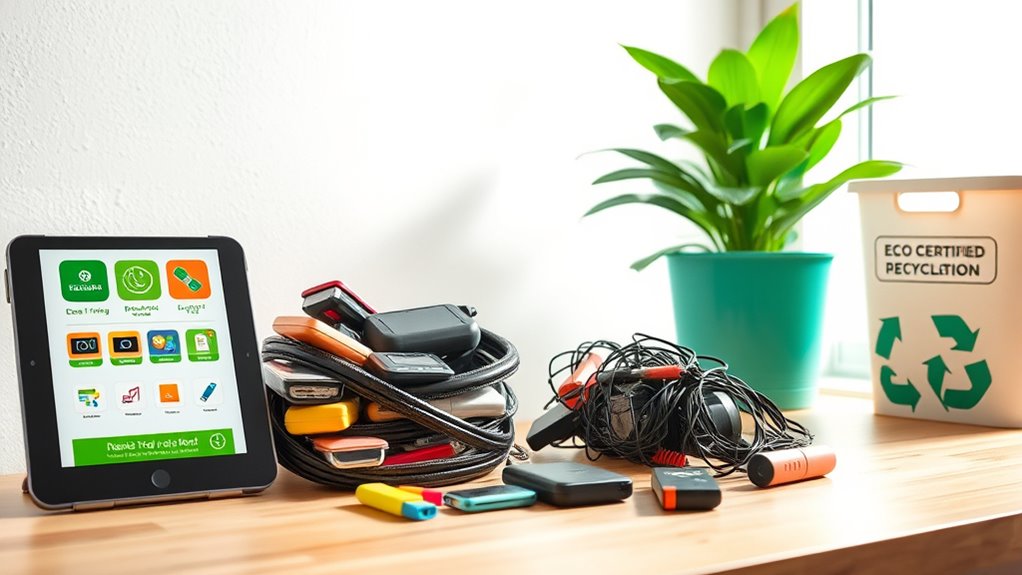
Technological tools play a essential role in promoting eco-friendly decluttering by streamlining organization and reducing waste. AI-powered apps help you identify what to keep, donate, or recycle, ensuring you make eco-conscious choices. Smart home devices can track your possessions and suggest efficient storage solutions, minimizing clutter while conserving resources. Digital platforms like decluttering apps or marketplaces enable you to sell or donate items quickly, extending their lifecycle and reducing landfill contributions. Barcode scanning and inventory management help you monitor electronics and textiles for proper recycling or upcycling. Additionally, eco-focused tools, such as online guides and virtual workshops, inspire sustainable practices. European cloud servers can support these digital solutions through energy-efficient hosting, reducing the carbon footprint of your decluttering efforts. By integrating these technologies, you simplify decluttering, make greener decisions, and support a circular economy—all while maintaining a tidy, environmentally friendly space.
Choosing Sustainable Materials for Storage and Organization
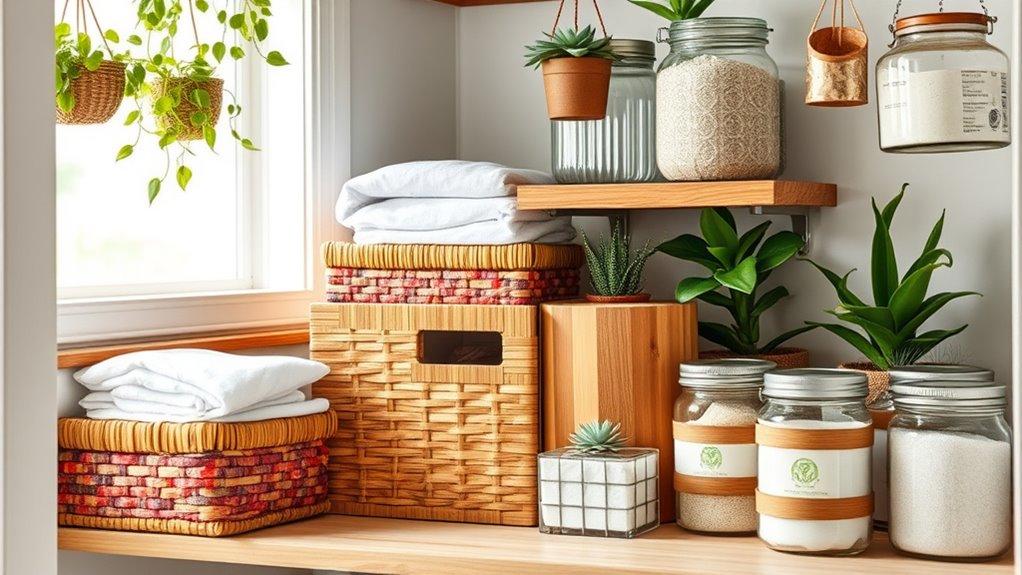
When selecting storage and organization solutions, opt for eco-friendly materials like bamboo, recycled plastics, or glass. Recyclable options help reduce waste and support a circular economy, making your decluttering efforts more sustainable. Keep design principles in mind by choosing versatile, durable, and minimal-impact solutions that blend function with environmental responsibility.
Eco-Friendly Material Options
Choosing sustainable materials for storage and organization is a key step in eco-friendly decluttering. Opt for items made from bamboo, jute, cork, or recycled plastics, as these materials have lower environmental impacts. Bamboo grows quickly and requires minimal resources, making it a renewable choice. Jute and cork are biodegradable, renewable, and durable, perfect for baskets, mats, and organizers. Recycled plastics reduce waste and conserve virgin resources, especially when used in clear containers or storage bins. Avoid products made from synthetic fibers or non-recyclable materials, which contribute to microplastic pollution and landfill waste. By selecting eco-friendly materials, you help support a circular economy, reduce your carbon footprint, and create a healthier environment for future generations. Incorporating sustainable design principles into your storage solutions can further enhance the eco-friendliness of your space.
Recyclable Storage Solutions
Opting for recyclable storage solutions allows you to extend the eco-friendly impact of your decluttering efforts. Choose containers made from sustainable materials like glass, metal, or biodegradable plastics that can be reused or recycled easily. Avoid single-use or non-recyclable plastics, which often end up in landfills or oceans. Look for products labeled with recyclable symbols or certifications indicating eco-friendly manufacturing processes. Bamboo baskets or wooden crates are natural, renewable options that add a rustic touch while being sustainable. Consider repurposing items like glass jars or metal tins for storage, reducing waste and giving these objects a second life. By selecting recyclable materials, you support a circular economy and minimize your environmental footprint. Incorporating sustainable material assessment into your storage choices ensures you make environmentally responsible decisions that align with expert rug care and preservation principles.
Sustainable Design Principles
Selecting sustainable materials for storage and organization means prioritizing products that are environmentally friendly, durable, and safe for your home. Look for options made from renewable resources like bamboo, cork, or jute, which grow quickly and have minimal environmental impact. Choose materials that are free from harmful chemicals, such as non-toxic paints or finishes, to guarantee safety. Recycled or upcycled products reduce waste and lower your carbon footprint. Opt for designs that are sturdy and timeless, so they last longer and don’t need frequent replacement. Incorporate modular and multipurpose items to maximize space and reduce clutter. Additionally, considering the environmental impact of your choices helps ensure your storage solutions contribute positively to sustainability. By selecting these sustainable materials and thoughtful designs, you support eco-friendly practices while creating organized, functional, and stylish storage solutions.
Building Community Engagement Through Eco-Conscious Decluttering

Building community engagement through eco-conscious decluttering transforms individual efforts into collective action that benefits both people and the environment. When you involve others, you amplify your impact and foster a sense of shared responsibility. You can:
- Organize local swap events where neighbors exchange clothes, books, or household items, reducing waste and strengthening bonds.
- Partner with schools or community centers to host upcycling workshops, inspiring creative reuse and educating others.
- Collaborate with charities or recycling programs to create collection drives, making it easy for everyone to donate items and divert waste from landfills.
- Emphasizing the importance of continuous learning and adaptation can help communities stay updated on sustainable practices and new eco-friendly innovations.
These activities encourage participation, raise awareness, and build momentum for sustainable habits. Together, you create a community that values eco-friendly living and makes meaningful environmental change.
Frequently Asked Questions
How Can I Identify Which Items Are Suitable for Donation or Recycling?
You can identify items suitable for donation or recycling by checking their condition and material. If they’re still usable, donate clothing, toys, or household goods to charities or thrift stores. For recycling, look for electronics, textiles, or packaging that have recycling programs. Items in good shape and made from recyclable materials are perfect for donation or recycling, helping you reduce waste and support sustainability efforts.
Are There Specific Guidelines for Eco-Friendly Disposal of Hazardous Household Waste?
You should always follow local regulations for hazardous household waste disposal. Typically, you’re advised not to pour chemicals down drains or throw them in regular trash. Instead, take items like batteries, paints, cleaning agents, and electronics to designated collection centers or hazardous waste drop-off events. Check your city’s website or contact local waste management services for specific guidelines. Proper disposal helps prevent environmental contamination and keeps your community safe.
What Are the Best Practices for Upcycling Furniture Safely and Effectively?
When upcycling furniture, you should start by evaluating the material for safety, especially if it’s old or painted. Wear protective gear like gloves and masks to avoid fumes or dust. Sand surfaces properly, work in a well-ventilated area, and use non-toxic paints or finishes. Follow manufacturer instructions carefully, and dispose of any waste responsibly. With these steps, you’ll create beautiful, safe upcycled furniture that’s eco-friendly and durable.
How Do I Find Local Donation Centers and Recycling Programs Near Me?
You can find local donation centers and recycling programs by searching online directories like Earth911, Goodwill, or the Recycling Center Locator. Use your zip code or city name to narrow down options. Visit their websites to check accepted items and hours. Call ahead if you’re unsure about specific items. Community centers and municipal websites often list nearby programs, making it easy to support sustainability while decluttering.
Can Digital Decluttering Also Be Environmentally Sustainable?
Imagine your digital space as a cluttered desk, overflowing with unused files and emails. You can make it environmentally sustainable by deleting unnecessary digital files, unsubscribing from unwanted emails, and organizing data efficiently. Using cloud storage minimizes physical resources, and choosing eco-friendly tech options reduces electronic waste. Regularly decluttering your digital life not only boosts productivity but also reduces energy consumption, making your digital habits greener and more sustainable.
Conclusion
By choosing to donate, recycle, or upcycle, you reduce waste and protect the planet. Instead of clutter piling up, you build a cleaner, greener space that benefits your mind and community. It’s a simple act with powerful results—transforming trash into treasure, chaos into calm. When your decluttering efforts align with sustainability, you create harmony not just in your home, but in the world around you. Small choices, big impact—start today.