
To embrace minimalism with kids, involve them in decluttering and organizing through fun activities like sorting or creating simple routines. Focus on quality items, designate specific spaces for belongings, and teach sustainability by encouraging eco-friendly habits. Make organization engaging and celebrate progress often to reinforce your values. Consistent routines and family efforts help maintain a calm, clutter-free home. Keep exploring to learn more effective ways to create a meaningful, minimalist family life.

Get the little things that make your day delivered free — and shop member deals
- Fast, free delivery on millions of items
- Access to Prime Big Deal Days deals on October 6–7
- Prime Video, Amazon Music and more included
Key Takeaways
- Involve kids in decluttering through age-appropriate tasks, games, and decision-making to foster ownership and understanding of minimalism.
- Establish routines for regular tidying, celebrating progress, and reinforcing values like simplicity and environmental responsibility.
- Focus on acquiring high-quality, durable items and designating dedicated spaces to reduce clutter effectively.
- Create family systems for ongoing organization, celebrate collective efforts, and document milestones to motivate continued minimalism.
- Emphasize patience, flexibility, and connecting decluttering efforts to core family values for sustainable, long-term minimal living.
kids toy storage bins with labels
As an affiliate, we earn on qualifying purchases.
As an affiliate, we earn on qualifying purchases.
Involving Kids in Decluttering and Organization

Have you ever wondered how to teach kids responsibility while making decluttering fun? You can turn organizing into an engaging activity by involving them directly. Start by giving your children age-appropriate tasks, like sorting toys or clothes into bins. Make it a game—set timers or challenge them to find specific items quickly. Encourage decision-making by asking which items they want to keep, donate, or toss. Praise their efforts to foster pride and ownership. Use colorful labels or pictures to help them identify where things belong. Keep the process positive, emphasizing teamwork and the benefits of a tidy space. By involving your kids in organizing, you teach responsibility naturally while creating a sense of accomplishment that motivates ongoing participation. Incorporating creative storytelling can make the experience even more memorable and meaningful for children.
As an affiliate, we earn on qualifying purchases.
Setting Realistic Expectations and Goals
Setting realistic expectations and goals is essential to guarantee your family’s minimalist journey is sustainable and satisfying. Start by understanding that change takes time, especially with kids involved. Focus on small, manageable steps that fit your family’s unique needs and routines. Avoid aiming for perfection; instead, aim for consistency and progress. Set specific goals, like decluttering one area each week or reducing toy collection by half. Communicate openly with your children about what you’re trying to achieve, encouraging their involvement and understanding. Be flexible and patient, recognizing setbacks as part of the process. Remember, the goal is to create a calmer, more intentional home, not to achieve instant perfection. With clear, realistic goals, your family can embrace minimalism steadily and joyfully. Additionally, understanding the importance of mental wellbeing can help maintain motivation and resilience during this transition.
As an affiliate, we earn on qualifying purchases.
Choosing Quality Over Quantity for Toys and Clothes

Choosing quality over quantity for toys and clothes means focusing on selecting items that are durable, timeless, and meaningful rather than accumulating numerous inexpensive or fleeting products. This approach reduces clutter and encourages intentional consumption. When shopping, prioritize items made from quality materials that withstand wear and tear, ensuring longevity. You’ll also find that fewer, well-chosen possessions foster appreciation and care from your kids. Use the table below to guide your choices:
| Material | Durability | Cost |
|---|---|---|
| Organic Cotton | High | Moderate |
| Hardwood Toys | Very High | Higher |
| Wool Clothing | Long-lasting | Moderate |
| Recycled Plastics | Moderate | Lower |
| Natural Dyes | Fades Less | Varies |
As an affiliate, we earn on qualifying purchases.
Creating Dedicated Spaces for Belongings
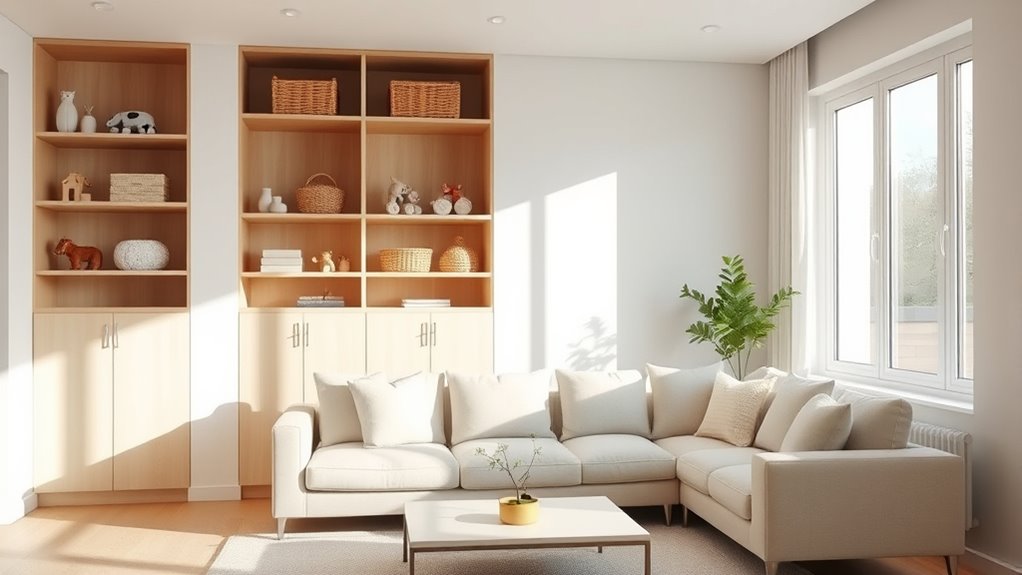
Creating dedicated spaces for belongings helps your family stay organized and reduces clutter by designating specific areas for different items. When each family member has a clear spot for toys, clothes, books, or school supplies, it’s easier to maintain order and prevent chaos. Consistently returning items to their designated places teaches kids responsibility and minimizes mess. Incorporating smart storage solutions can further optimize space and improve accessibility for your family. To create effective spaces, consider these strategies: – Use labeled bins or baskets for toys and small items – Assign a specific hook or shelf for backpacks and jackets – Designate drawers or compartments for clothing and accessories – Keep frequently used items within easy reach – Regularly review and reorganize spaces to fit your family’s changing needs
Designated spaces for belongings keep your home tidy and teach kids responsibility.
Implementing these ideas makes tidying up quick and simple, fostering a clutter-free home.
Teaching Kids the Value of Minimalism and Sustainability

You can teach your kids the importance of responsible consumption by involving them in choosing what to keep and buy, helping them see the value in quality over quantity. Encourage environmental awareness by explaining how their actions, like recycling or conserving energy, directly impact the planet. When kids understand these principles early, they develop habits that support sustainability and mindful living. Incorporating vetted information on eco-friendly practices can further reinforce their understanding and commitment.
Encourage Responsible Consumption
Teaching kids the value of minimalism and sustainability begins with involving them in mindful consumption habits. You can teach them to think before buying, asking if they truly need something or if it adds value to their lives. Encourage activities like choosing reusable items over disposable ones, repairing broken toys, or sharing belongings with friends. Set an example by making conscious purchasing decisions and avoiding impulse buys. Involve your children in shopping, explaining why you select eco-friendly or durable products. This helps them understand the importance of reducing waste, conserving resources, and valuing quality over quantity. Highlighting the benefits of high-quality projectors can also demonstrate the importance of investing in durable, long-lasting items rather than disposable alternatives. This understanding fosters a mindset of responsible consumption and sustainability.
Promote Environmental Awareness
Involving children in mindful consumption naturally leads to greater awareness of environmental impacts. Teach them about the importance of reducing waste, conserving energy, and choosing sustainable products. Encourage activities like recycling, composting, and shopping secondhand. Explain how small changes, like turning off lights and using reusable bags, make a difference. Use the following table to highlight eco-friendly habits:
| Habit | Benefit | Example |
|---|---|---|
| Recycling | Reduces landfill waste | Sorting recyclables daily |
| Energy Conservation | Lowers carbon footprint | Turning off unused devices |
| Reusable Products | Cuts down on plastic waste | Using cloth bags |
| Composting | Creates natural fertilizer | Composting food scraps |
Additionally, teaching children about the horsepower of electric dirt bikes can inspire them to appreciate efficient and powerful sustainable transportation options for the future.
Making Decluttering a Fun Family Activity
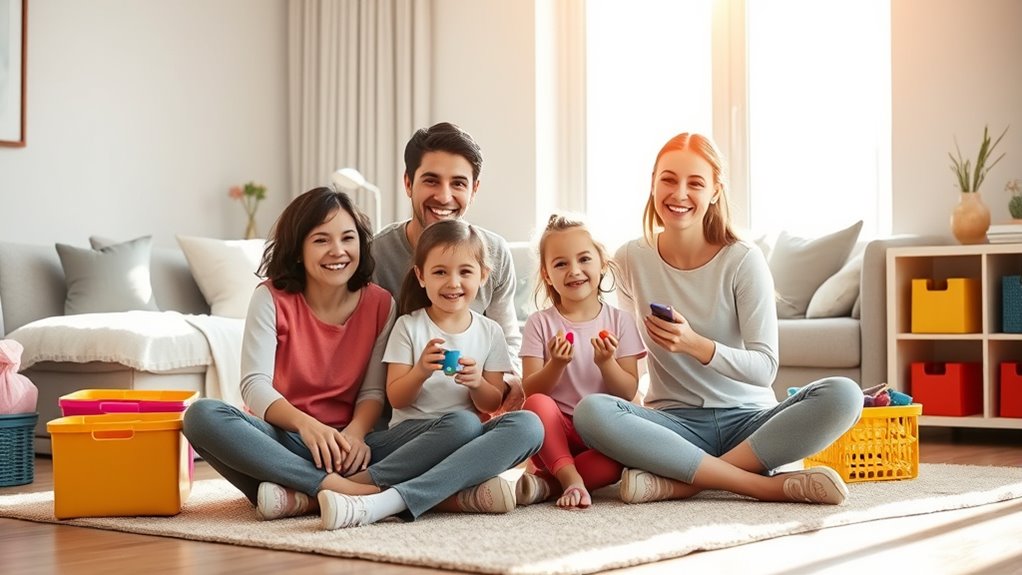
Have you ever considered turning decluttering into a game or adventure? Kids love a challenge, so make it fun by setting timers, creating scavenger hunts, or awarding points for sorting items. Involve your children in decision-making to give them ownership and responsibility. Use playful language to keep enthusiasm high and make the process feel less like chores. Consider these ideas:
- Set a timer and see who can sort the most items in five minutes
- Create a treasure hunt for items to donate or recycle
- Assign points for each item properly sorted or discarded
- Have a “before and after” photo contest to show progress
- Celebrate with a small reward or family treat after completing the task
- Incorporate interactive tools to make organizing more engaging and efficient
Making decluttering enjoyable helps kids develop habits and keeps your home organized with less stress.
Establishing Consistent Routines for Maintenance
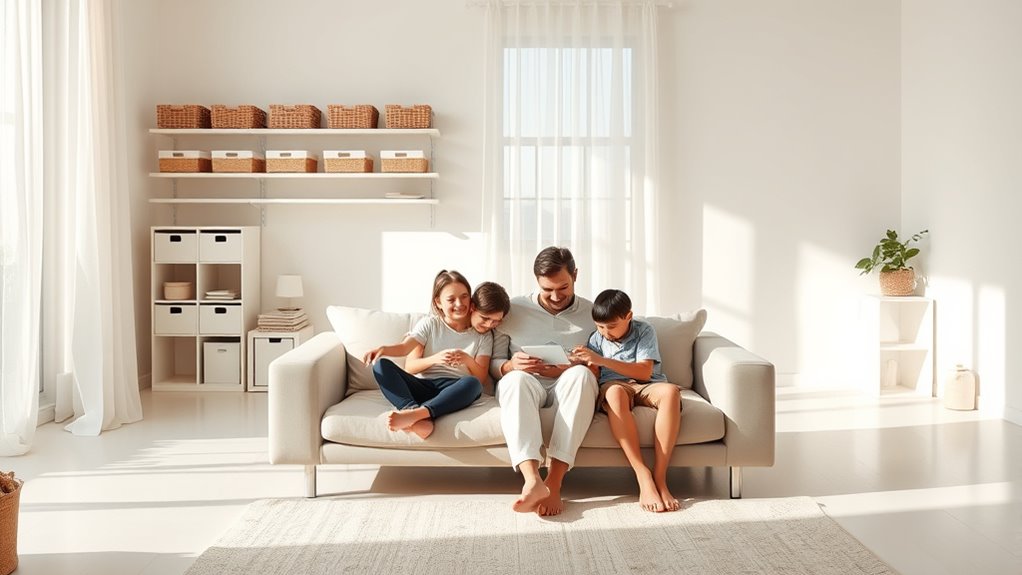
Establishing consistent routines for maintenance is essential to keep your minimalist home organized and clutter-free. When routines become part of your daily life, cleaning and tidying happen effortlessly, preventing clutter from piling up. Set specific times each day for quick tidying, like a five-minute morning pickup or a 10-minute evening reset. Involve your kids by assigning simple tasks, making maintenance feel like a team effort. Create a system for regularly evaluating possessions—donate or discard items that are no longer needed. Stick to these routines consistently, so they become habit. Incorporating energy-efficient practices into your routines can further reduce household waste and promote sustainability. Over time, this approach minimizes the effort needed to keep your space tidy, reduces stress, and helps your family enjoy the benefits of a calm, organized home.
Celebrating Progress and Reinforcing Minimalist Values
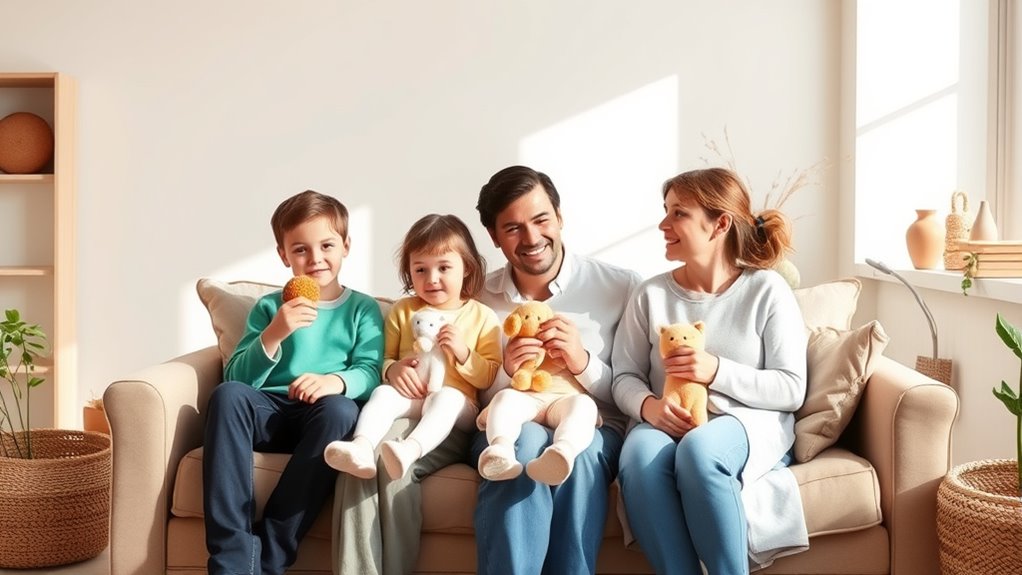
Celebrating small wins keeps your family motivated and reinforces your shared minimalist values. Recognizing progress, no matter how minor, helps everyone feel accomplished and committed to your goals. By highlighting these efforts, you strengthen your family’s connection to a simpler, more intentional way of living. Celebrating personal branding achievements can also inspire children to develop their own sense of identity within a minimalist lifestyle.
Recognize Small Achievements
Why is recognizing small achievements so essential in maintaining a minimalist lifestyle? It keeps you motivated and reinforces the value of simplicity. Celebrating progress, no matter how minor, helps your family see tangible results and stay committed. When you acknowledge these wins, you build confidence and foster a positive mindset toward minimalism. It encourages everyone to keep contributing and appreciating the benefits. Plus, it makes the journey feel rewarding rather than overwhelming. Regularly checking in on your cleaning and maintenance routines, as suggested in air purifier maintenance dos and don’ts, can help sustain your minimalist environment effectively. You can do this by: – Praising your kids for donating toys they no longer use – Highlighting how much easier cleanup has become – Celebrating a clutter-free zone you all worked on together – Noticing the calmness in your home after decluttering – Sharing how your family’s stress levels have decreased
Reinforce Core Values
Reinforcing your family’s core values through celebrating progress helps keep everyone aligned with your minimalist goals. When you acknowledge small wins, you remind family members of the purpose behind your efforts—simplifying life, reducing stress, and fostering meaningful connections. Highlight how each decluttering session or decision to donate aligns with your shared values. This encouragement builds a sense of purpose and motivates everyone to stay committed. Celebrate milestones, like completing a clutter-free zone or sticking to a new routine, to reinforce the positive impact. Recognizing these achievements not only boosts morale but also solidifies your family’s understanding of why minimalism matters. Incorporating Free Floating principles into your celebrations can help maintain a relaxed and adaptable approach to your minimalist lifestyle. Consistent reinforcement helps transform minimalist principles from occasional efforts into lasting habits, fostering a shared sense of accomplishment and purpose.
Celebrate Family Efforts
How can recognizing your family’s efforts boost motivation and strengthen commitment to your minimalist lifestyle? Celebrating progress shows everyone that their contributions matter, fostering pride and encouraging continued engagement. It reinforces your core values and makes the journey enjoyable. Acknowledging small wins builds momentum and helps your family see the benefits of minimalism firsthand. Incorporating support breakfast ideas can also provide energy and positivity during your minimalist routines. You can do this by:
- Praising kids when they donate toys or clothes willingly
- Sharing achievements like a clutter-free weekend or organized space
- Creating a family scrapbook to highlight milestones
- Setting up small rewards for collective efforts
- Having regular family meetings to discuss progress and celebrate successes
Celebrating these efforts keeps everyone motivated, strengthens bonds, and ensures that minimalism becomes a shared family value.
Frequently Asked Questions
How Can I Introduce Minimalism to My Children Without Causing Resistance?
You can introduce minimalism to your children by involving them in decluttering together, making it a fun family activity. Explain the benefits, like more space to play and less stress. Encourage them to choose toys or clothes they love, fostering appreciation for what they have. Set simple rules about acquiring new items and celebrate small wins. Over time, they’ll understand and embrace a minimalist lifestyle without resistance.
What Are Effective Ways to Handle Sentimental Items in a Minimalist Family?
When handling sentimental items, you’ve got to strike a balance—you don’t want to throw the baby out with the bathwater. Start by involving your kids in choosing which keepsakes matter most, and set clear limits on what to keep. Use boxes or albums to organize these treasures, and gently remind everyone that memories aren’t just in objects—they’re in shared experiences and love. This way, you honor the past without cluttering your space.
How Do I Balance Minimalism With My Child’s Developmental Needs?
You can balance minimalism with your child’s developmental needs by prioritizing quality over quantity, offering fewer toys but ensuring they’re meaningful and engaging. Encourage your child to participate in choosing what to keep, fostering decision-making skills. Maintain a clutter-free environment that promotes focus and creativity. Regularly review possessions together, teaching values of appreciation and responsibility, while ensuring your child’s growth and curiosity are supported through intentional, thoughtful possessions.
What Strategies Help Maintain Minimalism During Holidays and Special Occasions?
To keep minimalism during holidays, set clear limits on gift numbers and focus on meaningful experiences rather than material items. Involve your kids in choosing thoughtful presents and prioritize quality over quantity. Create traditions that emphasize togetherness, like family activities or giving back. Keep decorations simple and reusable, so the festive spirit doesn’t lead to clutter. Consistent boundaries help everyone enjoy celebrations without sacrificing your minimalist values.
How Can Minimalism Positively Influence My Child’s Habits and Values?
Think of yourself as a gardener shaping your child’s values. By practicing minimalism, you teach them gratitude and responsibility for their possessions. Less clutter encourages them to focus on meaningful experiences rather than material things. You foster patience, self-control, and appreciation for what truly matters. This environment nurtures mindful habits, helping your child develop a balanced perspective on possessions and creating a foundation for lifelong values rooted in simplicity and intentionality.
Conclusion
By involving your kids, setting realistic goals, and making decluttering fun, you create a minimalist lifestyle that benefits everyone. Focus on quality over quantity and teach your children the value of sustainability. Remember, “A little progress each day adds up to big results.” Keep routines consistent and celebrate your achievements together—your family’s simplicity and harmony will flourish as you embrace these mindful habits.
Fall Picks
fall essentials
As an affiliate, we earn on qualifying purchases.