Before buying storage products, ask yourself if they suit your item types and usage frequency, ensuring they are easy to access and durable enough for your needs. Consider the space you have and if the options maximize that space efficiently. Think about the material quality, portability, and your budget to find solutions that last. If you keep these questions in mind, you’ll choose the best storage options for your space and budget. More helpful tips follow.

Get the little things that make your day delivered free with Prime
- Fast, free delivery on millions of items
- Prime Video, Amazon Music and more included
- Member-only deals all year
Key Takeaways
- What items will I store, and how frequently will I access them?
- Does the storage solution fit my space size and environmental conditions?
- Is the material durable enough for my storage needs?
- Are the containers accessible, portable, and easy to open?
- Does the investment balance cost with long-term durability and versatility?
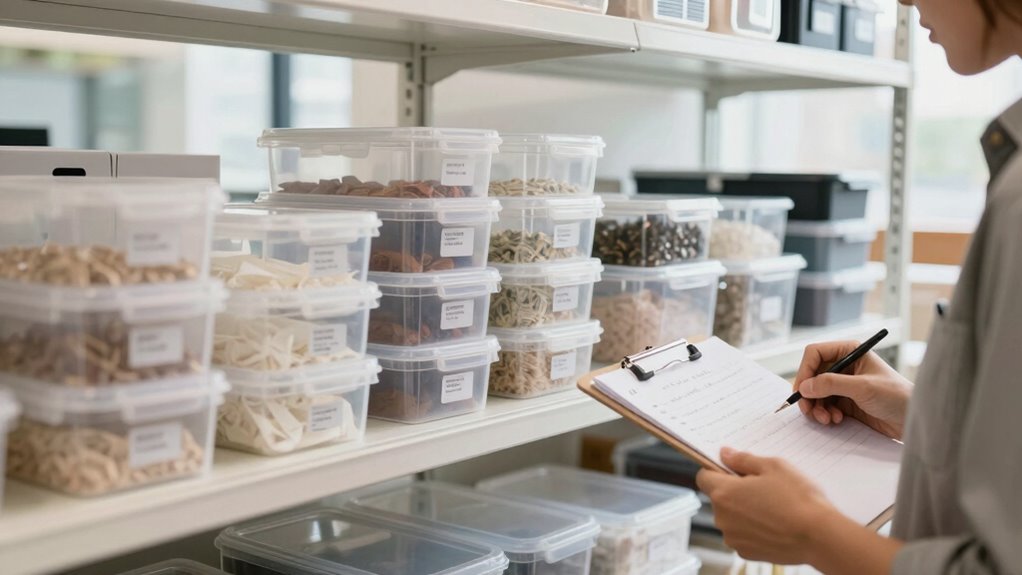
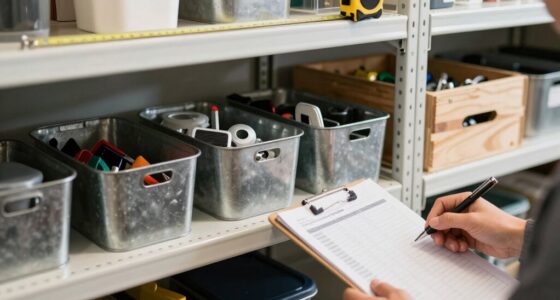
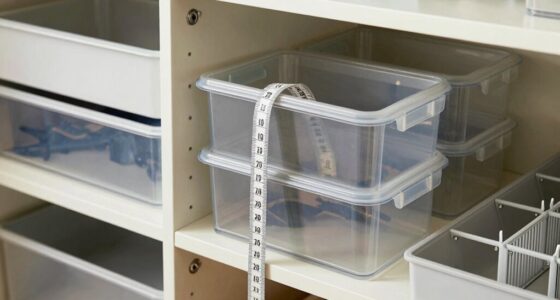
Before investing in storage products, it’s essential to ask the right questions to guarantee you choose solutions that meet your needs. The way you approach container organization and space optimization will determine how effectively you utilize your area. Start by evaluating what you need to store. Are these items seasonal, frequently used, or long-term storage? Knowing this helps you choose containers that are easy to access and suitable for your specific items. For example, clear bins allow you to see contents at a glance, saving time and reducing clutter, while stackable containers maximize vertical space.
Assess your storage needs first to select containers that optimize space and accessibility effectively.
Next, think about the space you have available. Do you have a small closet, a garage, or a large basement? The dimensions of your space will influence your choice of storage solutions. For tight areas, look for compact, modular pieces that can fit into corners or be tucked away when not in use. If space is abundant, you might consider larger shelving units or multi-tiered storage systems. Asking about the size and capacity of storage products helps you avoid purchasing items that are either too big or too small for your needs, guaranteeing you get maximum space utilization. Additionally, understanding the space constraints can help you select the most efficient options for your environment. It’s also helpful to consider how flexible your storage options need to be to adapt to changing needs over time. Incorporating versatile storage options can allow you to reconfigure your setup as your requirements evolve.
Another key question revolves around durability and material quality. Will the storage solution hold up over time? For heavy or sharp objects, sturdy materials like heavy-duty plastic or metal are essential. If you’re storing delicate items, consider padded or cushioned options. This not only protects your belongings but also prevents the need for frequent replacements, making your investment more cost-effective. Additionally, durability influences how well your storage solutions maintain their structure, contributing to overall space optimization. Choosing the right material can also impact the long-term value of your storage setup, ensuring it remains functional for years.
Ease of access is another important factor. Ask whether the storage containers or units are designed for easy opening, closing, and retrieval. Items you use often should be stored within reach, while those infrequently used can be placed higher or deeper. This approach streamlines your organization process and minimizes frustration. Also, consider whether the storage solutions are portable if you plan to move items around regularly. Recognizing the importance of material quality can help ensure your storage solutions last through daily wear and tear. Furthermore, accessibility features can significantly improve your overall organization efficiency, especially if you have mobility concerns or limited space.
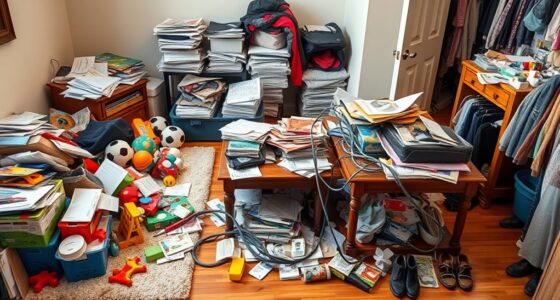
Finally, think about your budget and long-term value. Investing in high-quality storage products might cost more upfront but can save you money in the long run through durability and improved organization. Ask if the solutions are versatile enough to serve multiple purposes or be reconfigured as your needs change. By contemplating these questions beforehand, you guarantee your storage solutions will truly support your space optimization goals and container organization needs, making your environment more functional and clutter-free.
Products Worth Considering

Roborock Robot Vacuum and Mop Combo with Self-Empty Dock

Bose TV Speaker Compact Soundbar with Bluetooth and HDMI-ARC, Black

Philips Hue Smart LED Candle Bulbs, B39, E12, White and Color Ambiance, 2-Pack
As an affiliate, we earn on qualifying purchases.
Frequently Asked Questions
Are There Environmentally Friendly Storage Options Available?
Yes, eco-friendly storage options are available. You can find products made from sustainable design principles and eco-friendly materials like bamboo, recycled plastics, or biodegradable fibers. These options help reduce environmental impact while offering practical storage solutions. When shopping, look for labels indicating sustainable materials or certifications. Choosing these environmentally conscious products allows you to organize your space responsibly and support eco-friendly practices.
How Do Storage Products Handle Extreme Temperatures?
Did you know that some storage products are designed to withstand temperatures ranging from -40°F to 200°F? These options excel in temperature resistance, making them suitable for extreme conditions. When choosing, consider material durability, as high-quality plastics or metals maintain integrity under temperature fluctuations. You’ll want storage solutions that don’t warp or crack, ensuring your items stay safe regardless of weather extremes.
What Are the Maintenance Requirements for Different Storage Types?
You need to regularly inspect storage types, considering design considerations and material durability. For metal units, check for rust and corrosion, while wooden shelves may need treatment to prevent warping or pests. Plastic containers should be kept clean and free of cracks. Proper maintenance guarantees longevity, especially in environments with extreme temperatures or humidity. By staying vigilant, you protect your stored items and extend the life of your storage solutions.
Can Storage Solutions Be Customized to Fit Specific Spaces?
Yes, storage solutions can be customized to fit your specific space, opening incredible potential through modular customization. Imagine transforming awkward corners into efficient storage zones or maximizing vertical space with tailored designs. This approach guarantees ideal space optimization, making every inch count. By choosing adaptable storage options, you create a seamless, personalized system that meets your unique needs, turning any cluttered area into an organized, functional space you’ll love.
How Secure Are Storage Products Against Pests or Theft?
Storage products offer varying levels of security against pests and theft. Look for options with pest prevention features like sealed lids, locking mechanisms, and pest-resistant materials to keep pests out. For theft protection, choose storage solutions with sturdy locks, reinforced frames, and secure locking systems. Always verify the product’s security features to guarantee your belongings stay safe from pests and theft, giving you peace of mind.
Conclusion
Before purchasing storage products, asking the right questions guarantees you get the best fit for your needs. Remember, about 70% of people regret their storage choices because they overlooked key details. By clarifying your space, budget, and future needs upfront, you can avoid costly mistakes and find solutions that truly work for you. Taking a few moments to ask these questions will save you time, money, and hassle in the long run.