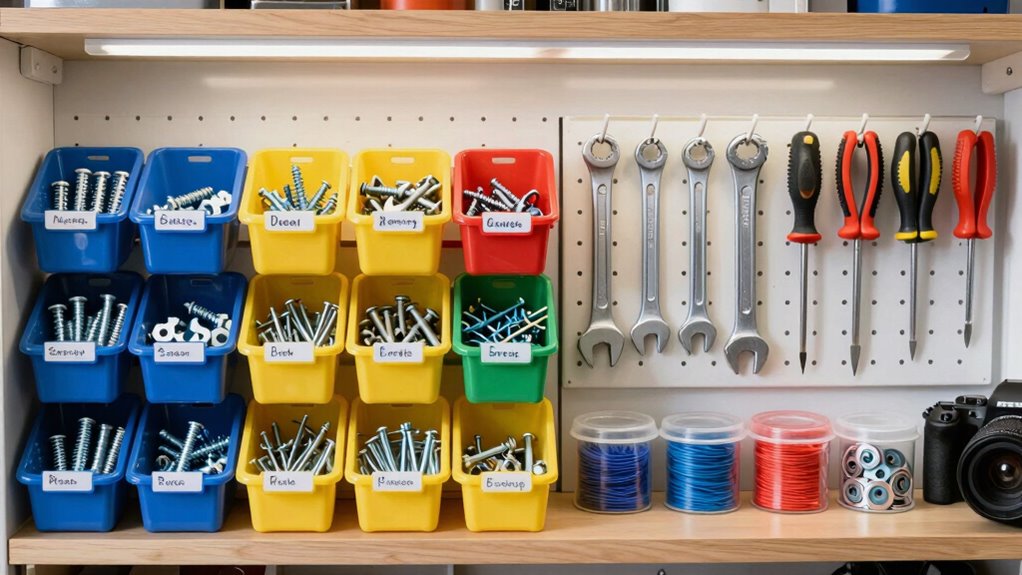

To sort your tools, hardware, and DIY supplies effectively, use clear, stackable plastic containers with labels that resist smudges and peeling. Organize smaller items like nails and screws in dedicated bins, and larger tools on shelves or pegboards for quick access. Group similar tools for efficiency and regularly update your labels to keep everything current. Doing so saves time, protects your supplies, and creates a safer workspace—if you want to learn even more, keep exploring these smart organization tips.
Key Takeaways
- Use clear, durable labels and color-coding to categorize and easily identify tools and supplies.
- Implement stackable, transparent containers for visibility and efficient space utilization.
- Hang frequently used tools on pegboards and store larger items on dedicated shelves or racks.
- Regularly review and update storage systems to prevent clutter and accommodate new supplies.
- Group similar tools together to streamline access and improve overall workspace organization.
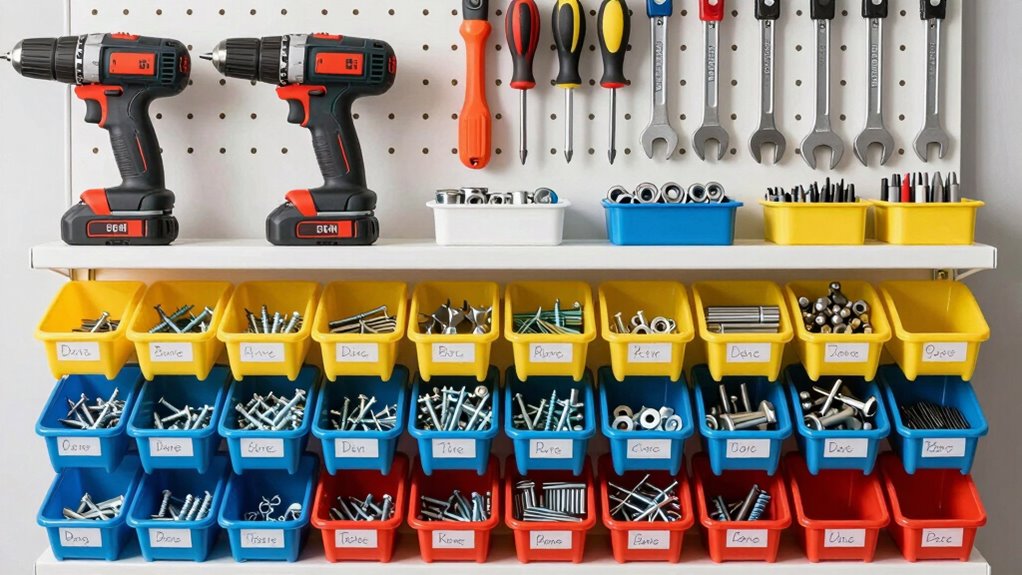
Organizing your tools and DIY supplies can make any project smoother and more enjoyable. When you have a clear system, you spend less time searching and more time building or fixing. The key to effective organization lies in using the right storage containers and implementing a reliable labeling system. Storage containers come in various shapes and sizes, so choosing the right ones helps keep your supplies protected and accessible. Clear plastic bins are especially helpful because you can see what’s inside without opening each container. Smaller containers are perfect for tiny hardware like nails, screws, and bolts, while larger bins can hold power tools, drills, and larger accessories. Stackable containers maximize space and keep your work area tidy.
A well-thought-out labeling system is equally important. When every container is labeled clearly, you eliminate guesswork and make it easier to find what you need quickly. Use durable labels that won’t smudge or peel over time, and consider color-coding by category—like red for fasteners, blue for hand tools, or green for electrical supplies. This visual cue speeds up your workflow and reduces frustration. Label both the outside and the top of each container, especially if you tend to store them on shelves or in cabinets where they might get stacked. For added clarity, include details on the labels, such as sizes or specific types, so you can grab exactly what you need without rummaging through multiple containers. Additionally, storage organization techniques can help optimize space and improve accessibility. Incorporating effective storage solutions can further enhance your organization system and make your workspace more functional. Regularly reviewing your setup can also help you identify clutter or inefficient arrangements, ensuring your workspace remains optimized for productivity. Keeping your tools and supplies sorted properly can also prevent damage and extend their lifespan.
Next, think about organizing your tools themselves. Hang frequently used tools on a pegboard for easy access, or invest in a toolbox with compartments designed for specific items. For larger tools, dedicated shelves or wall-mounted racks work well. Keep your power tools in a designated area to prevent clutter and ensure safety. Group similar items together—like all your screwdrivers, pliers, or wrenches—so you can quickly grab the right tool without rummaging through a jumble of miscellaneous supplies.
Maintain your system by regularly reviewing and updating your storage and labels. As your collection grows or changes, so should your organization methods. Take a few minutes every month to tidy up, discard damaged supplies, or add new labels. This routine keeps everything streamlined and prevents clutter from piling up. When your tools and supplies are properly sorted using the right containers and labeling systems, you create a workspace that’s efficient, safe, and more enjoyable to work in.
clear stackable plastic storage bins for tools
As an affiliate, we earn on qualifying purchases.
As an affiliate, we earn on qualifying purchases.
Frequently Asked Questions
How Often Should I Reorganize My Tools and Supplies?
You should reorganize your tools and supplies every few months to guarantee ideal tool maintenance and storage optimization. Regular checks help you identify damaged or misplaced items, keeping your workspace safe and efficient. If you notice clutter slowing you down or tools becoming hard to find, it’s time to re-assess. Frequent reorganizations also prevent rust, corrosion, and wear, extending your tools’ lifespan and making DIY projects smoother.
What Is the Best Labeling System for Small Hardware Items?
Did you know that proper labeling can boost your efficiency by up to 30%? For small hardware items, the best labeling system involves clear, durable labels on storage containers. Use labeling techniques like color coding or icons to quickly identify contents. Transparent storage containers help you see what’s inside, reducing search time. Stick to consistent labeling methods, and you’ll keep your supplies organized and easily accessible, saving time on every project.
How Can I Prevent Rust on Metal Tools During Storage?
To prevent rust on your metal tools during storage, you should regularly clean and dry them thoroughly after each use. Apply a light coat of oil or rust inhibitor to metal surfaces for rust prevention and to maintain the tools’ condition. Store tools in a dry, low-humidity environment, preferably in a toolbox or cabinet with silica gel packs. Proper metal maintenance keeps your tools in top shape and prolongs their lifespan.
What Storage Solutions Work Best for Limited Space?
Did you know that maximizing small spaces can increase storage efficiency by up to 50%? To make the most of limited space, consider using compact shelving, which stacks tools vertically, saving floor area. Magnetic containers are perfect for small parts and frequently used items, sticking to metal surfaces and keeping essentials within easy reach. These solutions help you organize effectively without sacrificing valuable space in your workshop or garage.
How Do I Prioritize Which Tools to Keep or Discard?
You should prioritize keeping tools that you frequently use for DIY project planning and that are well-maintained. Discard or donate tools that are broken, rarely used, or redundant. Regular tool maintenance helps extend their lifespan and guarantees safety. Focus on keeping versatile tools that suit your ongoing projects. By doing this, you create a streamlined collection, making your workspace more efficient and ready for your next DIY endeavor.
durable tool labels for organization
As an affiliate, we earn on qualifying purchases.
As an affiliate, we earn on qualifying purchases.
Conclusion
By organizing your tools and supplies with care, you create a workspace that feels like a well-oiled machine—each drawer, bin, and shelf a perfectly placed gear. As you close the cabinet, every wrench and screw is ready at your fingertips, waiting to bring your next project to life. When everything’s in its place, your workshop transforms into a sanctuary of productivity, where creativity flows effortlessly, and every task begins with a sense of calm and confidence.
As an affiliate, we earn on qualifying purchases.
small hardware storage containers
As an affiliate, we earn on qualifying purchases.
As an affiliate, we earn on qualifying purchases.