
To store chemicals and hazardous items safely at home, choose sturdy, compatible containers with secure lids, and keep labels clear and up-to-date. Store these items in high, childproof cabinets in a cool, dry environment away from children and pets. Regularly inspect containers, organize items by type, and dispose of expired chemicals properly. Proper storage minimizes risks—continue exploring these safety steps to protect your loved ones and property effectively.
Key Takeaways
- Use durable, clearly labeled, and secure containers to store chemicals safely and prevent leaks or reactions.
- Keep hazardous items out of children’s reach by installing childproof locks and storing on high shelves.
- Store chemicals in a cool, well-ventilated area away from temperature extremes and incompatible substances.
- Regularly inspect containers for damage, corrosion, or spills, and dispose of expired chemicals properly.
- Maintain an organized storage area with hazard signage and proper segregation to minimize accidents and ensure quick access.
Choosing the Right Storage Containers

Choosing the right storage containers is essential for keeping chemicals and hazardous items safe at home. Start by selecting containers made from appropriate materials, such as durable plastic or glass, that won’t react with the chemicals stored inside. Avoid using containers that are easily breakable or incompatible with certain substances. Proper chemical labeling is equally important; clearly mark each container with its contents and hazard information to prevent accidents. Use labels that are resistant to moisture and chemicals to ensure they stay legible over time. Also, choose containers with secure lids or closures to prevent leaks and spills. By paying attention to container material and labeling, you’ll reduce risks and maintain a safer environment for everyone in your home. Proper storage practices should also follow chemical safety guidelines to further minimize hazards. Additionally, selecting containers that are chemical-resistant can help prevent deterioration or leaks over time. Incorporating attention to detail in storage choices enhances overall safety measures. Ensuring proper ventilation around stored chemicals can also help reduce the buildup of dangerous fumes. Furthermore, using appropriate storage conditions, such as temperature control, can prolong the integrity of hazardous materials and reduce accidental reactions.
Securing Hazardous Items Away From Children and Pets

You should use childproof locks on cabinets and drawers to prevent children and pets from accessing hazardous items. Store chemicals and dangerous items on high shelves out of their reach, and always keep them in their original containers for safety. Taking these steps helps keep your home safer for everyone. Additionally, clearly labeling hazardous materials can help everyone in your household recognize and handle them safely. To further enhance safety, consider using proper storage containers designed specifically for chemicals to minimize accidental spills or leaks. Incorporating secure storage practices is essential for maintaining a safe environment when handling hazardous items. Implementing safe storage solutions can also prevent potential accidents and ensure that hazardous items are stored responsibly.
Use Childproof Locks
Childproof locks are essential for keeping hazardous items out of reach of children and pets, preventing accidental poisoning or injury. Installing safety latches on cabinets, drawers, and storage containers ensures that curious little ones can’t access dangerous chemicals or items. Choose sturdy childproof locks that are easy for adults to open but secure enough to deter children. Regularly check that the locks are functioning properly and haven’t become loose over time. Using these safety measures creates a barrier, giving you peace of mind. Remember, even small containers or bottles should be secured with childproof locks if they contain hazardous substances. Properly installed safety latches are a simple, effective way to prevent accidents and keep your home safe for everyone. Incorporating proper storage practices can further reduce risks associated with hazardous items in your home, especially considering the importance of home safety standards for protecting your loved ones. To ensure long-term safety, consider hazardous material storage guidelines that align with best practices for chemical safety at home. Additionally, implementing safe chemical handling procedures can help prevent spills and exposure, further enhancing your household safety measures.
Store in High Shelves
Storing hazardous items on high shelves keeps them out of children’s and pets’ reach, reducing the risk of accidental ingestion or exposure. Ensure that all chemicals are properly labeled for quick identification, especially in emergencies. High shelves make it harder for little ones to access dangerous substances and help maintain an organized storage area. When placing items, consider the weight and stability to prevent falls. Use clear labels and keep similar items grouped together for easy retrieval during emergencies. Regularly check that stored chemicals remain securely on shelves and are in good condition. Proper storage supports your emergency preparedness plan by keeping hazardous items secure and identifiable. Additionally, understanding the contrast ratio of your storage setup can help determine how well you can see labels and identify hazards in dim lighting conditions. Using lighting conditions effectively can further enhance safety by improving visibility of stored chemicals. Incorporating visual accessibility principles into your storage design ensures that labels are easily readable under various lighting environments, further reducing potential hazards.
Keep in Original Containers
Did you know that keeping hazardous items in their original containers considerably reduces the risk of accidental poisoning? When you store chemicals this way, it guarantees that labels, which follow labeling best practices, stay intact and clearly identify contents. This practice also helps prevent chemical misidentification and ensures that safety information remains visible. Properly labeled containers can also include hazard symbols that communicate specific dangers, making it easier for everyone in the household to recognize risks quickly. This helps prevent mix-ups and misuse. Always check that containers display proper chemical safety symbols, so you and others understand the hazards involved. If you transfer chemicals to different containers, be sure to label them correctly with the contents and date. Keeping items in their original packaging also minimizes the chance of spills or leaks, safeguarding children and pets. Additionally, proper storage practices can help prevent chemical accidents, which are crucial for maintaining a safe home environment. Implementing chemical storage guidelines can further enhance your safety measures. This simple step enhances your overall chemical safety at home, making it easier to recognize and handle hazardous items responsibly.
Organizing and Labeling for Easy Access and Identification
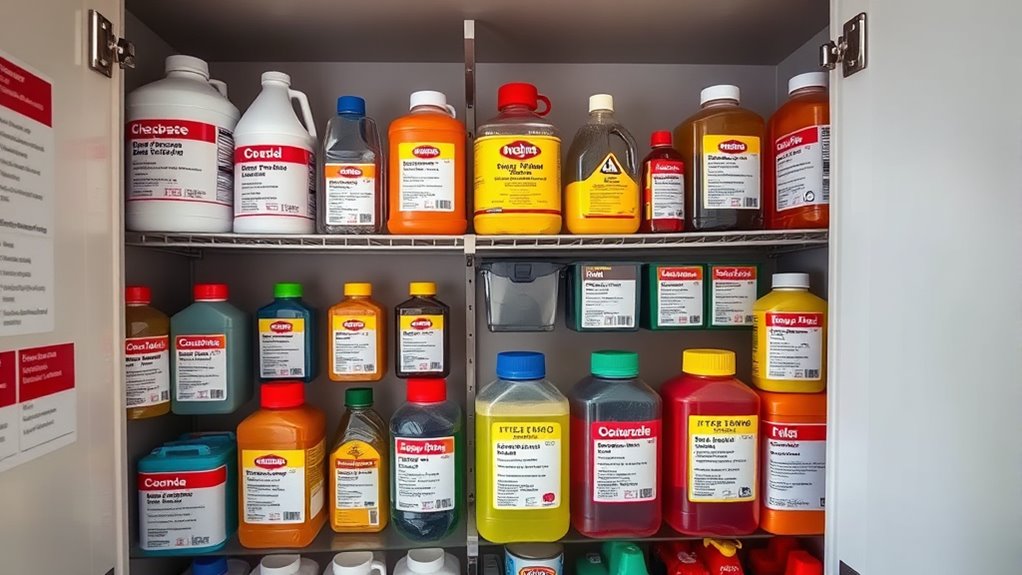
Have you ever struggled to find a hazardous item when you need it most? Organizing and labeling your chemicals ensures quick access and safety. Use clear, legible labels with labeling clarity, so you instantly recognize contents. Consider accessibility by placing frequently used items at eye level or in easy-to-reach containers. To help, create a system that groups similar items together—like cleaning supplies or paints. Here’s a simple guide:
| Item Category | Storage Location |
|---|---|
| Household cleaners | Easy-to-access shelf |
| Paints and solvents | High, labeled cabinet |
| Gardening chemicals | Bottom drawer or bin |
| Automotive fluids | Separate container, labeled |
| Personal care chemicals | Top shelf or labeled bin |
This organization makes it simple to find what you need quickly and keeps hazardous items safe. Proper labeling and storage also support auditory processing by reducing confusion and ensuring clear identification of items. Implementing smart storage solutions can further enhance safety and efficiency in managing hazardous materials at home.
Keeping Chemicals in a Temperature-Controlled Environment
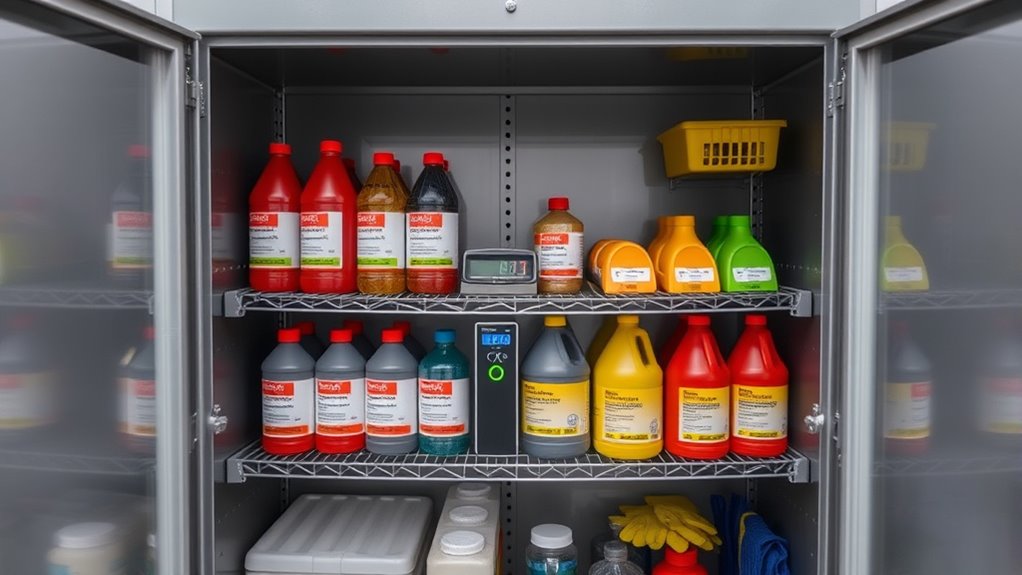
Maintaining a temperature-controlled environment is essential for ensuring the safety and effectiveness of your chemicals. Fluctuations in temperature can compromise chemical stability, leading to dangerous reactions or reduced potency. To prevent this, store chemicals in a cool, consistent environment away from heat sources, direct sunlight, and areas prone to temperature swings. Avoid garages, attics, and uninsulated spaces, as they often experience extreme temperature changes. Instead, choose a dedicated cabinet or closet in a climate-controlled room. Regularly monitor the storage area with a thermometer to catch any temperature fluctuations early. Proper temperature regulation helps maintain the integrity of your chemicals, reduces the risk of accidents, and ensures they perform as intended when needed. Additionally, understanding chemical storage guidelines can help you implement best practices for safety and effectiveness. Incorporating proper ventilation in storage areas can also prevent the buildup of potentially hazardous fumes or vapors. Consistently monitoring environmental conditions with digital thermometers can provide more precise control and early warning of temperature deviations. Using environmental monitoring devices can further enhance safety by providing real-time data on storage conditions. Ensuring proper storage conditions is crucial for maintaining chemical stability and safety over time.
Proper Disposal of Unused or Expired Chemicals
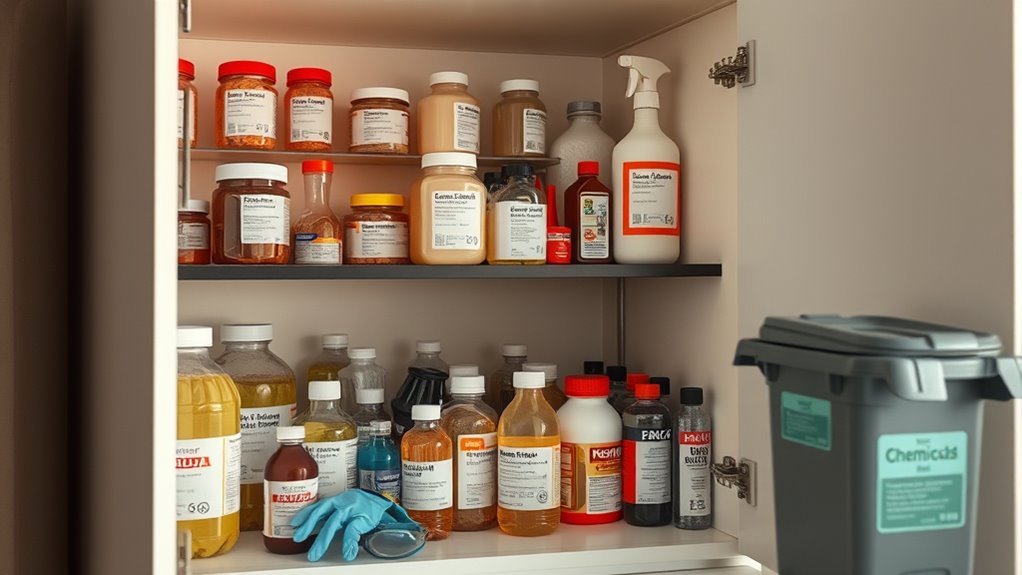
Properly disposing of unused or expired chemicals is essential for keeping your home safe and preventing environmental harm. Start by identifying expired chemicals through clear labels and safety data sheets. Never pour chemicals down the drain unless approved; instead, contact local waste disposal services. When handling a chemical spill, follow proper chemical spill response procedures—wear protective gear and contain the spill immediately. Use the table below to help categorize chemicals for disposal:
| Chemical Type | Disposal Method |
|---|---|
| Corrosive acids/bases | Take to hazardous waste facility |
| Flammable liquids | Use approved disposal programs |
| Toxic substances | Avoid household disposal |
| Unknown chemicals | Seek professional waste management |
Always prioritize safety and follow local regulations for chemical disposal.
Regular Inspection and Maintenance of Storage Areas

You should schedule routine checks of your storage areas to catch any issues early. During inspections, look for leaks, spills, or damaged containers that could pose hazards. Address any storage hazards immediately to keep your home safe and prevent accidents.
Schedule Routine Checks
Scheduling regular inspections of storage areas guarantees that hazardous items and chemicals remain safe and properly contained. By routinely checking your storage space, you can spot leaks, corrosion, or damaged containers early, reducing the risk of accidents. These checks are essential for maintaining chemical safety and preventing hazards before they escalate. During each inspection, verify that labels are clear, lids are secure, and storage conditions remain appropriate. Keep an eye out for spills or signs of deterioration, and promptly address any issues. Consistent inspections help ensure hazardous items are stored correctly, minimizing the chance of leaks or exposure. Establishing a routine for these checks reinforces hazard prevention, keeps your home safe, and protects everyone from potential chemical-related accidents.
Address Storage Hazards
Regular inspections not only help detect leaks and deterioration early but also address storage hazards that could lead to accidents. You should regularly check your storage areas for signs of corrosion, damaged containers, or spills, which can compromise chemical spill prevention. Ensuring proper hazard signage is in place alerts everyone to potential dangers and reinforces safe handling. During inspections, confirm that chemicals are stored according to their compatibility, reducing the risk of dangerous reactions. Keep the area clean and organized, removing any clutter that could cause accidental spills or falls. Routine maintenance helps you spot issues before they become serious problems, minimizing hazards and ensuring your home remains safe. Consistent checks are essential for maintaining a secure environment for everyone.
Frequently Asked Questions
How Often Should I Review My Chemical Storage Safety Procedures?
You should review your chemical storage safety procedures at least every six months. Follow your storage checklist closely during each safety review schedule to identify potential hazards or needed updates. Regular reviews help guarantee safe handling, proper labeling, and secure storage of hazardous items. Staying proactive prevents accidents and keeps your home safe. Don’t forget to update your safety procedures if you acquire new chemicals or if regulations change.
Are There Legal Regulations for Storing Hazardous Materials at Home?
You absolutely must follow legal regulations for hazardous materials at home—they’re like the rulebook of safety! Ignoring safety regulations can turn your home into a danger zone, risking fines or worse. Legal compliance guarantees you’re storing chemicals safely, preventing accidents and keeping your family protected. Always check local laws and guidelines; they’re there to make sure your storage methods are safe, responsible, and legally sound.
What Are the Signs of Chemical Deterioration or Spoilage?
You’ll notice chemical deterioration or spoilage if you detect a strong chemical smell or a noticeable color change in the substance. These signs indicate that the chemical may have broken down or become unsafe to use. Always inspect stored chemicals regularly, and if you observe these signs, dispose of the item properly and avoid inhaling fumes or touching it to prevent potential health risks.
Can Natural or Homemade Storage Solutions Be Effective and Safe?
Did you know that over 60% of households use DIY containers or natural preservatives for storage? You can definitely find effective and safe natural or homemade storage solutions. Using DIY containers made from glass or food-grade plastics guarantees safety, while natural preservatives like vinegar or baking soda help extend shelf life without chemicals. Just make sure to label everything clearly and keep hazardous items out of reach to maintain safety at home.
How Should I Handle Chemical Spills or Leaks Promptly and Safely?
If you experience a chemical spill or leak, act quickly by wearing protective gloves and goggles for safety. Use spill containment materials like absorbent pads or sand to control the leak. Ventilate the area and call emergency services if needed. Keep emergency preparedness supplies nearby, and don’t attempt to clean large spills alone. Prompt action prevents hazards and minimizes damage, ensuring you handle leaks safely and responsibly.
Conclusion
By choosing the right containers and securing hazardous items, you create a safe haven in your home, shielding loved ones from harm. Imagine a neatly organized cabinet, each bottle and container clearly labeled, tucked away in a cool, dark corner. Regular checks guarantee everything stays in place, like a well-oiled safety net. When you handle chemicals responsibly, you turn your space into a protected sanctuary—calm, secure, and ready for any challenge.