
To keep your outdoor cushions and furniture in top shape during the off-season, clean them thoroughly and guarantee everything is completely dry. Store cushions upright in breathable containers and cover furniture with waterproof, UV-resistant covers that allow airflow. Choose a dry, well-ventilated space like a garage or shed, and elevate furniture off the ground to prevent moisture damage. Follow these tips to protect your patio gear and enjoy hassle-free setups next season. More detailed advice awaits as you continue.
Key Takeaways
- Clean and dry cushions and furniture thoroughly before storage to prevent mold, rust, and deterioration.
- Use breathable covers and store items in a dry, ventilated indoor space or well-protected outdoor shed.
- Elevate furniture off the ground on pallets or racks to avoid moisture contact and pest infestation.
- Organize and label storage containers for easy seasonal retrieval and efficient space utilization.
- Regularly inspect stored patio gear for damage or pests, and clean surfaces before reusing.
Preparing Your Outdoor Furniture for Storage

Before storing your outdoor furniture, it’s essential to give it a thorough cleaning to remove dirt, pollen, and residues that can promote mold and mildew growth. Use a gentle soap solution and a soft brush or cloth to clean surfaces, paying special attention to crevices and joints. Make sure all furniture is completely dry before packing it away; moisture left behind can cause rust, rot, or mold. For wooden pieces, apply a sealant or oil to protect the finish during storage. Metal furniture benefits from cleaning and a protective coating to prevent corrosion. Don’t forget to clean and dry cushions separately, as damp fabric can develop mold. Proper preparation ensures your furniture stays in top condition and ready to use when the season returns. Additionally, consider ventilation considerations to prevent moisture buildup during storage and maintain your furniture’s longevity.
Choosing the Best Storage Location
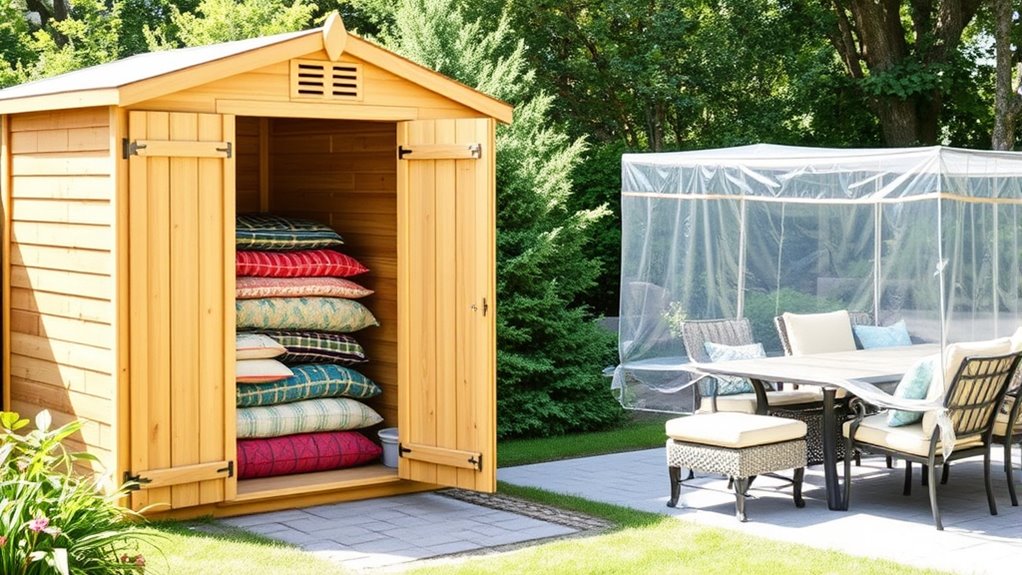
Selecting the essential storage location for your outdoor furniture is crucial to preserving its condition and extending its lifespan. You want a spot that shields your gear from harsh weather, UV rays, and temperature fluctuations. Indoor spaces like garages, basements, or sheds offer ideal protection by controlling humidity and preventing moisture damage. If indoor storage isn’t available, outdoor options such as weatherproof sheds or covered patios work well, especially if equipped with proper ventilation. Elevating furniture off the ground reduces contact with moisture. Consider accessibility—choose a location easy to reach for seasonal setup and removal. Ensure the area is clean, dry, and free from pests. Proper placement now minimizes the need for extensive cleaning or repairs later, keeping your outdoor furniture looking its best year after year. Incorporating environmental protection measures can further safeguard your gear from weather-related wear.
Protecting Cushions During Off-Season
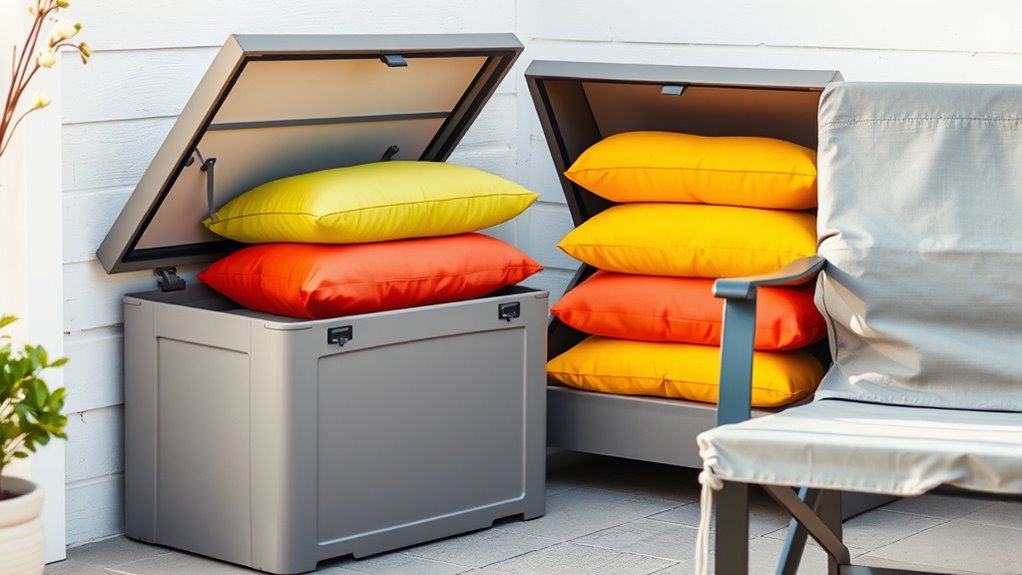
To effectively protect your outdoor cushions during the off-season, you need to guarantee they are thoroughly cleaned and completely dry before storage. This step prevents mold, mildew, and unpleasant odors from developing. First, wash cushions with mild soap and water, then allow them to dry in a well-ventilated area. Use a fabric protector spray for added defense against stains and moisture. Store cushions in breathable containers or bags that allow air circulation, preventing trapped moisture. Elevate cushions off the ground using pallets or racks to avoid dampness absorption. Additionally, ensuring proper privacy and security during storage helps safeguard your outdoor gear from theft or unauthorized access. Regularly inspect stored cushions for signs of moisture or pests. Proper cleaning and drying, combined with suitable storage solutions, ensure your cushions stay fresh and damage-free for the next season.
Utilizing Effective Cover Solutions
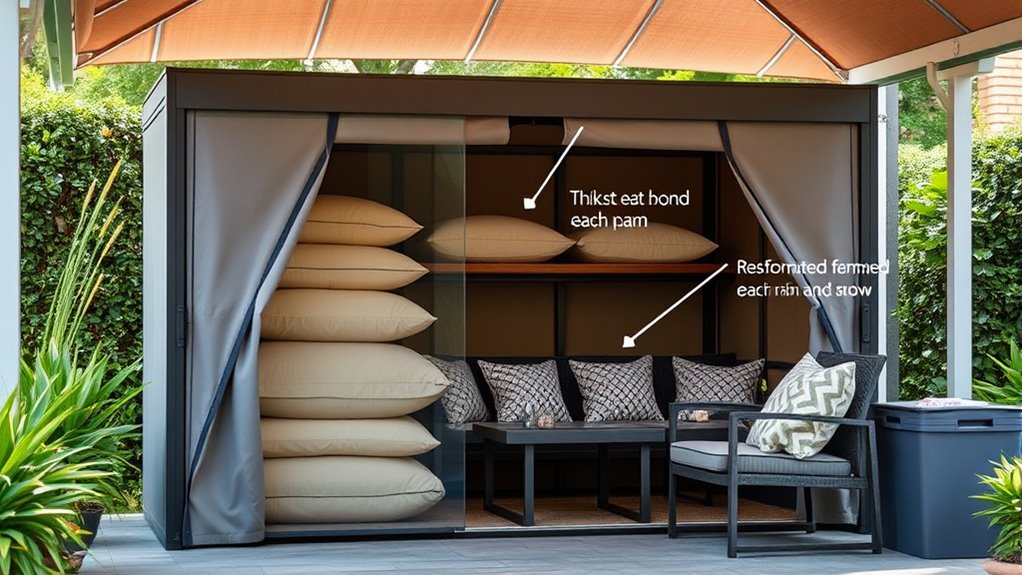
Using effective cover solutions is vital to protect your outdoor furniture from the elements and extend its lifespan. Choose covers made from heavy-duty, waterproof materials with UV resistance to shield against rain, snow, and sun damage. Make certain covers fit snugly to prevent dirt, debris, and moisture from seeping in, which can cause mold or rust. Ventilation panels or dry vents are essential, as they allow air circulation and prevent moisture buildup under the cover. For cushions, opt for breathable, ventilated covers that keep them fresh and maintain their shape. Properly covering your furniture after cleaning and drying reduces the need for frequent maintenance and helps preserve the finish and structural integrity over time. Well-chosen covers are an investment in protecting your outdoor gear year-round. Incorporating appropriate storage solutions can further enhance the longevity of your patio furniture and cushions.
Organizing Outdoor Storage Spaces
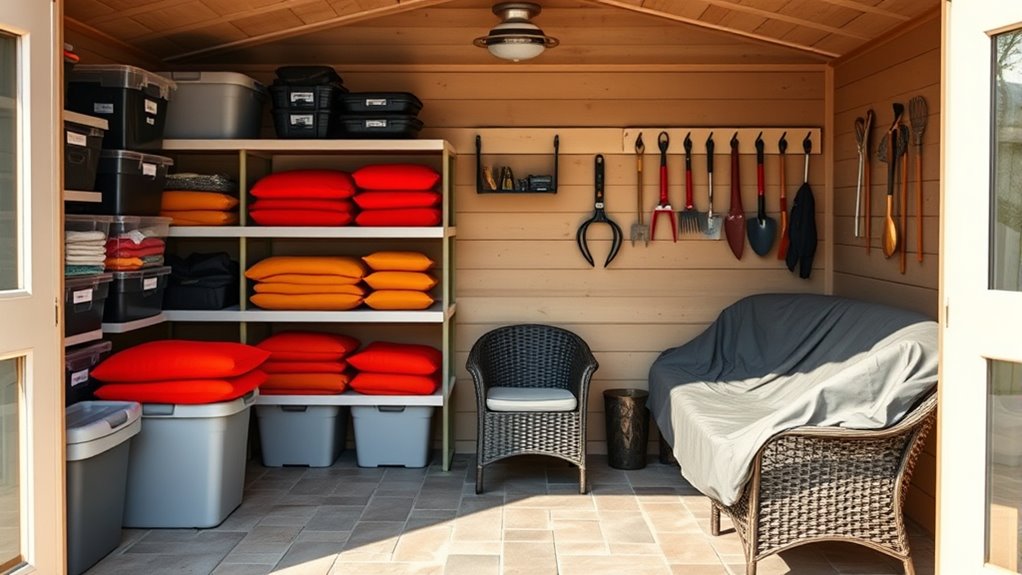
Ever wondered how to make your outdoor storage space more functional and organized? Start by sorting items into categories—furniture, cushions, tools—and designate specific areas for each. Use sturdy shelving units or storage cabinets to keep everything off the ground, preventing moisture damage. Label containers clearly so you can quickly find what you need when the season changes. Consider stacking or nesting smaller items to save space, and keep frequently used tools or cushions within easy reach. Elevate furniture on pallets or glides to prevent contact with damp surfaces. Regularly clean and inspect your storage area to catch issues early. Incorporating climate control methods can help maintain optimal conditions and extend the life of your outdoor gear. Efficient organization reduces clutter, protects your outdoor gear, and makes setup or winterization faster and easier.
Maintenance Tips for Long-Term Care

To keep your outdoor furniture and cushions in top shape, you should perform regular inspections to catch issues early. Preventative pest control helps avoid damage from insects and critters, while seasonal maintenance checks guarantee everything stays clean and functional. Staying proactive will extend the lifespan of your outdoor pieces and keep them looking great year after year. Incorporating simple maintenance routines can make a significant difference in preserving your patio gear over time.
Regular Inspection Routines
Regular inspection routines are essential for maintaining outdoor furniture and cushions over the long term. You should regularly check for signs of damage, moisture, or pests. Look for rust, cracks, or mold, and address issues immediately to prevent further deterioration. Make certain cushions remain dry, intact, and free of pests; replace or repair damaged items promptly. Staying vigilant helps you catch problems early, saving money and extending your gear’s lifespan. Incorporating natural pools into your backyard can also reduce chemical use and promote sustainability, further protecting your outdoor investments.
Preventative Pest Control
Preventative pest control is essential for safeguarding your outdoor furniture and cushions from insects, rodents, and other pests that can cause damage or pose health risks. Start by cleaning and thoroughly drying all items before storage, as moisture attracts pests. Use sealed containers or airtight bags for cushions to prevent pest entry and mold growth. Apply pest-repellent sprays or natural deterrents around storage areas, especially in sheds or garages. Keep the storage space tidy, removing debris, leaves, and standing water that attract pests. Regularly inspect stored furniture and cushions for signs of pest activity, such as droppings or chewed fabric. Elevate furniture off the ground using pallets or glides to reduce pest access. Incorporating pest prevention strategies can further enhance your efforts by addressing potential entry points and pest habitats. Proper pest control guarantees your patio gear stays in good condition for seasons to come.
Seasonal Maintenance Checks
Conducting seasonal maintenance checks is essential to keep your outdoor furniture and cushions in top condition year-round. Regular inspections help identify issues early, preventing costly repairs. Start by examining furniture for loose screws, rust, or damage, and tighten or repair as needed. Check cushions for signs of mold, tears, or insect activity. Ensure all pieces are thoroughly cleaned and dry before storage. Consider applying protective sealants or coatings to wooden and metal furniture to prevent deterioration. Look for the following:
- Tighten any loose hardware and repair or replace damaged parts
- Clean and dry cushions and furniture thoroughly
- Apply protective sealants or coatings as appropriate
- Inspect for signs of pests or mold and treat promptly
In addition, utilizing reliable whole‑home backup power can help ensure your outdoor gear remains protected during unexpected power outages, especially in off-season storage areas. These steps keep your patio gear in great shape for many seasons to come.
Tips for a Smooth Retrieval and Reuse

To guarantee a smooth retrieval and reuse of your outdoor furniture and cushions, start by carefully inspecting all items for any signs of damage, moisture, or pests before bringing them indoors or out for use. Check cushions for mold, mildew, or insect activity, and clean them if needed. Examine furniture for rust, loose parts, or cracks, and repair as necessary. Clean surfaces thoroughly to remove dust and debris, ensuring they’re ready for immediate use. When removing covers, do so carefully to prevent tearing. Store cushions upright and ventilated during retrieval to maintain freshness. For furniture, wipe down and inspect joints or moving parts. Incorporating connected equipment and proper organization can further streamline your storage process. Proper organization and cleaning before use save time and extend the lifespan of your patio gear.
Frequently Asked Questions
How Often Should I Clean My Outdoor Furniture Before Storing It?
You should clean your outdoor furniture thoroughly before storing it at least once a year, ideally at the end of the season. If your furniture gets especially dirty, pollen-covered, or stained during use, clean it more often to prevent buildup. Regular cleaning removes dirt, pollen, and residues that cause mold and mildew, ensuring your furniture stays in good condition, lasts longer, and is ready for use when the season begins again.
Can I Store Outdoor Cushions Outside Year-Round?
Sure, you can leave your cushions outside year-round—if you enjoy mold, mildew, and a wardrobe of soggy, misshapen fluff. But seriously, exposure to rain, snow, and sun will turn your cushions into a soggy, moldy mess. It’s best to store them in a dry, well-ventilated space or use waterproof covers with proper ventilation. Your cushions will thank you with a longer, fresher life.
What Is the Best Way to Prevent Mold on Stored Cushions?
To prevent mold on stored cushions, you should clean and dry them thoroughly before storage. Use airtight containers or breathable storage bags that allow air circulation and keep moisture out. Store cushions in a dry, well-ventilated space, and regularly check them for any signs of moisture or mold. Elevate cushions off the ground using pallets or furniture glides to minimize moisture absorption and maintain airflow.
Are Climate-Controlled Storage Units Necessary for Outdoor Furniture?
Climate-controlled storage units aren’t always necessary, but they can be a smart investment if you want to prolong your furniture’s life. You might be surprised to learn that high humidity and temperature fluctuations cause wood rot, rust, and fading. If you live in a climate with extreme weather or high moisture, investing in climate control guarantees your outdoor furniture stays in top shape, avoiding costly repairs or replacements later on.
How Do I Prevent Pests From Infesting Stored Cushions?
You can prevent pests from infesting your stored cushions by keeping them in airtight containers or plastic bags that block pests’ entry. Make sure cushions are thoroughly cleaned and completely dry before storage. Adding natural repellents like cedar chips or lavender sachets inside storage containers also deters insects. Regularly inspect your cushions for signs of pests or moisture buildup, and keep storage areas clean and well-ventilated for best protection.
Conclusion
By following these simple tips, you’ll turn your outdoor storage into a fortress that keeps your patio gear safe all year round. With just a little effort, you’ll protect your cushions and furniture from the elements, ensuring they stay as pristine as the day you bought them. Think of your storage space as a secret treasure chest—guarding your outdoor treasures from the harshest storms and the test of time. Happy storage and even happier outdoor adventures!