Creating a home reference binder helps you stay organized by consolidating essential info like insurance, medical records, financial documents, and property logs in one accessible place. Use clear dividers, color coding, and regular updates to keep everything current and easy to find. Decide whether a digital, paper, or hybrid system works best for you, and secure sensitive data carefully. Continuing with these tips will help you master a well-organized, secure home binder that keeps everything at your fingertips.
Play games included with Prime
Start a Prime free trial and play with Amazon Luna on your devices.
As an affiliate, we earn on qualifying purchases.
Key Takeaways
- Include essential documents like insurance policies, IDs, medical records, and financial information for quick access and safety.
- Organize sections with clear labels, color-coded dividers, and tabs for easy navigation and efficient updating.
- Regularly review and update the binder contents, removing outdated info and adding new records for accuracy.
- Store physical copies securely in a fireproof safe and maintain encrypted digital backups for added security.
- Share the binder’s location and key information only with trusted family members and establish security protocols.
home reference binder with dividers
As an affiliate, we earn on qualifying purchases.
As an affiliate, we earn on qualifying purchases.
Essential Sections to Include in Your Home Reference Binder
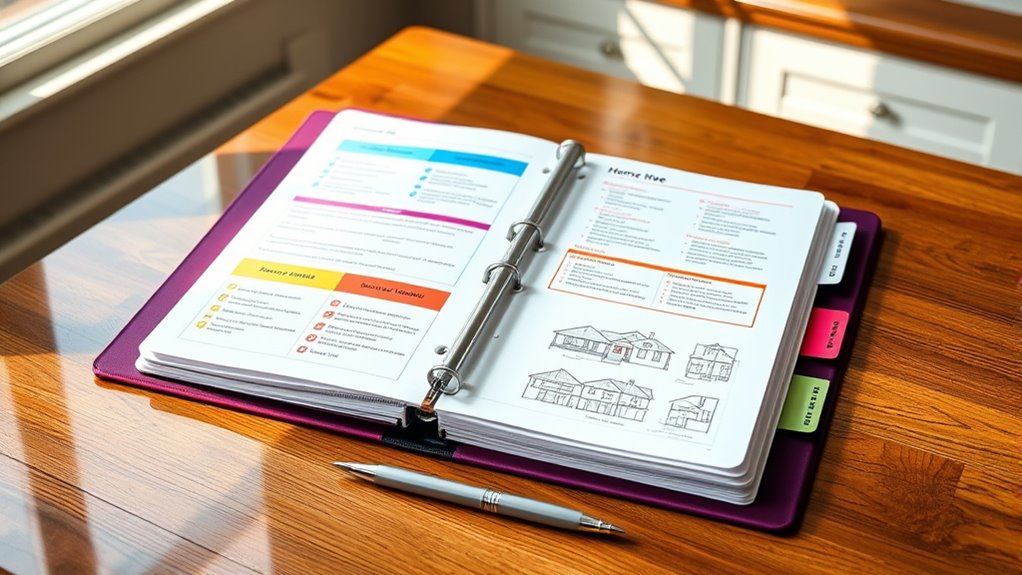
A well-organized home reference binder should include several indispensable sections to guarantee you can quickly find important information when needed. Start with your insurance policies and contact details, so you can easily reach providers or file claims. Keep crucial records like birth certificates, passports, and marriage licenses in a dedicated section for quick access during emergencies. Include medical information such as prescriptions, doctor contacts, and health histories to streamline healthcare visits. Financial records, including bills, budgets, and income details, help you stay on top of your expenses. Finally, maintain property and home maintenance logs to track repairs, warranties, and service schedules. Organizing these sections ensures everything essential is in one place, saving time and reducing stress when critical information is needed most. Additionally, consider adding a section on equipment maintenance and troubleshooting, especially if you have specialized tools or gear, to keep everything functioning smoothly.
fireproof safe for important documents
As an affiliate, we earn on qualifying purchases.
As an affiliate, we earn on qualifying purchases.
Effective Organization Methods for Your Binder

Using clear dividers helps keep your binder organized and makes it easy to find specific information quickly. Regular updates guarantee all details stay current and relevant, saving you time and frustration. Stay consistent with these methods to maintain an efficient and accessible home reference system. Incorporating support breakfast options into your binder can also provide helpful meal ideas and nutritional information for busy mornings.
Use Clear Dividers
Ever wonder how to keep your home reference binder neat and easy to navigate? Using clear dividers makes a huge difference. They help you quickly find sections like insurance, medical info, or bills without flipping through pages. Choose dividers with visible labels or write on tabs for quick identification. Color-coded dividers can also make sections stand out, reducing search time. Here’s a simple example:
| Divider Type | Purpose |
|---|---|
| Clear Plastic | Protects and labels |
| Paper Tabs | Easy to write labels |
| Color Tabs | Visual section cues |
| Index Divider | Summarizes contents |
Clear dividers organize your binder visually and functionally. They keep everything in its place, so you save time and stay confident knowing your important info is easy to access. Incorporating contrast ratio considerations can further improve how well you can read and distinguish sections at a glance.
Maintain Regular Updates
Regularly updating your home reference binder is crucial to keep all information current and reliable. Set a routine to review your binder at least quarterly, checking contact details, passwords, and important documents. Add new records, such as recent bills, medical visits, or insurance policies, to ensure everything is up-to-date. Remove outdated or irrelevant pages to avoid confusion. Keep digital copies of critical documents as backups, updating them alongside paper versions. Share the location of your binder with trusted family members, so everyone knows where to find essential information during emergencies. Use checklists to track updates and schedule reminders to review sections regularly. Staying proactive with updates ensures your binder remains a trustworthy resource and reduces stress when quick access to information is needed. Effective organization methods can help simplify this process and ensure nothing is overlooked.
As an affiliate, we earn on qualifying purchases.
Digital and Paper System Options for Household Records

Are digital and paper systems the best way to organize household records? It depends on your preferences and needs. Digital systems let you access files from anywhere, easily back them up, and password-protect sensitive information. Cloud storage guarantees you can retrieve documents quickly during emergencies. Paper systems, like a well-organized binder, don’t rely on technology and are simple to update—just insert or replace pages. They’re tangible, easy to flip through, and remain accessible during power outages or tech failures. A hybrid approach combines both, giving you the security of physical copies and the convenience of digital access. Additionally, incorporating smart home technology can help automate and manage your records more efficiently. Whichever method you choose, consistency and regular updates are key to keeping your records current and useful when you need them most.
As an affiliate, we earn on qualifying purchases.
Managing Family and Household Information

Managing your family and household information keeps everything organized and accessible. By tracking schedules and chores, you guarantee everyone stays on the same page and tasks get completed. This system saves time and reduces stress during busy days. Incorporating smart appliances into your organization can further streamline household management.
Family Schedule Organization
Organizing your family schedule within your home reference binder helps guarantee everyone stays on the same page and important appointments aren’t overlooked. You can create a dedicated calendar section, listing activities, school events, and appointments. Use clear labels and color coding to differentiate family members and event types. To visualize, consider this example:
| Family Member | Weekly Activities & Appointments |
|---|---|
| Alice | Soccer practice, dentist appointment |
| Bob | Work meetings, parent-teacher night |
| Kids | Homework, after-school clubs, playdates |
| Weekend Plans | Tasks or Events |
| Saturday | Grocery shopping, family hike |
| Sunday | Church, family movie night |
| Special Events | Birthday party, community fair |
This keeps everyone informed and minimizes scheduling conflicts. Incorporating a digital calendar integration can further streamline updates and ensure reminders are sent promptly.
Household Task Tracking
Keeping track of household tasks guarantees that responsibilities are clear and completed on time, preventing chaos and last-minute scrambles. Use your binder to create a dedicated section for chores, maintenance, and seasonal tasks. List daily, weekly, and monthly duties with checkboxes or dates to make sure nothing falls through the cracks. Assign specific tasks to family members to promote shared responsibility. Include reminders for appointment deadlines, bill payments, and home repairs. Regularly update this section to reflect completed tasks and upcoming needs. By keeping a clear, organized record, everyone stays informed and accountable. Whether you prefer paper checklists or digital trackers, this system helps you stay on top of household management, reducing stress and ensuring your home runs smoothly. Decoding slang can help you better understand informal language used in household communication or messages.
Regular Maintenance and Updating of Your Binder
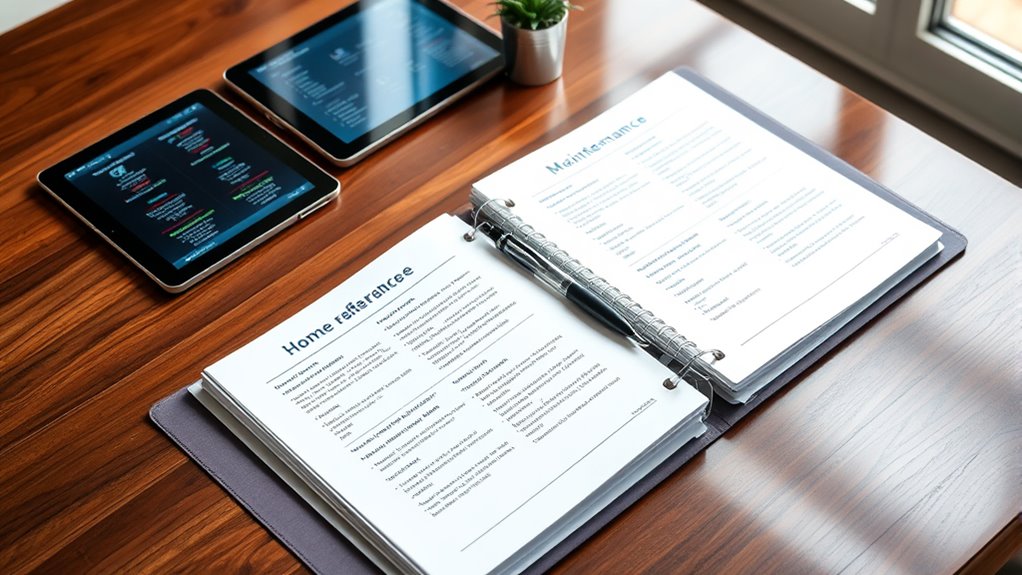
To guarantee your home reference binder remains a reliable resource, it’s essential to schedule regular reviews and updates. This ensures all information stays current and useful. Set a recurring reminder—monthly or quarterly—to go through each section. During these reviews, you should:
- Add recent documents or records
- Remove outdated or irrelevant pages
- Update contact information or passwords
- Confirm the security and accessibility of the binder
- Consider including information about water parks and aquatic activities that might be relevant for family fun or health.
Tips for Securing and Sharing Your Important Information
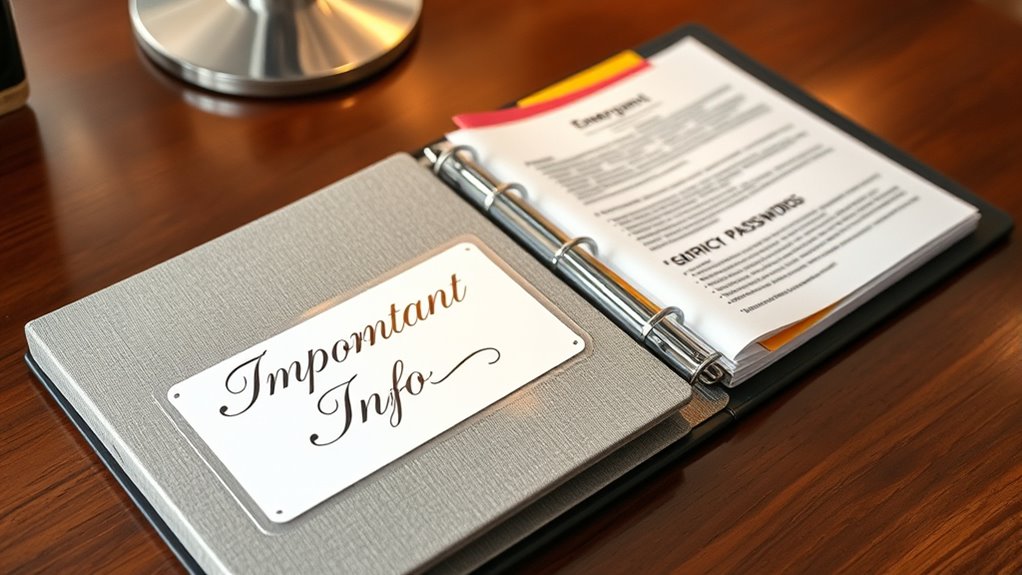
Securing and sharing your important information is essential to protect your household and guarantee quick access when needed. Use strong, unique passwords for digital files, and enable two-factor authentication whenever possible. Store physical documents in a fireproof, locked safe or a secure location known only to trusted family members. Regularly update passwords and security codes, and review access permissions. Share your binder’s location and key contents only with trusted individuals, like a spouse or close family member. Consider creating a digital copy with password protection as a backup. Keep a list of emergency contacts and instructions in a separate, secure spot. Maintaining transparency about your affiliate relationships supports trust, which is vital when sharing sensitive information. By taking these steps, you ensure your important information remains safe yet accessible in case of emergencies.
Frequently Asked Questions
How Often Should I Review and Update My Home Reference Binder?
You should review and update your home reference binder at least quarterly to keep everything current. Check important sections like insurance, medical info, and financial records for accuracy, adding new documents and removing outdated ones. Regular updates ensure you’re prepared for emergencies and can quickly access essential info when needed. Set reminders on your calendar to stay consistent, and involve trusted family members to keep the binder all-encompassing and secure.
What Are the Best Digital Tools for Managing Household Records Securely?
You should use digital tools like password-protected cloud storage services such as Google Drive or Dropbox, which offer encryption and secure access. Apps like LastPass or 1Password help manage passwords safely. Consider dedicated home management apps like Cozi or FamilyWall for organizing schedules and records securely. Always enable two-factor authentication for added security, and regularly update your passwords to keep your household information safe from breaches.
How Can I Ensure My Binder Is Accessible During Emergencies?
Think of your binder as a life raft in a storm—it’s essential to stay accessible. Keep it in a secure, known location, and tell trusted family members where it is. Use a waterproof, fireproof container if needed. Consider having a digital backup stored securely online. Regularly review and update your binder to guarantee vital info is current, so you’re always ready to navigate emergencies smoothly.
What Should I Do if I Lose Digital Access to My Records?
If you lose digital access to your records, stay calm and use your paper binder as a backup. Keep printed copies of essential documents like IDs, insurance info, and medical records in your binder. Store it in a secure, easily accessible location. Regularly update both digital and paper versions to make sure you always have current information. This way, you’ll be prepared even without internet or device access.
How Do I Choose a Secure Location to Store My Physical Binder?
You should choose a secure, easily accessible spot like a lockable cabinet or a hidden drawer in your home. Avoid obvious places like the kitchen or main entryway. Make sure the location is waterproof and fire-resistant if possible. Inform trusted family members of its whereabouts. Regularly check the security and condition of the storage area, so your binder stays safe and intact when needed.
Conclusion
Creating a home reference binder keeps your crucial information organized and easily accessible. Did you know that 60% of homeowners say managing household documents reduces stress? By maintaining and updating your binder regularly, you’ll save time and avoid last-minute searches during emergencies. Whether you prefer digital or paper systems, staying organized guarantees your family’s essential info is always at your fingertips. Start today and enjoy the peace of mind that comes with being prepared.
Fall yard work Picks
leaf blowers
As an affiliate, we earn on qualifying purchases.