
To keep a shared kids’ room organized and minimize mess, establish clear zones for different activities and age groups, like a cozy corner for younger kids and a study area for older ones. Use multi-functional furniture, labels, and baskets to make storage easy and fun. Encourage kids to take responsibility by involving them in organizing and developing routines for tidying up. Keep adjustments flexible as your kids grow, and learn useful tips if you continue exploring for more ideas.
Listen free for 30 days with Audible
Thousands of audiobooks and originals — cancel anytime.
As an affiliate, we earn on qualifying purchases.
Key Takeaways
- Establish designated zones for toys, study, and rest to clearly define each child’s space and reduce clutter.
- Use labeled, color-coded storage solutions to make cleanup quick and intuitive for kids.
- Involve children in choosing storage and organization methods to foster ownership and responsibility.
- Regularly reassess and adapt storage setups as children grow and their needs change.
- Create consistent routines for tidying up to develop habits and maintain an organized shared space.
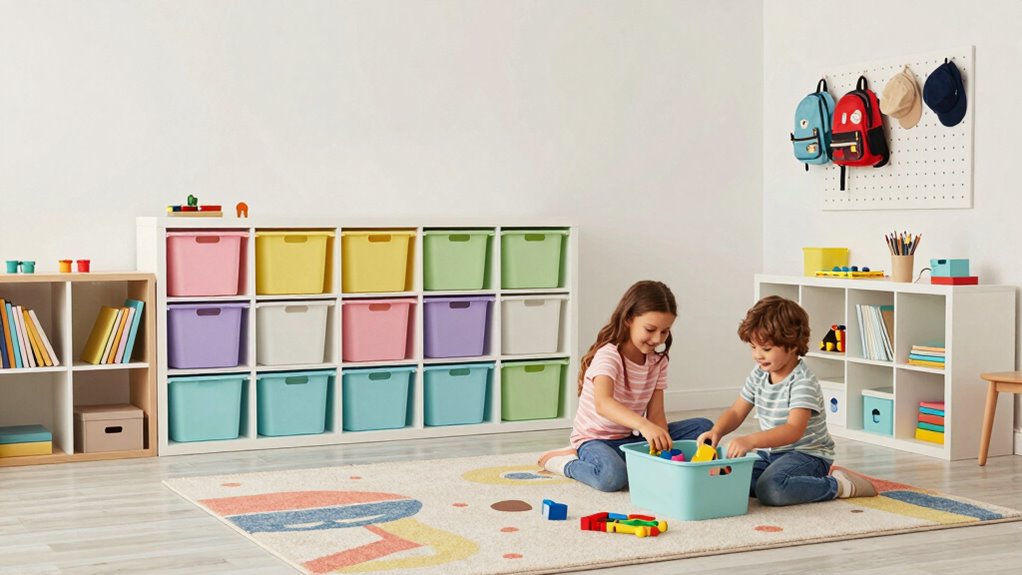
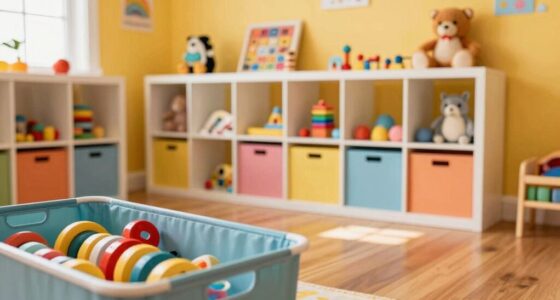
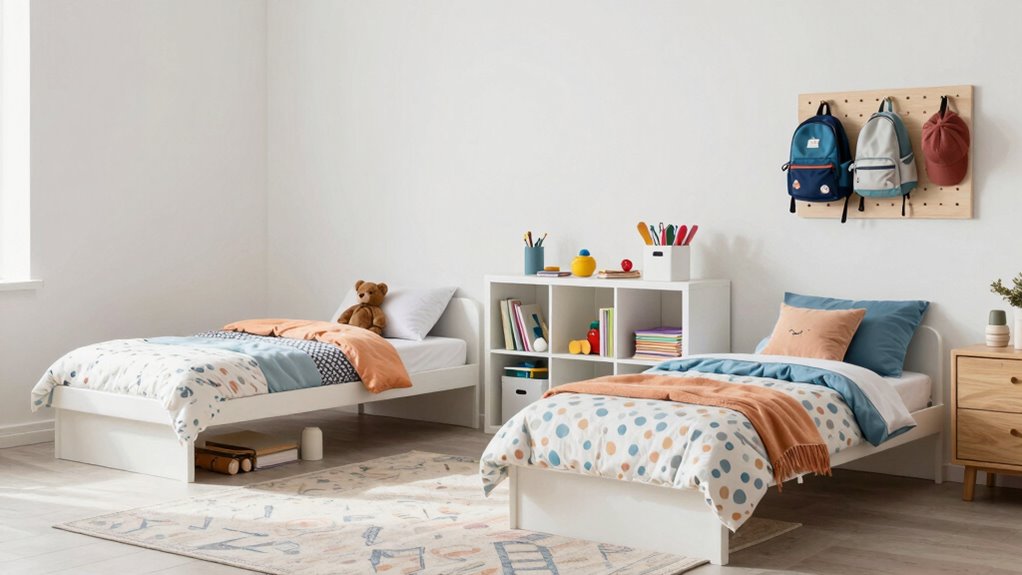
Sharing a kids’ room can be both fun and challenging, especially when keeping it organized feels like an uphill battle. When you’re trying to manage space for children of different ages, the key is creating designated areas that suit their needs. Establishing age-appropriate zones helps each child understand where their things belong, reducing clutter and confusion. For example, set up a cozy corner for your younger one’s toys and books, while giving the older sibling a dedicated study or craft space. This approach encourages responsibility and keeps items in their proper places.
Create personalized zones to help kids stay organized and reduce clutter in shared bedrooms.
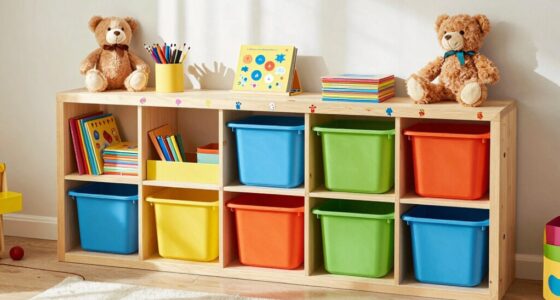
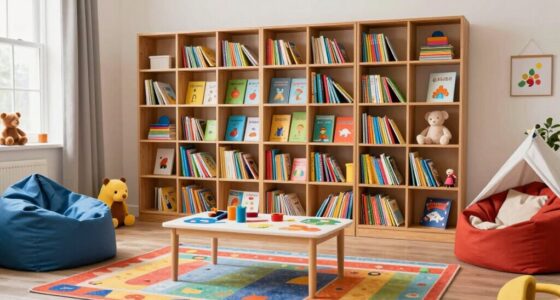
To keep the room tidy, you need creative storage solutions that maximize space and make tidying up easier. Think outside the box—use multi-functional furniture like beds with drawers underneath or storage ottomans that serve as seating. Wall-mounted shelves or pegboards can hold books, art supplies, or small toys, freeing up floor space. Baskets and bins are great for quick cleanups; label them clearly so your kids know exactly where to put their belongings. Using different colors or labels can help young children identify where items go, making organization a fun and educational activity. Additionally, involving your children in the storage setup process can motivate them to maintain their space and understand the importance of organization. Incorporating child-friendly organization strategies can further simplify their daily routines. Regularly reassess the storage setup as your children grow and their needs change, ensuring the system remains effective and tailored to their evolving needs. What works for a toddler might not be suitable for a tween, so adapt your organization system to keep it effective.
Encouraging your kids to take ownership of their space is crucial. Involve them in choosing storage bins, labels, or decorations so they feel invested in maintaining the room. This ownership fosters respect for their environment and makes them more likely to keep it organized. Remember, the goal isn’t perfection but creating a space where kids can play, learn, and rest comfortably without constant messes. A well-organized space can significantly reduce stress and make daily routines smoother. Creating routines and involving children in organization tasks helps develop good habits early on, making sustained tidiness more achievable. With thoughtful zones and creative storage solutions, you’ll find managing a shared kids’ room becomes less of a chore and more of a teamwork effort.
kids room storage bins with labels
As an affiliate, we earn on qualifying purchases.
As an affiliate, we earn on qualifying purchases.
Frequently Asked Questions
How Do I Encourage Kids to Keep the Room Tidy?
You can encourage your kids to keep the room tidy by establishing decorating routines and cleaning schedules they understand and follow. Make tidying up fun with rewards or games, and set clear expectations. Involve them in organizing their space, giving ownership and responsibility. Consistency is key, so stick to regular routines, and praise their efforts. Over time, these habits will become second nature, fostering a cleaner, more organized shared kids’ room.
What Storage Solutions Work Best for Different Ages?
You should choose versatile storage solutions tailored to each age group. Use toy storage bins and baskets for easy access and cleanup, making it fun for younger kids. For clothing organization, opt for low-hanging rods and clear drawers so older children can independently manage their wardrobe. Adjustable shelving and stackable bins also work well, allowing you to adapt as kids grow. This approach keeps the room organized and encourages responsibility.
How Often Should I Declutter the Shared Space?
You should declutter your shared space every few months, but let’s be honest, who has time for that? Instead, establish a toy rotation system and follow a regular decluttering schedule—monthly or quarterly—that keeps mess manageable. This way, you avoid overwhelming clutter, giving each kid a fresh start. Regularly reassessing prevents chaos from creeping back, making the room easier to maintain and less of a battleground.
How Can I Involve Kids in Organizing Their Room?
You can involve your kids in organizing their room by turning it into fun DIY projects and creative decorating activities. Let them choose storage solutions, decorate bins, or personalize shelves. Encourage their input on organizing systems, making it a collaborative effort. This approach empowers them to take responsibility, keeps them engaged, and makes tidying up more enjoyable, fostering a sense of ownership and pride in their shared space.
What Are Quick Fixes for Sudden Messes?
Quick fixes for sudden messes often involve toy rotation—putting away some toys and keeping a few accessible—which instantly reduces clutter. Establish a simple cleaning schedule that kids can follow, like tidying up before dinner. Keep cleaning supplies nearby for quick spot cleans. These strategies help manage chaos quickly, making the room more organized without much effort. Regularly practicing these habits prevents small messes from becoming overwhelming.
multi-functional kids furniture with drawers
As an affiliate, we earn on qualifying purchases.
As an affiliate, we earn on qualifying purchases.
Conclusion
By creating designated spaces, establishing clear routines, and involving your kids in the process, you can keep the shared room organized and clutter-free. Encouraging responsibility, setting boundaries, and maintaining consistency will turn chaos into order. When everyone knows their space, respects the rules, and works together, the mess becomes manageable, not overwhelming. With teamwork and patience, your shared kids’ room can become a tidy, joyful space for everyone to enjoy.
wall-mounted shelves for kids room
As an affiliate, we earn on qualifying purchases.
As an affiliate, we earn on qualifying purchases.
As an affiliate, we earn on qualifying purchases.
NFL season / tailgating Picks
team gear
As an affiliate, we earn on qualifying purchases.