To declutter your kitchen cabinets, start by discarding broken or damaged cookware and chipped dishes. Clear out old plastic food containers, expired food, and spices. Streamline your cleaning supplies and organize small items using uniform, labeled containers, especially those that match in size and shape. Store frequently used items within easy reach and utilize divided containers for better separation. Follow simple rules like the 12-12-12 method to make your space safer and more efficient—more helpful tips await as you continue.
Key Takeaways
- Discard damaged or chipped cookware and dishes to ensure safety and improve kitchen aesthetics.
- Remove expired food items, spices, and mismatched containers to free up space and reduce clutter.
- Declutter and organize cleaning supplies and small items for efficiency and a tidy appearance.
- Use uniform, labeled containers and divided bins to optimize storage and quick identification.
- Apply the 12-12-12 decluttering rule to systematically eliminate unnecessary items and maintain an organized kitchen.
Discard Broken or Damaged Cookware

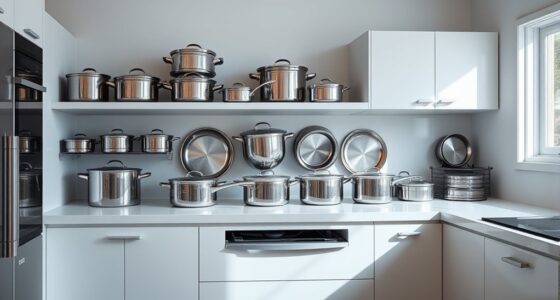
Have you ever thought about the importance of discarding broken or damaged cookware during your kitchen declutter? It might seem obvious, but leaving these items lingering can create hazards and clutter your cabinets. Damaged pots and pans with chipped coatings or warped bottoms can be unsafe, causing food to stick or spill. They also take up valuable space that could be used for better tools or appliances. By removing these items, you make your kitchen safer and more functional. Plus, it’s easier to organize when you’re not dealing with broken or unusable cookware. Toss out or donate damaged pieces promptly to maintain a tidy, efficient kitchen. Clearing out these clutter culprits not only frees space but also helps you focus on what you truly need and use. Incorporating energy-efficient appliances can further enhance your kitchen’s sustainability and reduce unnecessary clutter by replacing outdated items.
Clear Out Old Plastic Food Containers

Are your plastic food storage containers taking over your cabinets? It’s time to declutter and make space for what you actually use. Start by gathering all your containers and lids. Check for cracks, warping, or missing lids—these are signs they’re past their prime. Discard damaged or mismatched containers that no longer serve a purpose. Keep only the sets that fit well together and are in good condition. If you find lids that don’t match any containers, recycle or toss them. Organize the remaining containers by size or frequency of use to make grabbing what you need quick and easy. Clearing out old plastic containers not only frees up space but also reduces clutter and stress in your kitchen. Additionally, inspecting your containers’ material quality can help determine which ones are safest and most durable for long-term use.
Remove Expired Food and Spices
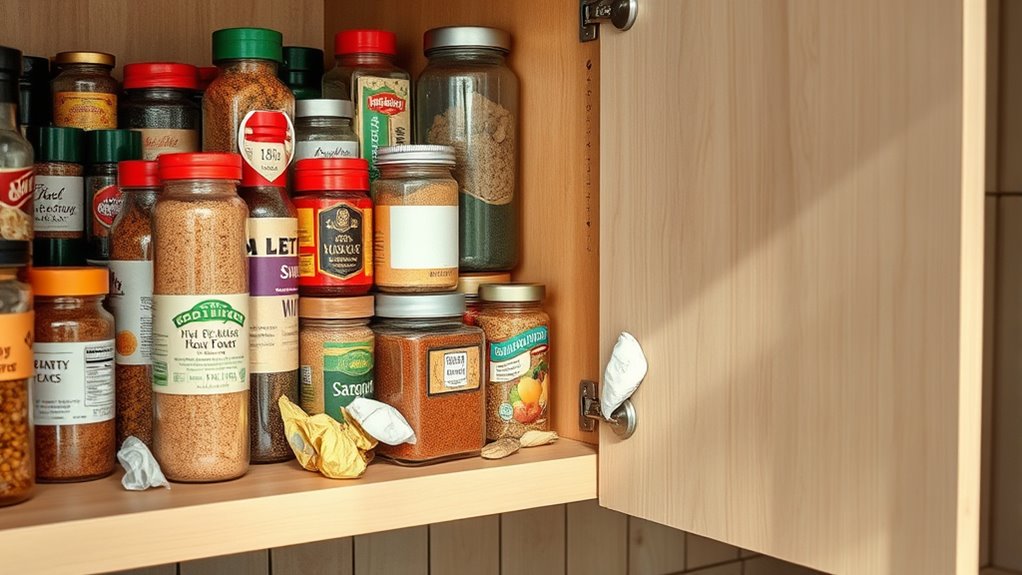
Clearing out old food containers is a straightforward way to reduce clutter and keep your kitchen organized. Start by checking expiration dates on all pantry staples, spices, and canned goods. Discard anything that’s expired or no longer safe to eat. Spices lose potency over time, so if your jars have dull labels or smell weak, it’s time to toss them. Take a moment to review dried herbs and spices, and remove any clumped or discolored items. Not only does this free up space, but it also prevents accidental use of spoiled ingredients. As you purge, wipe down shelves and containers to eliminate dust and spills. Regularly removing expired food and spices keeps your kitchen clean, reduces waste, and makes finding ingredients easier. Proper storage practices also help maintain your spices’ quality and longevity.
Replace or Donate Chipped Dishes and Cookware

Wondering what to do with chipped dishes and cookware? It’s best to replace or donate them. Chipped dishes can harbor bacteria and pose a safety risk, so discard any with cracks or chips. If the damage is minor, consider donating them if they’re still usable for casual use or crafts. For cookware with chips or cracks, replace them to ensure safe, even cooking and prevent further damage. Donating slightly chipped items might help someone in need, but only if they’re still functional and safe. Keep in mind that damaged dishes and cookware can make your kitchen look cluttered and unorganized. By removing these items, you create space for new or better-quality pieces, making your kitchen safer, more attractive, and easier to maintain. Additionally, avoiding free floating clutter can improve your kitchen’s overall functionality and aesthetics.
Purge Unnecessary Cleaning Supplies and Rags

Cleaning supplies and rags often accumulate quickly, cluttering your cabinets and countertops. Over time, you might find old bottles of cleaner, empty spray cans, or worn-out rags taking up space. Take a moment to sort through these items and discard anything expired, unused, or damaged. If a cleaning product has been sitting for over a year without use, it’s time to let it go. Worn or stained rags can be replaced or donated if still usable. Keep only what you genuinely need for regular cleaning tasks, and consider consolidating supplies to free up space. This not only improves your kitchen’s organization but also makes cleaning more efficient when you’re not sifting through clutter. Clearing out unnecessary supplies creates a calmer, more functional kitchen environment. Regularly reviewing your cleaning tools can also prevent the buildup of clutter, making your cleaning routine more effective.
Eliminate Clutter From Junk Drawers and Mail Areas

Taking control of your junk drawers and mail areas is essential for a clutter-free kitchen. Regularly organizing your mail and sorting through items help prevent buildup of unnecessary papers and small gadgets. By discarding what you no longer need, you’ll create a tidier, more functional space. Incorporating smart home automation can also help remind you to declutter and maintain organized storage areas regularly.
Organize Mail Regularly
Organizing your mail regularly is essential to prevent clutter from building up in junk drawers and mail areas. When mail piles up, it creates chaos and makes it harder to find important documents. To keep things in check, focus on these three key actions:
- Sort mail immediately upon receipt, separating bills, receipts, and junk.
- Create designated spots for different types of mail, like a folder for bills and a tray for pending tasks.
- Discard or shred unnecessary papers right away to prevent buildup.
Sort and Discard Items
To eliminate clutter from junk drawers and mail areas, start by sorting through each item and deciding what to keep, discard, or relocate. Take everything out and lay it all in front of you. Discard broken or damaged items, expired food or spices, and anything you no longer need or use. Be ruthless with old plastic containers missing lids, chipped dishes, and worn-out cleaning supplies. Use the 12-12-12 rule: donate 12 items, throw away 12, and return 12 to their proper place. As you sort, group similar items together—pens, batteries, coupons, or receipts. This process helps you see what’s truly necessary, making it easier to streamline your space and reduce clutter in your kitchen. Maintaining awareness of your privacy preferences ensures your data is handled according to your comfort level while decluttering.
Streamline Items in Tupperware Drawers
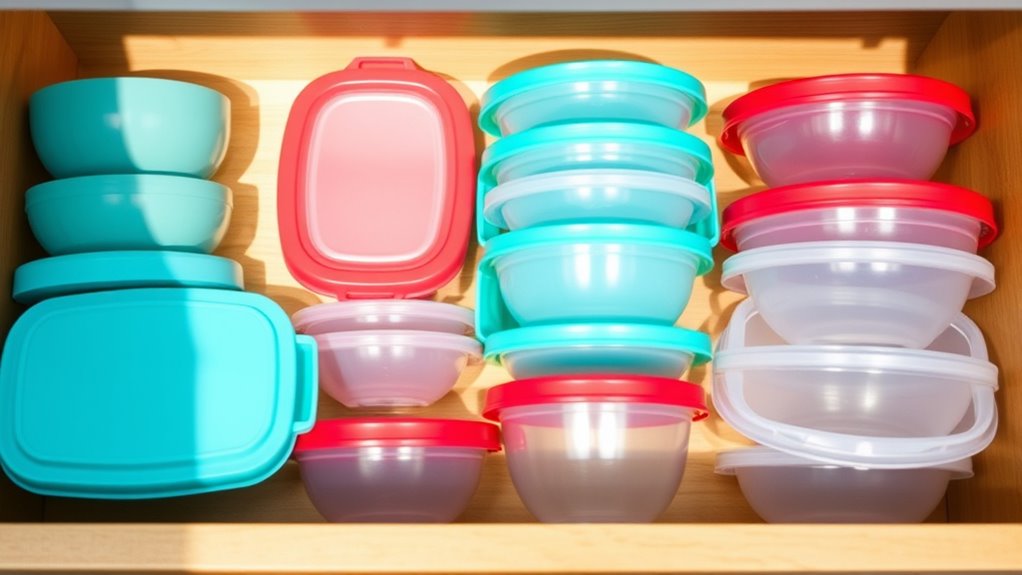
Start by sorting through your Tupperware and discarding any unused or damaged containers. Switch to uniform containers to make stacking and storage easier. This simple step can instantly reduce clutter and boost your drawer’s efficiency. Consider investing in a vacuum storage system for extra organization, which can help preserve leftovers and maximize space.
Sort and Discard Unused
Clearing out unused Tupperware and food storage containers can dramatically reduce clutter and make your kitchen more functional. Start by sorting through your drawers and removing items you no longer need. Discard containers that are cracked, have missing lids, or don’t fit together anymore.
Focus on these three key actions:
- Throw away damaged or mismatched containers.
- Remove expired or stale food storage items.
- Keep only containers that are clean, functional, and fit your current needs.
Use Uniform Containers
Using uniform containers can considerably simplify your kitchen organization by creating a consistent and tidy appearance. When your Tupperware and storage bins match, it’s easier to stack, store, and find what you need quickly. Choose containers with the same size and shape for maximum efficiency, reducing clutter and wasted space. Clear containers allow you to see contents instantly, saving time and preventing duplicate purchases. Label each container for added clarity, especially for leftovers or pantry items. Regularly check and rotate stock to avoid expired food and unnecessary duplicates. By streamlining your containers, you’ll minimize chaos in your drawers and make meal prep smoother. An organized, uniform system saves space, reduces stress, and keeps your kitchen looking clean and polished. Incorporating safety and storage checklists can help ensure your containers are used and stored properly to prevent accidents and spoilage.
Organize Items by Frequency of Use
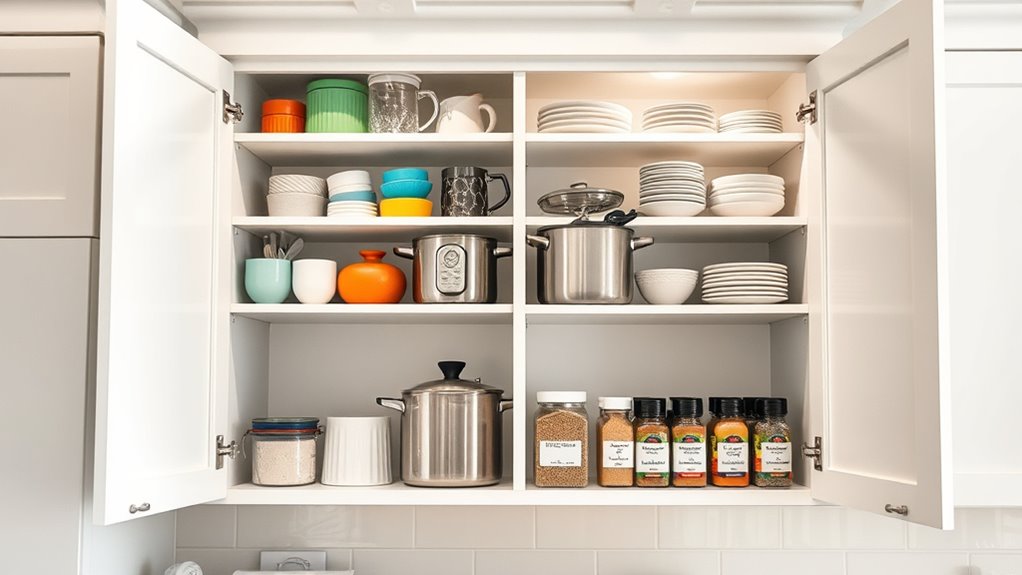
Organizing items by how often you use them helps create a functional and efficient kitchen layout. When you know which tools and dishes are used daily, you can keep them within easy reach. This simple system prevents unnecessary clutter and saves time during meal prep. Consider these tips: 1. Store everyday essentials—like plates, glasses, and utensils—in accessible cabinets or drawers. 2. Place items used weekly—such as specialty cookware or spices—in slightly less accessible areas. 3. Keep rarely used or seasonal items—like holiday dishes or large appliances—at the back or in higher cabinets.
Create Functional Storage With Divided Containers

Maximizing storage efficiency in your kitchen often comes down to how well you can keep similar items together. Divided containers help organize utensils, spices, and small accessories, making them easy to find and access. They prevent clutter from spreading and keep drawers tidy. Choose containers with adjustable dividers to customize compartments for different items. This keeps everything visible and within reach, saving time during meal prep. Use the following table to see how divided containers can optimize your space:
| Item Type | Ideal Container Type | Benefits |
|---|---|---|
| Utensils | Multi-compartment | Easy access and sorting |
| Spices | Small adjustable dividers | Keeps spices organized and fresh |
| Snacks | Stackable bins | Maximizes space and visibility |
| Small gadgets | Divided drawer trays | Prevents clutter and loss |
Properly organization techniques are essential for maintaining an efficient kitchen layout.
Follow the 12-12-12 Rule for Decluttering

To effectively tackle kitchen clutter, try the 12-12-12 rule: aim to donate 12 items, toss out 12 items, and return 12 items to their proper places. This simple approach keeps you focused and prevents overwhelm. Start by identifying items you no longer need or use—such as expired spices, broken gadgets, or duplicate utensils.
Here are three key items to target:
- Old plastic containers with missing lids
- Expired food or spices
- Broken or damaged cookware
Frequently Asked Questions
How Often Should I Declutter My Kitchen Cabinets?
You should declutter your kitchen cabinets every six months to keep things organized and prevent clutter from piling up. Regularly evaluating your items helps you discard broken or expired products and makes cleaning easier. If you notice cabinets becoming crowded or hard to navigate, it’s a sign it’s time for a thorough declutter. Staying consistent ensures your kitchen stays functional, stress-free, and visually appealing.
What’s the Best Way to Organize Small Kitchen Gadgets?
The best way to organize small kitchen gadgets is to group similar items together, like all whisks or peelers, and use drawer dividers or small containers to keep them sorted. Store frequently used gadgets within easy reach, and less-used ones in deeper drawers or cabinets. Regularly assess and purge duplicates or broken items to maintain organization. This approach saves space and makes finding gadgets quick and effortless.
How Do I Decide What to Donate Versus Discard?
To decide what to donate versus discard, first assess each item’s condition and usefulness. If it’s broken, chipped, or expired, it’s time to toss it. If it’s still functional but you no longer need or use it, consider donating. Ask yourself if it fits your current kitchen style and routines. Items in good shape but unused can help someone else and clear your space efficiently.
Are There Safety Tips for Handling Expired Food?
Imagine a spilled jar of old sauce blending into your clean countertop—handling expired food requires care. Always wear gloves to avoid contamination and dispose of spoiled items promptly in sealed bags. Clean and disinfect the area thoroughly afterward. Keep your hands away from your face, and wash them afterward. Store any remaining, unexpired food properly. These safety tips help prevent bacteria spread and protect your health during decluttering.
How Can I Prevent Clutter From Returning Quickly?
To prevent clutter from returning quickly, establish a regular cleaning routine, like weekly tidy-ups, to stay on top of items. Keep only essentials and discard expired or damaged products immediately. Use storage solutions like drawer organizers and designated spots for frequently used items. Also, declutter in categories, and avoid impulse purchases that add to clutter. Consistency and mindful organization are your best tools to maintain a tidy kitchen.
Conclusion
Did you know the average person spends over 37 minutes a day searching for kitchen items? Decluttering your space not only saves time but also creates a more enjoyable cooking environment. By tackling these 10 decluttering tips today, you’ll reclaim valuable space and reduce stress. Start small, stay consistent, and watch your kitchen transform into a tidy, functional oasis. Your future self will thank you for making your kitchen a clutter-free zone!