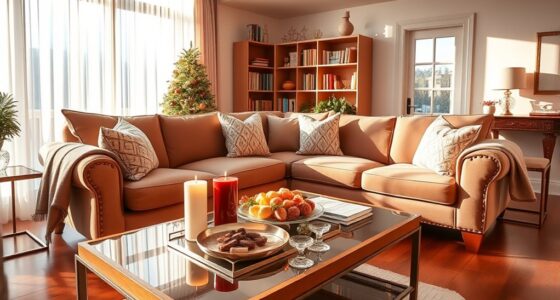
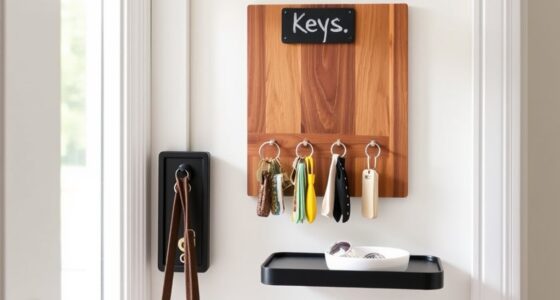
To style a cozy minimalist living room, focus on choosing a calming neutral palette with soft tones and simple, high-quality furniture that serves multiple purposes. Keep your space uncluttered by incorporating smart storage solutions and arranging furniture to promote openness and natural light. Add warmth with textured textiles and subtle personal accents that reflect your style. By balancing simplicity with comfort, you’ll create a peaceful retreat—you’ll discover more ways to achieve this balance as you explore further.
Key Takeaways
- Choose high-quality, multifunctional furniture with clean lines to maximize utility and maintain a clutter-free, open layout.
- Use a neutral, soft color palette to create a calming backdrop that enhances natural light and visual harmony.
- Incorporate textured textiles and natural materials for warmth and comfort without adding visual clutter.
- Optimize storage with hidden solutions and furniture that doubles as storage to keep surfaces clear.
- Select meaningful, curated decor accents to personalize the space while preserving simplicity and serenity.
Embracing the Less Is More Philosophy

Embracing the “less is more” philosophy begins with intentionally choosing quality over quantity. You focus on selecting fewer, well-crafted pieces that serve a purpose and elevate your space. Every item should have a reason for being there, whether it’s functional, aesthetic, or both. Avoid clutter by resisting the urge to fill every corner; instead, prioritize open, airy layouts that foster calm. Simplifying your surroundings helps you appreciate each piece’s beauty and utility, creating a tranquil environment free of distractions. Incorporating intentional design principles ensures your living room remains purposeful and uncluttered. This approach encourages mindfulness in your choices, ensuring your living room remains purposeful and uncluttered. By emphasizing quality, intentionality, and restraint, you craft a space that feels peaceful, balanced, and effortlessly stylish.
Choosing a Neutral and Calming Color Scheme
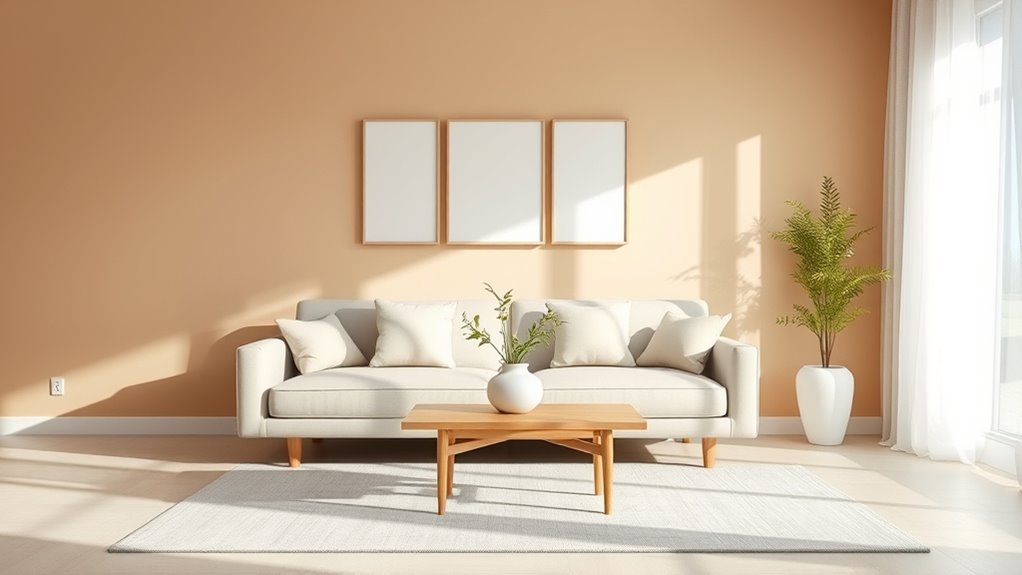
Selecting a neutral and calming color scheme is essential to achieving a minimalist living room that feels spacious and serene. Stick to soft tones like whites, creams, greys, or beiges to create a soothing backdrop. These colors reflect natural light, making the space feel open and airy. Avoid bold or loud hues that can disrupt the calm atmosphere and clutter the visual flow. Use subtle variations within your chosen palette to add depth without overwhelming the senses. Incorporate warm neutrals like gentle browns or taupe for comfort, and consider accenting with a single, muted color—such as a soft blue or green—to introduce visual interest. Consistency in color tones helps maintain a cohesive, tranquil environment that invites relaxation and simplicity. To enhance the overall harmony, choose color schemes that complement your furniture and decor styles, ensuring a balanced and unified look.
Selecting Functional and Sleek Furniture Pieces
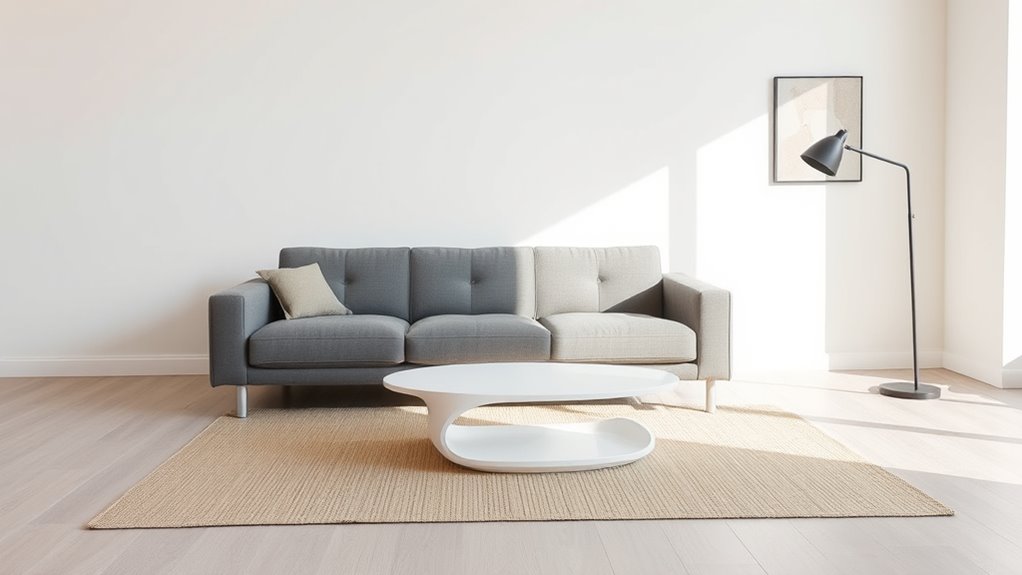
When choosing furniture, focus on pieces that serve multiple purposes to maximize your space and functionality. Look for sleek, low-profile designs with clean lines that create an uncluttered, modern look. Prioritizing quality over quantity guarantees your room remains simple, stylish, and easy to maintain. Incorporating multi-functional furniture can further enhance your minimalist space by providing additional storage and versatility.
Prioritize Multi-Functional Pieces
Prioritizing multi-functional pieces is essential in a minimalist living room because they maximize utility while maintaining a clean, uncluttered appearance. These versatile furniture options help you save space and reduce the need for excess items, keeping the room simple yet practical. Look for pieces that serve multiple purposes, such as a sofa bed for guests or a coffee table with hidden storage. Choosing furniture with clean lines and sleek designs ensures the space remains visually calm and cohesive. Additionally, incorporating energy-efficient furniture can contribute to a more sustainable living space. By selecting multi-functional pieces, you create a flexible environment that adapts to your needs without sacrificing style.
Emphasize Quality Over Quantity
Focusing on quality over quantity guarantees your living room remains sleek, functional, and visually balanced. Choose furniture pieces built to last, with durable materials like solid wood, natural stone, or metal accents. These items offer both longevity and a refined look that elevates your space without clutter. Opt for fewer, well-crafted pieces that serve multiple purposes, such as a sturdy sofa with clean lines or a coffee table with hidden storage. Prioritize sleek designs with simple shapes and smooth finishes, avoiding overly ornate or bulky furniture. This approach creates a calm, uncluttered environment while emphasizing craftsmanship. Incorporating timeless style through high-quality furniture ensures your space remains elegant and adaptable over time. By investing in high-quality furniture, you’ll enjoy timeless style, enhanced comfort, and a space that feels thoughtfully curated rather than crowded.
Opt for Low-Profile Designs
Choosing low-profile furniture is key to maintaining a minimalist living room’s sleek and open feel. These pieces sit closer to the ground, creating a sense of balance and preventing the space from feeling crowded. Low-profile designs help emphasize clean lines and simple shapes, aligning with minimalist principles. They also make the room appear larger and more airy. To achieve this, select furniture with slim legs, flat surfaces, and minimal ornamentation. Avoid bulky or towering pieces that can dominate the room. Instead, focus on functional, streamlined options that blend seamlessly into your space. Incorporating free floating furniture can further enhance the sense of openness and simplicity.
Planning Your Layout for Openness and Flow
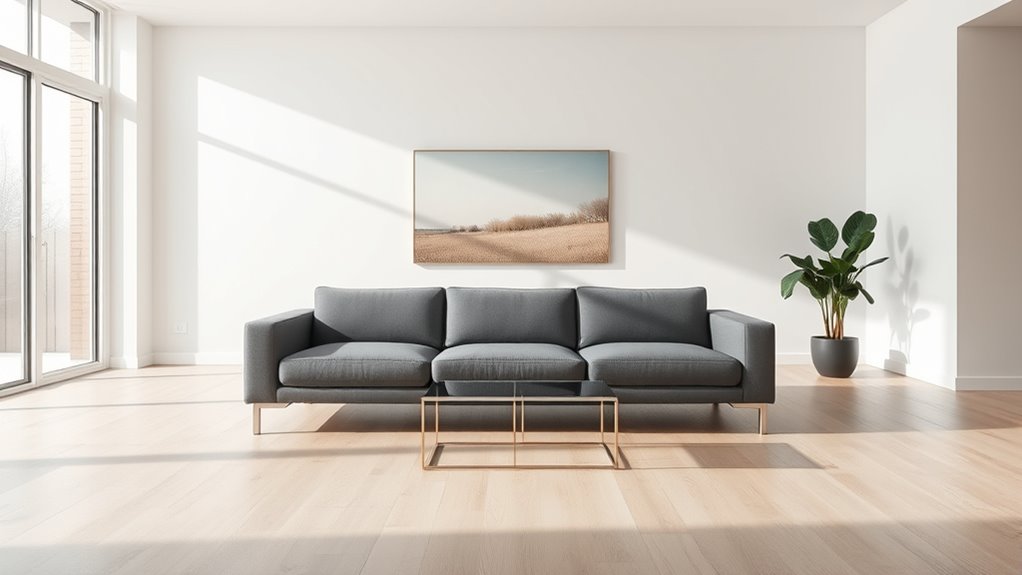
To create an open and inviting living room, focus on placing your furniture to encourage easy movement and natural conversation. Make sure pathways are clear and unobstructed, maintaining at least 40-50% free space around key pieces. Thoughtful layout choices help your room feel more spacious and promote a seamless flow. Utilizing proper space planning can further optimize your layout for comfort and style.
Optimize Furniture Placement
Effective furniture placement is key to creating a minimalist living room that feels open and inviting. You want to arrange your pieces to maximize space, flow, and functionality. Start by positioning larger furniture against walls to free up central areas, making the room appear more spacious. Focus on creating pathways that allow easy movement without obstruction. Use a focal point, like a main sofa or fireplace, to anchor the layout. Keep furniture proportions in check; avoid oversized pieces that dominate the space. Balance the arrangement with enough negative space around each item. Consider the natural flow of sunlight and sightlines to enhance openness.
- Place seating to promote conversation and balance
- Leave at least 40-50% of the floor space empty
- Position furniture to maximize natural light
- Use symmetry or asymmetry for visual harmony
Ensure Clear Pathways
Arranging furniture to guarantee clear pathways enhances both the openness and functionality of your living room. You want movement to flow naturally without obstacles, creating a spacious feel. Place larger pieces against walls and keep central areas open. Use the following layout as a visual guide:
| Focal Point | Seating Area | Pathway | Empty Space |
|---|---|---|---|
| Fireplace | Sofa | Walkway | Clear floor |
| TV | Accent Chair | Corridor | Open area |
| Art Piece | Coffee Table | Main aisle | Minimal clutter |
| Window | Side Table | Entryway | Calm space |
Limit furniture to around 50-60% of your room to maintain airiness. Prioritize flow and simplicity for a minimalist vibe. Incorporating a key piece like a statement artwork or a unique light fixture can also enhance the cozy atmosphere without cluttering the space.
Incorporating Warm Textures and Subtle Decorative Touches

While minimalism emphasizes clean lines and simplicity, incorporating warm textures can soften the space and add inviting depth. You can achieve this by adding tactile elements that contrast with sleek surfaces. Consider plush throw blankets, soft area rugs, or textured cushions to create visual and physical warmth. Natural materials like wood or woven fibers bring organic comfort without cluttering the room. Subtle decorative touches, such as a tasteful vase or a small sculpture, add personality without overwhelming the minimalist aesthetic. Focus on quality pieces that enhance the space’s coziness. Remember, less is more—select items thoughtfully to maintain balance and harmony. Additionally, integrating smart home fitness technology can add modern convenience while maintaining a clean, uncluttered look.
Maximizing Natural Light and Managing Space
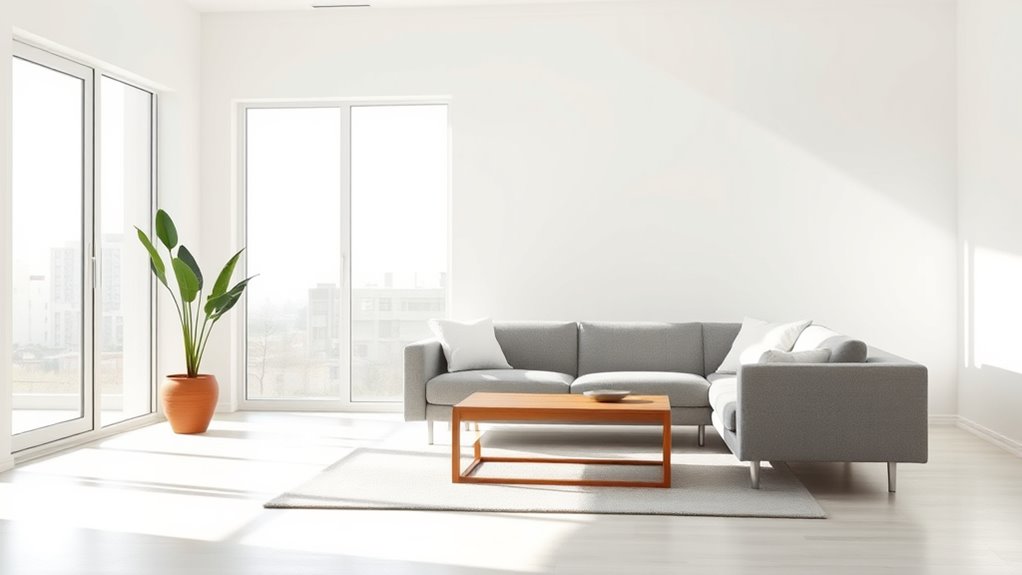
How can you make the most of natural light in a minimalist living room? Start by choosing large windows or glass doors that let in plenty of sunlight. Keep window treatments simple—light, sheer curtains or none at all—to avoid blocking light. Position furniture to face windows, which helps distribute natural brightness evenly across the space. Use light-colored walls and reflective surfaces, like glass or polished wood, to bounce light around the room. Avoid clutter that can cast shadows or obstruct light flow. To manage space, create open pathways by spacing furniture comfortably—at least 40-50% of the floor remains clear. This promotes a sense of airiness, making the room look larger, brighter, and more inviting. Incorporating natural light management strategies can further enhance the room’s brightness and overall atmosphere.
Utilizing Smart Storage Solutions to Reduce Clutter

Maximizing natural light creates a bright, open atmosphere, but keeping your living room clutter-free requires smart storage solutions. To achieve this, choose furniture that doubles as storage, like ottomans or coffee tables with compartments. Incorporate hidden storage options such as wall-mounted shelves or built-in cabinets to keep items out of sight. Use minimalist dressers or sideboards that blend seamlessly into your decor. Regularly reassess your belongings, donating or discarding items that don’t serve a purpose or bring joy. Keep surfaces clear by establishing dedicated storage zones for different items. These strategies help maintain a clean, calm environment, emphasizing spaciousness and simplicity.
- Multi-functional furniture with storage
- Floating shelves and wall-mounted units
- Hidden compartments in furniture pieces
- Regular decluttering routines
Adding Personal Style With Meaningful Minimalist Accents

In a minimalist living room, adding personal style involves selecting meaningful accents that reflect your personality without cluttering the space. Focus on a few carefully chosen pieces that hold significance, like a family heirloom or a favorite artwork. These accents should complement the room’s neutral palette and clean lines, adding warmth and character. Incorporating personalized decor can further enhance the space’s individuality and emotional appeal. Choose items that evoke emotion or tell a story, but keep their number limited. This way, your space feels personal yet serene, embodying both simplicity and individuality.
Frequently Asked Questions
How Do I Choose the Right Furniture Size for a Minimalist Living Room?
You should choose furniture that’s appropriately scaled to your space, avoiding oversized pieces that can make the room feel cramped. Opt for low-profile, streamlined designs with clean lines to maintain an open feel. Measure your room carefully, leaving at least 40-50% clear space for easy movement. Focus on quality over quantity, selecting versatile pieces that serve multiple functions, and guarantee they don’t overpower the room’s simplicity.
What Are Some Tips for Maintaining a Clutter-Free Space Long-Term?
To keep your space clutter-free long-term, regularly declutter and only keep items that serve a purpose or bring joy. Use smart storage solutions like hidden drawers or floating shelves to hide away unnecessary stuff. Develop habits like returning items to their designated spots and avoiding impulse purchases. Keep surfaces clear and reassess your belongings every few months. Consistency and mindful organization are key to maintaining a tidy, minimalist living room.
How Can I Add Personality Without Compromising Minimalist Principles?
You might worry adding personality makes your space feel cluttered, but it doesn’t have to. Focus on a few meaningful decor pieces, like a striking artwork or a unique plant, and keep the rest simple. Use subtle textures and warm tones to showcase your style without overwhelming the room. By selecting items with purpose and maintaining clean lines, you create a cozy yet personalized minimalist living room.
Are There Specific Lighting Options That Enhance Minimalist Design?
You should choose lighting options that are simple and functional, like sleek pendant lights, recessed ceiling lights, or minimalist floor lamps. Opt for warm, soft bulbs to create a cozy atmosphere without cluttering the space. Incorporate natural light as much as possible through large windows or sheer curtains. Avoid overly ornate fixtures; instead, select clean-lined designs that complement your room’s calm, uncluttered aesthetic, enhancing its spacious and warm feel.
How Do I Incorporate Natural Elements Without Overcrowding?
You can effortlessly incorporate natural elements by choosing a few carefully selected accents. Think of a sleek wooden coffee table or a simple potted plant, placed thoughtfully to enhance warmth without cluttering. Keep accessories minimal, focusing on quality and organic textures. This approach lets nature’s beauty shine through, creating a cozy, inviting atmosphere that complements your minimalist space while maintaining its clean, uncluttered aesthetic.
Conclusion
By embracing simplicity, you create a space that’s calm and inviting. By choosing fewer, better pieces, you foster clarity and comfort. By planning thoughtfully, you enhance openness and flow. And by adding meaningful touches, you infuse personality without clutter. When you prioritize purpose over excess, you transform your living room into a sanctuary of serenity and style. Less isn’t just less — it’s everything you need for a cozy, minimalist haven.