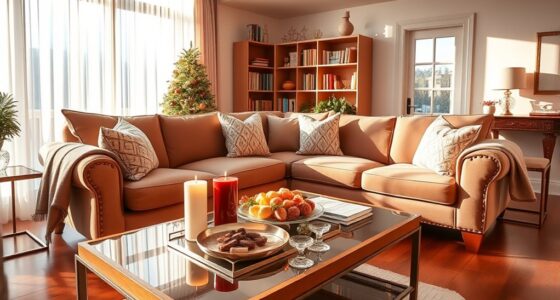
To master your multi-purpose room, start by designing distinct zones for work, play, and relaxation, using furniture placement, colors, and lighting to visually divide each area. Choose versatile furniture with built-in storage and flexible layouts to easily switch functions, while ensuring clear pathways for comfort and flow. Incorporate smart storage solutions and adaptable technology to keep clutter minimal. These tips help create a balanced space — keep going to discover even more clever strategies.
Key Takeaways
- Establish distinct zones for work, play, and relaxation using visual cues like rugs, lighting, and color schemes.
- Use multi-functional furniture with built-in storage to maximize space and reduce clutter.
- Incorporate flexible partitions and movable furniture to easily reconfigure the room for different activities.
- Integrate adaptable lighting and discreet technology to support seamless transitions between zones.
- Maintain clear pathways and organized storage to ensure comfort, functionality, and room versatility.
Prioritizing Functions and Setting Up Zones

Before designing your multipurpose room, it’s essential to identify and prioritize the functions you need most. Think about your daily activities—do you work, play, or relax more often? Once you know, define distinct zones for each activity. You might want a dedicated workspace, a play area for kids, and a cozy relaxation corner. Use your space wisely by allocating areas based on activity needs, helping you stay organized without expanding your square footage. Plan where to place furniture and storage around each zone for quick access and efficiency. Use lighting and design elements to visually separate these areas within one large room. Clear zones help you switch between tasks smoothly and keep clutter under control. Incorporating visual cues can also aid in distinguishing different zones, making your multi-purpose space more functional and inviting.
Choosing Versatile Furniture for Flexibility

Choosing versatile furniture is key to creating a flexible multipurpose room that adapts to your changing needs. Look for pieces that serve multiple functions, like ottomans that act as both seating and storage, or fold-out sofas that provide extra bedding when needed. Modular and stackable furniture allows you to reconfigure the space quickly, fitting different activities seamlessly. Incorporate furniture with built-in storage to keep clutter out of sight, maintaining a tidy environment. Use room dividers or movable partitions to visually separate zones without permanent walls. Prioritize items that blend style and practicality, ensuring your space remains comfortable and functional. Versatile furniture makes it easier to switch between work, play, and relaxation modes, maximizing your room’s potential. Additionally, choosing energy-efficient furniture can contribute to a more sustainable living space, aligning with eco-friendly principles.
Maximizing Space and Enhancing Room Flow
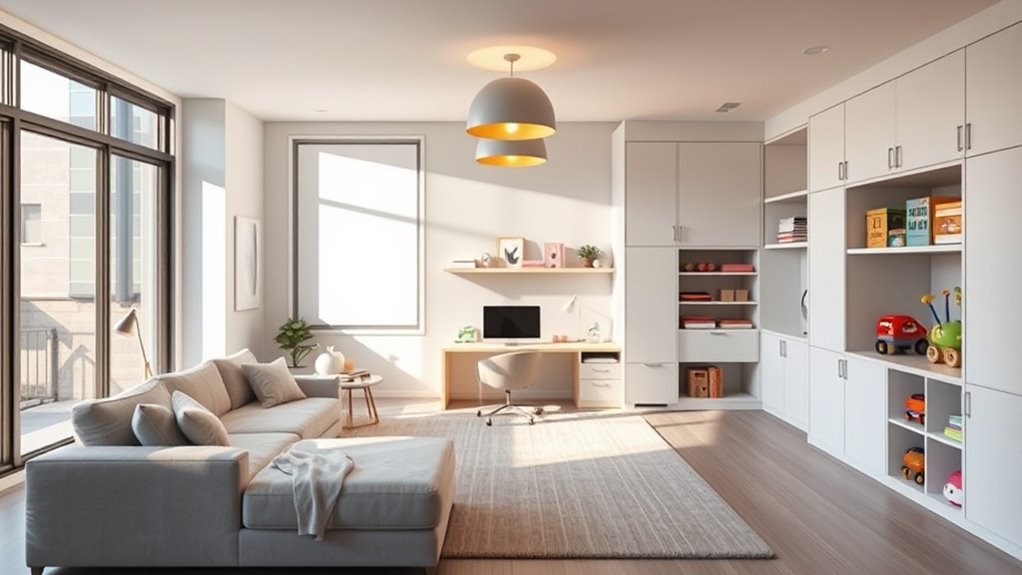
To make the most of your space, focus on smart furniture placement that supports multiple functions without cluttering the room. Clear pathways ensure easy movement between zones, preventing congestion and improving flow. Using visual cues like color or lighting helps define areas, making the room feel organized and functional. Incorporating multi-use furniture can further maximize versatility and storage.
Smart Furniture Placement
Smart furniture placement is essential for maximizing space and creating a smooth room flow in a multipurpose living area. You want furniture arranged to support each activity without crowding or blocking pathways. Start by positioning larger pieces, like sofas and desks, to define zones clearly. Use open layouts where possible to keep sightlines clear, making the room feel spacious. Incorporate versatile furniture, such as ottomans with storage or foldable tables, that can adapt to different needs. Place storage solutions strategically to hide clutter and keep the room organized. Avoid placing furniture in walkways or blocking access points. Finally, consider the natural flow of movement—arrange pieces so that progression between work, play, and relaxation feels intuitive and effortless. Paying attention to room layout principles can further enhance the overall functionality and harmony of the space.
Clear Pathways Design
Effective furniture placement naturally leads to clear pathways that keep your multipurpose room functional and inviting. To maximize space, arrange larger pieces against walls, creating open areas for movement. Avoid cluttering the center with furniture or bulky storage, which can restrict flow. Use narrow or low-profile furniture to maintain sightlines and ease navigation. Incorporate unobstructed routes between zones, ensuring you can move seamlessly from work to play areas without obstacle. Keep pathways wide enough for daily activities, especially if children or guests frequently use the space. Consistent circulation encourages natural transitions between functions, reducing frustration. Regularly assess traffic patterns and adjust furniture placement as needed. Smart furniture solutions can further optimize space and improve room flow with adjustable features. Well-planned routes enhance both the practicality and comfort of your versatile living room.
Visual Zone Separation
Visual zone separation plays a crucial role in maximizing space and improving the flow within a multipurpose room. By clearly defining different areas, you help your mind easily switch between tasks and prevent clutter from overlapping. Use design elements like rugs, lighting, or color changes to create subtle boundaries. Furniture placement, such as bookcases or sofas, can act as physical dividers without enclosing the space. Wall-mounted shelves or artwork can also delineate zones while adding aesthetic appeal. Window treatments, like curtains or blinds, provide flexible visual separation and can be adjusted for privacy or openness. Incorporating storage solutions further enhances organization and helps maintain clear visual boundaries. Effective visual cues support mental clarity, making your room more functional, inviting, and adaptable for work, play, or relaxation.
Designing for Comfort, Usability, and Atmosphere

Creating a comfortable, functional, and inviting multipurpose room begins with thoughtful design choices that balance usability and atmosphere. Start by selecting cozy, ergonomic furniture that supports both work and relaxation, guaranteeing comfort for long periods. Use warm, neutral colors and varied textures to create a welcoming environment, while lighting should be adjustable to suit different activities—bright for work, soft for leisure. Incorporate acoustic solutions to minimize noise disruptions, helping you concentrate or unwind. Durable, easy-to-clean surfaces keep the space practical for children and daily use. Organize zones with visual cues, like rugs or lighting, to signal different functions. Additionally, understanding space optimization techniques can help you make the most of every square foot in your room. This mindful approach ensures your room feels inviting, supports productivity, and adapts seamlessly to your changing needs.
Integrating Technology for Seamless Transitions

You can create smooth passages between activities by incorporating hidden tech solutions that stay out of sight until needed. Flexible power access guarantees devices and entertainment systems are always ready without cluttering the space. Adaptive lighting controls let you quickly change the room’s mood, making it easy to shift from work to play without interruption. Additionally, integrating a high refresh rate projector can enhance gaming and movie experiences, providing seamless transitions and immersive visuals.
Hidden Tech Solutions
Seamless integration of technology is essential for maintaining the flexibility and functionality of a multipurpose room. Hidden tech solutions keep the space organized and clutter-free while supporting your activities. Use built-in or concealed wiring to hide cables and power outlets, preventing visual clutter. Consider furniture with integrated charging stations or outlets, such as desks or ottomans, to keep devices powered without mess. Mount screens and speakers flush against walls or within cabinetry to preserve a clean look. Employ smart lighting and sound systems that can be easily adjusted for work, play, or relaxation modes. These discreet tech features allow you to switch seamlessly between functions, making your room adaptable without sacrificing style or efficiency. Incorporating multi-purpose furniture designed specifically for versatility can further enhance the room’s adaptability.
Flexible Power Access
How can you guarantee your multipurpose room stays adaptable and clutter-free when it comes to powering your devices? The key is flexible power access. Install multiple outlets in convenient locations, including behind furniture and within built-in storage, to reduce cable clutter. Use power strips with surge protection and USB ports to expand charging options without adding extra cords. Consider furniture with hidden wiring channels or integrated charging stations for a sleek look. Wireless chargers can keep devices powered without cords tangling. Position outlets near workstations and entertainment zones to support laptops, tablets, and gaming systems. Lastly, use smart power strips that can be scheduled or remotely controlled, helping you manage energy use efficiently while maintaining a tidy, organized space.
Adaptive Lighting Controls
Integrating adaptive lighting controls enhances the functionality and comfort of a multipurpose room by allowing you to easily adjust lighting levels to suit different activities. With the tap of a button or a voice command, you can switch from bright task lighting for work to soft ambient light for relaxation or play. This seamless changeover creates a dynamic environment that adapts to your needs. Incorporating smart gear into your lighting setup ensures your system remains responsive and reliable over time. You’ll feel more in control and relaxed, knowing your lighting adjusts effortlessly. Consider these features: 1. Smart dimmers that respond to your mood, making every activity more enjoyable. 2. Automated scenes that preset lighting for work, play, or relaxation at the push of a button. 3. Voice-activated controls for quick adjustments, so you stay focused on your tasks or family fun.
Smart Storage Solutions to Reduce Clutter

Smart storage solutions are essential for keeping a multipurpose room organized and clutter-free, especially when space needs to serve multiple functions. Use hidden compartments within furniture, like storage ottomans or beds with built-in drawers, to maximize space. Incorporate wall-mounted shelves and vertical storage to free up floor area for activities. Opt for multi-purpose furniture, such as desks with integrated cabinets or fold-away tables, to minimize clutter. Baskets and bins help categorize toys, supplies, and office essentials, making cleanup quick and simple. Consider using furniture with concealed storage to keep everyday items out of sight, maintaining a tidy look. Regularly declutter and rotate items to prevent accumulation. These strategies ensure your room remains functional, inviting, and free of unnecessary mess.
Adapting the Space for Future Needs
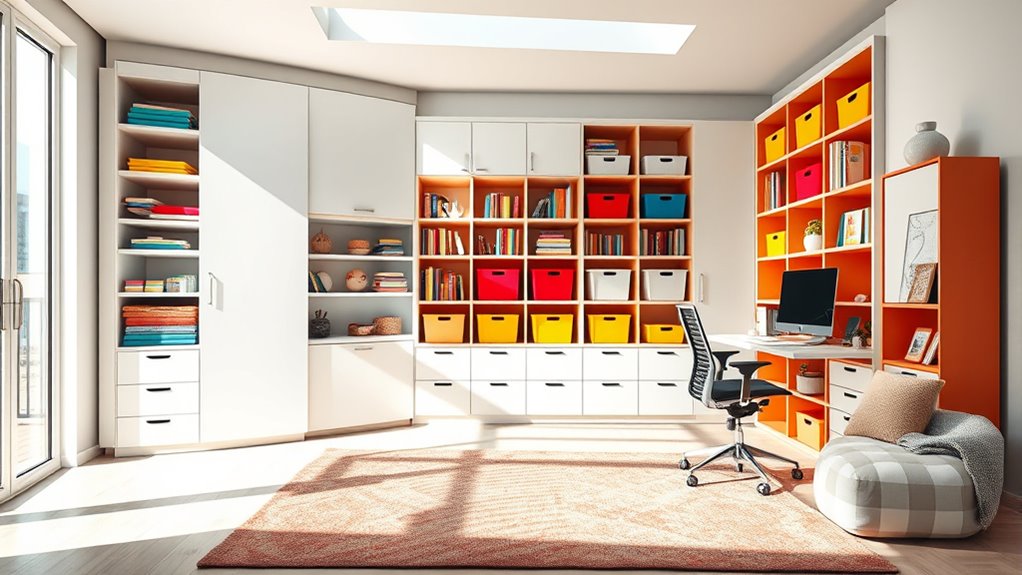
Planning your multipurpose room with future needs in mind guarantees it remains functional as your lifestyle evolves. To do this, incorporate flexible furniture, adaptable layouts, and versatile zones that can shift with your priorities. Consider these key strategies:
- Choose modular furniture that can transform from workstations to play areas or guest beds effortlessly.
- Design adjustable zones with movable dividers or open layouts that can expand or contract based on current needs.
- Install technology and storage solutions that can easily support new activities or accommodate changes without major overhaul.
Tips for Maintaining Balance Between Work and Play

How can you guarantee your multipurpose room stays balanced between work and play? Start by clearly defining zones for each activity and establishing visual cues, like rugs or lighting, to differentiate them. Keep work supplies organized and out of sight when not in use, so play areas remain inviting. Use versatile furniture that adapts to different needs—like foldable desks or storage ottomans—to easily switch between tasks. Set boundaries with room dividers or natural separation to minimize distractions. Maintain a routine that designates specific times for work and play, helping everyone switch gears smoothly. Regularly reassess the space’s layout and storage to ensure it continues to meet your evolving needs. Staying intentional about organization and boundaries keeps your room functional and enjoyable. Incorporating mastering firewood tips, like proper organization and safety precautions, can also help create a more efficient and clutter-free environment.
Frequently Asked Questions
How Can I Ensure Sufficient Lighting for Both Work and Play Areas?
To guarantee sufficient lighting for both work and play areas, you should layer different lighting types. Use bright task lighting, like adjustable desk lamps, for your workspace, and softer ambient lights for relaxation and play zones. Incorporate dimmable fixtures or smart lighting controls to adjust brightness easily. Position lights to minimize glare and shadows, and consider natural light sources like windows or skylights to enhance overall illumination without sacrificing comfort.
What Are the Best Materials for Durable, Easy-To-Clean Multipurpose Furniture?
You should choose materials like laminate, vinyl, or treated wood for durability and easy cleaning. These surfaces resist spills, stains, and scratches, making maintenance simple. Consider furniture with water-resistant finishes or coated fabrics to withstand daily use and children’s activities. Metal frames or plastic components also offer strength and longevity. Opting for these materials guarantees your multipurpose furniture remains functional, clean, and looking good over time.
How Can I Soundproof Zones for Quiet Work and Active Play?
You can soundproof zones by adding acoustic panels or foam tiles to walls and ceilings, which absorb noise effectively. Use soft, plush rugs and curtains to dampen sound further. Place bookshelves or storage units filled with soft items between zones to act as noise barriers. Opt for furniture with fabric upholstery and consider installing door seals or draft stoppers on doors to minimize sound transfer, creating a quieter workspace and lively play area.
Which Technology Features Are Essential for a Flexible Living Room-Office Setup?
Think of essential tech features like the backbone of your flexible living room. You’ll want versatile power outlets and charging stations, so every device stays powered, like a steady heartbeat. Incorporate smart lighting and sound controls to easily shift from work to play moods. Mount or conceal tech to keep space tidy. These features make transforming your room seamless, like flipping a switch, ensuring your space adapts effortlessly to your needs.
How Do I Balance Aesthetic Appeal With Functionality in a Multi-Use Space?
You balance aesthetic appeal with functionality by choosing versatile furniture that looks good and serves multiple purposes. Incorporate stylish storage solutions to keep the space tidy, and use colors and textures that suit both work and play areas. Add visual cues like rugs or lighting to define zones, making the room inviting yet practical. Prioritize sleek design and durable materials to maintain a cohesive, attractive, and functional multi-use space.
Conclusion
Creating a multi-purpose room may seem challenging, but with thoughtful planning, it becomes a seamless space that adapts to your needs. Don’t worry about clutter or losing your sense of calm—smart storage and well-defined zones keep everything organized. Remember, flexibility is key; your room can evolve with you. Embrace the process, and you’ll enjoy a balanced environment that supports both productivity and relaxation, making your home truly work for you.