

To declutter your bookshelf, start by removing all books to assess your collection and set clear goals for display or accessibility. Choose an organizational method that suits your style, like alphabetically or by genre, and add decorative items such as small art or souvenirs to boost visual interest. Use digital tools to catalog your books and plan upgrades. Regularly maintain your shelf by tidying and rotating decor—keep exploring to learn more tips for a stylish, organized space.
Key Takeaways
- Remove all books from shelves to evaluate and identify duplicates, damages, or unwanted titles before reorganizing.
- Choose an organization method such as alphabetical, genre-based, or color-coding to suit your preferences.
- Incorporate decorative items like souvenirs or artwork, mixing heights and textures for visual interest.
- Use digital cataloging tools to track your collection, making it easier to maintain and update.
- Regularly tidy shelves weekly, straightening books and rotating decor to keep the display fresh and clutter-free.
Assessing Your Collection and Setting Goals

How do you begin organizing your bookshelves effectively? First, assess your collection honestly. Take everything off the shelves and lay your books out. This gives you a clear view of what you have and helps identify duplicates, damaged books, or titles you no longer want. Set specific goals for your organization—do you want a tidy display, easier access, or space for new books? Decide on priorities: Are you focusing on preserving certain genres, authors, or themes? Consider your available space and how much time you want to dedicate. Clarifying these objectives helps shape your organizational approach, making the process manageable and tailored to your needs. Once you know what you have and what you want, you can create a plan that works for you. Incorporating color accuracy into your system can also enhance the visual appeal of your display.
Choosing an Organizational Method That Fits Your Style

Once you’ve assessed your collection and set your goals, the next step is choosing an organizational method that aligns with your personal style and habits. Think about how you prefer to find and display your books. If you value quick access, alphabetical order by author or title works best. For a more thematic approach, categorize by genre or subject. If you love visual impact, arrange by color or incorporate decorative items. Consider how much effort you’re willing to invest; simple methods like grouping by height or size can keep things manageable. Combining techniques is also effective—mixing genre with alphabetical sorting, for example. Most importantly, choose a system that feels intuitive and sustainable for you, so maintaining order becomes part of your routine, not a chore. Exploring European cloud innovation can inspire new organizational ideas and solutions for your space.
Incorporating Decorative Items to Enhance Visual Appeal

Incorporating decorative items into your bookshelf can transform a purely functional space into a stylish display that reflects your personality. Start by adding small objects like souvenirs, vases, or artwork to break up rows of books. Mix different heights and textures to create visual interest. Use horizontal stacks of books as platforms for decorative items, giving the shelf more dimension. Incorporate elements that complement your room’s color scheme to unify the look. Don’t overcrowd; leave some open space to prevent clutter. Consider using a vintage ladder or unique bookends to add character. These touches make your bookshelf more inviting and personalized, encouraging you to maintain its organization while showcasing your style. Remember, balance is key—combine practicality with aesthetics for the best effect. Additionally, incorporating aquatic exercise techniques can promote relaxation and enhance the calming ambiance of your space.
Utilizing Digital Tools for Efficient Cataloging and Planning
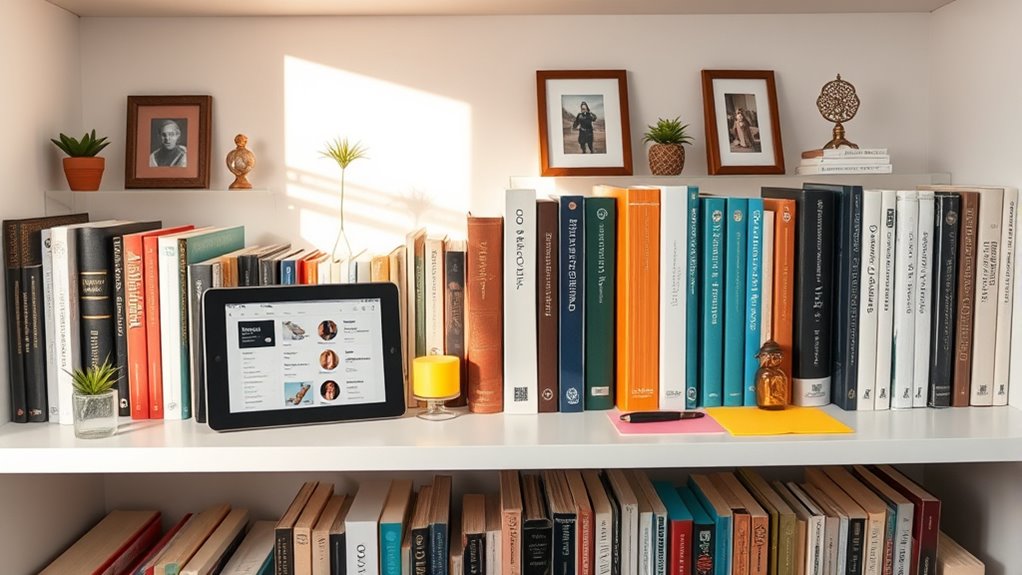
Digital tools have revolutionized the way you organize and manage your bookshelves, making the process faster and more accurate. With apps like Libib or Collectorz, you can quickly catalog your entire collection, adding details like titles, authors, genres, and publication dates. These tools enable you to search instantly, track books you’ve lent or acquired, and plan reorganization projects efficiently. You can create multiple virtual libraries—for example, one for your favorite novels and another for academic texts—helping you stay organized across different categories. Digital cataloging reduces the need for manual sorting and prevents misplacing books. Although entering data takes some time upfront, it pays off by providing a clear overview of your collection, simplifying future updates, and making browsing and locating books much easier.
Maintaining a Tidy Shelf: Tips for Regular Upkeep

Regularly tidying your bookshelf prevents clutter from building up and keeps your collection accessible. To stay organized, set a routine and stick to it. Here are four simple tips:
- Dedicate 10 minutes weekly to straighten books and remove dust, keeping everything looking fresh.
- Rearrange misplaced titles back to their designated spots, avoiding disorder.
- Rotate decorative items, swapping out souvenirs or knick-knacks to refresh the look.
- Review your collection, discarding or donating books you no longer need or love, preventing accumulation.
Frequently Asked Questions
How Can I Prioritize Which Books to Keep or Donate?
You should start by sorting your books into categories like favorites, useful, or rarely referenced. Then, evaluate each book’s sentimental value, relevance, and condition. Keep the ones that bring you joy, serve a purpose, or have personal significance. Donate or discard those that no longer fit these criteria, are damaged, or you haven’t touched in years. This way, you create a meaningful, manageable collection aligned with your current needs.
What Are Space-Saving Strategies for Small or Crowded Shelves?
Did you know that stacking books horizontally can save up to 30% more space? To maximize small shelves, use vertical stacking and group books tightly with minimal gaps. Incorporate multi-level organizers or adjustable shelves to utilize every inch efficiently. Consider placing decorative items on top of books or in gaps. You can also rotate books periodically, keeping only those you frequently read, which helps maintain a tidy, space-efficient collection.
How Do I Handle Sentimental or Rare Books During Decluttering?
You should handle sentimental or rare books carefully by setting aside a special box or shelf to safeguard them. Keep your most cherished items within easy reach, and consider donating or selling duplicates or less meaningful ones to free space. Take your time to evaluate each book’s value, both emotional and monetary. Handle them gently, and consider professional conservation for valuable pieces to ensure they stay preserved.
What Tools Can Help Automate or Streamline the Organization Process?
You can use digital cataloging apps like Libib or Collectorz to streamline your organization. These tools let you record, categorize, and search your books quickly, saving you time and effort. They also help track large collections and plan reorganizations. While setting up takes some time, they make maintaining order easier long-term, especially if you often add new books or want a clear overview of your entire collection.
How Often Should I Reorganize or Review My Bookshelf Layout?
You should review your bookshelf layout every 3 to 6 months, especially if you frequently add or remove books. Regular check-ins help you maintain order, prevent clutter, and keep your collection accessible. If you notice your system slowing down or books piling up, consider reorganizing sooner. Consistent reviews guarantee your shelves stay functional and visually appealing, making it easier to find what you need quickly.
Conclusion
By taking the time to assess your collection and set clear goals, you’ll find it easier to organize your books and display items in a way that reflects your style. Remember, a tidy shelf is a happy shelf, so stay consistent with your upkeep and leverage digital tools for efficiency. With a little effort, you’ll turn your bookshelf into a curated oasis that’s both functional and beautiful—proof that beauty lies in the details.