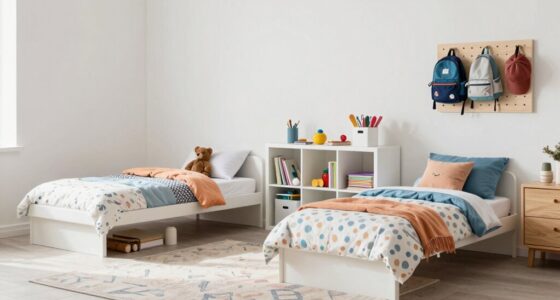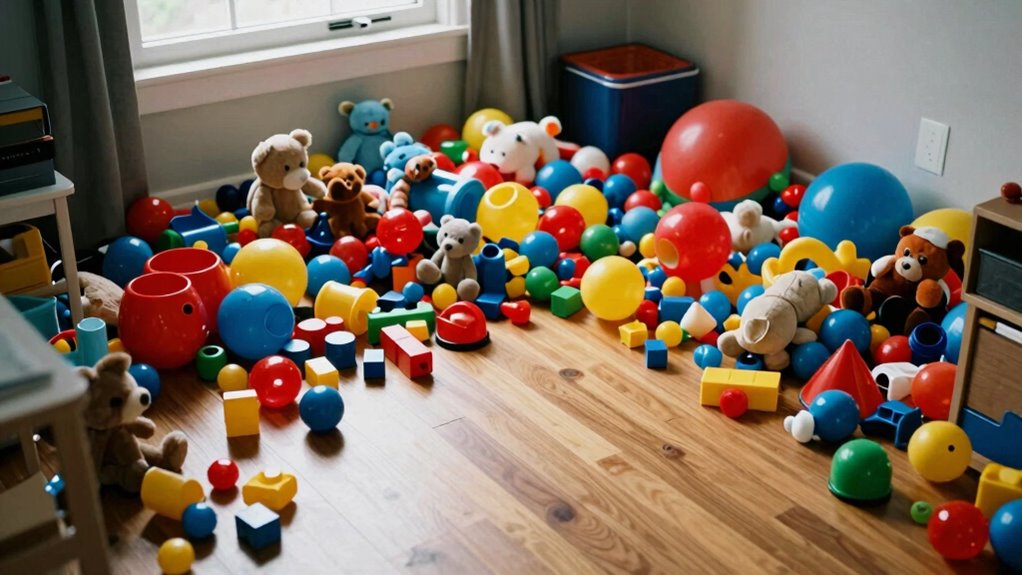

Toy clutter returns quickly because kids tend to pull out many toys, play briefly, then leave a mess behind, especially when there’s no proper storage or regular decluttering. Without clear organization and boundaries, toys spread throughout your home, making cleanup harder. Limiting toys, rotating them, and establishing routines can help. If you want to discover more ways to keep clutter at bay and create a tidy space, keep exploring these helpful tips.

Get the little things that make your day delivered free with Prime
- Fast, free delivery on millions of items
- Prime Video, Amazon Music and more included
- Member-only deals all year
Key Takeaways
- Toys are designed to be attractive and accessible, encouraging frequent use and resulting in scattered clutter.
- Lack of organized storage and clear boundaries makes tidying difficult for children.
- Regularly reviewing and decluttering toys prevents collection from becoming overwhelming.
- Establishing routines and rules for toy use and storage promotes long-term clutter control.
- Consistent teaching and smart organization strategies help maintain an orderly and clutter-free environment.
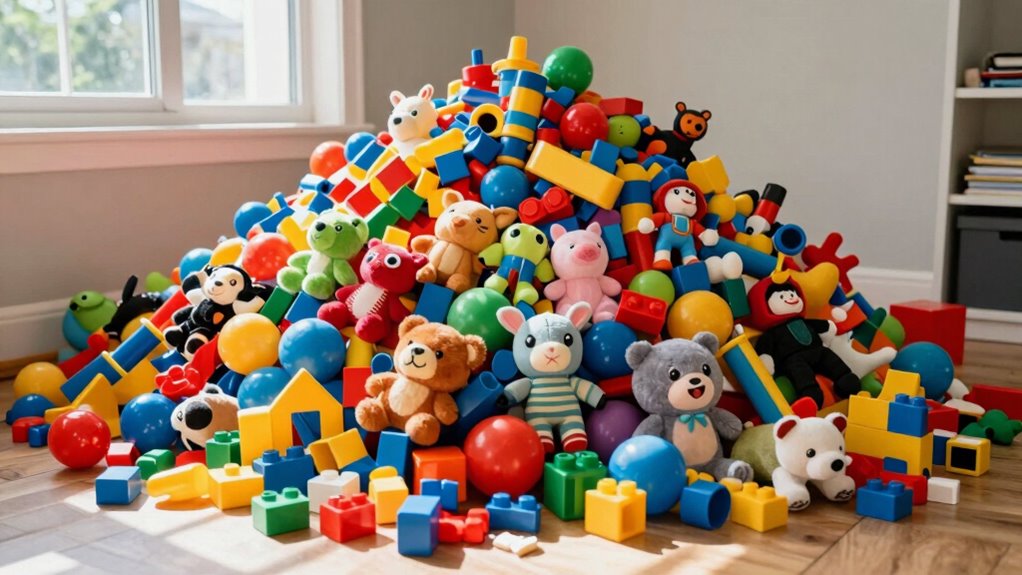
Are you noticing toy clutter creeping back into your home sooner than you’d like? It’s a common frustration that many parents face. No matter how diligently you tidy up, it seems like the toys multiply overnight. The key to keeping this chaos at bay lies in understanding why toy clutter returns so quickly and implementing effective strategies like toy organization and clutter prevention.
One reason clutter comes back so fast is that toys are designed to be appealing and easy to access. Kids often bring out a handful of toys, play with them for a little while, and then leave them scattered around. Without proper toy organization, these toys quickly spread throughout the house, creating a mess that’s hard to manage. To combat this, focus on creating designated storage spaces that are simple for your child to use. Clear bins, labeled containers, or toy chests make it easier for kids to put toys away, reinforcing clutter prevention habits. When toys are stored in accessible, organized ways, your child learns to pick up after themselves, reducing the amount of clutter that accumulates daily.
Creating accessible storage like labeled bins helps kids learn to tidy up and keeps clutter under control.
Another factor is the sheer volume of toys children accumulate. Many of us unintentionally buy or receive new toys as rewards, gifts, or impulse purchases. Without regular decluttering, the collection grows uncontrollably, making cleanup even more overwhelming. Establishing a routine for toy organization and decluttering helps keep the number of toys manageable. Periodically go through toys with your child and decide which ones to donate, keep, or discard. This not only limits clutter but also teaches your child important lessons about sharing and valuing their belongings. Implementing effective clutter control methods can significantly reduce the frequency of toy clutter reappearing. Additionally, understanding the role of proper storage can help maintain an organized space over time. Employing storage solutions that are durable and easy to access can also make a big difference in managing toys long-term. Creating a visual toy management plan can help children understand where everything belongs and encourage them to keep their space tidy.
Clutter prevention is also about setting boundaries and establishing rules. Limit the number of toys available at any one time—this could mean rotating toys or only offering a select few during playtime. When your child knows they can only play with a handful of toys at a time, it’s easier to maintain a tidy space. Consistency is key; if you regularly encourage putting toys back in their designated places, cleaning up becomes a habit rather than a chore.
Ultimately, keeping toy clutter from returning so quickly involves a combination of smart toy organization, setting clear boundaries, and maintaining a routine of clutter prevention. Creating simple storage solutions and teaching your child to tidy up can make a significant difference. When you invest in organized storage solutions and teach your child to tidy up, you create an environment where toys are enjoyed, but chaos is kept in check. The effort might take some time initially, but once these habits are ingrained, you’ll find that toy clutter no longer takes over your home as effortlessly as before.
As an affiliate, we earn on qualifying purchases.
Frequently Asked Questions
How Can I Prevent Toy Clutter From Accumulating so Quickly?
To prevent toy clutter from piling up, regularly sort through your child’s toys and donate those they no longer use. Focus on clutter hotspots like the living room or toy storage areas, keeping only what fits and sparks joy. Implement a routine, perhaps weekly, to tidy and reassess toy collections. This way, you control the clutter before it becomes overwhelming, making your space more organized and enjoyable for everyone.
Are There Specific Storage Solutions That Work Best for Toy Organization?
You should try modular bins and creative storage solutions—they’re flexible, customizable, and keep toys neatly contained. Modular bins allow you to sort toys by type or size, making cleanup easier. Creative storage ideas, like under-bed organizers or wall-mounted shelves, maximize space and add visual interest. Using these options actively keeps clutter at bay, encourages your kids to tidy up, and makes toy organization more enjoyable for everyone.
How Often Should I Declutter My Child’s Toys?
You should declutter your child’s toys every few months to keep clutter zones manageable. Regular decluttering allows you to identify toys suitable for toy donation and remove those no longer played with. By establishing a routine, you prevent toy accumulation from overwhelming your space. Involving your child in this process encourages responsibility and helps them appreciate the value of donating toys to others, keeping your home organized and clutter-free.
What Are Effective Ways to Teach Kids About Tidying Up?
You can teach kids about tidying up by making toy sorting fun, turning it into a game or challenge. Use creative storage solutions like colorful bins or labeled containers to help them understand where each toy belongs. Encourage them to put things away after playing, praising their efforts. Consistent routines and involving them in organizing teach responsibility, making tidying up an enjoyable part of their daily activities.
How Do I Handle Toy Clutter During Holidays or Special Occasions?
During holidays or special occasions, you can manage toy clutter by setting clear expectations about holiday gift etiquette, encouraging thoughtful giving. After celebrations, involve your kids in toy donation tips, helping them choose toys to donate or gift to others. This teaches gratitude and reduces clutter. Keep a designated space for new toys, and make it a fun activity to sort and donate old ones, fostering a sense of sharing and organization.
As an affiliate, we earn on qualifying purchases.
Conclusion
Toy clutter is like a relentless tide, always rushing back to flood your space. But with a little strategy—like setting clear boundaries and regular tidy-ups—you can become the steady lighthouse guiding the chaos away. Remember, it’s not about banishing toys forever but learning to dance with them without drowning. So, keep your anchor tight, and soon, your home will be a calm harbor instead of a stormy sea of clutter.
As an affiliate, we earn on qualifying purchases.
kids' playroom storage solutions
As an affiliate, we earn on qualifying purchases.
As an affiliate, we earn on qualifying purchases.
NFL season / tailgating Picks
team gear
As an affiliate, we earn on qualifying purchases.